



Grand Tour Intaglios
Grand tour intaglios are Neoclassical moulded impressions of classical gems and sculptures, collected by travellers as souvenirs of Italy.
Grand tour intaglios
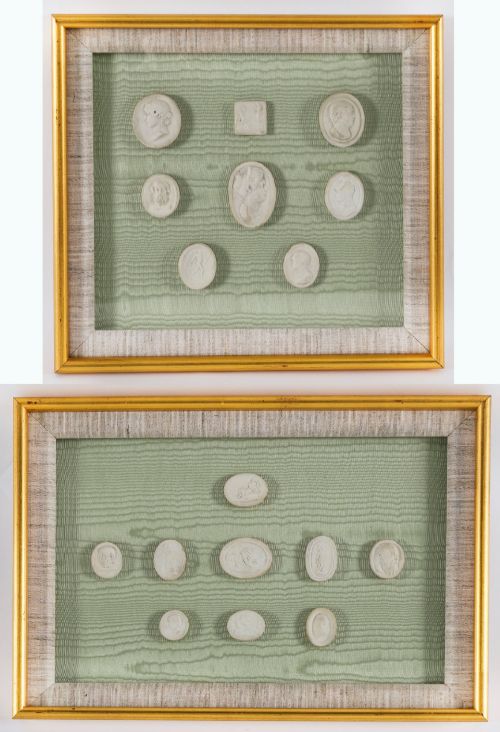
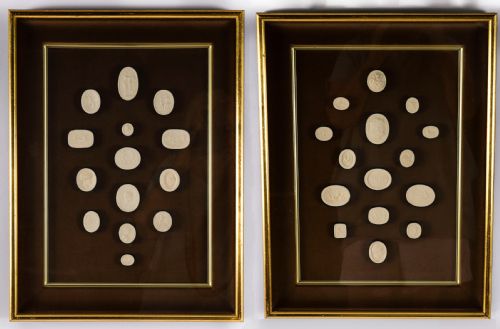
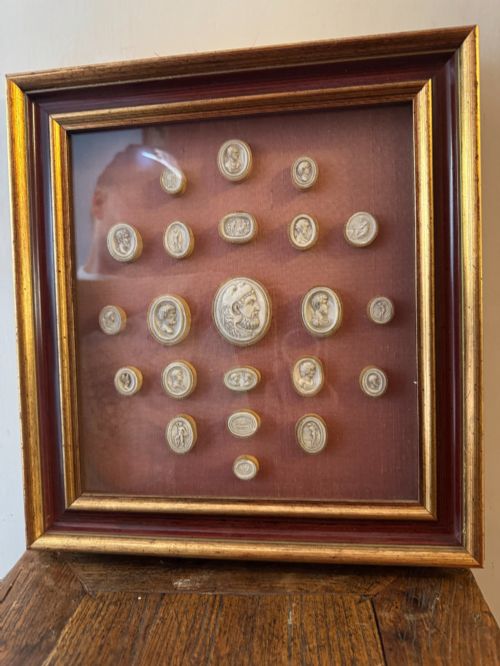
Grand tour intaglios comprise collections of classical motifs, mythological scenes and Roman emperors gathered by travellers during their travels across Europe. These pieces appear most frequently as framed wall art or within specialist book-form cases, presenting series of miniature reliefs for study and display.
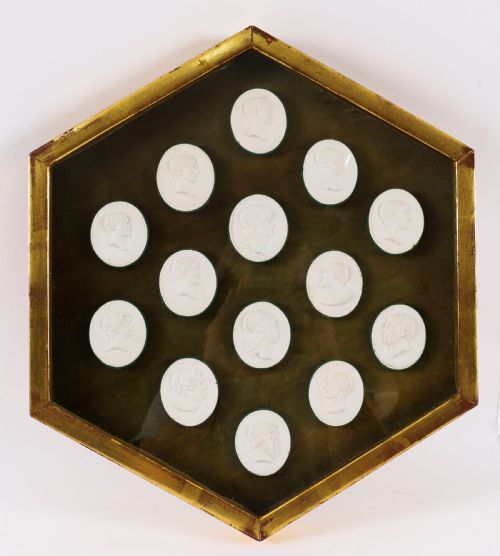
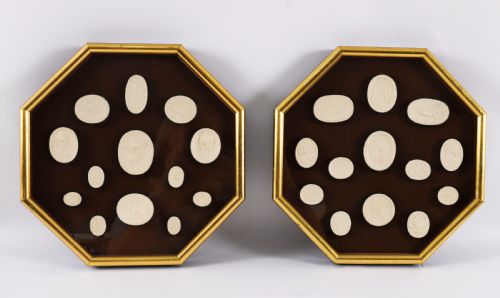
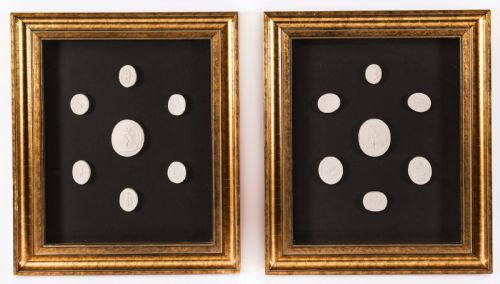
The objects stem predominantly from the nineteenth century, reflecting the prevailing Neoclassical taste of the period. Makers arranged these impressions in symmetrical pairs, octagonal frames, or larger glazed presentations designed to ornament domestic interiors.
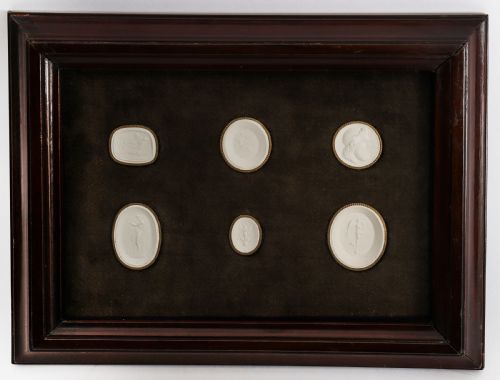
Examples range from modest pairs to extensive collections numbering dozens of individual reliefs. Wall art configurations utilise giltwood, ebonised or box frames lined with velvet, fabric or textile backgrounds to isolate each plaster or glass impression.
Materials and technique
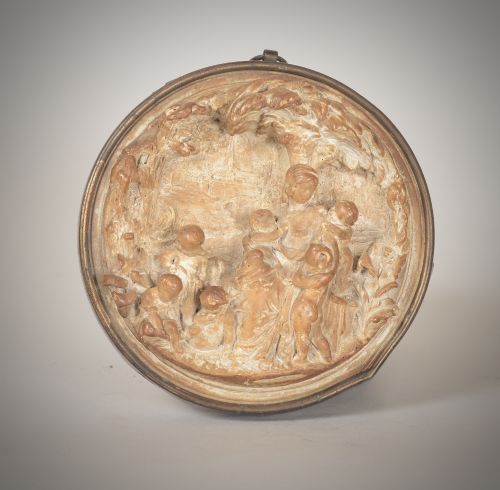
Plaster serves as the primary medium for these miniature reliefs, capturing fine detail from ancient and Renaissance gems. Artisans also poured glass to form translucent impressions, mounted against dark textile backgrounds to enhance sculptural depth.
Framing materials incorporate gilded wood, standard timber and fabric linings such as velvet. Workshops housed larger assemblages within specialist double-sided faux books or custom box frames designed for preservation.
Retail Price Guide 2026
Typical UK retail prices for grand tour intaglios, calculated from the Sellingantiques database of over a million retail prices indexed since 2003. This retail price guide relies exclusively on Sellingantiques data; no external sources or auction records are used, so the figures do not describe the wider market.
Defining quality
Quality rests upon the crispness of the impression and the reputation of the workshop that produced the casts. Skilled modellers achieved sharp relief that captured the minute lettering and anatomical subtleties of the original carved gems.
The presentation dictates visual impact, separating standard decorative groupings from masterworks mounted in bespoke giltwood frames or bound as scholar's faux books. Preservation of the fragile plaster and the integrity of the textile backing determine the overall coherence of the set.
Giovanni Liberotti·Pietro Bracci·Bartolomeo Paoletti·Paoletti
The Grand Tour Intaglios Glossary
- Intaglio
- A design carved into a material or cast in relief, representing classical figures, profiles of Roman emperors or mythological scenes. These miniature impressions formed the core of nineteenth-century collections.
- Plaster
- A fine paste that hardens into a solid mass, utilised extensively for casting detailed impressions from antique carved gems. This material captures the precise contours of the original sculpture.
- Faux book
- A specialist container shaped like a bound volume, lined with velvet or fabric to house collections of intaglios securely. Scholars and travellers utilised these portable libraries for study.
- Giltwood
- Timber treated with a thin layer of gold leaf, employed for framing grand tour intaglios. This ornate finish complements the classical subject matter.
- Neoclassical
- The prevailing artistic style of the period, drawing inspiration from the classical art and architecture of ancient Greece and Rome. This aesthetic governed the creation and display of intaglio collections.
Frequently Asked Questions
What are grand tour intaglios?
Grand tour intaglios are miniature plaster or glass impressions taken from classical carved gems, collected during European travels in the eighteenth and nineteenth centuries.
Travellers mounted these detailed reliefs in frames or housed them in faux books as tangible records of classical antiquity and artistic education.
How were they displayed originally?
Wealthy collectors typically displayed their intaglios as framed wall art within domestic interiors, arranging them symmetrically in giltwood or ebonised enclosures.
Alternatively, larger collections remained in custom desk boxes or faux book bindings lined with velvet or fabric for intimate study.
Who made these intaglio collections?
Specialist Roman workshops and skilled modellers produced these impressions for foreign travellers. Prominent figures such as Giovanni Liberotti and the Paoletti family operated studios dedicated to casting classical gems.
These craftsmen arranged the plaster casts into comprehensive series depicting Roman emperors, mythological figures and classical sculpture.
How do I care for framed intaglios?
Framed intaglios require protection from direct sunlight and high humidity to prevent the plaster casts and textile backings from degrading. Maintaining stable indoor temperatures preserves the delicate materials.
Glazed frames protect the fragile surfaces from dust, requiring only gentle cleaning of the exterior wood or gilt surfaces.