



Antique Plaster Intaglios
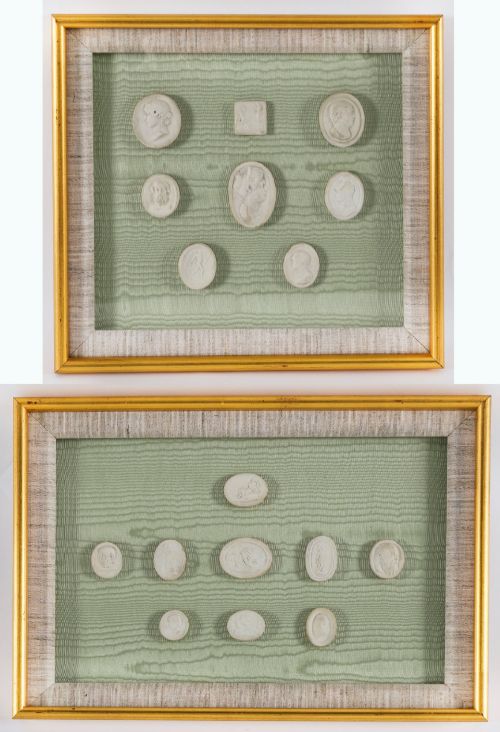
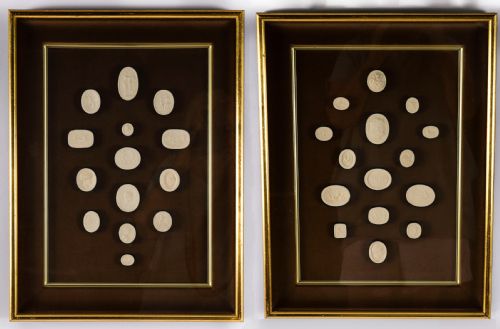
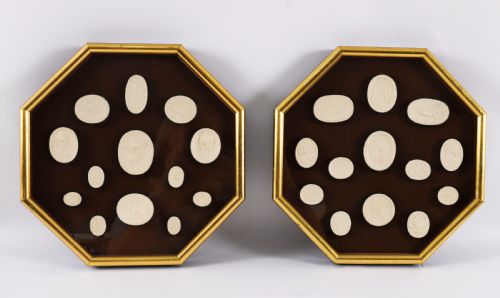
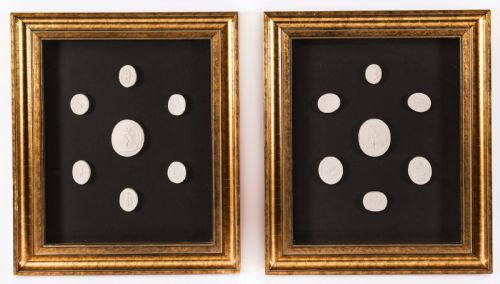
These antique plaster intaglios bring classical sculpture home, offering framed miniature relief panels gathered on European journeys.
Antique Plaster Intaglios
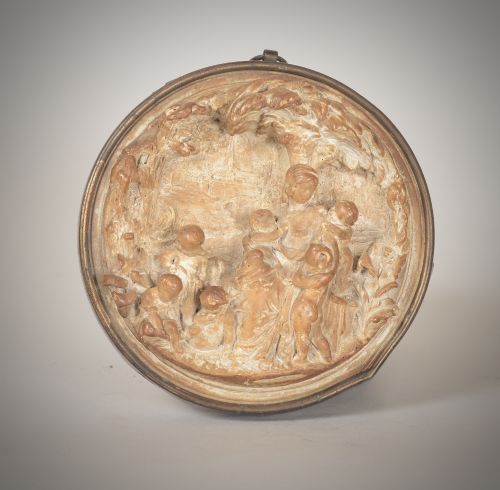
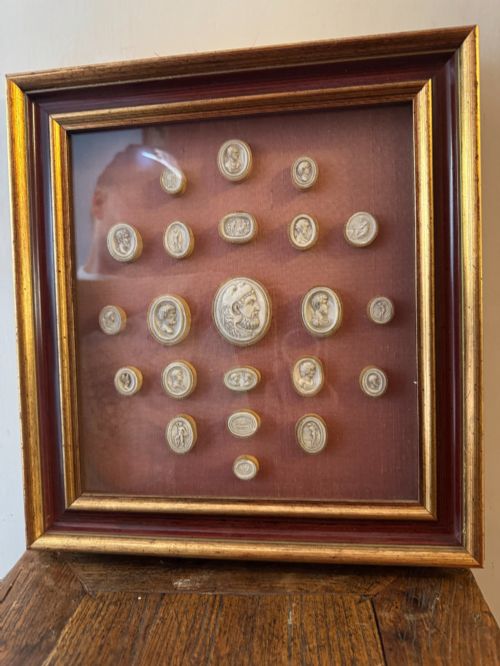
When you search for antique plaster intaglios, you encounter miniature relief casts that collectors gathered during European travels across the eighteenth and nineteenth centuries. These plaster medallions reproduce ancient carved gems, statues, and portrait busts of Roman and Greek gods, goddesses, emperors, and kings.
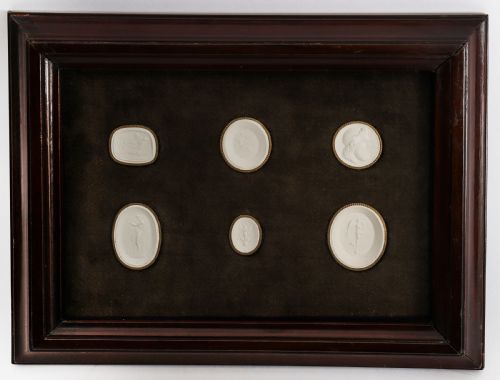
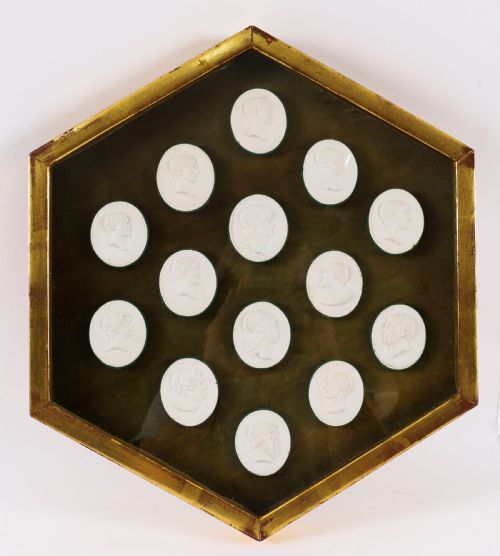
The versions most common on this page appear arranged inside wooden or giltwood frames, often set against a backing of dark velvet or fabric. Others take the form of book-form collections disguised as leather-bound volumes, holding rows of crisp white casts for close scholarly study.
Materials and construction
Craftsmen poured fine plaster or gypsum into moulds taken directly from ancient hardstone gems and classical sculptures, producing sharp relief details. Some workshops also utilised pressed white glass paste to achieve a similar translucent cameo effect.
Makers housed these fragile casts within bespoke wooden frames, frequently finished with gold leaf or giltwood, and mounted them securely upon plush velvet or fabric backings to highlight the bright white plaster against a dark ground.
Listings feature works from the nineteenth century alongside eighteenth-century examples, utilising materials such as plaster, glass, velvet, and giltwood.
Factors of quality
The presentation and organisation elevate certain pieces above others. Carefully ordered sets featuring identifiable classical deities or historical rulers, housed within well-preserved giltwood frames or fitted book-form cases, demonstrate superior original assembly.
Giovanni Liberotti·Pietro Bracci
The Antique Plaster Intaglios Glossary
- Intaglio
- A design carved into a material so that the impression sits below the surface. In these collections, the term also applies to the resulting relief casts which replicate those sunken carvings.
- Cameo
- A method of carving where the subject is raised in relief against a contrasting background. These plaster panels often depict classical cameo subjects in miniature form.
- Grand Tour
- A traditional educational journey of Europe undertaken by wealthy young men during the eighteenth and nineteenth centuries. Travellers collected these plaster intaglios as portable proof of their classical education and travels.
- Gypsum
- A soft sulphate mineral used to make plaster of Paris. It forms the smooth, bright white material of the cast medallions.
- Giltwood
- Wood carved and covered with a thin layer of gold leaf or gold paint. This finish frames many of the wall-hanging intaglio panels.
Antique Plaster Intaglios: Frequently Asked Questions
How were antique plaster intaglios displayed originally?
Travellers and scholars kept these plaster casts either mounted in glazed wooden frames for wall display or housed in custom book-form boxes designed to sit on library tables.
The book-form sets allowed collectors to turn the pages and examine the miniature portraits of emperors and gods up close during private study.
What subjects do these intaglio collections show?
The casts typically reproduce classical sculpture, featuring portrait busts of Roman and Greek gods, goddesses, emperors, and historical kings.
Larger collections often group these figures thematically to tell a visual story of classical history and mythology.
How do I care for framed plaster intaglios?
Keep these framed pieces away from direct sunlight and damp environments to protect the delicate plaster casts and fabric backings from deterioration.
Leave the sealed frames intact and clean only the exterior glass gently with a dry cloth.