


Classical Relief Medallions
Classical relief medallions bring the carved mythology and portraiture of antiquity into domestic interiors through framed plaster, bronze, marble and porcelain.
Classical Relief Medallions
Classical relief medallions are sculptural plaques and framed groupings created to capture ancient motifs, mythological scenes and historical profiles. When searching for classical relief medallions, buyers most frequently encounter Grand Tour plaster casts, carved marble cameos, and bronze roundels housed in period frames.
The objects span the eighteenth and nineteenth centuries, drawing heavily on Neoclassical, Victorian Classical Revival and French Empire aesthetics. These pieces often originate from Italian workshops, British manufacturers and Continental foundries, appearing as single wall plaques, matched pairs or large framed collections.
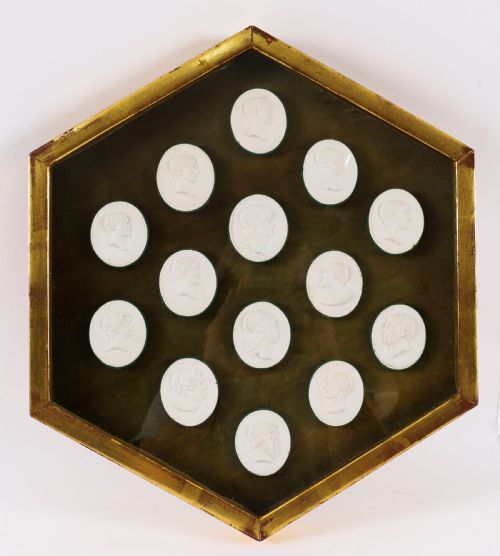
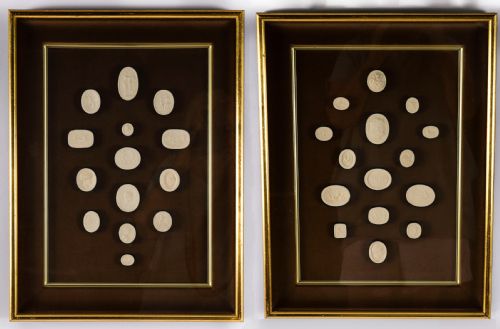
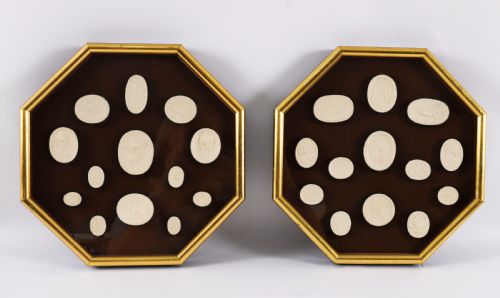
Formats range from roundels and octagonal frames to velvet-backed shadow boxes containing dozens of individual casts. They serve primarily as wall art and decorative objects, preserving the appearance of ancient glyptic art for nineteenth-century and Edwardian collectors.
Materials and Construction
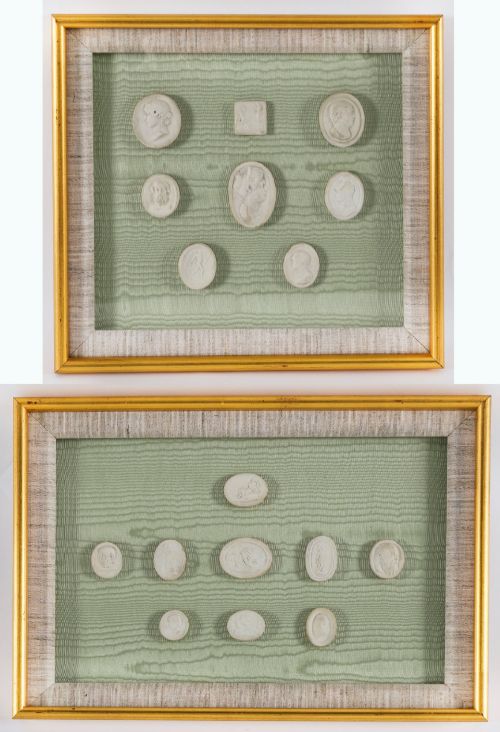
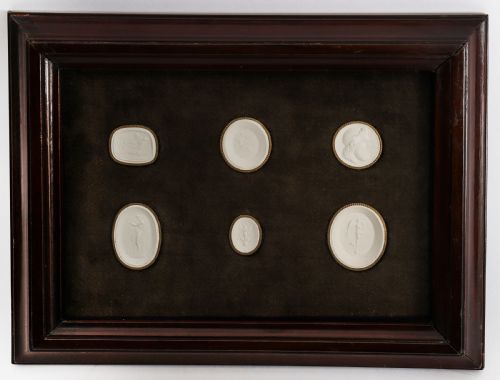
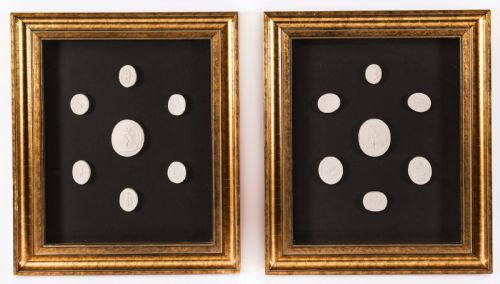
Plaster cast medallions are formed from fine plaster of Paris, frequently set against contrasting fabric or velvet backgrounds within giltwood, wood or fabric-lined frames. These casts capture the crisp detail of ancient gems and intaglios collected during European travels.
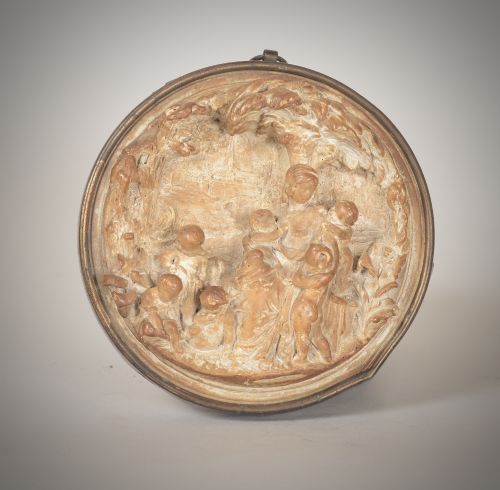
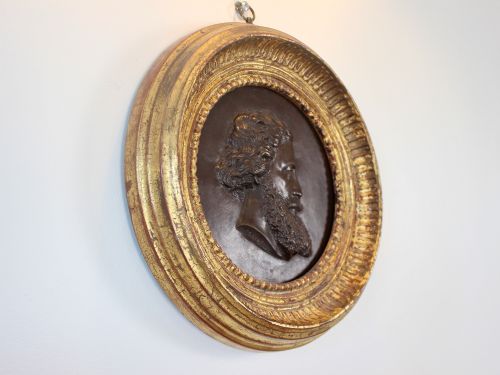
Metal plaques utilise bronze, cast lead bronzed compositions and iron, shaped through casting techniques and patination. Heavier sculptural works employ carved marble and mahogany, displaying intricate bas-relief profiles of emperors, muses and historical figures.
Framing forms an integral part of the construction, utilising turned mahogany, gilt wood and shadow box enclosures to protect fragile plaster and ceramic surfaces.
Listings feature plaster, bronze, marble, wood and glass, spanning the eighteenth century to the Edwardian era in neoclassical and classical revival styles.
Factors of Quality
Quality rests upon the crispness of the relief detail and the fidelity of the casting process, distinguishing sharp, well-defined profiles from worn or softened impressions. Maker attribution also elevates certain pieces, particularly those bearing signatures or originating from established Italian studios and English potteries.
The integrity of the framing and mounting contributes significantly to the overall standard. Original giltwood frames, period turned mahogany surrounds, and well-preserved velvet backings maintain the historical context of the artwork far better than later replacements.
Giovanni Liberotti·Smith, Beck and Beck·Pietro Bracci·De Grave Short and Fanner·Thorvalsen Workshop·Coalbrookdale·Mintons
The Classical Relief Medallions Glossary
- Intaglio
- A gem or medallion carved with a sunken design so that an impression in wax or plaster yields a relief. These form the basis of many framed Grand Tour collections.
- Grand Tour
- A cultural journey undertaken by wealthy young Europeans in the eighteenth and nineteenth centuries to study classical art. Souvenirs included plaster casts and carved cameos of ancient sculptures.
- Bas-relief
- A sculptural technique where figures project only slightly from the background plane. This method dominates the profile portraits and narrative scenes found on these plaques.
- Pate sur Pate
- A ceramic painting technique where liquid clay is applied layer by layer to a coloured body to create a low relief cameo effect. Mintons utilised this method on decorative tondos.
- Roundel
- A circular panel or plaque used for decorative artwork. These are frequently cast in bronze or lead and housed in matching wooden frames.
Classical Relief Medallions: Frequently Asked Questions
How were framed intaglios displayed?
Framed intaglios were typically hung on walls as decorative art or arranged in pairs and larger sets within wooden, giltwood or shadow box frames.
The velvet or fabric backings provided a dark background that emphasised the sharp white relief of the plaster casts.
What materials are these plaques made from?
These pieces utilise plaster, bronze, marble, carved mahogany, cast lead bronzed compositions and jasperware ceramics.
Frames incorporate gilt wood, turned timber and velvet linings to house the relief carvings securely.
How do I date a relief medallion?
Dating relies on stylistic clues such as Neoclassical or French Empire aesthetics, material composition, frame construction, and occasionally maker signatures or exhibition records.
Most examples originate from the eighteenth century through to the Edwardian period, reflecting nineteenth-century classical revival movements.