



Plaster Cast Medallions
These plaster cast medallions bring the sculptural detail of classical antiquity straight onto your wall.
Plaster Cast Medallions
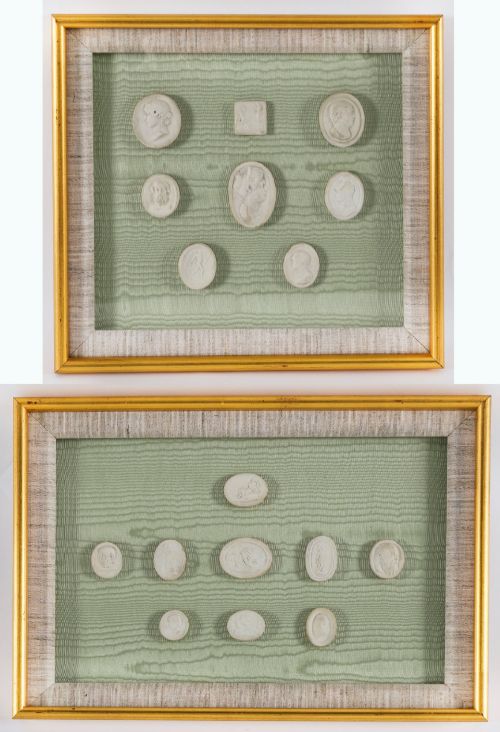
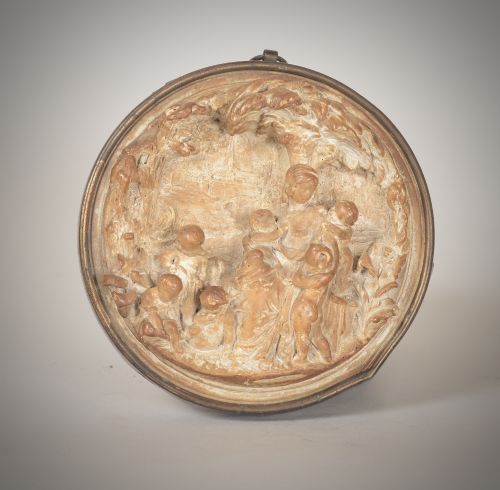
Plaster cast medallions take the form of framed wall art and decorative objects that reproduce classical cameos and intaglios. These pieces emerge predominantly from the nineteenth century, reflecting the enthusiasm for the Grand Tour across Europe.
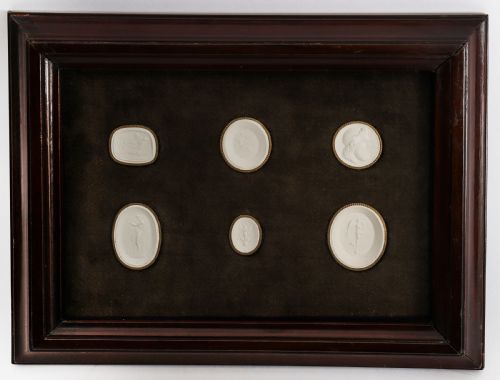
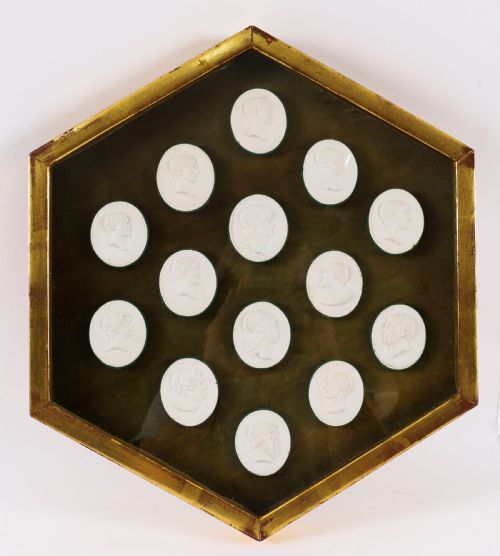
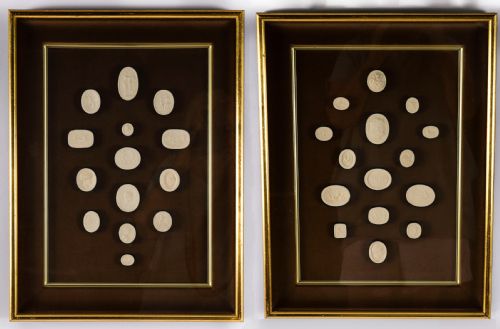
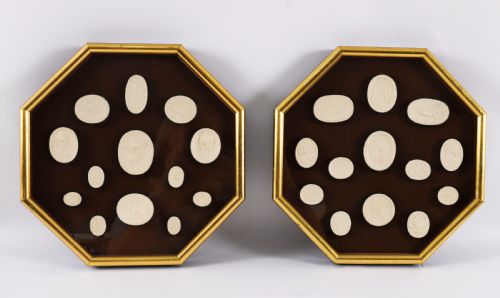
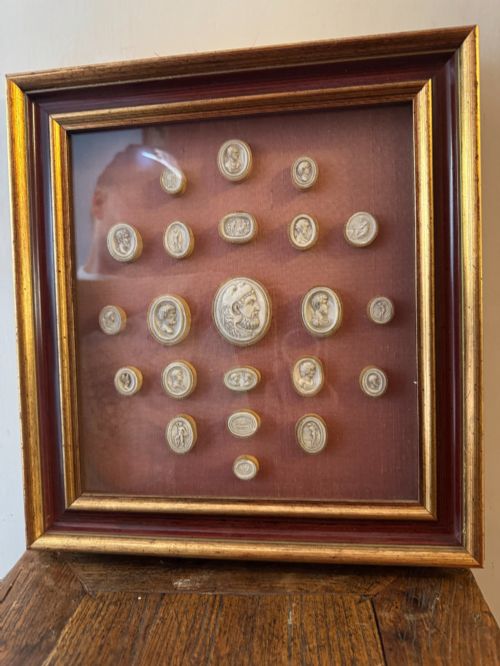
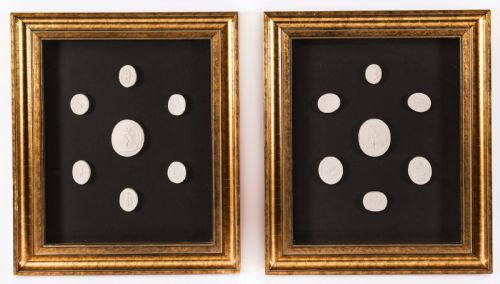
Collectors encounter single framed reliefs alongside large curated collections and matched pairs. The compositions often feature classical motifs arranged within octagonal frames, box frames, or velvet-lined backings.
Originating largely from Italian workshops, these items serve as intimate studies of ancient sculpture. They bridge the gap between classical archaeology and nineteenth-century interior decoration.
How they were made
Plaster and gypsum form the primary body of the casts, capturing fine relief details from ancient or Renaissance originals. Makers poured these materials into moulds to create crisp profiles of classical heads and mythological scenes.
Frames rely on wood, giltwood, and gold leaf to house the delicate casts securely. Velvet and fabric often provide a contrasting background that highlights the stark white plaster within the frame.
Object types on display include wall art, framed intaglios, and decorative panels adhering to neoclassical and Grand Tour styles.
What varies in quality
The sophistication of the framing and mounting elevates certain collections above standard decorative pieces. Original giltwood frames and meticulous velvet arrangements indicate higher workshop standards.
Giovanni Liberotti·Pietro Bracci
The Plaster Cast Medallions Glossary
- Intaglio
- A design carved into a material so that the impression sinks below the surface. These plaster casts often replicate stone intaglios.
- Cameo
- A method of carving where the subject is raised in relief against a contrasting background. Many medallions display miniature cameos cast in white plaster.
- Gypsum
- A soft sulphate mineral used to create plaster of Paris. It provides the smooth, fine-grained surface characteristic of these medallions.
- Giltwood
- Wood carved and covered with a thin layer of gold leaf or gilt. This finish frames many nineteenth-century Italian panels.
- Grand Tour
- A traditional trip of Europe undertaken by upper-class European young men of means. Travellers collected these plaster casts as souvenirs of classical antiquity.
Plaster Cast Medallions: Frequently Asked Questions
What are plaster cast medallions?
Plaster cast medallions are sculptural reliefs made from plaster or gypsum that replicate classical cameos and intaglios. They emerged as popular souvenirs for travellers undertaking the Grand Tour.
These pieces are typically mounted behind glass within wooden or giltwood frames, often set against dark velvet or fabric backgrounds for display.
How were they displayed originally?
Travellers and collectors mounted these medallions on interior walls as framed art or kept them in specialised cabinets. They served both as decoration and as portable study collections of classical sculpture.
Today, they function primarily as wall plaques and framed artwork that bring neoclassical texture to domestic interiors.
How do I date a plaster cast medallion?
Dating relies heavily on the construction of the frame, the materials used for the backing, and stylistic clues from the period. Most pieces date from the nineteenth century and the Edwardian era.
Examining the type of wood, the style of the giltwood, and any maker stamps on the reverse helps narrow down the decade of production.
Are these pieces fragile?
The plaster casts themselves are delicate and susceptible to damage from moisture and impact. Keeping them behind glass protects the fragile surfaces from dust and accidental knocks.
The wooden and giltwood frames require standard care suited to antique furniture and frames, avoiding direct sunlight and humidity.