



Classical Plaster Medallions
Classical plaster medallions are framed neoclassical reliefs brought back from Italy, prized for adding scholarly elegance to any study or library.
Classical Plaster Medallions
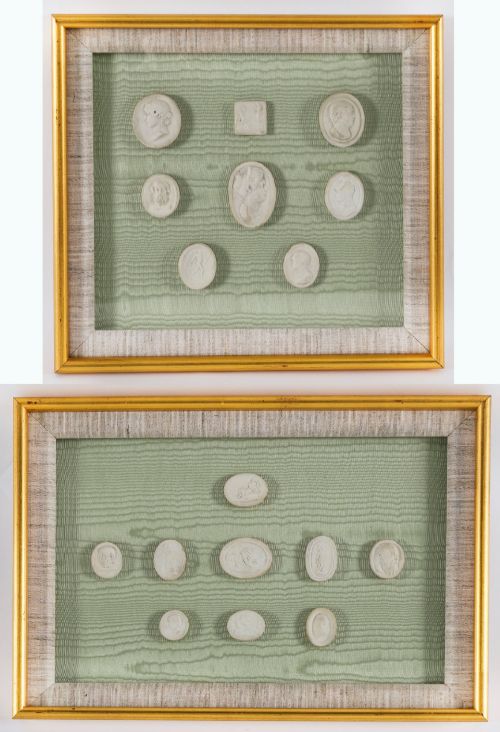
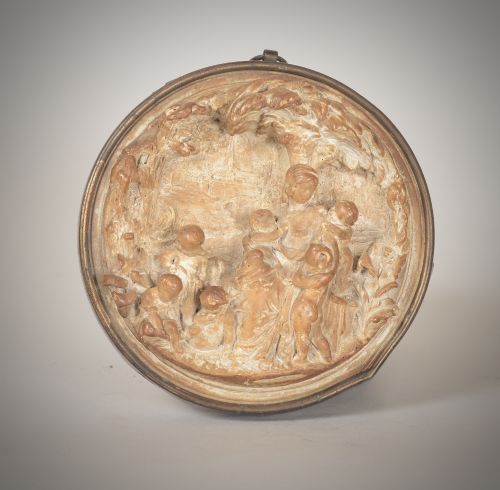
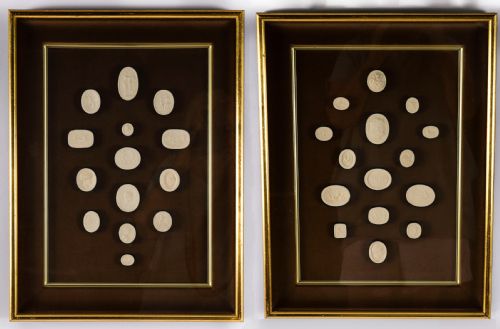
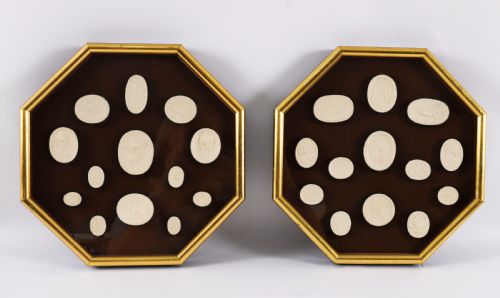
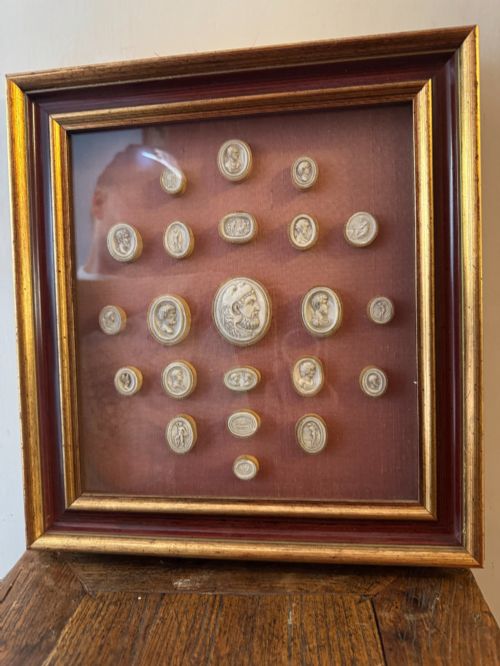
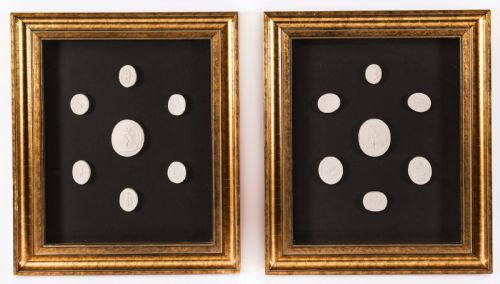
Classical plaster medallions appear here primarily as framed grand tour intaglios and relief panels dating from the nineteenth century and the Edwardian era. These decorative objects replicate ancient carved gems and cameos, arranged neatly inside glazed wooden frames often enhanced with giltwood, glass, velvet, and fabric.
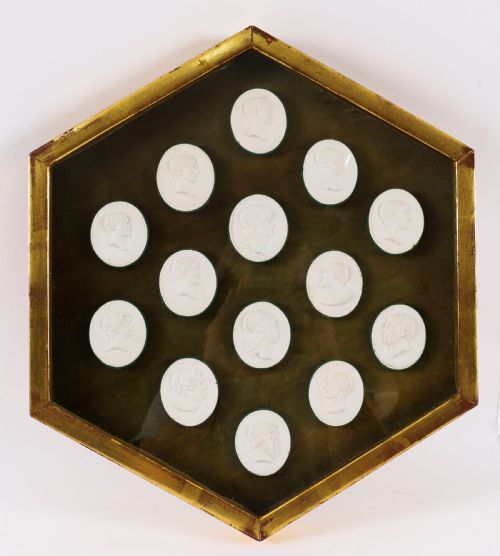
Buyers encounter single framed plaques alongside extensive collections housing dozens of individual plaster casts. Italian origins dominate the selection, reflecting the souvenirs collected by travellers on the grand tour during the nineteenth century.
How they were made
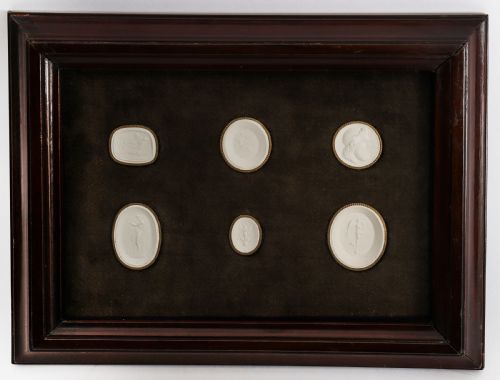
Makers cast these pieces in fine plaster or gypsum, capturing the minute details of classical intaglios and cameos. Workshops mounted the finished white reliefs against contrasting dark backgrounds of fabric, velvet, or painted wood to accentuate the sculptural profiles.
Craftsmen housed the delicate medallions within timber frames, frequently applying gold leaf, gilt wood, or giltwood finishes. Glazing protected the fragile plaster surfaces from dust and handling while allowing clear viewing of the mounted arrangements.
Travellers once carried portable museums of tiny plaster emperors home in their luggage, hoping friends would mistake them for ancient Roman jade.
What varies in quality
Quality rests upon the crispness of the plaster casting and the depth of detail preserved in the individual intaglios. Finer examples display sharp, legible imagery that faithfully translates ancient carved gemstones without blurring or surface pitting.
The sophistication of the framing and mounting elevates certain pieces above standard souvenirs. Uniformity in the arrangement of multiple casts and the preservation of original backing materials distinguish superior collections.
Giovanni Liberotti·Pietro Bracci
The Classical Plaster Medallions Glossary
- Grand Tour
- A traditional journey through Europe undertaken by upper-class young men during the eighteenth and nineteenth centuries to study the arts and antiquities of Italy.
- Intaglio
- A design engraved into a material so that the impression sinks below the surface, commonly used for seals and gem carving.
- Cameo
- A method of carving an object such as a gemstone or plaster piece in relief, making the raised subject stand out from a background.
- Giltwood
- Wood that has been treated with gold leaf or a gold-coloured coating to give a metallic sheen.
- Gypsum
- A soft sulphate mineral used to create plaster of Paris for casting sculptural reliefs.
Classical Plaster Medallions: Frequently Asked Questions
What are classical plaster medallions?
These pieces are nineteenth-century and Edwardian casts of classical carved gems, preserved behind glass in decorative wooden frames. They were originally collected as souvenirs of travel through Italy.
Today, they serve as sophisticated wall art for studies, libraries, and living spaces, bringing historical neoclassical motifs into modern interiors.
How were grand tour medallions displayed?
Makers arranged the small plaster casts neatly against backing materials like velvet, fabric, or dark wood inside glazed frames. Some sets contained dozens of individual intaglios grouped together in rows.
Single framed plaques and pairs also appear, designed for hanging on walls as decorative artwork rather than storage in cabinets.
How do I date a plaster medallion?
Dating relies heavily on the construction of the frame, the materials used for the backing, and the style of the mounting. Nineteenth-century and Edwardian examples show distinct framing techniques and hardware appropriate to those periods.
The paper labels, handwriting on the reverse, and the specific composition of the plaster or gypsum also offer clues to the era of manufacture.
Are these pieces fragile?
Plaster and gypsum require careful handling because the material is sensitive to impact, moisture, and heavy pressure. The glazed frames protect the delicate reliefs from direct contact.
Hanging them away from direct sunlight and damp environments ensures the fabric backings and plaster casts remain stable over time.