


Framed Relief Medallions
Framed relief medallions are small sculptural works set behind glass for display, offering collectors a tangible piece of classical history and portraiture.
Framed Relief Medallions
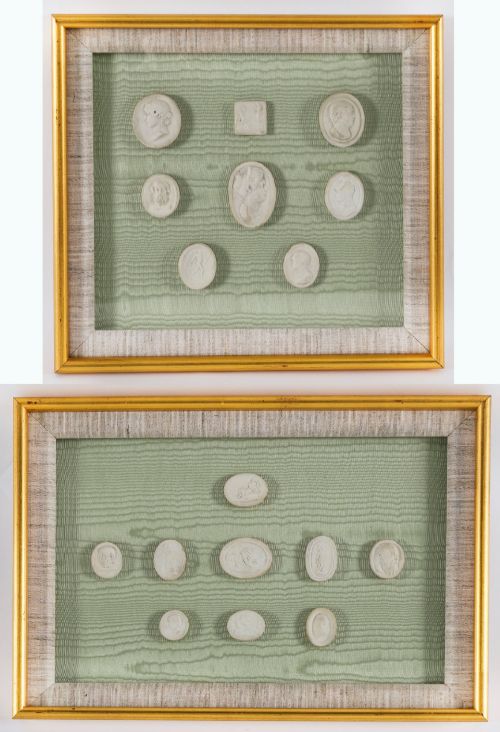
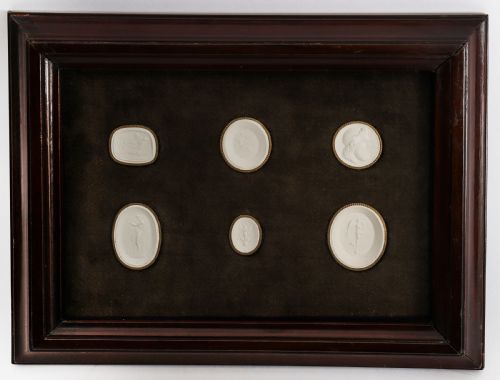
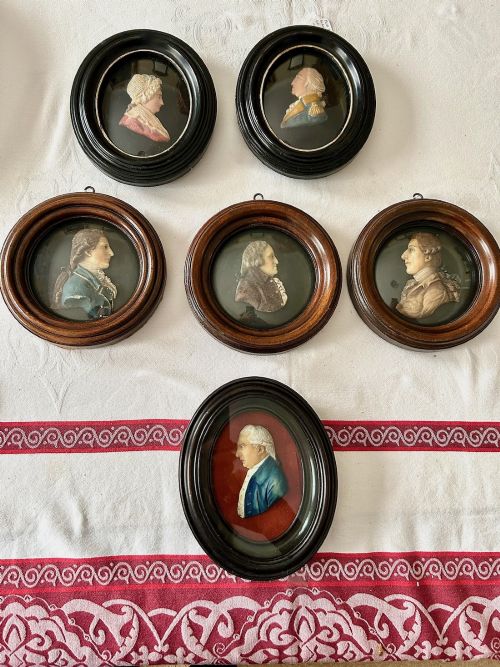
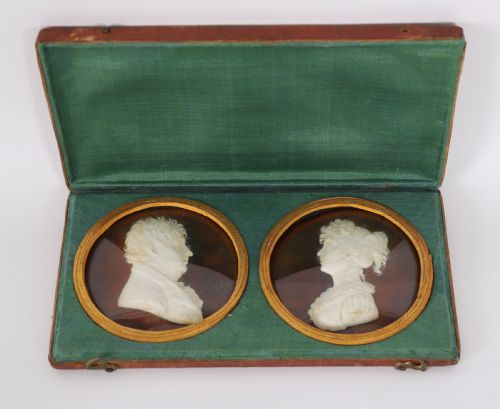
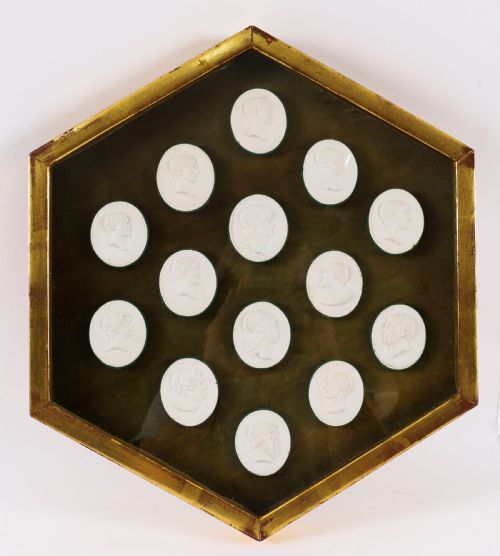
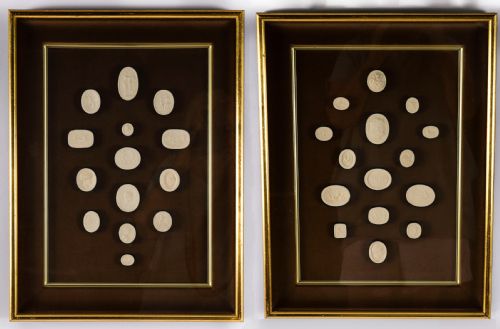
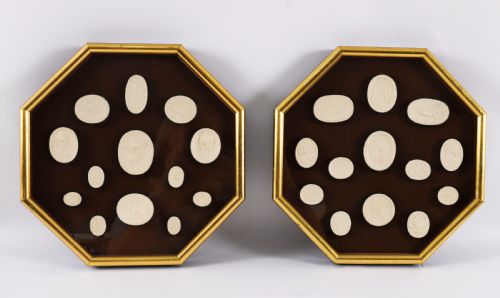
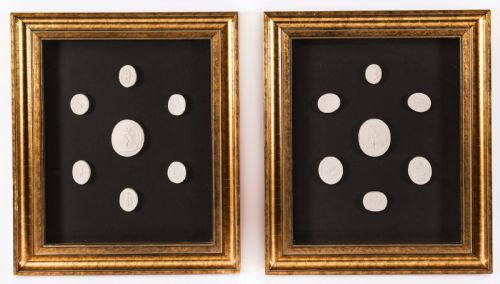
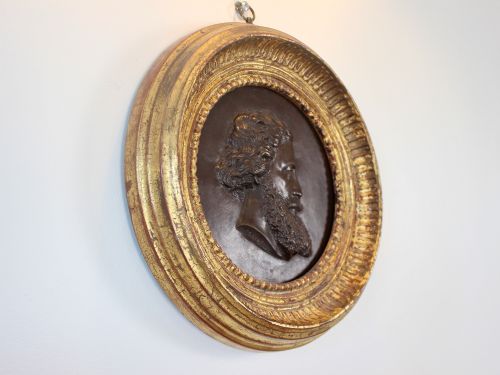
Framed relief medallions encompass a variety of wall art and decorative objects, ranging from individual portrait plaques to extensive sets of classical intaglios. When you search for framed relief medallions, you encounter pieces primarily from the eighteenth and nineteenth centuries, often associated with the tradition of the Grand Tour. These works capture profile portraits, mythological scenes, and historical figures in miniature relief.
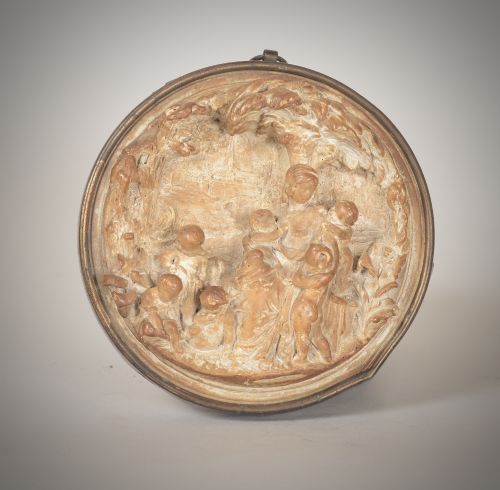
The objects take several distinct forms on this page, including pairs, sets, and single framed pieces. Materials such as plaster, wax, and carved marble form the central reliefs, while wooden and giltwood frames enclose them. Many examples present arranged collections of classical subjects within a single glazed display case.
What varies in quality
The composition of the framing and the arrangement of multiple medallions also influence the overall standard. Cohesive sets featuring uniform alignment and high-grade materials like carved marble or finely pressed wax stand apart from simpler, loosely mounted displays.
Materials recorded across the inventory include plaster, glass, wood, velvet, giltwood, brass, fabric, wax, bronze, marble, and cast lead.
Giovanni Liberotti·Pietro Bracci·MAINFROY
The Framed Relief Medallions Glossary
- Intaglio
- An engraved gem or medallion where the design is incised below the surface. These were frequently cast in plaster during the nineteenth century.
- Grand Tour
- A cultural journey undertaken by wealthy young Europeans in the eighteenth and nineteenth centuries, acquiring souvenirs like plaster casts and carved cameos.
- Giltwood
- Wood that has been treated with gold leaf or a gold-coloured finish. It is commonly found on the frames enclosing nineteenth-century portrait reliefs.
- Jasperware
- A type of fine stoneware developed by Josiah Wedgwood, characterised by a matte finish and neoclassical relief figures in contrasting colours.
- Roundel
- A circular work of art, such as a cast lead bronze plaque or medallion. These are often housed in turned mahogany or wooden frames.
Framed Relief Medallions: Frequently Asked Questions
What are grand tour medallions?
Grand tour medallions are historical souvenirs collected by travellers in Europe during the eighteenth and nineteenth centuries. They typically replicate classical sculptures, gems, and architectural details in plaster or wax.
These pieces were brought home and often arranged in custom frames to decorate domestic interiors. They serve as miniature records of classical antiquity and European art.
How should I hang framed medallions?
Framed relief medallions require stable wall locations away from direct sunlight and excessive moisture. Plaster and wax components are particularly sensitive to environmental changes and temperature fluctuations.
Use secure picture hooks suited to the weight of the wood or giltwood frame. Groupings look effective when hung at eye level with consistent spacing between pairs or sets.
What materials are used for reliefs?
The reliefs are fashioned from materials such as plaster, wax, carved marble, and cast bronze. Backgrounds often consist of velvet or fabric to enhance the contrast of the sculptural elements.
Frames are constructed from wood, giltwood, brass, or turned mahogany. Glazing protects the delicate surfaces from dust and handling.
How do I identify nineteenth century pieces?
Nineteenth-century pieces often display specific framing styles, such as deep shadow boxes or octagonal wooden surrounds. The use of plaster casts, signed bronze plaques, and classical subject matter points to this era.
Examining the reverse of the frame and the mounting materials provides further clues to the period of manufacture. Construction techniques align with the manufacturing standards of the Regency and Victorian epochs.