

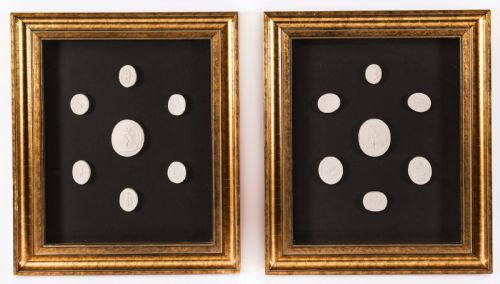


Classical Cameos Framed
Classical cameos framed bring miniature neoclassical sculpture onto the wall and into jewellery, prized for finely carved profiles and plaster casts collected on European travels.
Classical Cameos Framed
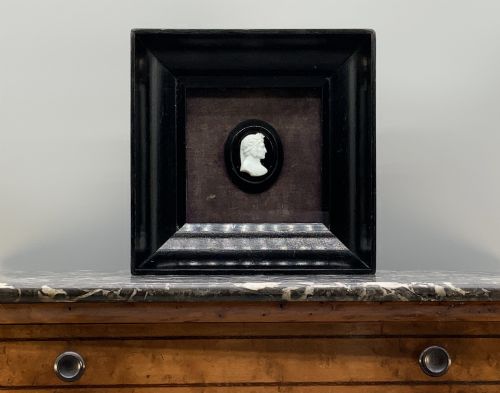
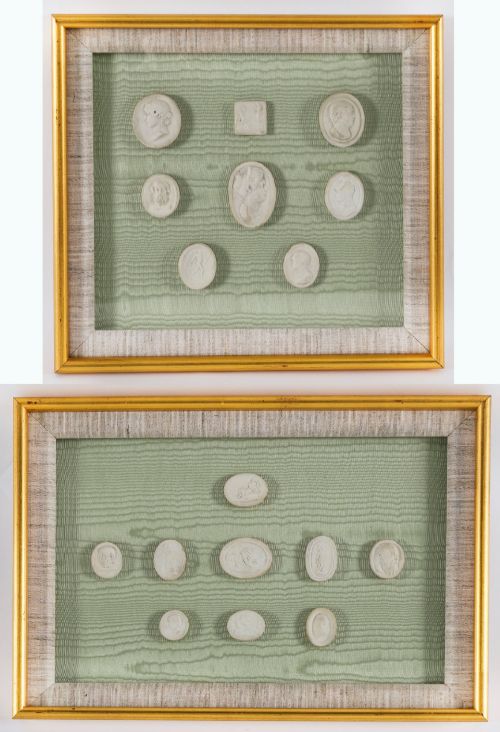
Classical cameos framed encompass both wearable ornaments and wall panels, capturing ancient mythological portraits and profiles. Collectors encounter shell, hardstone, and coral brooches alongside plaster and gypsum intaglio panels arranged in timber frames.
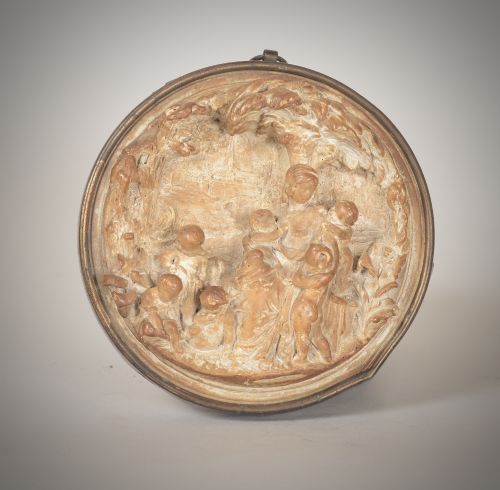
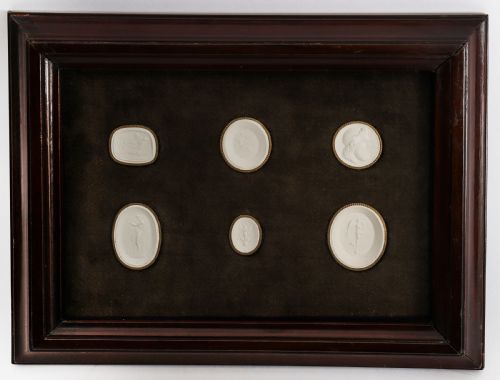
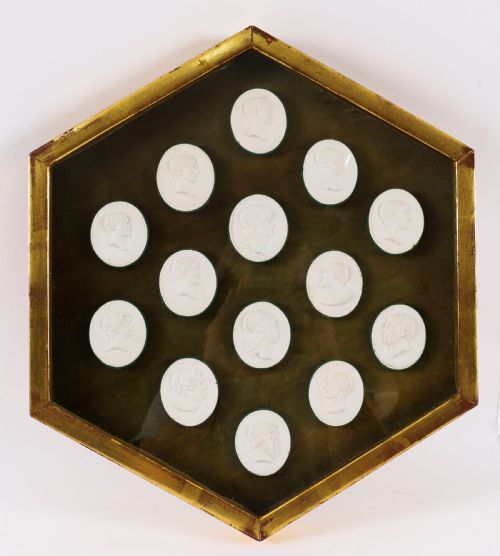
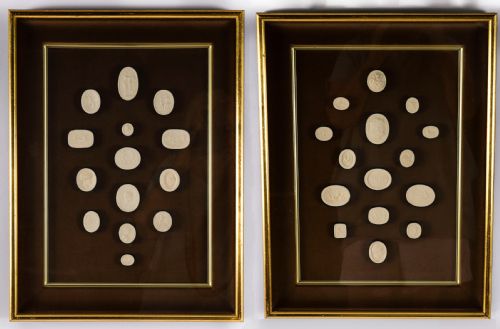
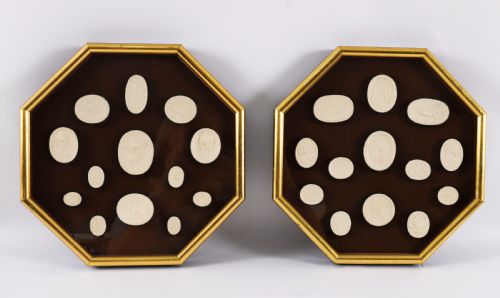
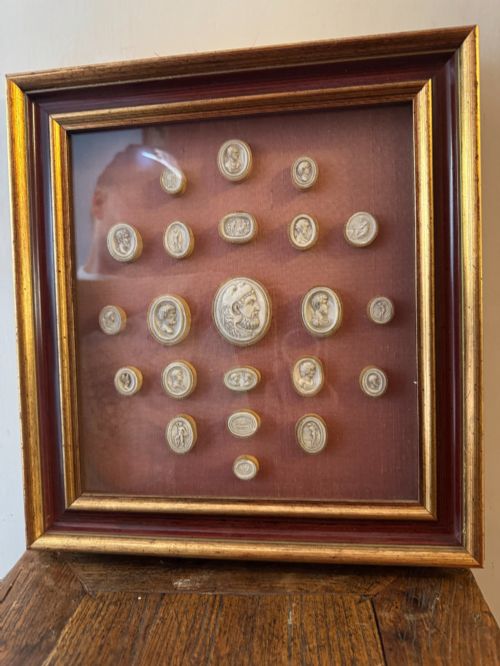
Grand Tour souvenirs dominate the selections, featuring plaster cast medallions, carved marble bas-relief portraits of Roman emperors, and collections of intaglios housed behind glass. These pieces reflect eighteenth and nineteenth-century travel traditions across Italy and Europe.
Wearable examples appear mounted in gold, pinchbeck, and ornate frames, depicting classical figures such as the goddess Aurora or cherubs. Wall art variations range from individual plaques to extensive framed sets by historical makers.
How they were made
Craftsmen carved shell, hardstone, and ivory by hand, cutting through distinct strata of material to isolate the pale relief figure against a darker background. Plaster casts and gypsum intaglios utilised moulds taken from ancient gems and marble sculptures, capturing minute details with sharp definition.
Framing materials combined carved wood, giltwood, and fabric backings such as velvet to display collections of medallions and plaques. Metalwork mounts for brooches utilised 9ct, 15ct, and 18ct gold, alongside pinchbeck for durable settings.
Roman goddesses cruise across gold-framed seas while tiny plaster emperors watch quietly from their velvet boxes.
What varies in quality
Execution of the carving defines the upper tier, where facial expressions, drapery folds, and proportions remain crisp and lifelike rather than soft or shallow. Sharp undercut details in shell and stone indicate superior handwork by skilled artisans.
Arrangement and provenance elevate framed sets, particularly when individual casts originate from documented workshops and retain original mounting and labelling. Matched pairs and harmonious compositions within giltwood or box frames show greater consideration in design.
Giovanni Liberotti·Pietro Bracci·Wedgwood·Minton·R.Pernice
The Classical Cameos Framed Glossary
- Cameo
- A method of carving where the relief subject is raised above the background. This technique exploits natural colour bands in shell, stone, or layered glass.
- Intaglio
- A design incised into the material rather than raised above it. These served as seals and were often cast in plaster for framed Grand Tour collections.
- Grand Tour
- A cultural journey of Europe undertaken by wealthy young men in the eighteenth and nineteenth centuries. Travellers collected plaster casts, cameos, and carved marble plaques as souvenirs.
- Pinchbeck
- An alloy of copper and zinc developed to imitate gold. It provides durable and warm-toned metal settings for antique brooches.
- Bas-relief
- A sculptural technique where the figures project only slightly from the background plane. It appears frequently in framed marble and plaster portrait panels.
Classical Cameos Framed: Frequently Asked Questions
What is a Grand Tour intaglio collection?
Grand Tour intaglio collections comprise sets of small plaster, gypsum, or glass casts reproducing classical gems and sculptures. Travellers mounted these in fitted wooden frames to document their European journeys.
Such collections range from single pairs to extensive framed sets containing dozens of numbered profile portraits of Roman emperors and mythological figures.
How do you date a shell cameo brooch?
Dating relies on the style of the carving, the subject matter, and the construction of the metal frame. Victorian examples often feature ornate gold mountings, while Georgian pieces display distinct neoclassical profiles.
Subject matter also guides attribution, with specific mythological scenes aligning with popular decorative tastes of the early to late nineteenth century.
Where were framed plaster cameos displayed?
Framed plaster cameos and intaglios hung in libraries, studies, and drawing rooms of nineteenth-century homes. They served as educational displays and conversation pieces reflecting classical learning.
Box frames and velvet-backed panels protected the delicate plaster medallions while allowing visitors to examine the miniature relief portraits closely.
What materials are used in antique cameos?
Antique cameos utilise natural shell, layered hardstone, ivory, and coral for carved pieces. Plaster, gypsum, and glass paste form the materials used for intaglios and cast relief panels.
Frames incorporate giltwood, timber, and velvet, while wearable pieces employ 9ct, 15ct, and 18ct gold or pinchbeck for the surrounding mounts.