


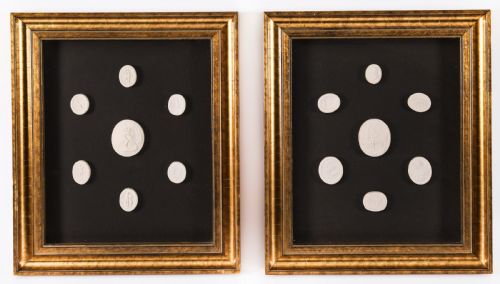


Framed Cameo Collections
Framed cameo collections are scholarly wall displays of classical casts and intaglios that bring the Grand Tour directly into a room.
Framed Cameo Collections
When you search for framed cameo collections, you are looking at assemblages of classical intaglios, plaster casts, and wax portraits gathered as wall art. These pieces typically originate from the nineteenth century, including the Regency and Victorian periods, reflecting the neoclassical taste of travellers returning from Italy.
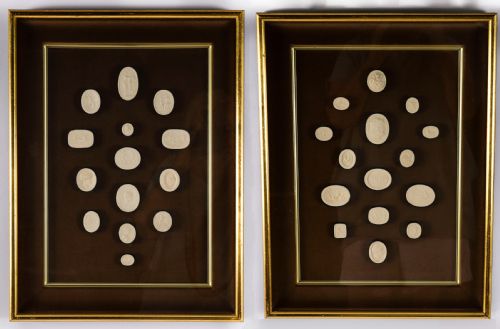
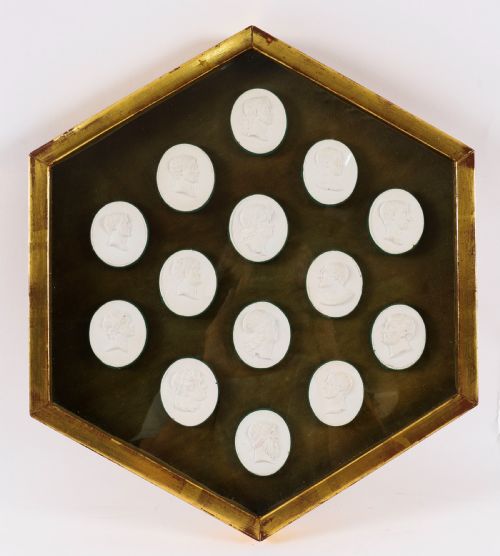
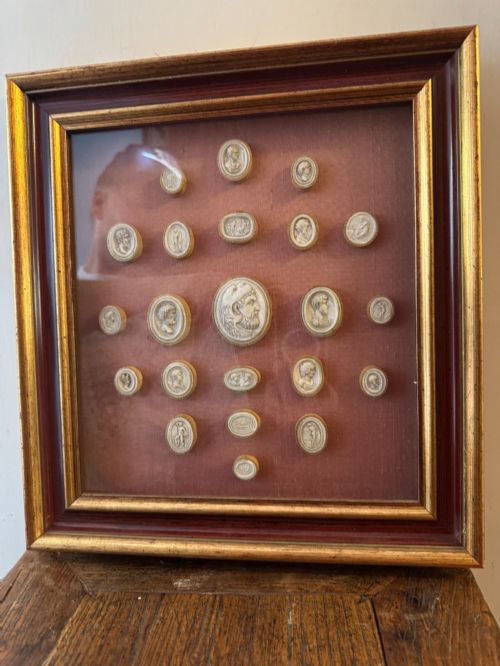
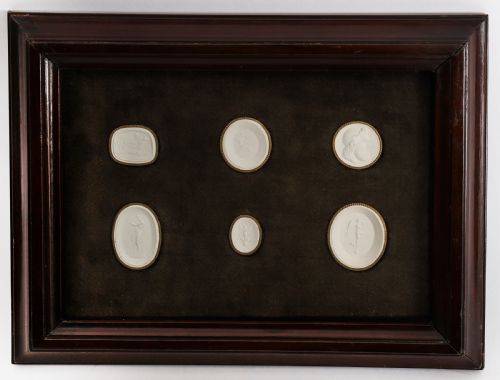
The objects themselves take the form of wall decor and framed artwork, often presenting sets of classical subjects neatly arranged within gilt wood, giltwood, or box frames over velvet, fabric, or paper backgrounds. You will frequently encounter groupings ranging from small pairs to extensive series containing dozens of individual casts.
Grand Tour souvenirs form the core of what appears on this page, alongside specific nineteenth century wax portraits of dignitaries. These compositions serve primarily as decorative objects that record classical antiquity through miniature sculpture.
How they were made
Maker workshops utilised plaster, gypsum, wax, and glass to cast classical intaglios and medallion profiles by hand. These relief elements were then mounted onto backing materials such as velvet, fabric, or paper to create a clear contrast against the background.
Framing involved gilt wood, giltwood, and simple box frames designed to protect the delicate casts while hanging on a wall. The meticulous arrangement of multiple pieces within a single frame required careful hand placement by artisans.
Framed Cameo Collections Retail Price Guide 2026
Typical asking prices for framed cameo collections among the pieces listed under this phrase on Sellingantiques today, from the lower quarter to the upper quarter. They describe what is for sale here now, not the wider market.
Listings show items spanning the nineteenth century, including Regency, Edwardian, and Victorian periods, utilising plaster, glass, gilt wood, fabric, wood, velvet, paper, and giltwood.
What varies in quality
The crispness of the plaster or wax casting dictates the visual strength of each intaglio, separating sharp classical detail from softer impressions. Finer sets maintain uniform clarity across every medallion in the arrangement.
The quality of the mounting and framing materials elevates the overall composition, particularly when original giltwood frames and rich fabric backings remain intact. Harmony between the layout and the housing defines the better examples.
Giovanni Liberotti·Pietro Bracci·Wedgwood
The Framed Cameo Collections Glossary
- Intaglio
- An engraved gem or cast where the design is sunken below the surface rather than raised in relief. These were used in antiquity to seal documents and later collected as miniature works of art.
- Plaster cast
- A reproduction made by pouring liquid plaster into a mould taken from an original carved gem or sculpture. This technique allowed travellers to bring home affordable copies of famous classical antiquities.
- Grand Tour
- The nineteenth century travel itinerary through France and Italy undertaken by young aristocrats to study classical art and culture. Souvenirs acquired along the way formed the basis of these framed collections.
- Giltwood
- Wood that has been coated with gold leaf or a gold-coloured finish. It provides a bright, reflective border suited to classical wall art.
- Neo-classical
- The artistic style drawing inspiration from the art and culture of classical antiquity. It dominated the design of these framed casts and intaglios throughout the nineteenth century.
Framed Cameo Collections: Frequently Asked Questions
What are framed cameo collections?
These pieces are historical groupings of classical intaglios, plaster casts, or wax profiles mounted behind glass for wall display. They originate mainly from the nineteenth century as souvenirs of European travel.
Collectors valued them for their miniature detail and their evocation of ancient sculpture. They function today as decorative wall art with a distinct academic character.
How were these collections used?
Travellers during the nineteenth century purchased these framed casts in Italy to demonstrate their education and appreciation of classical history. They were hung in studies, libraries, and drawing rooms as conversation pieces.
The arrangements allowed owners to display dozens of miniature sculptures simultaneously without requiring cabinet space. They served both as scholarly reference tools and as fashionable interior decoration.
How do I live with framed cameo collections?
Keep these framed pieces away from direct sunlight and damp environments to protect the delicate plaster, paper, and fabric backgrounds. Hanging them at eye level in a study or hallway allows the fine details of the intaglios to be appreciated up close.
Pair them with traditional interiors, wood panelling, or neutral walls where their neoclassical forms can stand out. Their quiet monochrome palettes integrate easily into various room schemes.
How do I tell periods apart?
Nineteenth century pieces often feature deep giltwood frames and rich velvet or paper backings characteristic of Grand Tour manufacturing. Regency examples frequently incorporate detailed wax portraits with specific biographical or historical subjects.
Later Victorian variations sometimes include industrial ceramics like jasperware alongside traditional plaster casts. Examining the mounting style and the framing materials helps establish the approximate decade of assembly.