



Grand Tour Plaster Medallion
A grand tour plaster medallion captures the classical sculpture and antiquity collected by travellers on the eighteenth and nineteenth-century continental tour.
Grand Tour Plaster Medallion
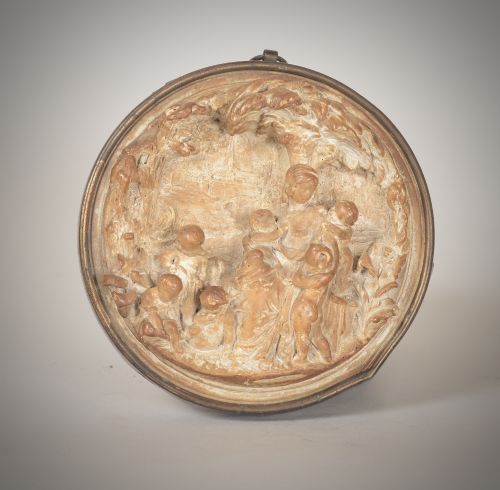
A grand tour plaster medallion represents the sculptural monuments, ancient gems and classical architecture witnessed abroad by nineteenth-century travellers. These miniature reliefs capture the profile portraits of emperors, mythological scenes and antique statues in crisp white plaster.
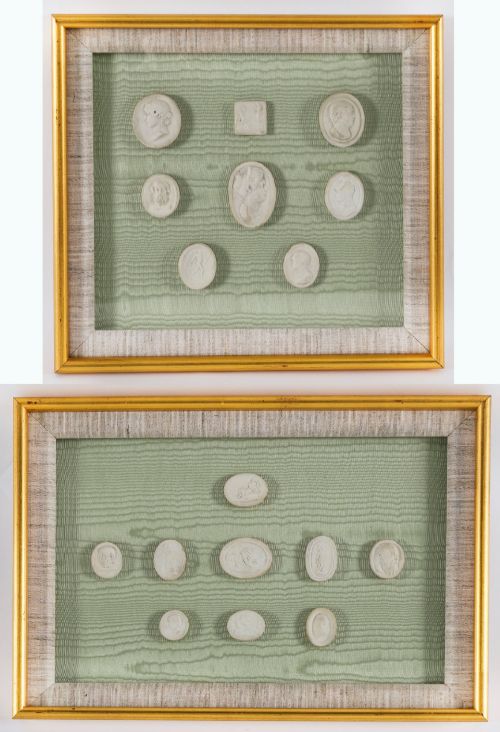
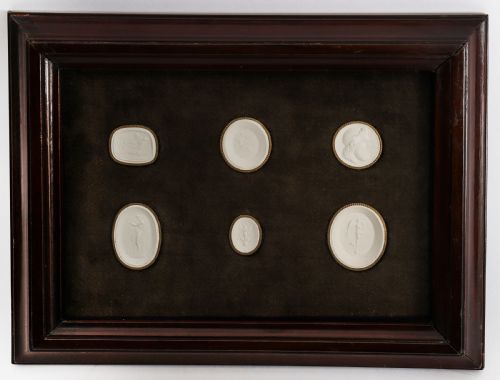
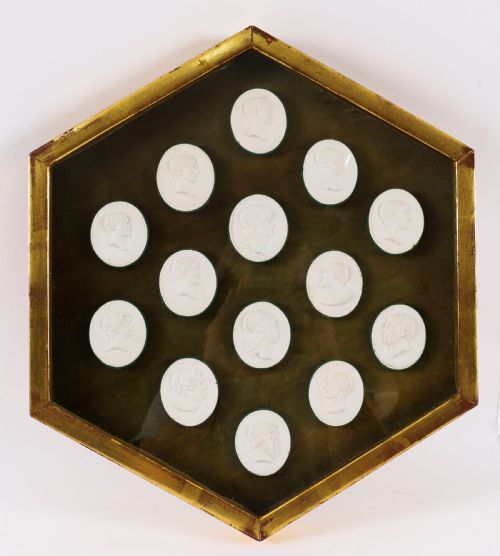
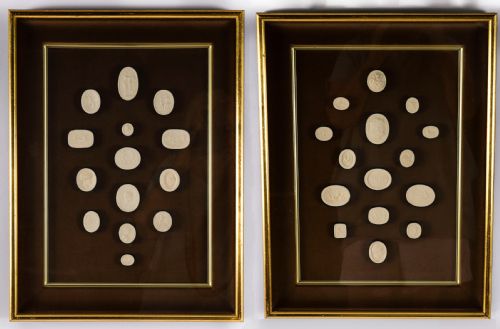
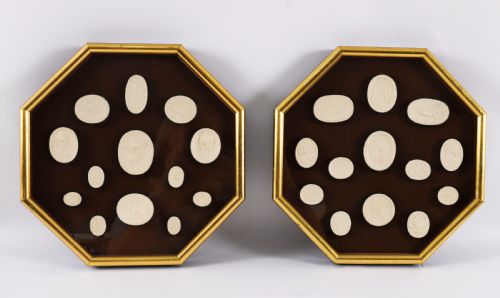
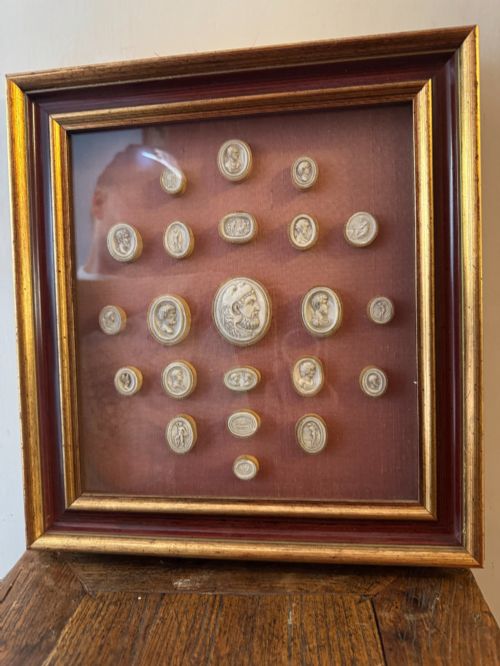
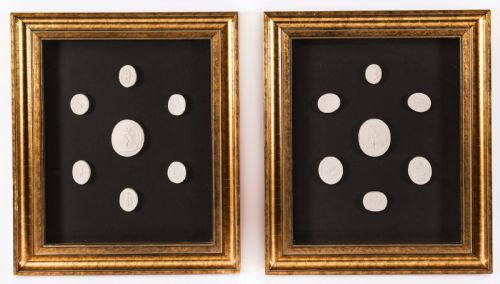
Collectors encounter these pieces mounted as single framed plaques, arranged in pairs or gathered into substantial wall displays holding dozens of individual casts. The most frequent formats on this page are framed wall art and boxed collections designed for domestic display.
Originating largely from Italian workshops, these works span the nineteenth century and the Edwardian period, often retaining their original giltwood frames, fabric backings and protective glass covers.
How they were made
The makers formed these medallions using plaster or gypsum poured into moulds taken directly from ancient cameos, intaglios and carved stone reliefs. This wet casting method preserved the minute details of the original classical carvings in sharp relief.
Finished plaster casts were then set against backgrounds of velvet, silk or fabric and secured within wood frames finished in gold leaf or giltwood. Many groupings relied on precise geometric arrangements inside shadow boxes or octagonal frames to showcase the collection.
Travellers bought these portable casts by the dozen so they could pretend to have excavated Rome themselves over dinner.
What varies in quality
Quality rests in the crispness of the plaster cast and the depth of the relief work, where sharper impressions reveal more of the original carved source material. Finer examples display clean edges and undamaged surfaces free from the softening that occurs in worn moulds.
The presentation housing also defines the piece, distinguishing simple modern surrounds from period giltwood frames, matched glass covers and carefully preserved backing fabrics. Sets demonstrate higher craftsmanship when the individual medallions are sorted by subject and arranged with symmetrical precision.
Giovanni Liberotti·Pietro Bracci
The Grand Tour Plaster Medallion Glossary
- Plaster medallion
- A circular or oval relief cast in gypsum plaster, designed to replicate classical carved stones and sculptural reliefs.
- Intaglio
- A gem or medallion carved with a sunken design so that the impression raised in plaster appears in positive relief.
- Giltwood
- Wood carved and coated with a thin layer of gold leaf or metallic gilt, commonly used for nineteenth-century picture frames.
- Cameo
- A method of carving where a figure is raised in relief against a contrasting background, frequently imitated in white plaster casts.
- Neoclassical
- The eighteenth and nineteenth-century artistic style drawing direct inspiration from the art and culture of classical antiquity.
Grand Tour Plaster Medallion: Frequently Asked Questions
What is a grand tour plaster medallion?
These pieces are small relief casts made from plaster or gypsum, produced in Italy during the nineteenth century to record classical antiquities seen by travellers.
They serve as portable representations of ancient sculpture and carved gems, usually mounted behind glass within decorative wooden frames.
How were these medallions originally displayed?
Travellers housed their plaster casts inside custom wooden frames, travelling cabinets or large wall panels lined with velvet and silk fabric.
Many surviving examples retain these period giltwood frames and fabric backgrounds, designed to protect the fragile plaster while decorating home interiors.
How do I date a plaster medallion?
Dating relies on the construction of the frame, the type of backing fabric and the style of the mounting paper or handwritten labels on the reverse.
Pieces originating from the nineteenth century often feature hand-carved giltwood surrounds and nineteenth-century backing materials distinct from later Edwardian assemblages.
Are these pieces fragile?
The plaster casts are delicate and susceptible to chipping or surface dust if removed from their protective housings.
Keeping the original glass and frame intact preserves the gypsum relief from physical damage and environmental moisture.