



Plaster Cameo Medallion Frames
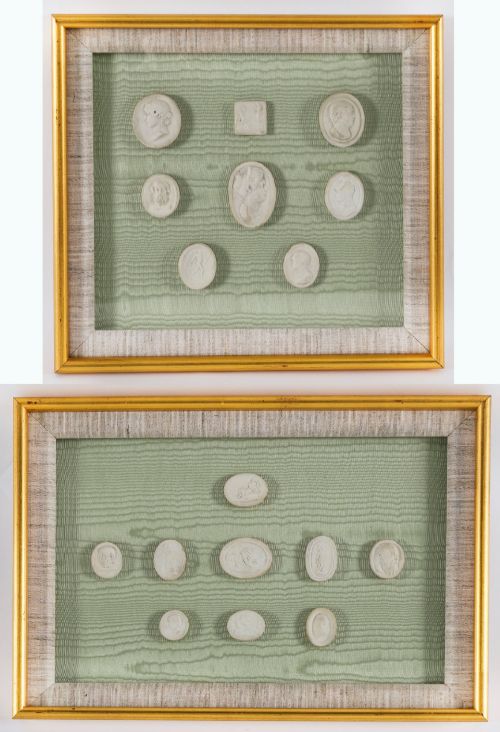
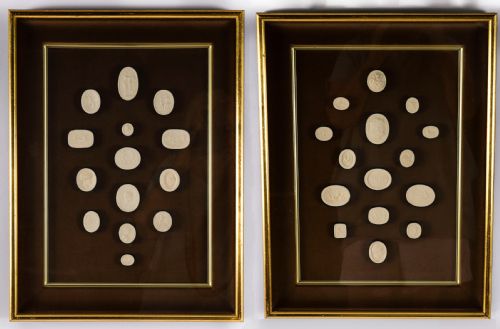
These plaster cameo medallion frames gather neoclassical plaster casts and intaglios behind glass, offering a tangible slice of the Grand Tour for the wall.
Plaster Cameo Medallion Frames
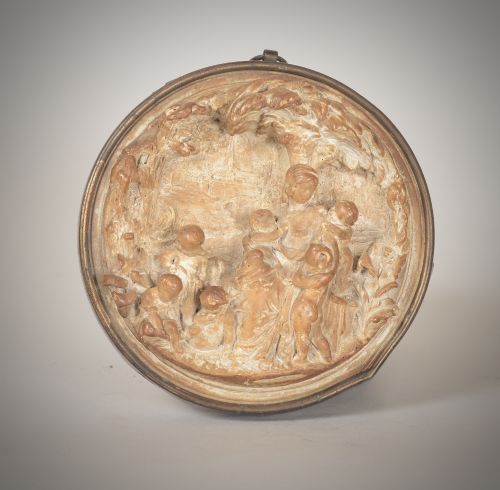
When searching for plaster cameo medallion frames, you look at wall art and framed displays housing miniature classical reliefs. These pieces originate predominantly from the nineteenth century, capturing the enduring European fascination with antiquity.
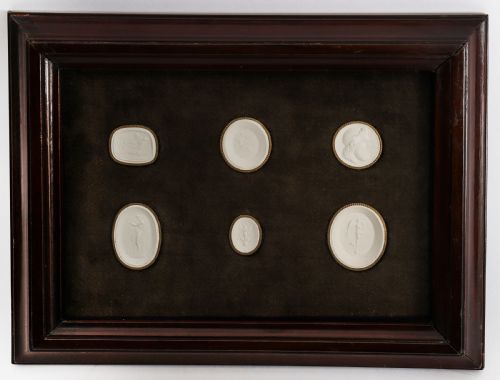
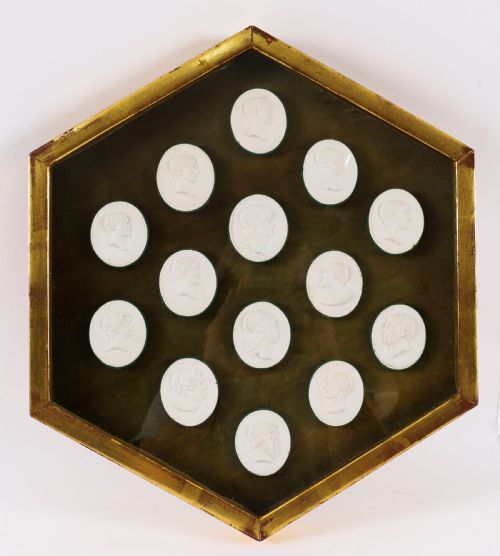
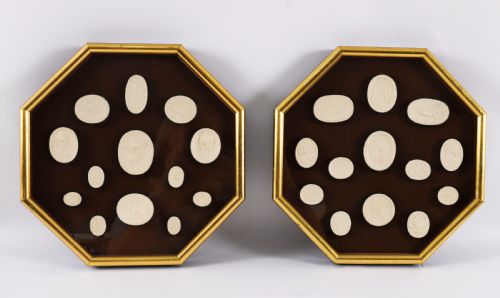
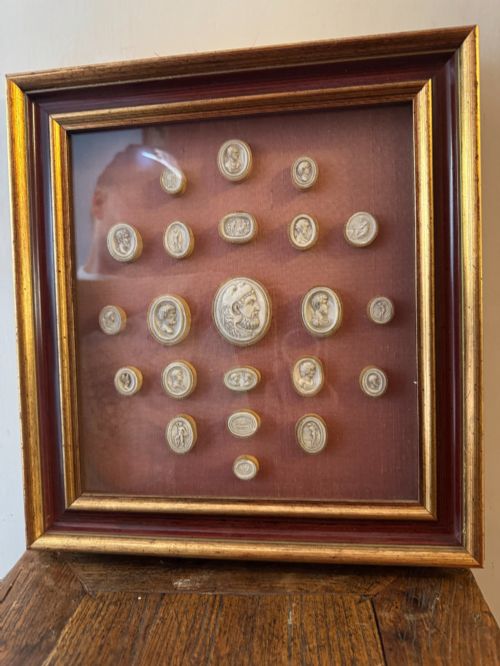
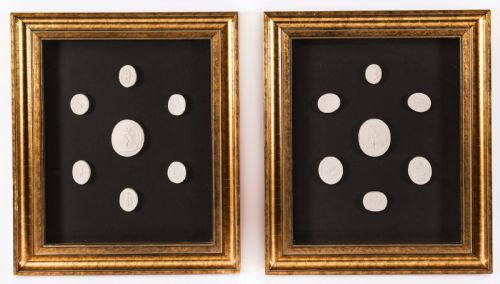
The most common examples on this page are Grand Tour collections, arranged singly or in multiples inside gilt wood, giltwood, or fabric-backed frames. They present classical figures, portraits, and mythological scenes cast in white plaster or gypsum.
Makers and collectors of the period mounted these intaglios to mimic ancient carved gems, creating decorative objects fit for a study or drawing room. You will find octagonal frames, box frames, and larger panel formats containing dozens of individual casts.
How they were made
The casts themselves utilise fine plaster or gypsum, poured into moulds taken from antique engraved gems and carved stones. This method allowed craftsmen to replicate the crisp detail of classical glyptic art in a clean white medium.
Frames are constructed from wood, finished with gold leaf or giltwood, and frequently lined with velvet or fabric to contrast against the white reliefs. Glass protects the delicate plaster surfaces from dust and handling while holding the composition securely in place.
Some sets pack up to thirty-five tiny classical heads into one frame, watching over your room like an antique committee.
What varies in quality
The crispness of the individual plaster casts dictates much of the visual appeal, as sharper moulds capture finer facial expressions and drapery folds. Faint or rounded casts indicate worn production tools or secondary moulding.
Framing standards differ significantly between standard commercial pieces and bespoke workshop assemblies. Original gilt wood mouldings, undamaged glass, and harmonious velvet or fabric backings elevate the overall presentation of the collection.
Giovanni Liberotti·Pietro Bracci·James Tassie
The Plaster Cameo Medallion Frames Glossary
- Intaglio
- A gem or impression carved or cast into the material so that the design dips below the surface. They were originally used as personal seals.
- Grand Tour
- The traditional journey of continental Europe undertaken by upper-class young European men of the eighteenth and nineteenth centuries to study the arts.
- Gypsum
- A soft sulphate mineral used to create fine plaster casts. It provides the smooth, matte white surface seen on these medallions.
- Giltwood
- Wood carved and then covered with thin sheets of gold leaf or gilt. It provides a bright, reflective border to the framed wall art.
Plaster Cameo Medallion Frames: Frequently Asked Questions
What are plaster cameo medallion frames?
These pieces consist of nineteenth-century wall art featuring miniature plaster or gypsum casts of classical intaglios mounted behind glass. They preserve the tradition of collecting classical antiquities during the Grand Tour era.
Craftsmen arranged individual white medallions upon velvet, fabric, or painted backings inside giltwood frames. They served as decorative scholarly objects for period interiors.
How were they displayed originally?
Travellers and collectors hung these framed panels in studies, libraries, and drawing rooms to signal their classical education and refined taste. Sets ranged from single portraits to extensive grids containing dozens of intaglios.
Cabinet makers and specialised workshops built custom gilt wood or octagonal frames to house the delicate plaster casts safely.
How do I care for framed intaglios?
Keep these framed pieces away from direct sunlight and damp environments to protect the antique wood, gilt leaf, and fabric backings. The glass front should remain sealed to prevent dust from settling on the fragile plaster.
Dust the exterior frame gently with a dry, soft cloth. Avoid using liquid cleaners near the joins where moisture might seep inside.
How do I distinguish periods?
Nineteenth-century examples often display the characteristic craftsmanship of the Grand Tour, utilising gypsum casts mounted on velvet or fabric. Late eighteenth-century pieces may show the influence of neoclassical sculptors like Pietro Bracci.
Examine the frame construction, backing materials, and the crispness of the plaster to determine age. Period glass and hand-carved giltwood frames offer strong chronological indicators.