




Classical Profile Medallions
Classical profile medallions bring the sculpted likenesses of emperors, poets, and historic figures straight from the Grand Tour into modern rooms.
Classical Profile Medallions
Classical profile medallions present the likenesses of historical figures, emperors, and poets in low relief. When you search for classical profile medallions, you encounter wall plaques, framed art, and decorative relief panels originating from the eighteenth and nineteenth centuries.
These pieces draw directly on neoclassical and Grand Tour aesthetics, often capturing subjects inspired by ancient Rome and Greece. The selection leans heavily towards nineteenth century classical and Italian workmanship.
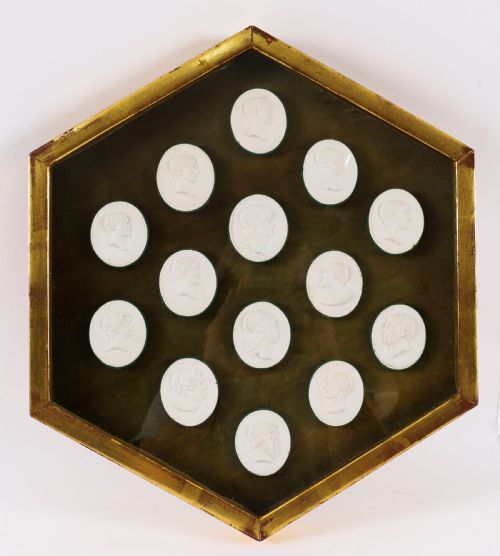
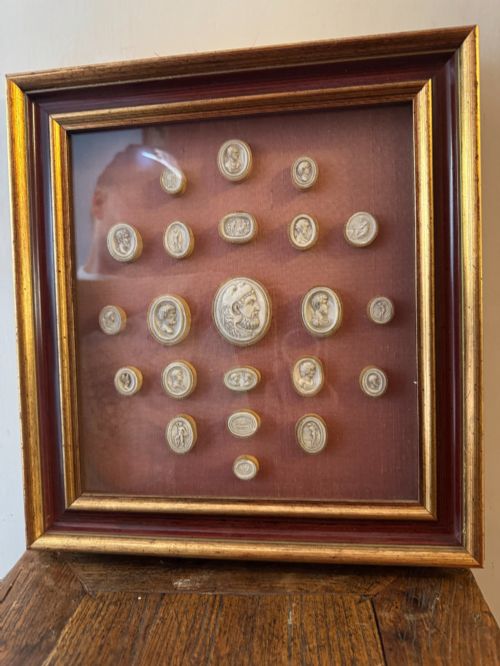
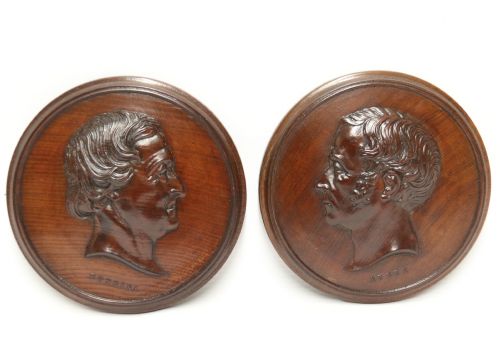
You meet them mounted in turned mahogany frames, set on marble, or presented as plaster and gypsum intaglio panels. Pairs and sets dominate the offerings, depicting subjects from Roman Emperors to figures like Byron, Rossini, and Auber.
How they were made
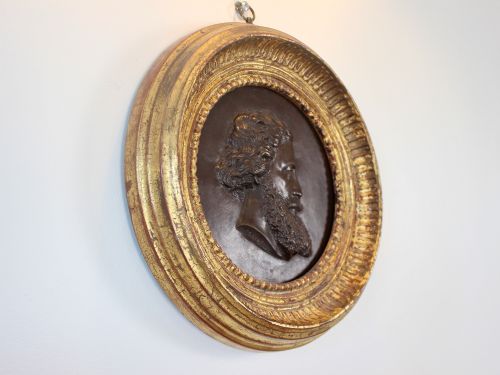
Makers shaped these reliefs using materials such as carved marble, gypsum, plaster, and cast lead bronzed roundels. Carved mahogany frames and giltwood elements frequently enclose the profiles, while select pieces incorporate glass and fabric backing.
Italian and French workshops employed traditional carving and casting techniques to render sharp facial details and crisp profile outlines. Gypsum and plaster intaglios capture minute impressions, whilst marble and mahogany plaques rely on skilled hand carving.
What varies in quality
The choice of housing elevates the piece, with original turned mahogany frames, marble backings, and signed plaques marking the higher end of the range. Finer works reflect meticulous attention to the subject's expression and the clean execution of the relief ground.
Pietro Bracci·Thorvalsen Workshop·Mainfroy
The Classical Profile Medallions Glossary
- Intaglio
- A design carved into the material so that the impression sits below the surface. These are often found in gypsum or plaster panels created as souvenirs.
- Cameo
- A method of carving where the subject is raised in relief against a contrasting background. This technique highlights the profile of the figure.
- Grand Tour
- A traditional trip through Europe undertaken by upper-class young men in the eighteenth and nineteenth centuries. Souvenirs included classical profile medallions and intaglio sets.
- Roundel
- A circular panel or plaque used for decorative wall art. They appear framed in turned mahogany or cast in bronze.
- Bas-relief
- A sculptural technique where the figures project only slightly from the background plane. It defines the profile portraits seen on these wall plaques.
Classical Profile Medallions: Frequently Asked Questions
How were intaglio panels displayed?
Intaglio panels were traditionally housed in custom frames or bound in collections to protect the delicate plaster or gypsum impressions. They allowed collectors to study classical sculpture and portraiture at home.
Many survive in matched pairs or structured sets, often mounted on fabric backgrounds or within turned wooden frames designed for wall hanging.
How do I date a marble plaque?
Dating relies on stylistic cues from the neoclassical period, the character of the carved profile, and the nature of the surrounding frame. Eighteenth and nineteenth century Italian works show distinct handling of marble bas-relief.
Signatures, workshop attributions, and the choice of historical subject matter also help narrow the period of creation.
Where should I hang wall plaques?
These plaques suit spaces where their detailed profiles can be viewed closely, such as hallways, studies, or living rooms. Paired arrangements work well flanking a mirror or fireplace.
Ensure they are hung securely away from direct sunlight and moisture to protect materials like plaster, gypsum, and polished mahogany.