



Framed Neoclassical Plaster Cameos
Framed neoclassical plaster cameos bring classical mythology and portraiture into the domestic interior through crisp relief casts.
Framed Neoclassical Plaster Cameos
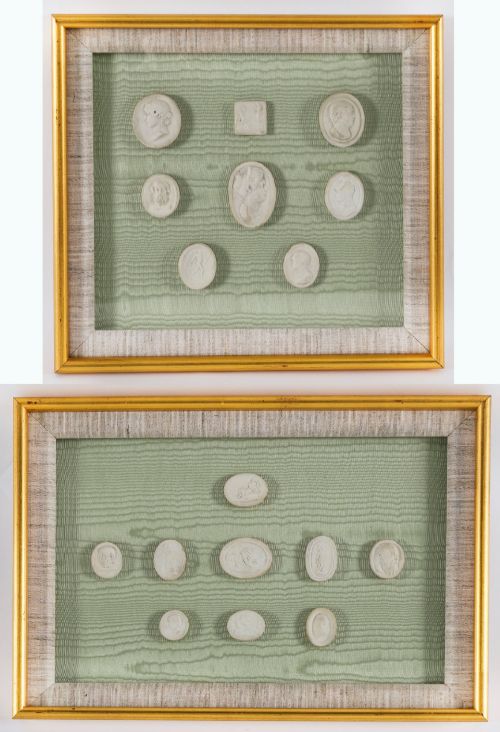
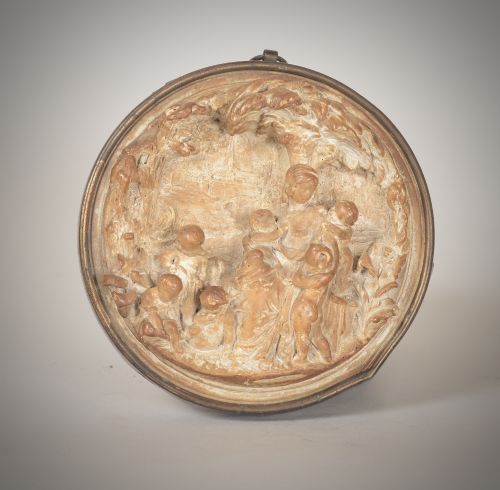
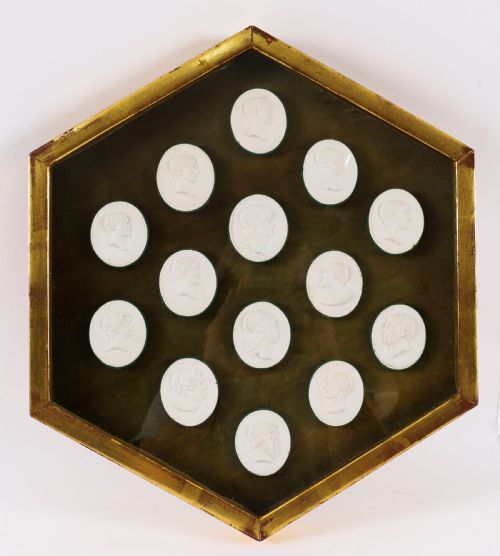
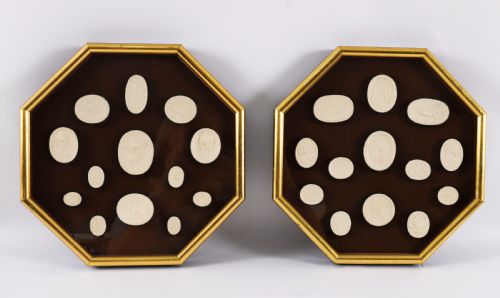
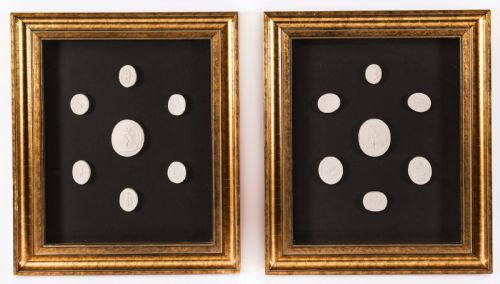
Framed neoclassical plaster cameos capture the spirit of classical antiquity, mostly originating from the nineteenth century as mementos of the Grand Tour. These pieces take the form of wall art, plaques, and framed collections arranged in sets, pairs, or single octagonal panels.
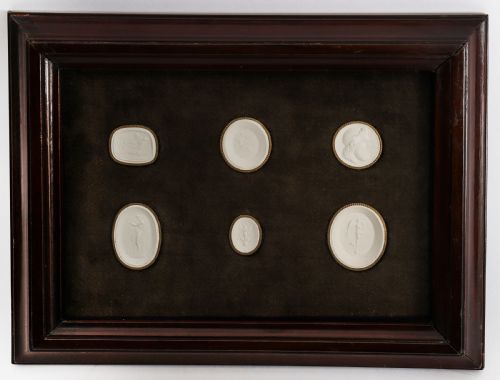
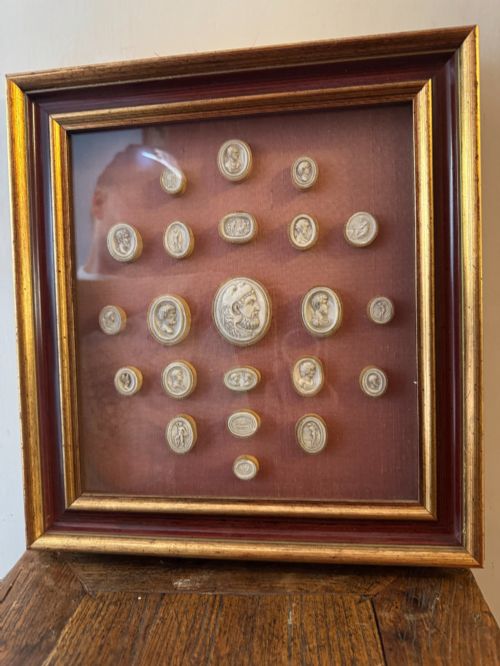
Most examples encountered here date to the nineteenth century, with occasional pieces stretching back to eighteen hundred or forward into the Edwardian period. They present classical intaglios and relief casts mounted against backgrounds of velvet, fabric, or plain backing within giltwood and wooden frames.
Collectors find these objects categorized under various terms such as wall plaques, framed intaglios, and decorative objects. The groupings range from single portraits to extensive collections housing dozens of individual casts within a single frame.
Materials and construction
The casts themselves utilise fine plaster or gypsum, yielding a bright white surface that emulates carved stone or layered shell. Pressed white glass paste also appears in specific portrait miniature types, offering a translucent alternative to matte plaster.
Maker studios mounted these delicate reliefs against backing materials like velvet and fabric to create contrast and protect the fragile casts. Surrounding these displays are frames fashioned from wood, finished with gold leaf or giltwood, alongside glass panes for preservation.
Listings feature materials including plaster, glass, velvet, gilt wood, fabric, giltwood, wood, and gold leaf.
Distinctions in craftsmanship
The clarity of the relief work dictates the visual impact of each piece, where crisp edges distinguish superior casts from softer impressions. Finer items exhibit meticulous rendering of classical motifs, down to the subtle musculature and drapery folds of mythological figures.
Presentation elevates certain examples, particularly where multiple casts are symmetrically arranged and housed in bespoke giltwood frames or box settings. The choice of backing material, such as rich velvet, alongside the preservation state of the original gilding, contributes to the overall distinction of the piece.
Giovanni Liberotti·Pietro Bracci·James Tassie
The Framed Neoclassical Plaster Cameos Glossary
- Intaglio
- A design carved into a material so that the impression sinks below the surface, commonly used to create raised casts when pressed into plaster. These negative impressions mirror the technique used in ancient engraved gems.
- Grand Tour
- A traditional trip through Europe undertaken by upper-class young men in the eighteenth and nineteenth centuries to study classical art and architecture. Travellers collected plaster casts and intaglios as portable souvenirs of their journey.
- Gypsum
- A soft sulphate mineral used to create the fine plaster casts found in these framed collections. Its smooth consistency allows for the reproduction of minute details from antique engraved stones.
- Portrait Miniature
- A small, highly detailed painting or relief portrait designed for intimate viewing. Examples in this medium often depict historical or mythological figures in white paste or plaster.
- Giltwood
- Wood carved and treated with gold leaf or gold paint to produce a brilliant metallic finish. This material forms the decorative frames that house classical plaster reliefs.
Framed Neoclassical Plaster Cameos: Frequently Asked Questions
What are framed neoclassical plaster cameos?
These decorative objects consist of white plaster or gypsum casts modeled after classical intaglios and reliefs. They are mounted behind glass within wooden or giltwood frames for wall display.
Originating largely from the nineteenth century, they reflect the enthusiasm for classical antiquity associated with the Grand Tour. Collectors encounter them as single panels, pairs, or extensive sets arranged on velvet and fabric backgrounds.
How were these plaster cameos used?
Travellers purchased these collections during European tours to demonstrate classical learning and refined taste in their homes. They functioned as wall art and decorative plaques, designed to be hung in studies, libraries, and drawing rooms.
Beyond mere decoration, the sets served as portable museums of classical sculpture and mythology. Scholars and enthusiasts studied the miniature reliefs to identify historical figures and mythological scenes.
How do I live with these pieces?
Display these framed works away from direct sunlight to protect delicate fabrics, velvets, and plaster surfaces from fading. Hanging them at eye level in rooms with stable humidity ensures the longevity of both the wooden frames and the interior mounts.
Because plaster and glass are fragile, wall placement should be secure and clear from high-traffic zones where vibrations might occur. Pairing them with traditional or eclectic interiors enhances their classical aesthetic without overwhelming modern spaces.
How do I tell periods apart?
Nineteenth-century examples often feature extensive sets of grand tour intaglios arranged systematically within giltwood frames. Pieces from around eighteen hundred may carry specific attribution to known modblers like Pietro Bracci or utilise pressed white glass paste in the manner of James Tassie.
Edwardian interpretations tend toward carefully arranged decorative medallion sets housed in modern display formats. Examining the framing style, backing fabric, and mounting technique helps establish the chronological context of each piece.