



Antique Cameo Casts
Antique cameo casts are framed plaster and glass classical intaglios that bring Grand Tour scholarship straight onto the study wall.
Antique Cameo Casts
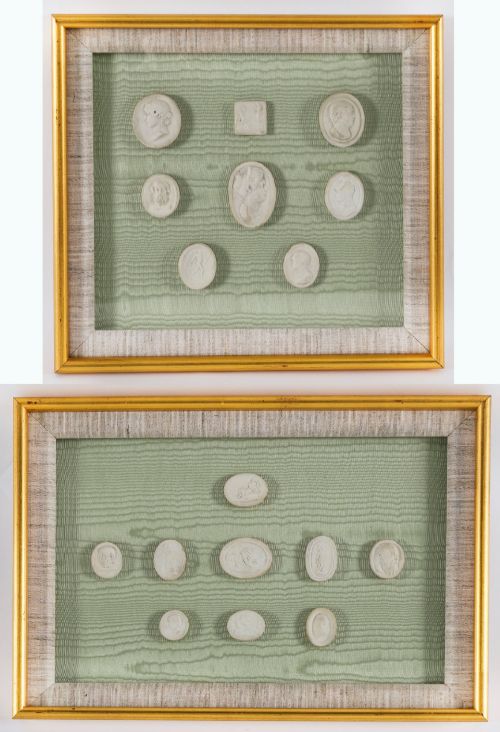
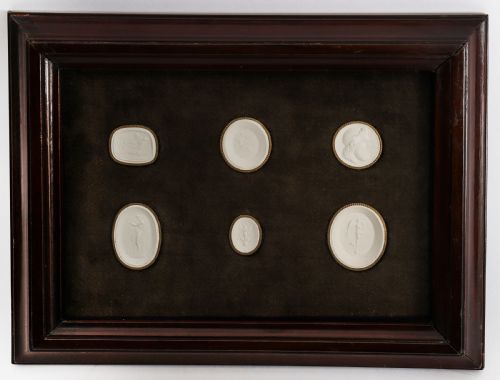
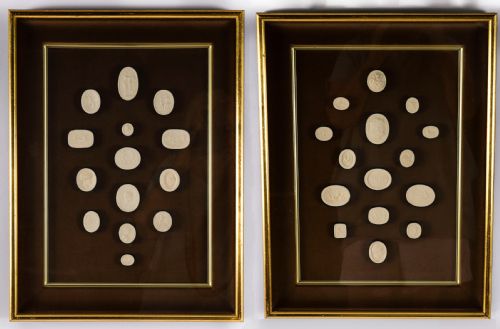
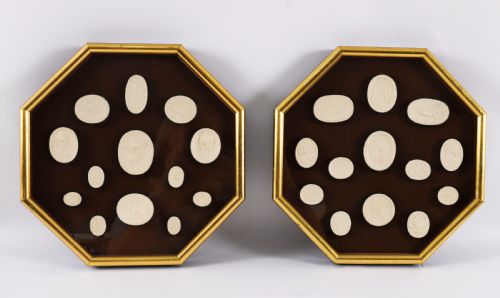
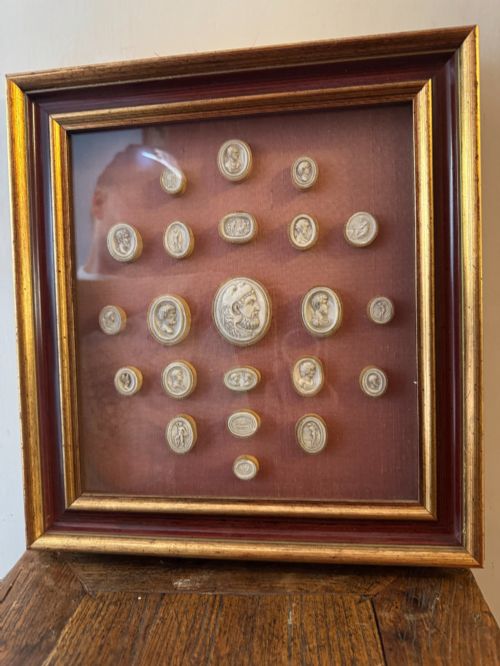
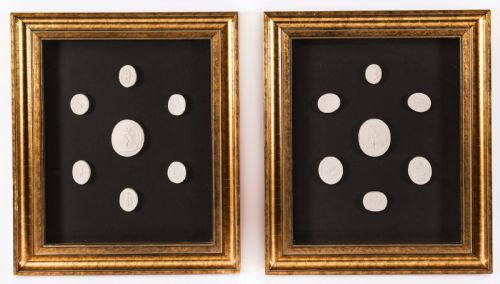
When you search for antique cameo casts, you enter the world of nineteenth-century Grand Tour souvenirs designed to display classical sculpture in miniature. These framed wall art pieces and decorative objects comprise collections of plaster reliefs arranged behind glass, often set within giltwood or wood frames lined with fabric or velvet.
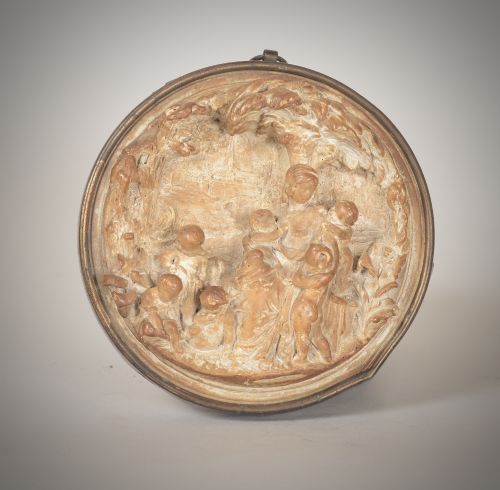
You are most likely to encounter nineteenth-century sets and pairs on this page, ranging from single octagonal panels to extensive collections of classical intaglios. Makers such as Giovanni Liberotti and Pietro Bracci shaped these gypsum and plaster casts to emulate ancient carved gems for travellers returning from Italy.
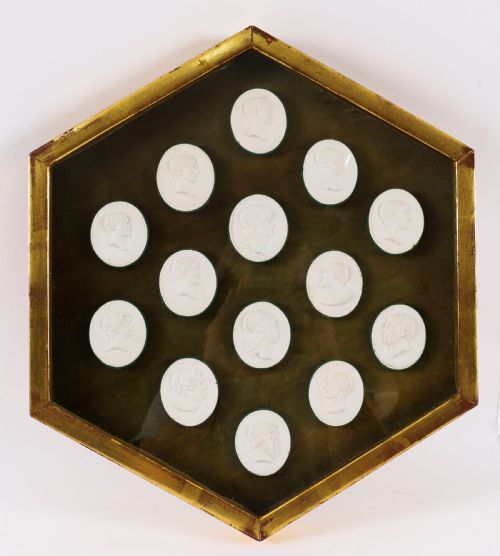
The aesthetic is distinctly neoclassical, capturing the profiles of deities, emperors and mythological scenes collected by educated gentlemen on their travels. Whether housed in simple boxes or elaborate gilt frames, these panels preserve the scholarly pursuits of the 1800s and Edwardian eras.
Materials and construction
The casts themselves are formed from fine plaster or gypsum, poured into moulds taken directly from ancient carved gems and cameos. This material captures minute details of classical profiles and inscriptions with remarkable fidelity, drying to a crisp opaque white that contrasts sharply with its background.
Makers set these delicate plaster medallions against velvet, fabric or painted mounts to highlight their relief, enclosing the arrangements within wood, giltwood or gilt bronze frames. Glazing protects the soft plaster surface from dust and handling, whilst secure backing boards maintain the structural integrity of multi-piece collections.
Materials recorded across the inventory include plaster, gypsum, glass, velvet, gilt wood, fabric, giltwood, wood and gold leaf.
Distinctions in quality
The quality of antique cameo casts rests upon the crispness of the moulding and the scholarly accuracy of the classical subjects represented. Finer sets exhibit sharp relief without surface chipping, capturing the subtle musculature and facial expressions of the original carved gems.
Presentation elevates the piece, with superior examples featuring harmonious groupings, bespoke giltwood frames and rich fabric backdrops rather than hasty arrangements. The reputation of the maker, such as Liberotti or Bracci, further distinguishes standard souvenir sets from masterworks commissioned by serious collectors.
Giovanni Liberotti·Pietro Bracci
The Antique Cameo Casts Glossary
- Intaglio
- A gem or cast carved in incuse, where the design sinks below the surface, though the term is frequently applied to these relief casts. They reproduce the appearance of ancient signet rings.
- Grand Tour
- A traditional trip of Europe undertaken by upper-class European young men of sufficient means. It resulted in the accumulation of art and classical casts.
- Gypsum
- A soft sulfate mineral used to create fine plaster casts. It allows for high-detail reproduction of antique carved stones.
- Neoclassical
- A Western cultural movement drawing inspiration from the art and culture of classical antiquity. It dominates the aesthetic of these nineteenth-century casts.
- Giltwood
- Wood carved and covered with a thin layer of gold leaf or gold paint. It provides a traditional framing for classical plaster panels.
Antique Cameo Casts: Frequently Asked Questions
What are antique cameo casts?
These pieces are miniature plaster and gypsum reliefs reproducing ancient carved gems, assembled into framed wall art during the nineteenth century. Travellers brought them home as tangible records of classical sculpture seen abroad.
They function primarily as decorative wall plaques, offering a scholarly aesthetic rooted in neoclassical taste and Grand Tour traditions.
How were they displayed originally?
Travellers and collectors mounted these plaster intaglios in bespoke wooden frames, often lining the backing with velvet or fabric to showcase the crisp white reliefs. They hung them in studies, libraries and cabinets alongside other antiquities.
Today, they suit similar spaces, adding texture and historical depth to panelled rooms or neutral gallery walls.
Who made these plaster casts?
Specialised workshops and artisans in Italy produced these pieces for the tourist market, with prominent modellers like Giovanni Liberotti and Pietro Bracci signing or attributing their curated sets.
These makers utilised moulds taken directly from ancient collections, ensuring their miniature panels mirrored authentic classical sculpture.
How do I care for framed casts?
The primary requirement is protecting the delicate plaster from moisture and physical impact by keeping the glass intact. Dust the exterior frames gently without applying liquid cleaners near the joints.
Position the frames away from direct sunlight to prevent the fading of interior fabrics and velvet backdrops over time.