


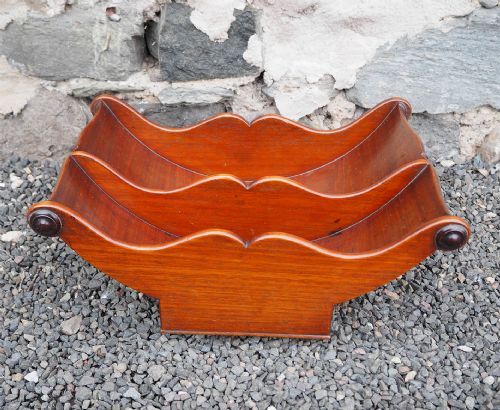


A 2026 Guide by Sellingantiques
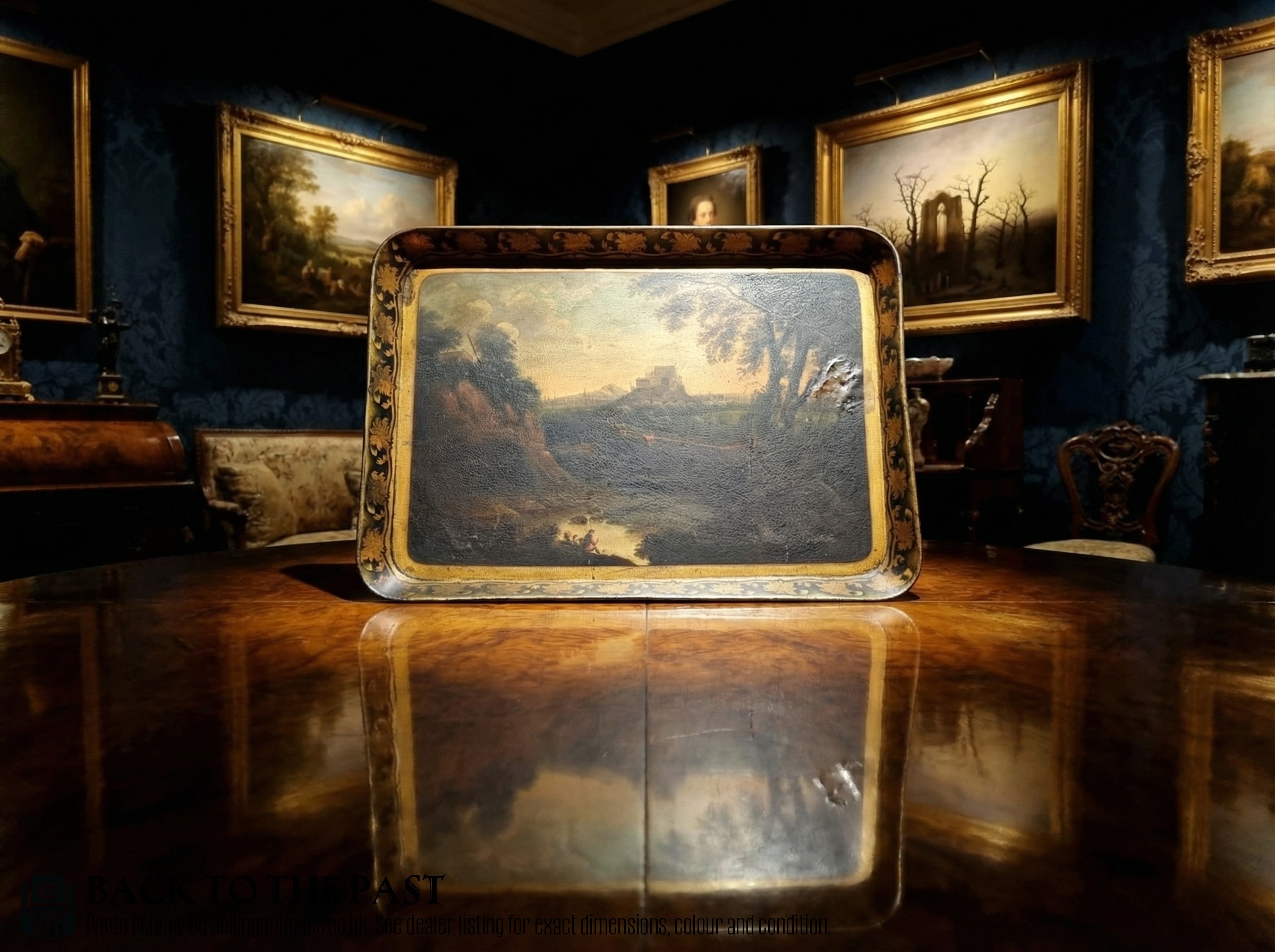
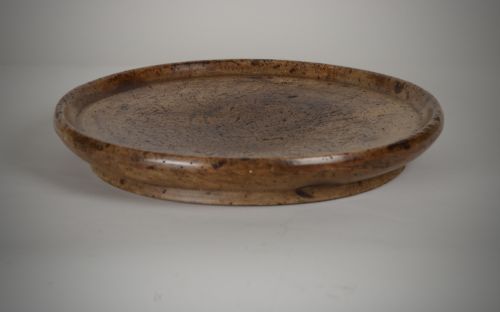
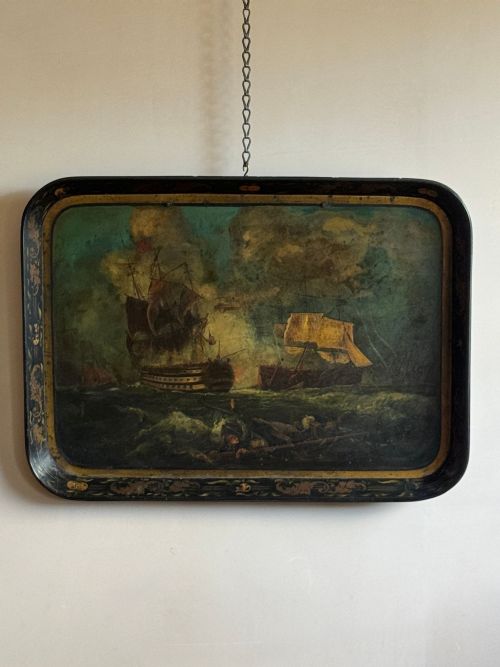
Massive Naive L18thc Papier Mache Tray of Fishing Interest, 18th Century
Priced at £425 from Mike Melody Antiques
Serving rituals changed during the Georgian period. Tea became central to domestic life and households needed large portable surfaces.
Look at the shift in dining habits. Separate dining rooms meant servants had to carry heavy loads from distant kitchens safely.
Salvers evolved alongside larger antique trays to meet different household needs. These smaller footed examples held individual drinking glasses rather than cumbersome silver tea sets.
Demand peaked in the nineteenth century. Production methods scaled up quickly to meet the everyday needs of the expanding middle classes.
Matthew Boulton produced silver and fused plate trays in Birmingham during the late eighteenth century.
Jennens and Bettridge dominated the papier-mâché trade. They worked in the mid-nineteenth century and held patents for pearl shell inlay.
Look for marks from Elkington & Co. They pioneered commercial electroplating techniques for silver trays from the 1840s onwards.
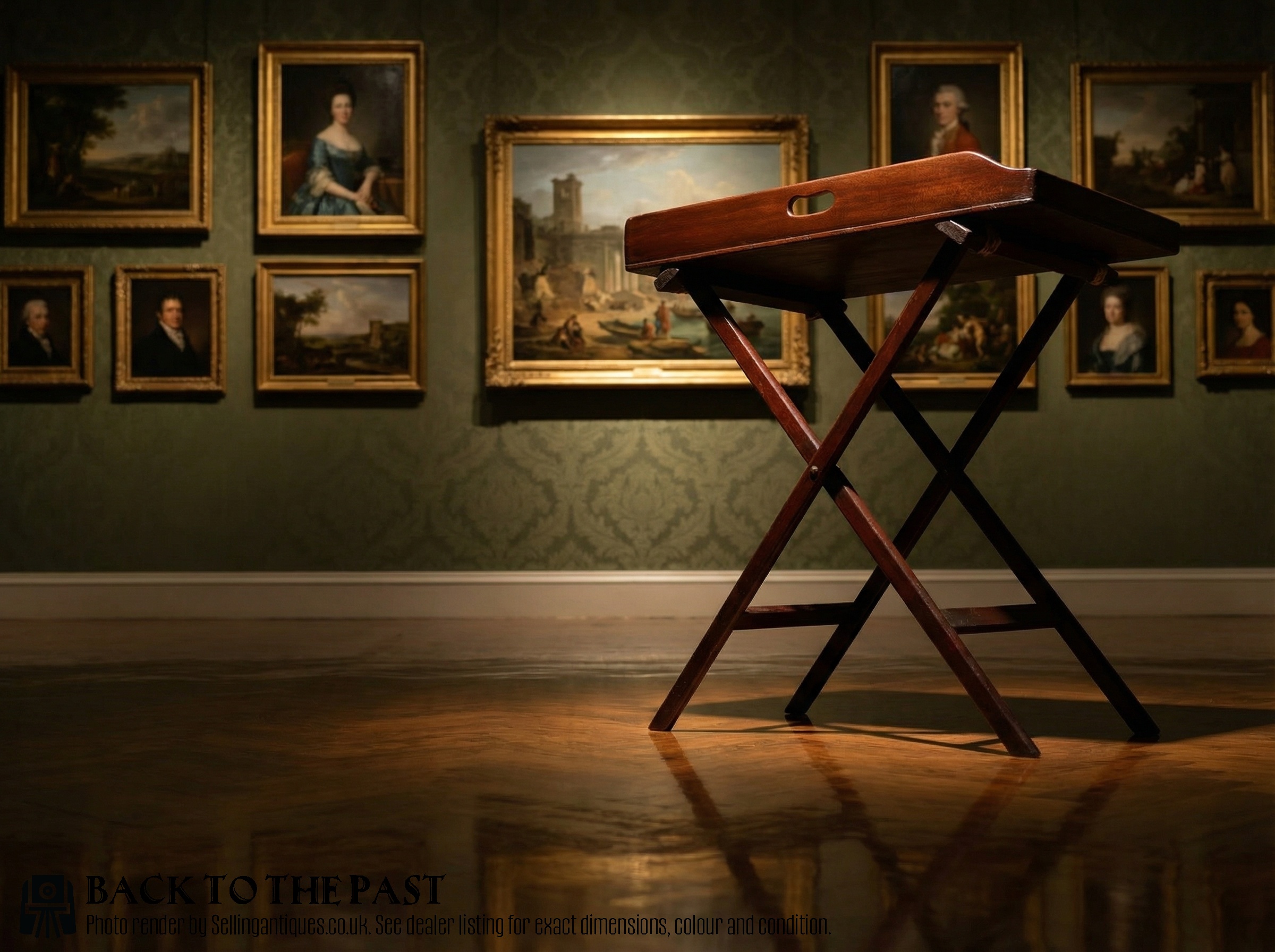
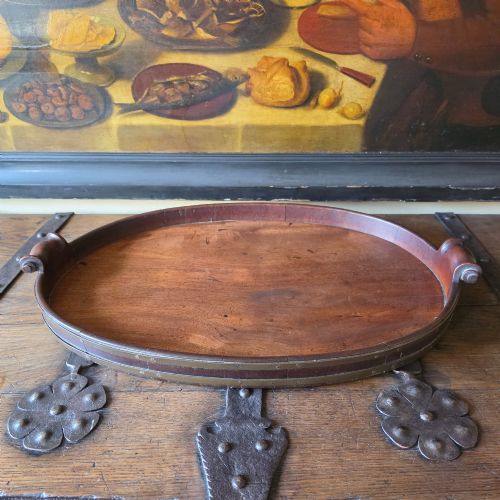
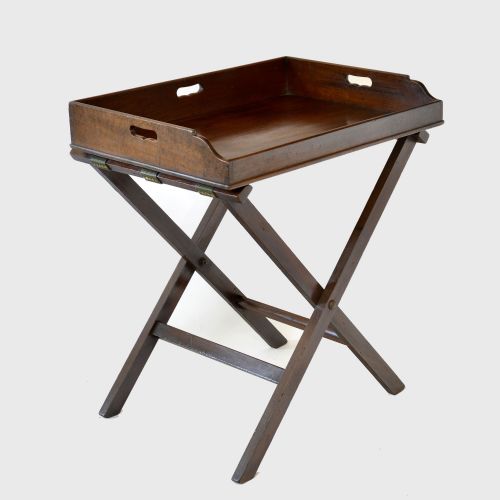
19thc Butlers Tray & Stand, 19th Century
Priced at £525 from Andros Antiques
The 2026 retail price guide for Antique Trays is drawn from a proprietary archive of over 1.1 million retail prices indexed by Sellingantiques since 2003. This guide relies exclusively on their own internal data; no external sources or auction records are used.
Analysing nearly 25 years of UK antique market history alongside current retail values, the data indicates that typical UK retail prices for Antique Trays range between £300 and £1,600. Entry-level prices generally fall under £300 and premium examples upwards of £1,600.
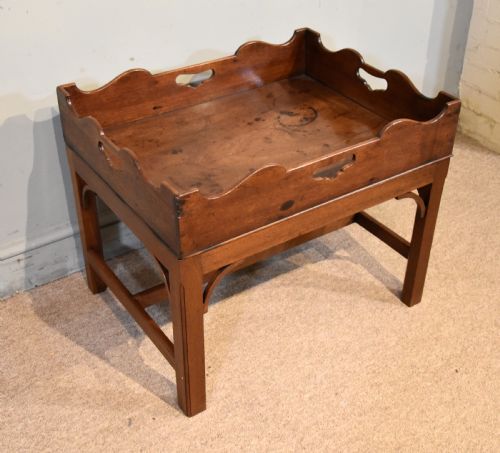
Raised galleries keep objects contained. Some have solid wooden walls, while others feature pierced fretwork.
Notice the handles on larger antique trays. Cut-out grips or cast metal loops let a person carry the weight safely without dropping the load.
Flat central fields are crucial. Warped bases make the piece useless for holding tall glasses.
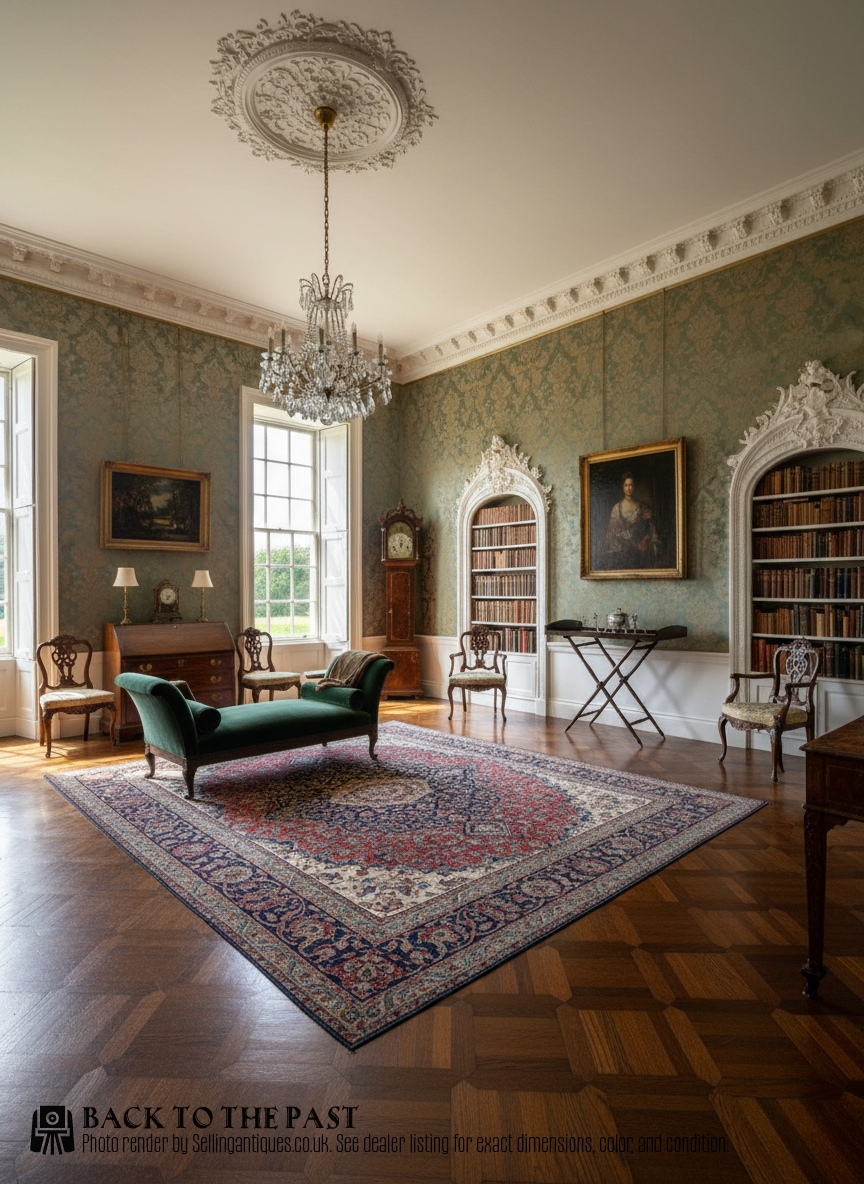
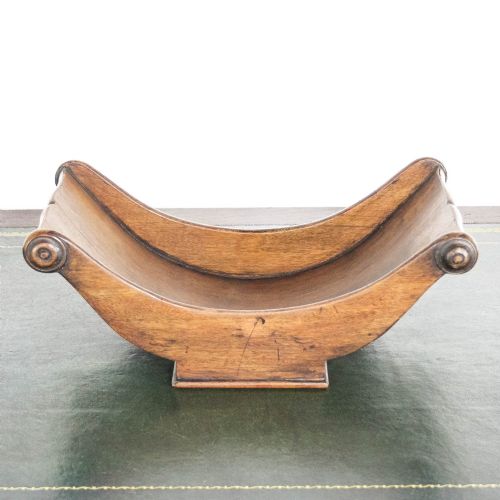
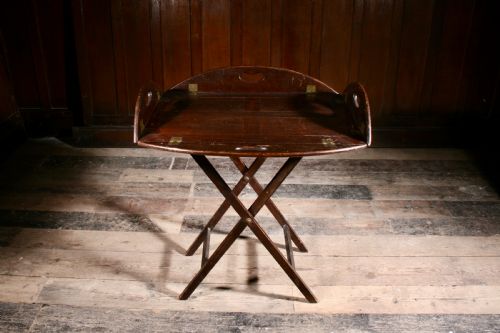
Fantastic Quality Antique Victorian Rosewood Butler’s Tray on Stand, 1850
Priced at £1,395 from London City Antiques
Fretwork galleries require precision. Cabinetmakers sawed intricate patterns out of thin mahogany strips before steaming them around curves.
Observe the joinery on wooden examples. Base panels slide into grooved rims to allow the timber room to expand.
Silversmiths hammered flat sheets over anvils. Getting a large metal tray perfectly flat without buckling takes immense skill.
"Many large silver examples hide a wooden core. This internal board provides rigid strength while keeping the overall weight manageable."
"Notice the clever heat resistance of papier-mâché. The layered paper construction insulates polished tables from hot teapots surprisingly well."
"Some wooden antique trays double as tabletops. They lift off custom folding stands to transition from carrying to serving."
Based on almost 25 years of Sellingantiques UK antique market data, Antique Trays appeared 10397 times (out of 1,100,000 antiques) which gives it a rarity score of 13/100.
This score measures scarcity within the Sellingantiques archive only and is not a survey of the entire antiques market, so these statistics may not be indicative of the general availability of Antique Trays elsewhere.
Wash them gently in warm soapy water. Dry the surface immediately with a soft cotton cloth to prevent water spots forming.
Use a dedicated silver foam or mild liquid polish when the metal actually tarnishes. Rub lightly and avoid abrasive dips that strip the thin silver layer away.
Fabric-lined antique trays typically feature a fixed glass panel. The wooden rim or gallery usually holds the glass firmly in place with a sealed inner moulding.
Taking them apart involves removing pinned wooden slips from the back. Dust and moisture will ruin the textile if the seal gets broken.
A damp cloth handles normal dust and spills.
Keep chemical polishes away from the lacquer. A light application of microcrystalline wax brings back the shine safely.
Silver and plated trays often feature a solid wooden base board. The metal is chased and formed into a thin skin, which relies on the timber core for structural rigidity.
Without this wooden backing, a large metal tray would flex and bend under the weight of a heavy tea service. The screws are meant to be there and keep the layers clamped together.
Leave the board exactly where it is. Removing it often warps the metal beyond repair.
Please note: This Antique Trays guide and its associated pricing data are provided for general informational purposes only. It does not constitute formal financial, investment, or appraisal advice and should not be relied upon as the sole basis for any commercial activity, purchasing, or sales decisions. Sellingantiques.co.uk accepts no liability for any actions taken in reliance on this information. Always consult with a qualified professional or independent appraiser.
