


A 2026 Guide by Sellingantiques
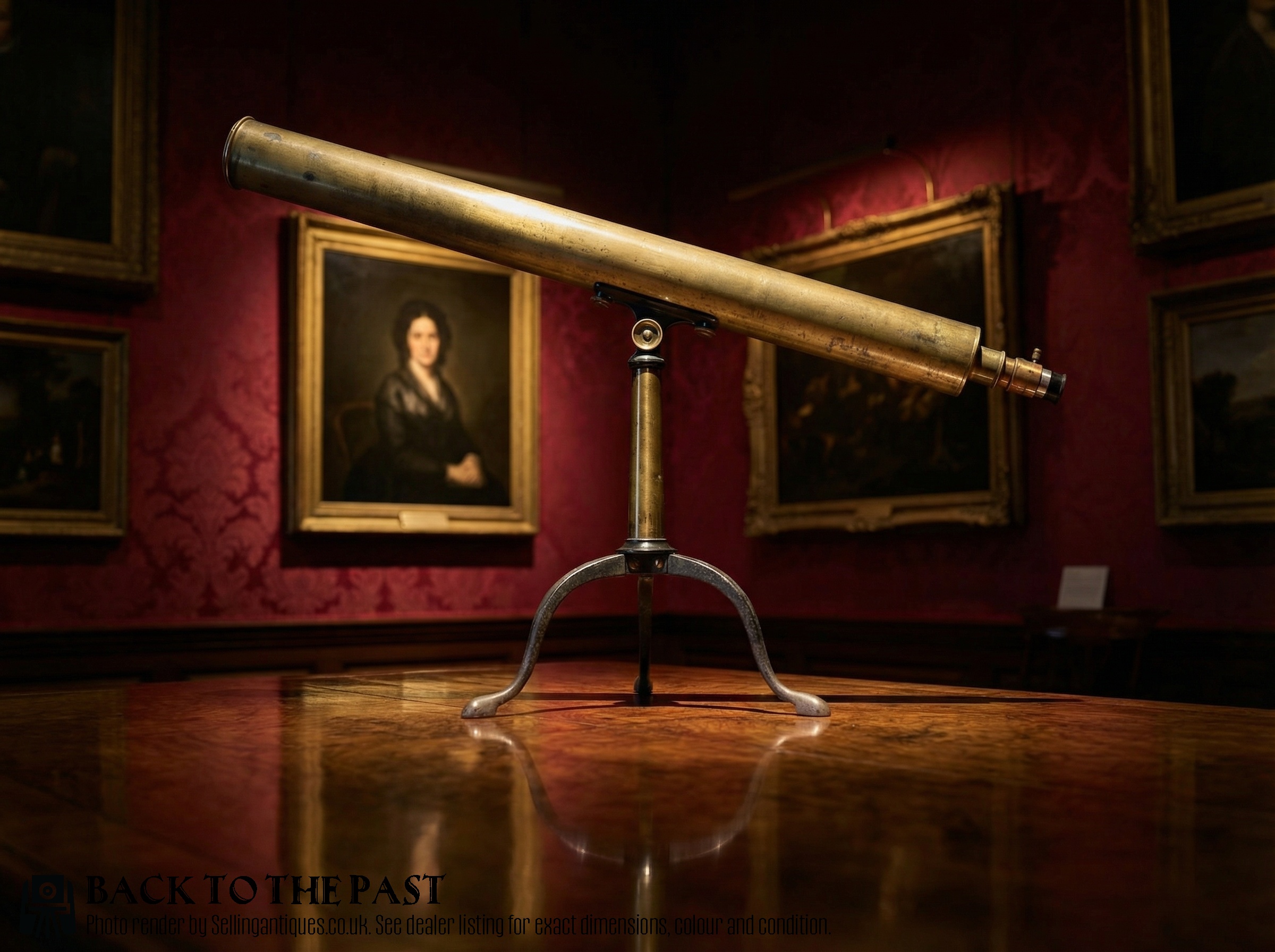
A Terrestrial 19thc Library Telescope, Victorian
Priced at £575 from The Antique Partnership
Early maritime examples expanded trade routes by allowing sailors to identify hazards and coastal landmarks from a distance.
Essential tools for naval officers during the eighteenth and nineteenth centuries.
Look at the size of the piece, as larger refracting antique telescopes often belonged to wealthy gentlemen pursuing amateur astronomy.
Terrestrial versions usually incorporate an extra lens group to flip the inverted image the right way up.
Dollond of London dominated the high-end optical trade from the late eighteenth century after patenting the achromatic lens.
Thomas Harris & Son supplied numerous brass refracting telescopes to the Admiralty throughout the early nineteenth century.
Look out for signatures from Troughton & Simms, who built large-scale astronomical examples alongside smaller transit instruments.
A Regency London Made Pocket Telescope, Regency
Priced at £395 from The Antique Partnership
The 2026 retail price guide for Antique Telescopes is drawn from a proprietary archive of over 1.1 million retail prices indexed by Sellingantiques since 2003. This guide relies exclusively on their own internal data; no external sources or auction records are used.
Analysing nearly 25 years of UK antique market history alongside current retail values, the data indicates that typical UK retail prices for Antique Telescopes range between £300 and £1,900. Entry-level prices generally fall under £300 and premium examples upwards of £1,900.
Multiple draw tubes slide inside one another to collapse the instrument for transport.
Sliding dust covers on the eyepiece offer protection against dirt and sea spray.
A braided rope knotwork finish, known as coach whipping, sometimes covers the main barrel of maritime antique telescopes.
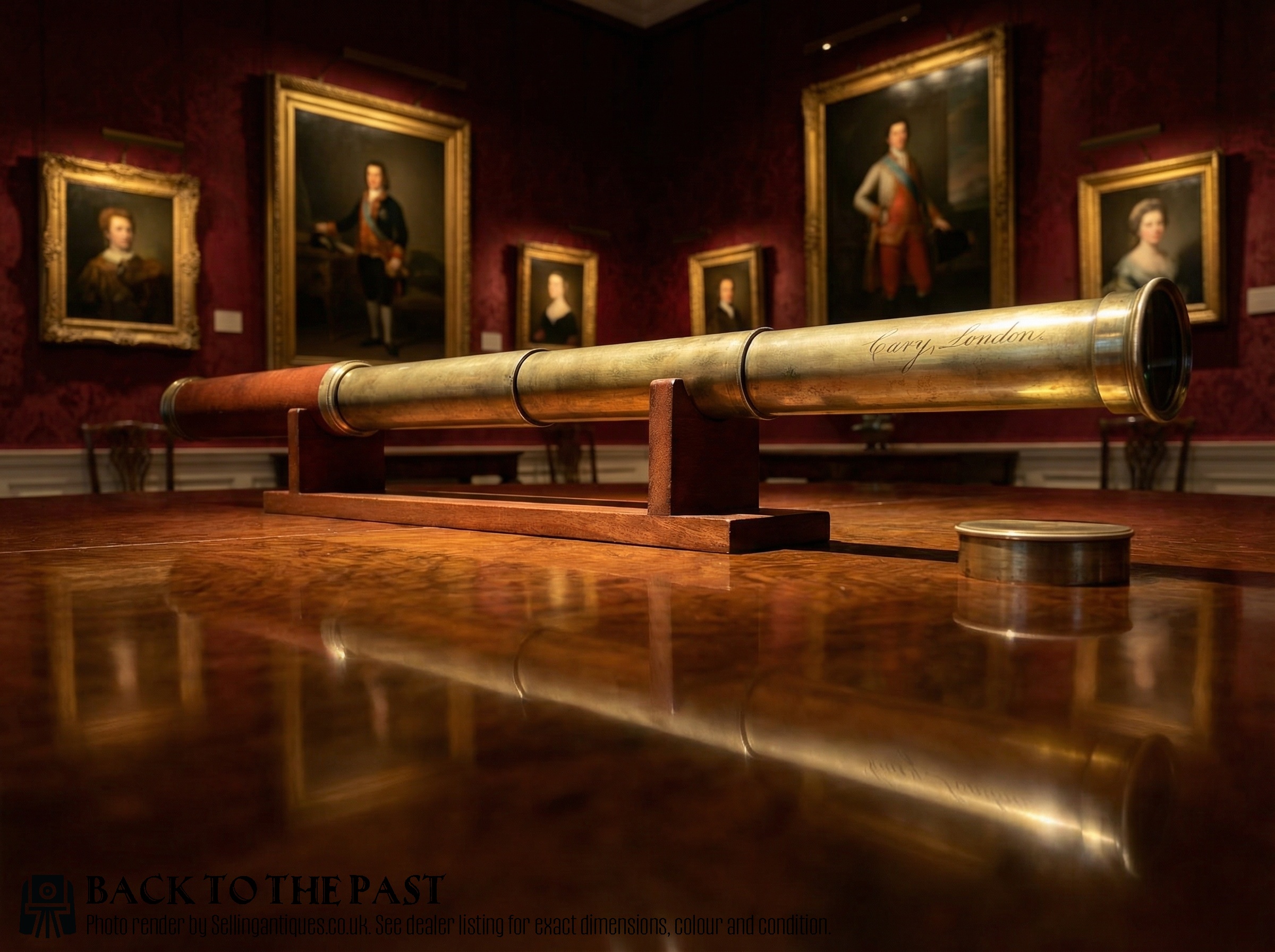
A Telescope by Cary London, Georgian
Priced at £450 from The Antique Partnership
Early tubes were sometimes formed from pasted paper and vellum before brass founding became standard practice.
Hand-cut threads on the brass collars join the sections together, requiring precise lathe work by the instrument maker.
Lens grinding evolved from simple single elements to complex compound groups glued with Canada balsam.
"Some small pocket versions were disguised as walking stick handles for discreet use while strolling."
"Leather bound naval models often survived rough ocean conditions better than bare metal alternatives."
"You will sometimes find secret compartments in the wooden carrying cases designed for spare celestial lenses."
Based on almost 25 years of Sellingantiques UK antique market data, Antique Telescopes appeared 539 times (out of 1,100,000 antiques) which gives it a rarity score of 90/100.
This score measures scarcity within the Sellingantiques archive only and is not a survey of the entire antiques market, so these statistics may not be indicative of the general availability of Antique Telescopes elsewhere.
Dust is the main enemy. Use a soft blower brush first to remove loose particles before they can scratch the surface.
Wipe gently with a dry microfibre cloth if a smudge remains. Avoid liquid chemical cleaners as they can seep into the threaded brass mounts and dissolve the historical lens cement.
Leave the brass alone if it has developed a dark, even patina. That aged surface protects the metal underneath and polishing it away removes part of the history.
For bright brass that is already polished, a light dusting is usually enough. If you must use a metal polish, apply it sparingly and buff it away so white residue does not gather in the crevices.
This phrase often appears engraved on the barrel of nineteenth-century naval examples. It indicates the instrument has a specific optical setup designed for low-light conditions.
The maker achieved this by using a larger objective lens to gather more ambient light. They also removed some internal lenses that standard daytime models use, trading a slightly lower magnification for a brighter image at dusk.
You might just be pushing the tubes in too far. Most draw tubes need extending almost to their limit before the focal point is reached.
Start with all the brass sections extended. Slowly push the smallest tube closest to your eye inwards until the distant image becomes sharp. If the image stays blurred, an internal lens might be facing the wrong way from a past cleaning attempt.
Please note: This Antique Telescopes guide and its associated pricing data are provided for general informational purposes only. It does not constitute formal financial, investment, or appraisal advice and should not be relied upon as the sole basis for any commercial activity, purchasing, or sales decisions. Sellingantiques.co.uk accepts no liability for any actions taken in reliance on this information. Always consult with a qualified professional or independent appraiser.
