15,162  PAGES BROWSED TODAY PAGES TODAY 24  ANTIQUES UPLOADED TODAY NEW ARRIVALS
ID #SA1211917
FOR SALE
£495
Email
Save
Early Victorian Cooke's Drainage Level in Mahogany Case Retailed by L Casella & Co
Jason Clarke Antiques
for sale €579     $629
£495
Jason Clarke Antiques

Jason Clarke Antiques

Sellingantiques Verified Since Jul 2015
View Dealers Stock Page
Id #SA1211917
PDF SHARE
SAVE

Early Victorian Cooke's Drainage Level in Mahogany Case Retailed by L Casella & Co

19th century
Description

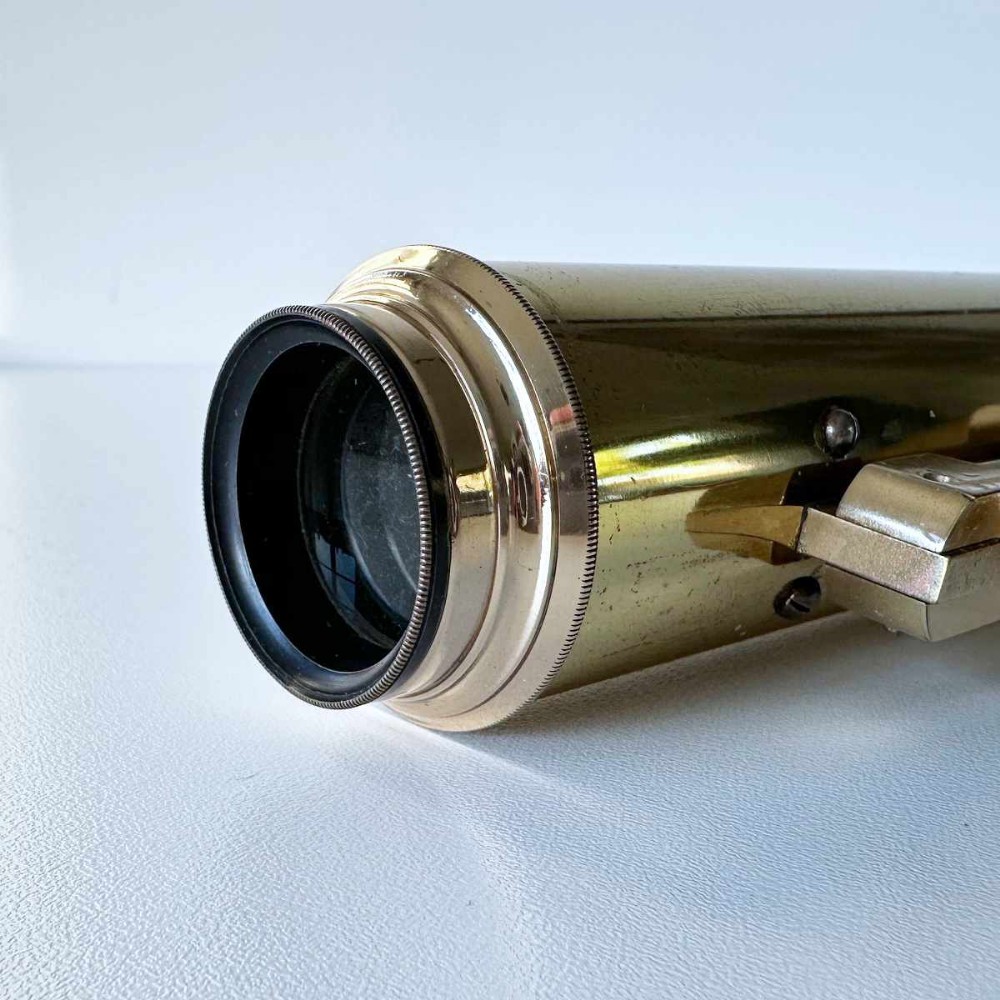
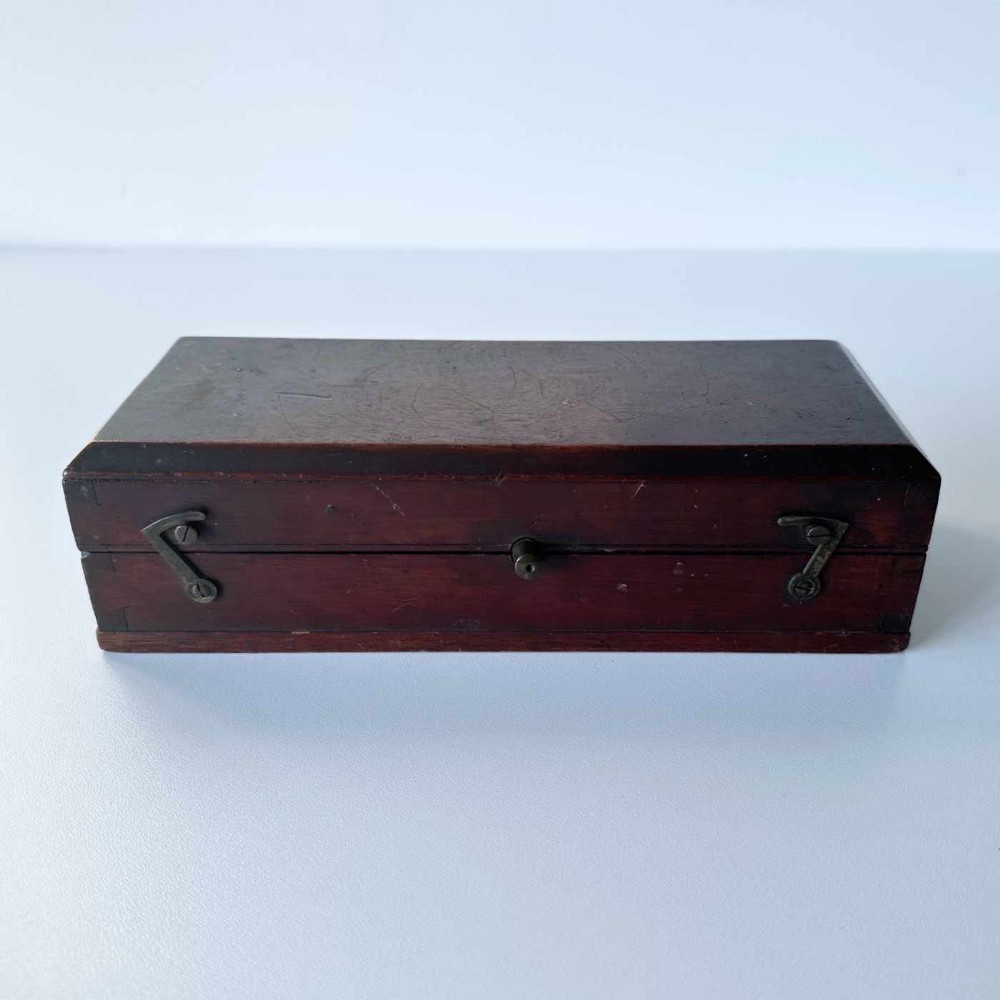
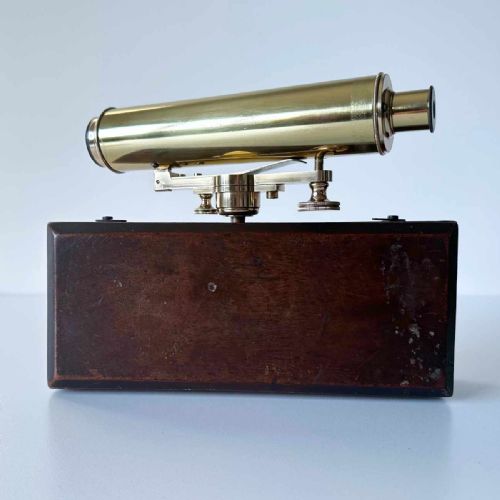
For sale, an early Victorian Cooke’s Drainage Level in original mahogany case retailed by L Casella & Co, London.

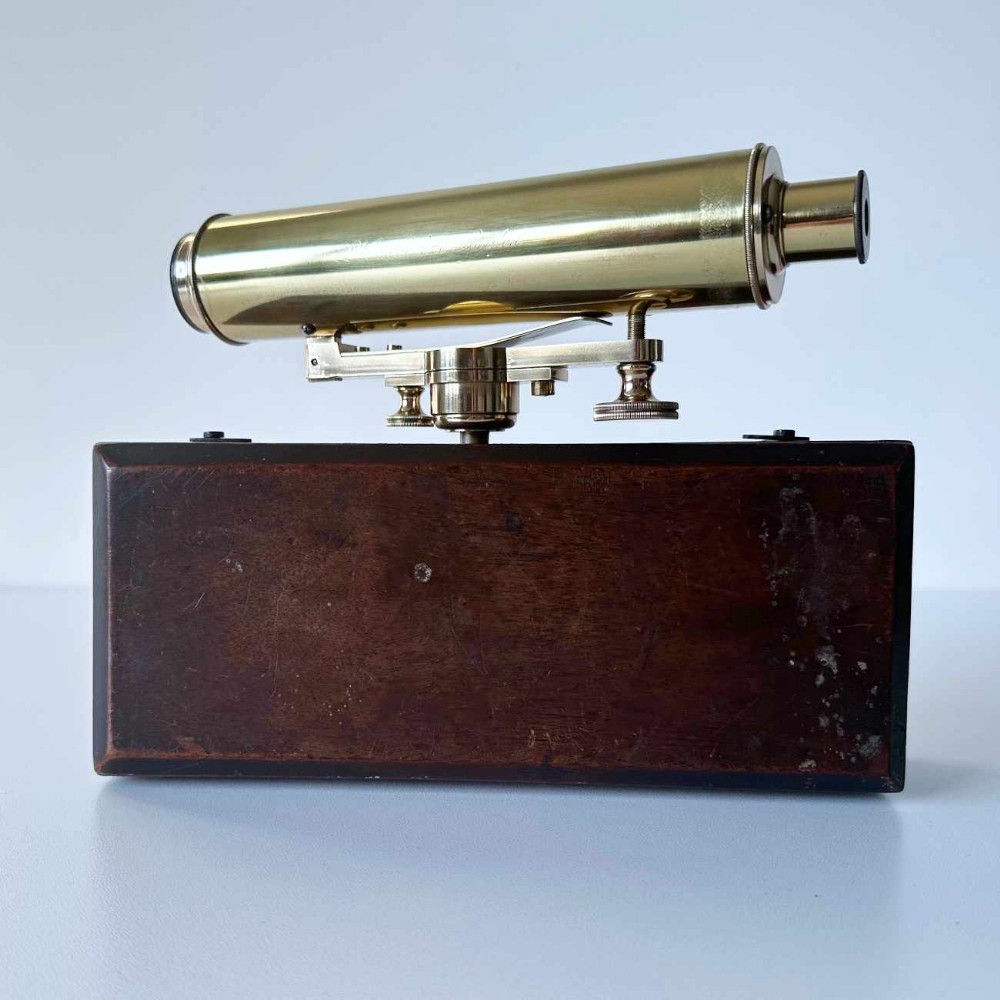
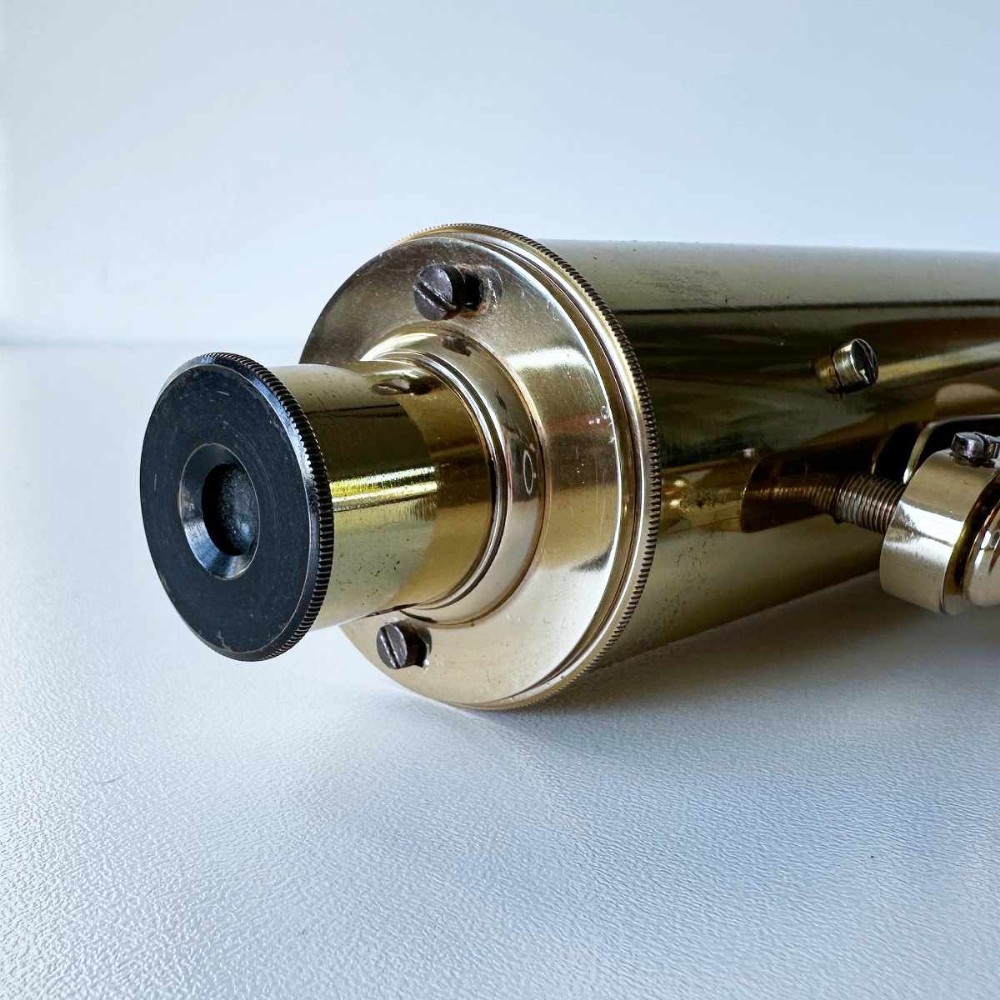
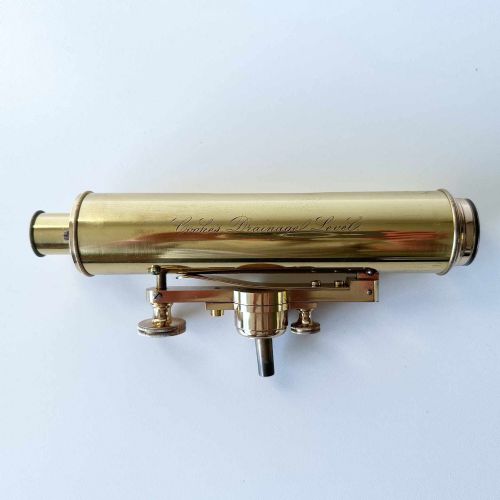
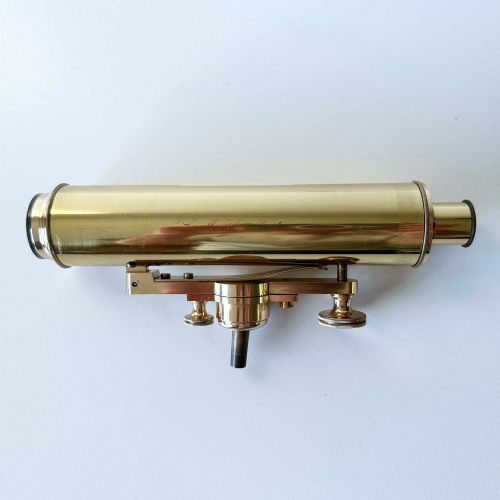
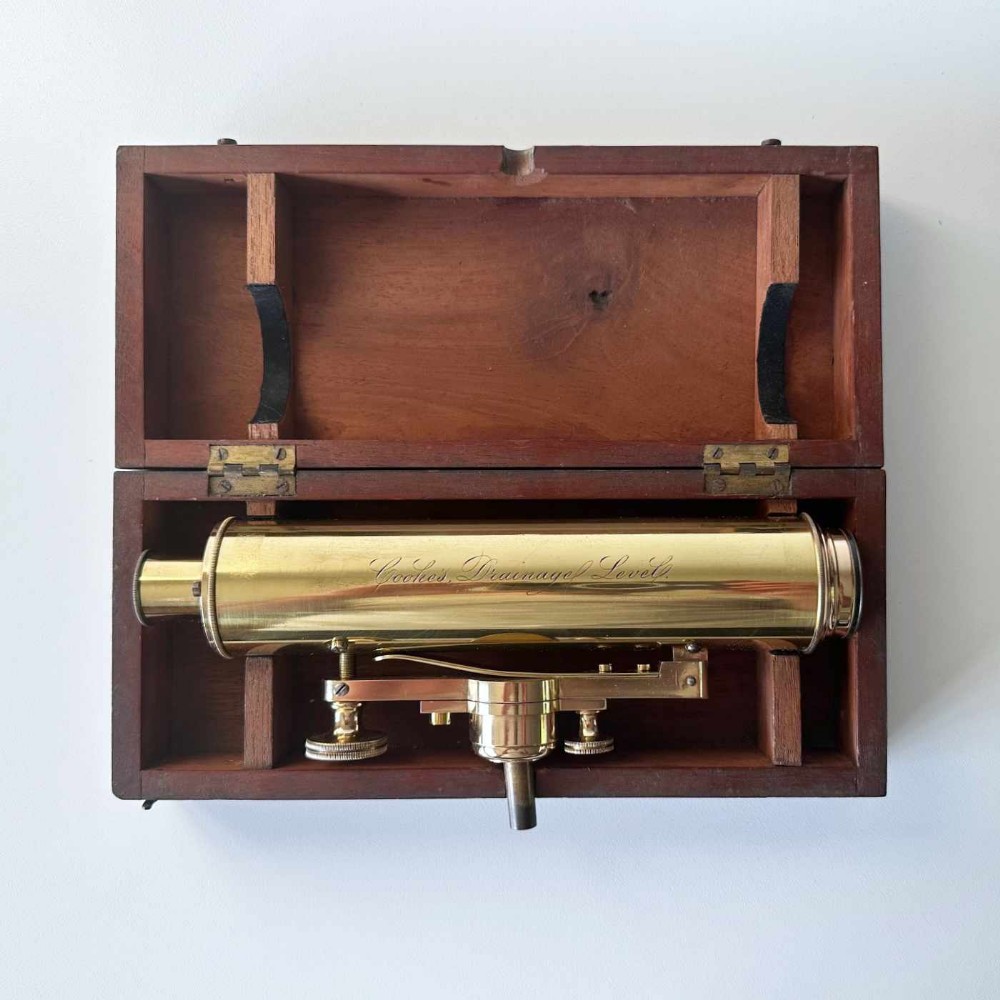
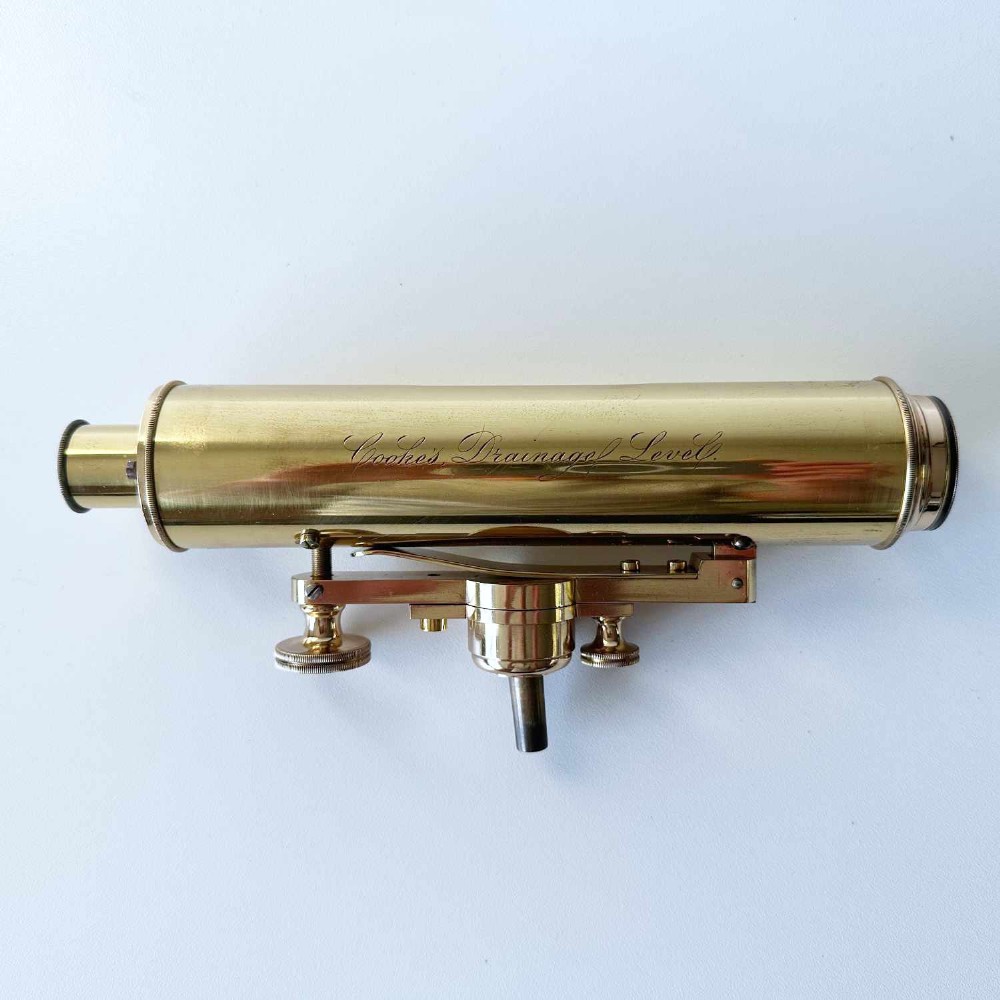
This simple level engraved with Cooke’s Drainage level to one side of the barrel and to L Casella and Co to the other, has a short 18cm brass barrel with “superior telescope, cross lines etched on the glass and ball and socket joint” as described in Casella’s catalogue of 1860. It has an integral bubble level fitted within the top of the barrel and fine tilt adjustment underneath by means of the large, knurled screw. The smaller knurled brass screw in front allows the release and adjustment of the ball and socket joint which would attach to a tripod stand or staff. According to Casella, the level is “strongly recommended by the Royal English, the Royal Irish, and the Highland Agricultural Societies”.
Described variously in catalogues as a drainage level or Agricultural Drainage Level this instrument is likely to have been one of Thomas Cooke’s earliest trading successes since it was first advertised by Thomas Cooke in 1849 before he had established his Buckingham Works and it remained a standard product for many retailers until at least the end of the Nineteenth century.
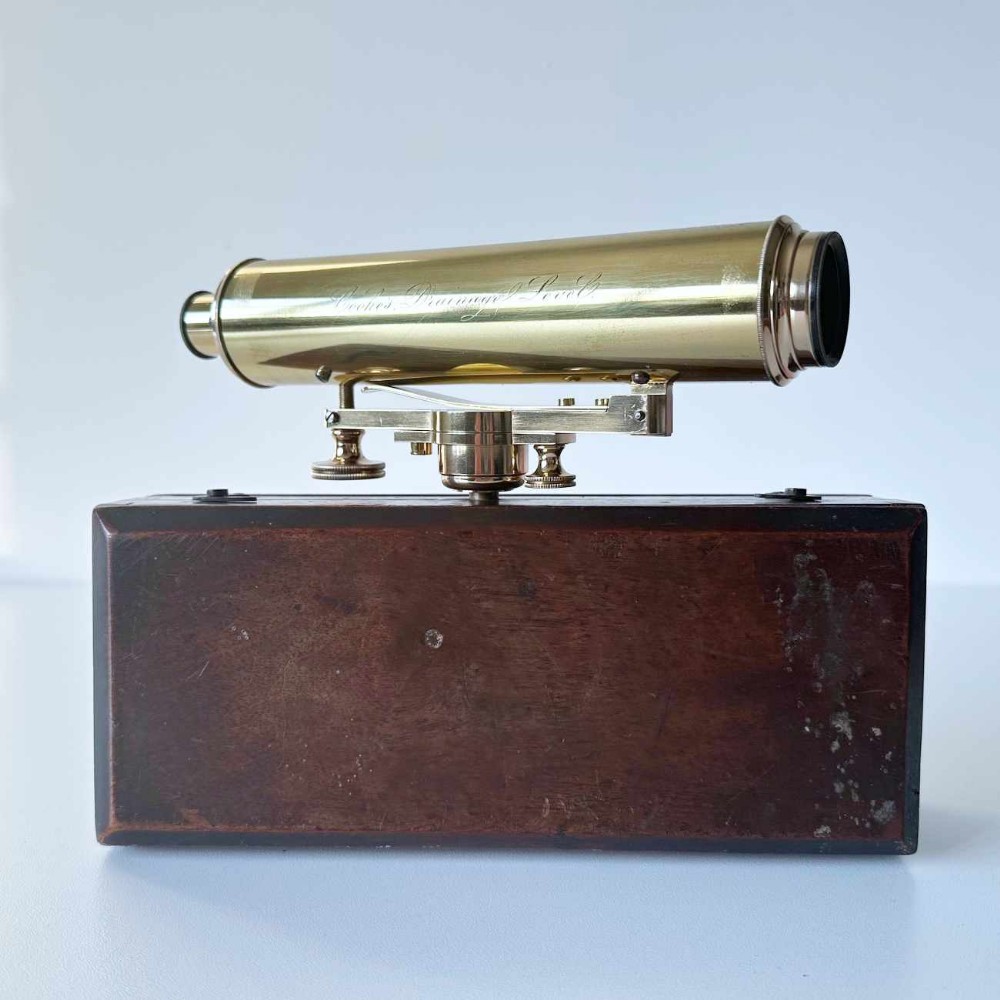
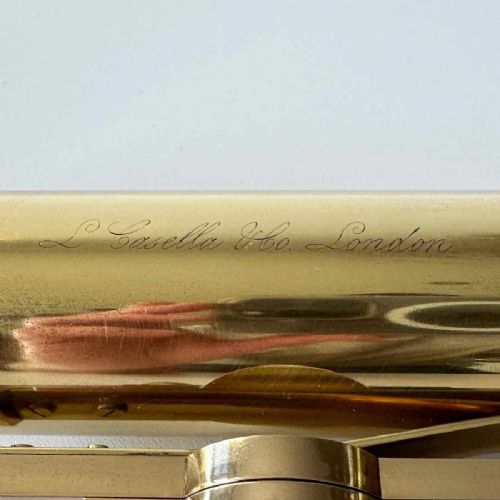
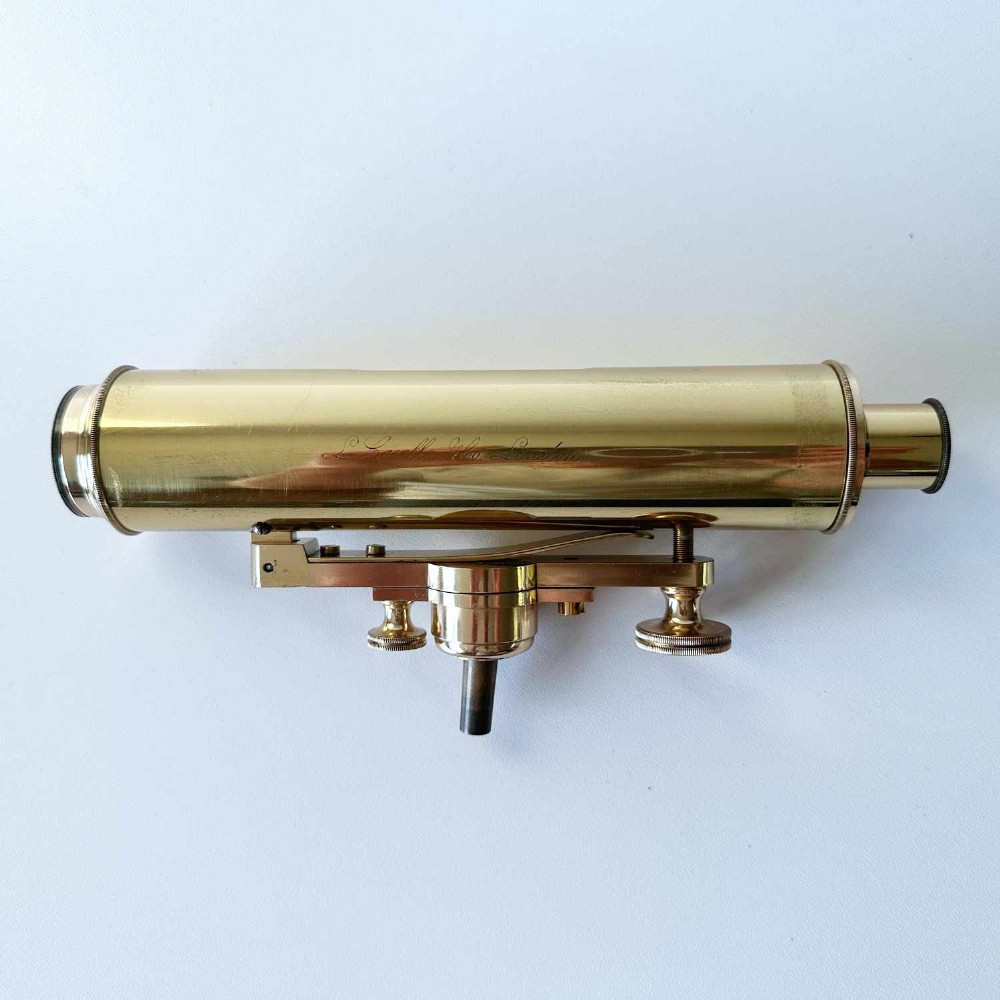
Retailers ordinarily included their paper label trade cards within the case but in this instance, Casella has applied more permanent secondary engraving to the other side of the telescope barrel. It is a very interesting convergence between two extraordinarily famous instrument makers of the Nineteenth Century and gives some flavour of the way in which the instrument trade worked. Casella was already well established in 1849 so it must have been hugely encouraging for Cooke to see his products gaining attention. His appearance at subsequent exhibitions in Paris and London cemented that position quite considerably since he stood alongside many of these famous figures.
Thomas Cooke was born in East Ridings, Yorkshire in 1807. His Father was a shoemaker of humble means which precluded him from being provided with an education worthy of his obvious talent. Dissatisfied with the prospect of a shoemaking career, Cooke taught himself astronomy and navigation and moved to York in 1829 at the age of twenty-two where he sought out a living as a private tutor of mathematics and writing. His spare time was otherwise devoted to the study of optics and the construction of telescopes.
In 1837, he took on premises in Stonegate, York where he immediately built a strong reputation for the manufacture of optical lenses and telescopes, receiving orders from numerous learned Yorkshiremen. A move to a larger shop in Coney Street became necessary shortly afterwards but by 1855, Cooke had also outgrown these premises and he purchased land to build a factory named the Buckingham Works in Bishopshill, York where with the assistance of his two sons, Frederick & Thomas he manufactured a diverse range of products including surveying instruments, clocks and steam engines to compliment the successful optical business. In the same year, he also won a first-class medal at the Paris Exposition Universelle for an equatorial refractor of his construction.
In 1860, Cooke’s reputation had grown large enough for him to be commissioned by Prince Albert to provide a 5.5-inch mounted telescope intended for the newly built Royal residence of Osborne House on the Isle of Wight. He also began to construct turret clocks which were eventually exhibited at the 1862 London Exhibition.
During the exhibition, Robert Stirling Newall of Gateshead purchased two very large optical glass discs from Chance Brothers of Birmingham and a year later, Cooke was commissioned to produce a mounted telescope using the enormous twenty-five inch discs. The Newall telescope took six years to construct, it was by some margin, the largest astronomical object glass ever produced and the telescope whe

Physical Dimensions
Height
6.5cm (2.56")
Width
23.5cm (9.25")
Depth
10cm (3.94")
Declaration

Jason Clarke Antiques has dated this Victorian Brass Drainage Level to the 1850s.

Reference Numbers
Sellingantiques Reference
SA1211917
Description
For sale, an early Victorian Cooke’s Drainage Level in original mahogany case retailed by L Casella & Co, London.

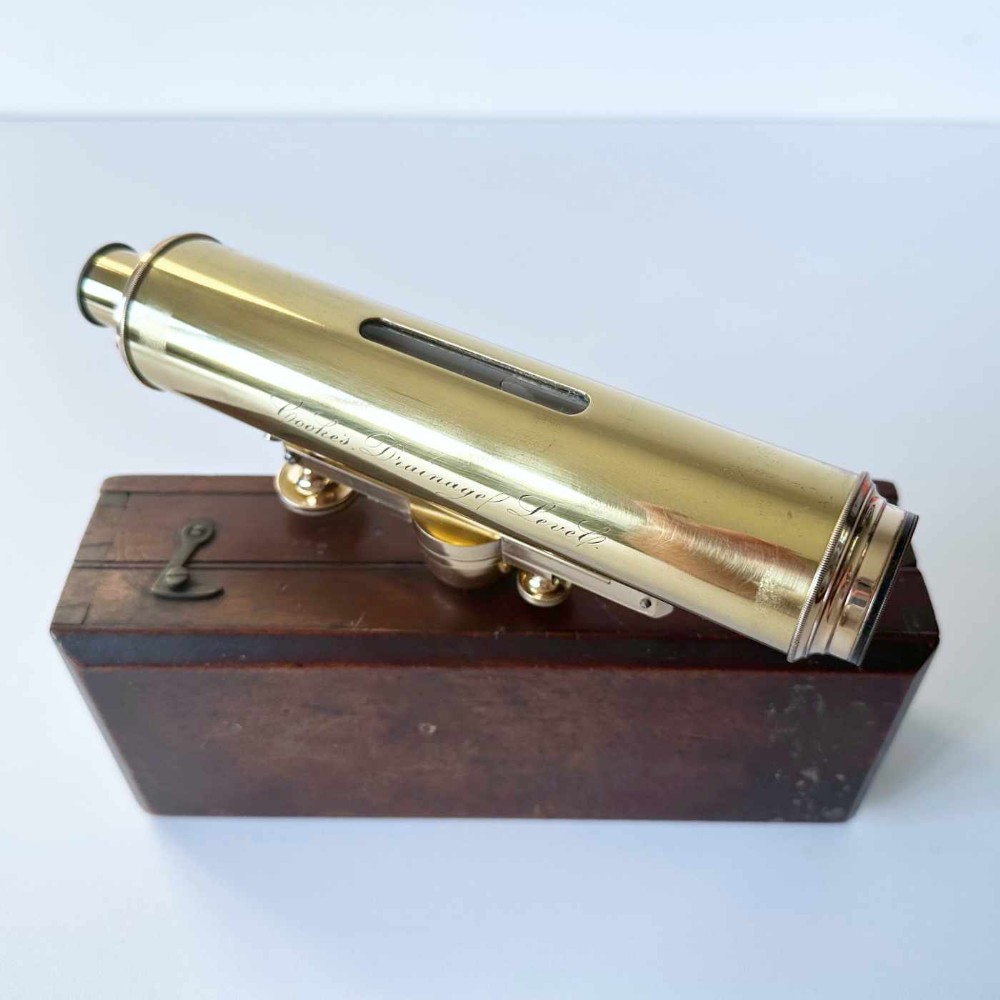
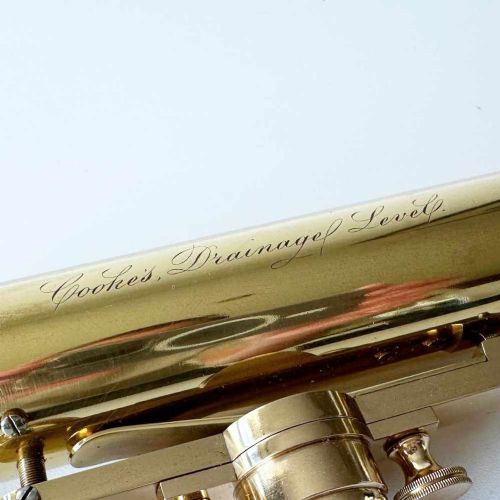
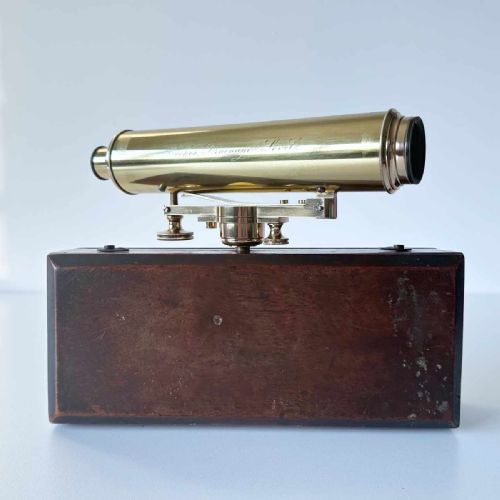
This simple level engraved with Cooke’s Drainage level to one side of the barrel and to L Casella and Co to the other, has a short 18cm brass barrel with “superior telescope, cross lines etched on the glass and ball and socket joint” as described in Casella’s catalogue of 1860.

It has an integral bubble level fitted within the top of the barrel and fine tilt adjustment underneath by means of the large, knurled screw.
Jason Clarke Antiques

The smaller knurled brass screw in front allows the release and adjustment of the ball and socket joint which would attach to a tripod stand or staff. According to Casella, the level is “strongly recommended by the Royal English, the Royal Irish, and the Highland Agricultural Societies”.

fig 1. An antique brass optical surveying drainage level positioned inside a open fitted mahogany wooden box.
fig 1. Early Victorian Cooke's Drainage Level in Mahogany Case Retailed by L Casella & Co

Described variously in catalogues as a drainage level or Agricultural Drainage Level this instrument is likely to have been one of Thomas Cooke’s earliest trading successes since it was first advertised by Thomas Cooke in 1849 before he had established his Buckingham Works and it remained a standard product for many retailers until at least the end of the Nineteenth century.

fig 2. An antique brass optical surveying drainage level positioned inside a open fitted mahogany wooden box.
fig 2. Early Victorian Cooke's Drainage Level in Mahogany Case Retailed by L Casella & Co

Retailers ordinarily included their paper label trade cards within the case but in this instance, Casella has applied more permanent secondary engraving to the other side of the telescope barrel. It is a very interesting convergence between two extraordinarily famous instrument makers of the Nineteenth Century and gives some flavour of the way in which the instrument trade worked. Casella was already well established in 1849 so it must have been hugely encouraging for Cooke to see his products gaining attention. His appearance at subsequent exhibitions in Paris and London cemented that position quite considerably since he stood alongside many of these famous figures.

fig 3. An antique brass optical surveying drainage level positioned inside a open fitted mahogany wooden box.
fig 3. Early Victorian Cooke's Drainage Level in Mahogany Case Retailed by L Casella & Co

Thomas Cooke was born in East Ridings, Yorkshire in 1807. His Father was a shoemaker of humble means which precluded him from being provided with an education worthy of his obvious talent. Dissatisfied with the prospect of a shoemaking career, Cooke taught himself astronomy and navigation and moved to York in 1829 at the age of twenty-two where he sought out a living as a private tutor of mathematics and writing. His spare time was otherwise devoted to the study of optics and the construction of telescopes.

fig 4. An antique brass optical surveying drainage level positioned inside a open fitted mahogany wooden box.
fig 4. Early Victorian Cooke's Drainage Level in Mahogany Case Retailed by L Casella & Co

In 1837, he took on premises in Stonegate, York where he immediately built a strong reputation for the manufacture of optical lenses and telescopes, receiving orders from numerous learned Yorkshiremen. A move to a larger shop in Coney Street became necessary shortly afterwards but by 1855, Cooke had also outgrown these premises and he purchased land to build a factory named the Buckingham Works in Bishopshill, York where with the assistance of his two sons, Frederick & Thomas he manufactured a diverse range of products including surveying instruments, clocks and steam engines to compliment the successful optical business. In the same year, he also won a first-class medal at the Paris Exposition Universelle for an equatorial refractor of his construction.

fig 5. An antique brass optical surveying drainage level positioned inside a open fitted mahogany wooden box.
fig 5. Early Victorian Cooke's Drainage Level in Mahogany Case Retailed by L Casella & Co

In 1860, Cooke’s reputation had grown large enough for him to be commissioned by Prince Albert to provide a 5.5-inch mounted telescope intended for the newly built Royal residence of Osborne House on the Isle of Wight. He also began to construct turret clocks which were eventually exhibited at the 1862 London Exhibition.

fig 6. An antique brass optical surveying drainage level positioned inside a open fitted mahogany wooden box.
fig 6. Early Victorian Cooke's Drainage Level in Mahogany Case Retailed by L Casella & Co

During the exhibition, Robert Stirling Newall of Gateshead purchased two very large optical glass discs from Chance Brothers of Birmingham and a year later, Cooke was commissioned to produce a mounted telescope using the enormous twenty-five inch discs. The Newall telescope took six years to construct, it was by some margin, the largest astronomical object glass ever produced and the telescope whe

Height
6.5cm (2.56")
Width
23.5cm (9.25")
Depth
10cm (3.94")
Date of Manufacture

Jason Clarke Antiques has dated this Victorian Brass Drainage Level to the 1850s.

Reference Numbers
Sellingantiques Ref
SA1211917
Jason Clarke Antiques
Sellingantiques verified Since Jul 2015
Dealer Profile

You can view the stock and full dealer information on the Jason Clarke Antiques Profile Page
PDF SHARE
SAVE
An antique brass optical surveying drainage level positioned inside a open fitted mahogany wooden box.
1 / 11
Archive I An antique brass optical surveying drainage level positioned inside a open fitted mahogany wooden box.

Early Victorian Cooke's Drainage Level in Mahogany Case Retailed by L Casella & Co
Archive II An antique brass optical surveying drainage level positioned inside a open fitted mahogany wooden box. View II
Archive III An antique brass optical surveying drainage level positioned inside a open fitted mahogany wooden box. View III
Archive IV An antique brass optical surveying drainage level positioned inside a open fitted mahogany wooden box. View IV
Archive V An antique brass optical surveying drainage level positioned inside a open fitted mahogany wooden box. View V
Archive VI An antique brass optical surveying drainage level positioned inside a open fitted mahogany wooden box. View VI
Archive VII An antique brass optical surveying drainage level positioned inside a open fitted mahogany wooden box. View VII
Archive VIII An antique brass optical surveying drainage level positioned inside a open fitted mahogany wooden box. View VIII
Archive IX An antique brass optical surveying drainage level positioned inside a open fitted mahogany wooden box. View IX
Archive X An antique brass optical surveying drainage level positioned inside a open fitted mahogany wooden box. View X
Archive XI An antique brass optical surveying drainage level positioned inside a open fitted mahogany wooden box. View XI
FURTHER BROWSING

Visitors also looked at these ⇣

Enlarged Archival View
Telephone 07815 046645
Location
Newbury
Berkshire
United Kingdom
Verified Since Jul 2015
Items For Sale 82
Items Sold 605
Jason Clarke Antiques
Verified Since Jul 2015
View Dealer Info
Location: Newbury, Berkshire, United Kingdom
Verified
Jul 2015
For Sale
82
Sold
605
An antique brass optical surveying drainage level positioned inside a open fitted mahogany wooden box.
Early Victorian Cooke's Drainage Level in Mahogany Case Retailed by L Casella & Co
Ref: SA1211917
An antique brass optical surveying drainage level positioned inside a open fitted mahogany wooden box.
Detail View 1
Detail View 2
Detail View 3
Detail View 4
Detail View 5
Detail View 6
Detail View 7
Detail View 8
Detail View 9
Detail View 10
Archival Detail
Every single antique dealer on our platform is individually approved by our internal team. We verify their professional trade history, ethical standards, and photographic quality to ensure a secure, high-standard buying environment. Upon joining, every dealer agrees to a strict 9-point code of conduct. While issues can occasionally arise, our dealers typically resolve them swiftly and directly with the buyer. In fact, since our founding in 2002, Sellingantiques has only had to step in to help resolve an issue on roughly five occasions—a true testament to the quality of our dealers and their dedication to your happiness.
Our dealers are highly experienced in packing and shipping fragile, high-value antiques. Because you are in direct contact with the dealer, you will be able to easily go through all available shipping and insurance options together to ensure your item arrives safely.
Antiques are the ultimate green purchase. By choosing historical pieces over newly manufactured goods, you completely eliminate the carbon footprint of modern mass production while preserving exceptional, timeless craftsmanship.

A drainage level is a specialised optical surveying instrument used by nineteenth-century engineers and land surveyors to determine relative elevations and establish gradients for agricultural drainage, canal construction, and railway development.

Victorian scientific instruments were predominantly crafted from solid lacquered brass to ensure structural rigidity and corrosion resistance, fitted with precision optical glass lenses, and stored inside bespoke mahogany timber cases for field protection.

Authentic nineteenth-century levels feature hand-engraved maker or retailer inscriptions, period-correct thread sizes on adjusting screws, original lacquered brass finishes showing minor oxidisation, and custom-fitted wooden transport boxes with original dovetail joinery.

Displaying a polished brass scientific instrument on an executive office desk, library bookshelf, or console table alongside framed maps and leather-bound volumes creates a refined focal point suitable for classic or dark academia interiors.

Dust the brass components and timber case regularly using a clean, soft microfibre cloth without abrasive cleaning agents that could damage original lacquer layers. Maintain the item in a dry, stable environment to minimise metal tarnishing and timber movement.
items
Add keywords to the filter
Price
£100
£250000
Era
Movements
Material
Origin
Stock Location
Freshness
Online Payments
Categories