

Antique Nest of Tables
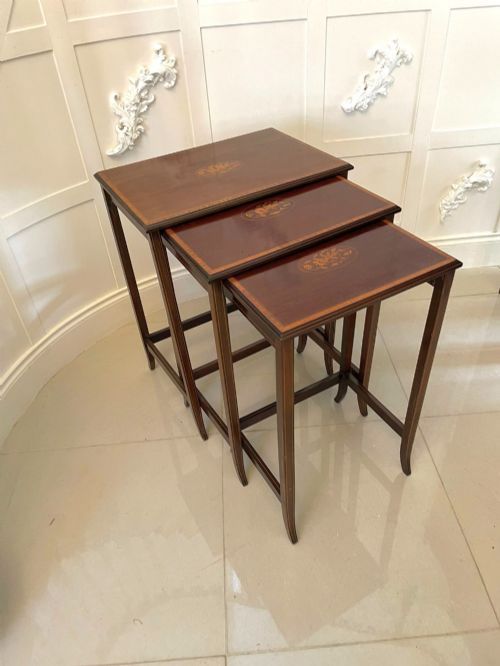
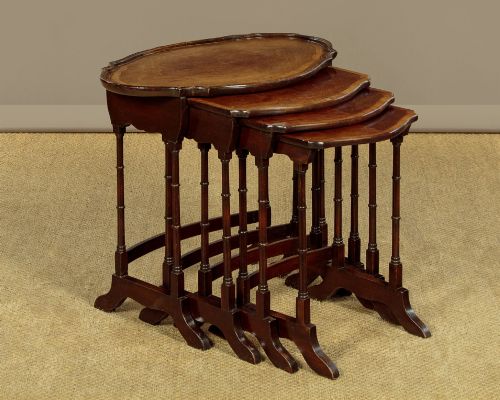
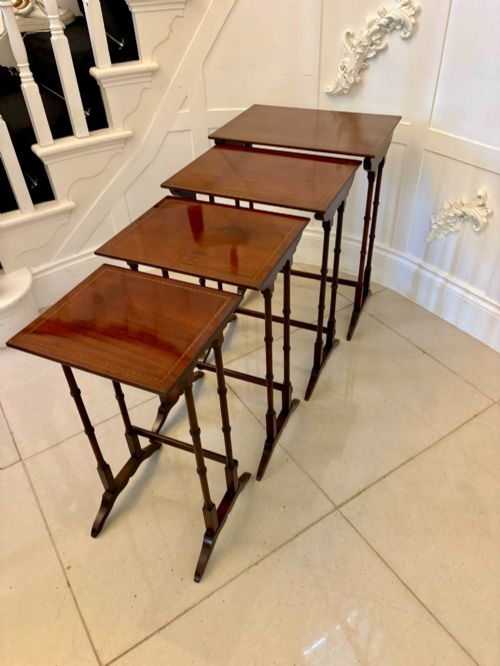
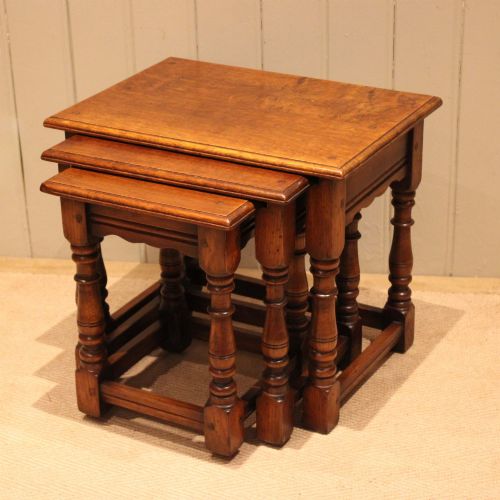
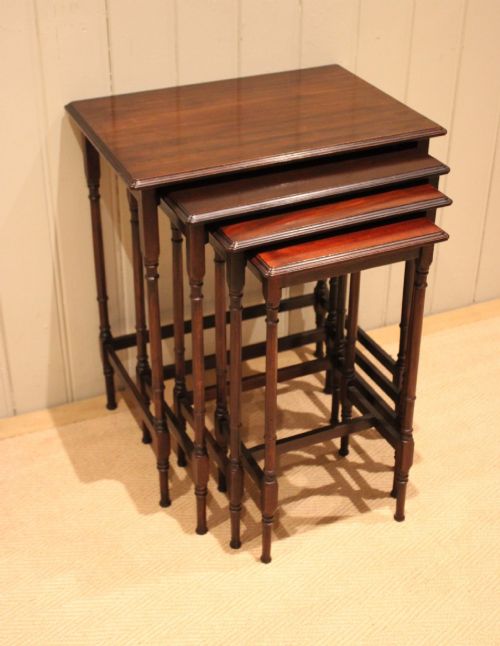
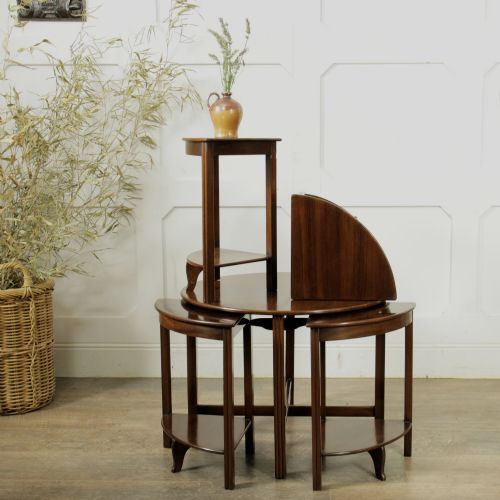
A nest of tables is a graduated set of small side tables, each sliding under the next, made so one piece could serve several people for tea, work or cards and then be pushed back together.
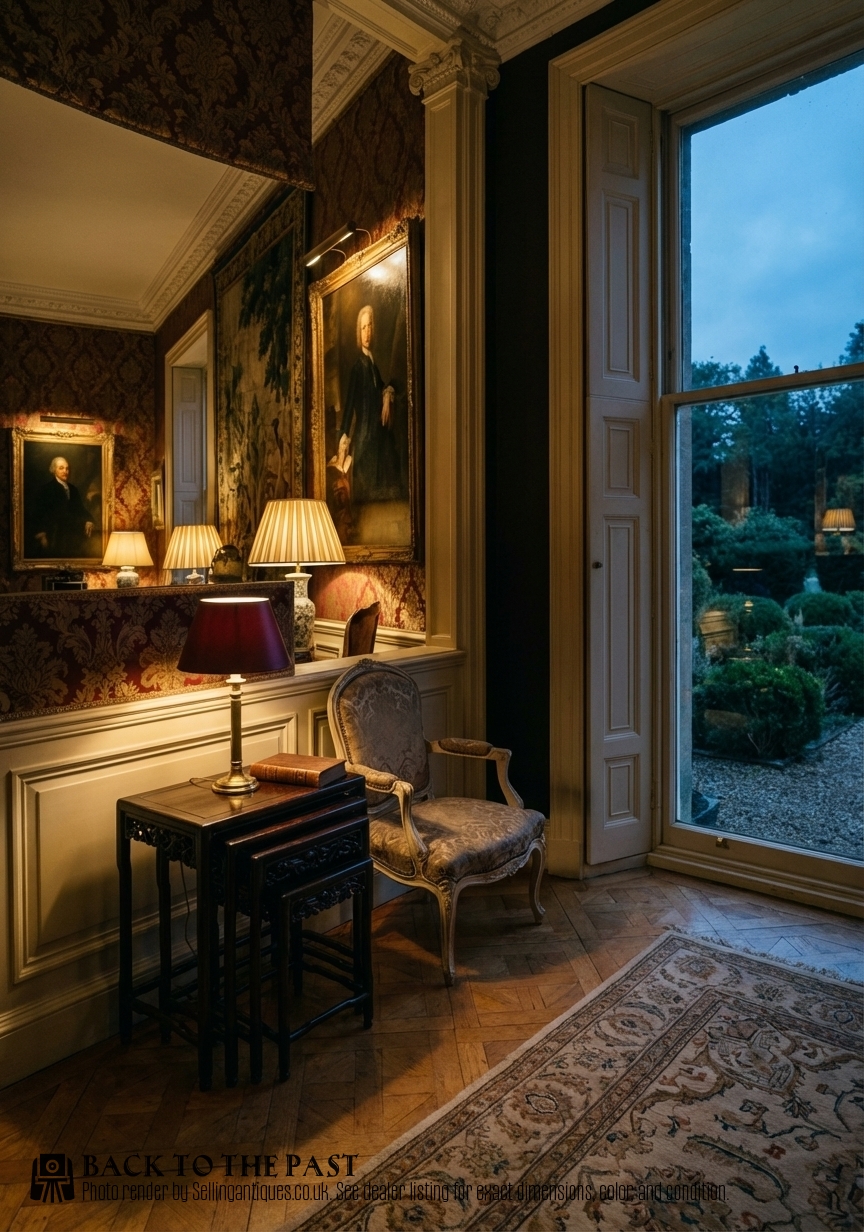
Antique Nest of Tables
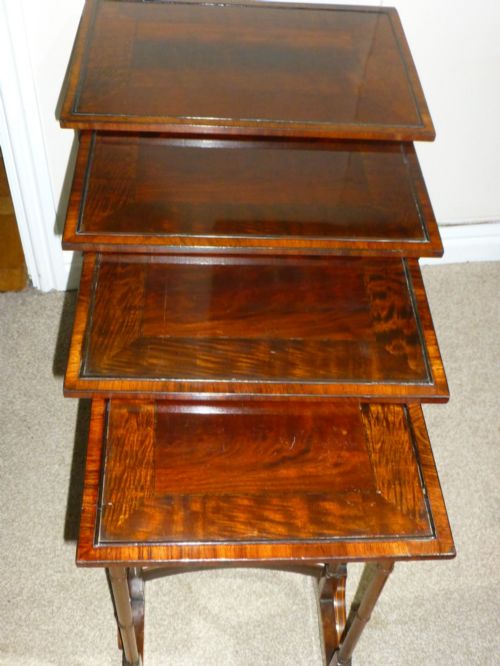
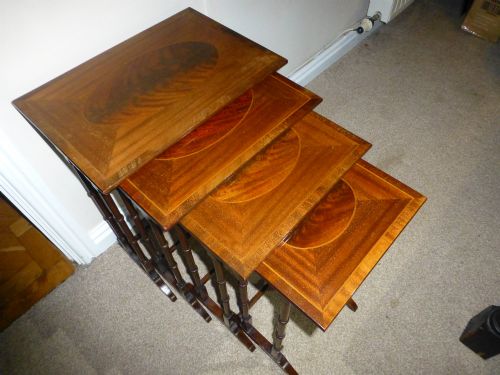
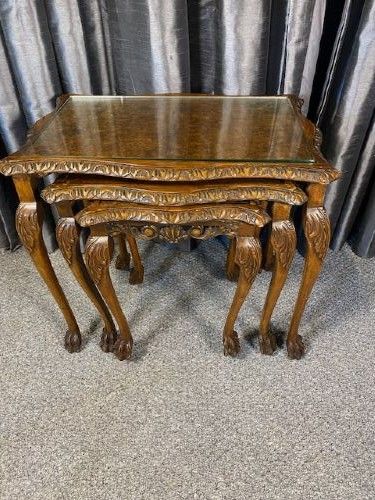
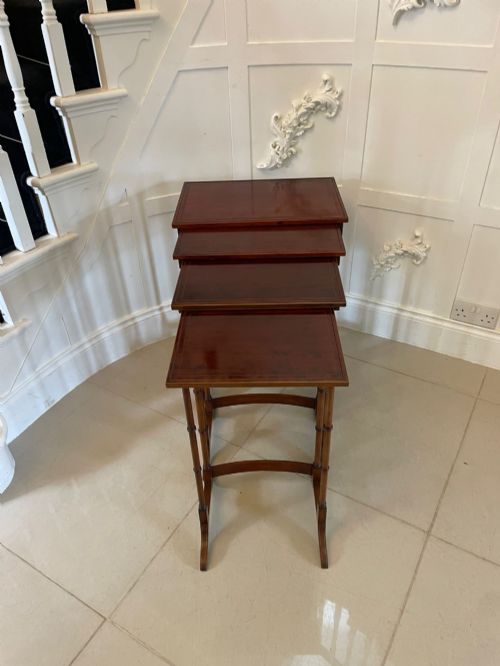
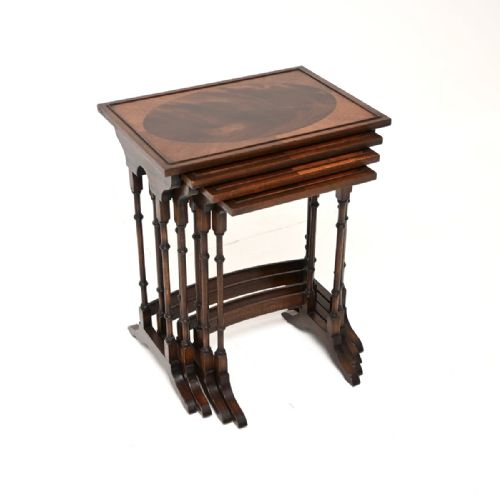
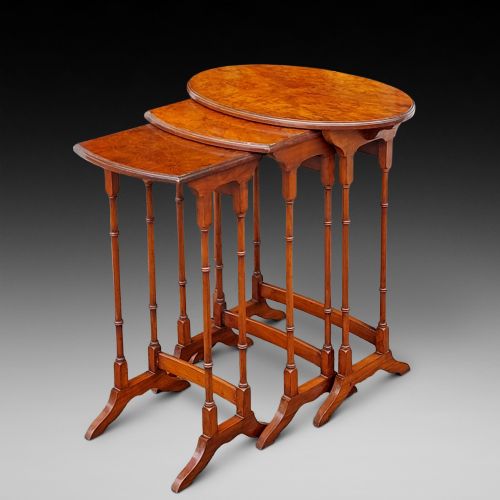
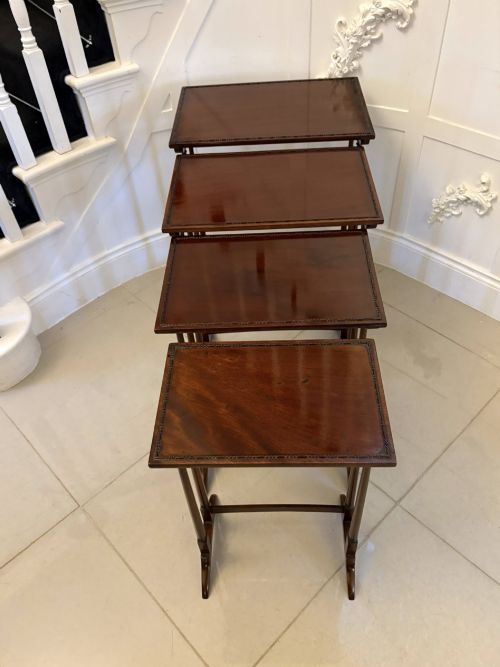
The set you're most likely to meet is a nest of three or four in mahogany or walnut, English, made somewhere between the Edwardian years and the 1930s. Mahogany leads the archive, walnut follows, and burr walnut accounts for a good slice of that walnut. Dealers title them by wood, count and style rather than by use: "Nest of Three Burr Walnut Tables", "Edwardian Inlaid Mahogany Nest of 4 Tables".
The idea is late Georgian. Graduated tables that store one inside another suited a drawing room, and the form was revived and made in quantity from the late 19th century onwards for smaller houses. That revival is what fills the category. Of the listings carrying a clean year, more than half fall in the four decades from 1900 to 1939.
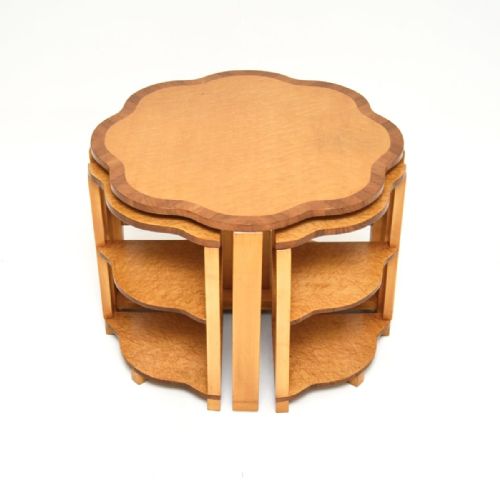
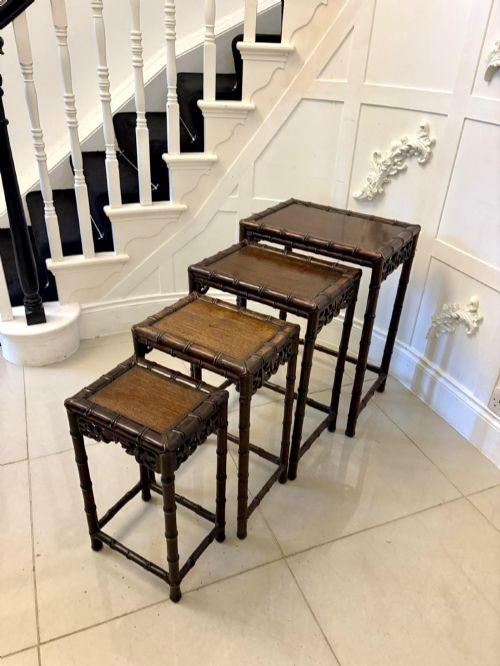
Beyond that main run there are branches. Edwardian and revival mahogany, often inlaid with satinwood or boxwood lines, is the largest. Burr and figured walnut sits behind it in the 1920s and 1930s. Art Deco nests form a smaller group, and these are where sets of five turn up. Chinese, Japanese and Anglo-Indian sets are a persistent minority, in carved hardwood, padouk, huanghuali, red lacquer or Kashmir work.
Regency and 19th-century quartetto sets in rosewood or mahogany appear, along with single William IV, George IV and George III titles, but anything before about 1890 is a small part of this archive. Period words in titles are labels, not years, and a title and its dated field don't always agree.
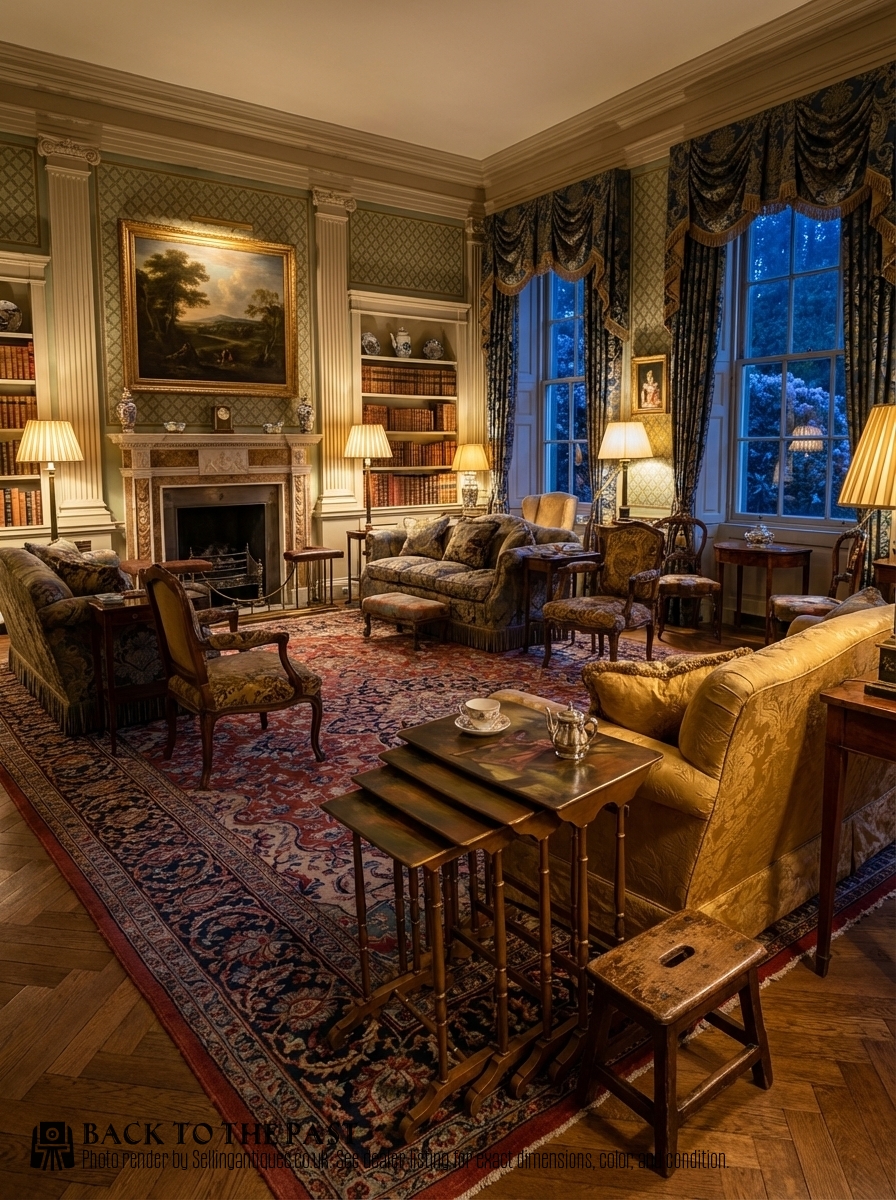
Where The Range Splits
Timber does most of the work. Plain oak sets sit at the bottom of the range, and so do the plain-walnut 1920s and 1930s nests titled with nothing but a wood and a number. Burr walnut, satinwood, amboyna, kingwood, huanghuali and specimen-veneered tops recur at the upper end, where the figure is the point of the piece.
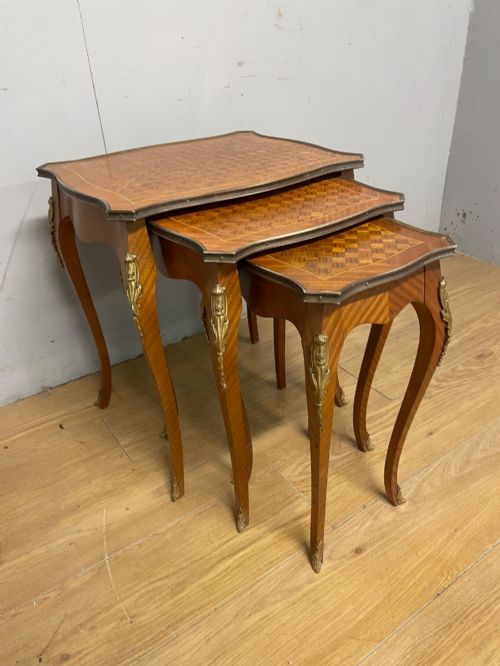
Decoration follows the same line. Inlay appears in a good many titles, and parquetry, marquetry, brass inlay and ormolu mounts cluster among the higher-priced sets. An undecorated "Nest of Three Tables" title tends to say what it says.
Date and count both push upward. Regency, George III and IV, William IV and 18th-century Sheraton-period sets sit at the top; the earliest thing in the archive is an amboyna set of that date. Nests of five run above the general run of threes, and a named workshop lifts a set above comparable unattributed ones.
Antique Nest of Tables Retail Price Guide 2026
Typical UK retail prices for nest of tables, calculated from the Sellingantiques database of over a million retail prices indexed since 2003. This retail price guide relies exclusively on Sellingantiques data; no external sources or auction records are used, so the figures do not describe the wider market.
Chinese sets appear in 73 titles on Sellingantiques, including Qing Dynasty carved hardwood, padouk, huanghuali and hongmu.
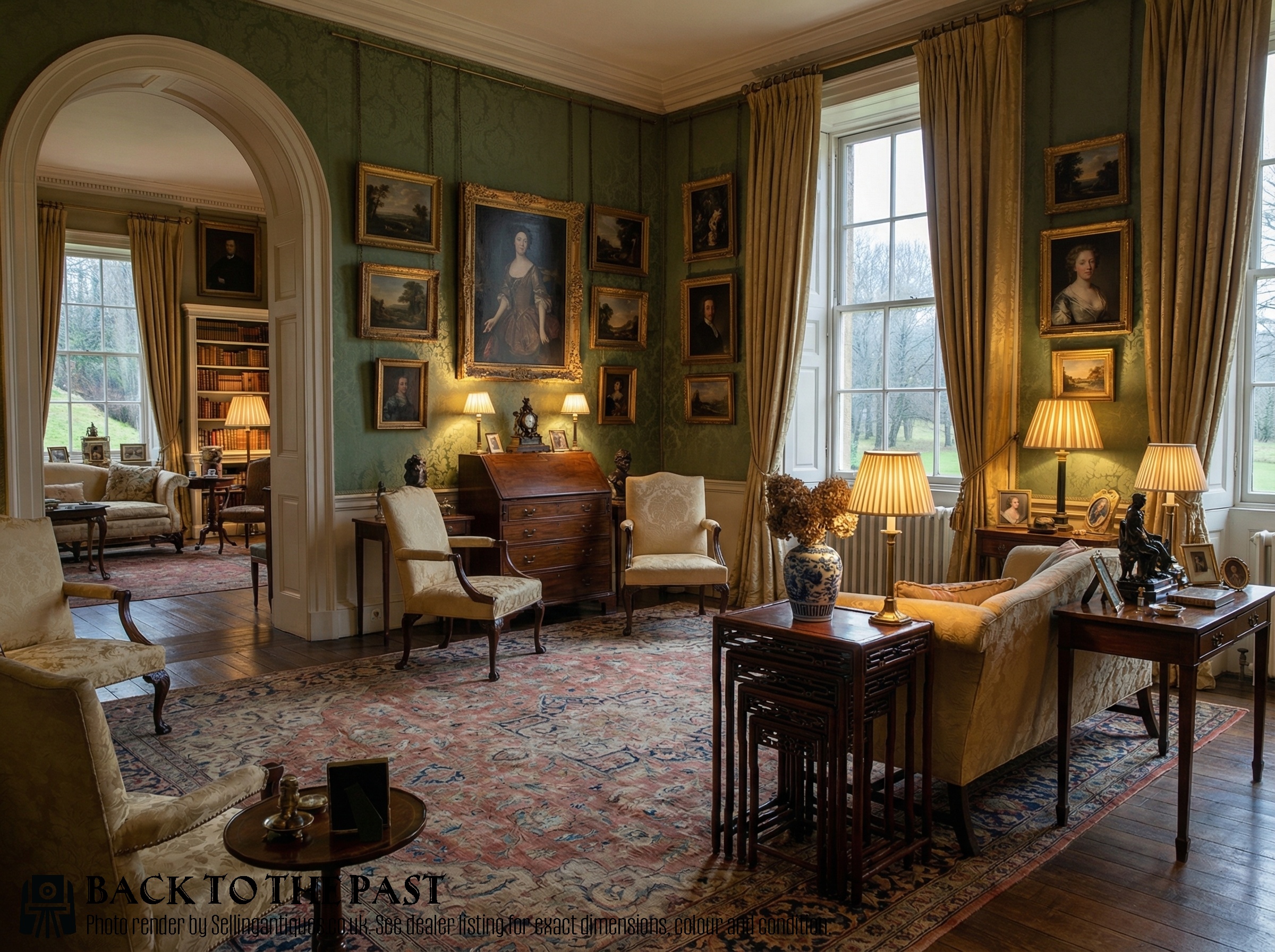
Gillows·Hille·Harry and Lou Epstein
The Antique Nest of Tables Glossary
- Nest
- A graduated set of tables that store one beneath the next, the standard being three or four.
- Quartetto
- A nest of four. It's spelled at least five ways across the titles, including quarteto, quartette and quartet.
- Quintetto
- A nest of five, turning up now and then alongside Art Deco walnut sets.
- Graduated
- The tables decrease in size in sequence, so each slides under the one above.
- Burr walnut
- Veneer cut from a knotty growth on the tree, giving swirled figure. It runs through a large part of the walnut group.
- Chinoiserie
- Western decoration in the Chinese taste, which is a different thing from the Chinese sets in the archive.
Antique Nest of Tables: Frequently Asked Questions
How many tables are in a nest?
Three or four covers the great bulk of what's on Sellingantiques, with three slightly ahead of four in the titles.
Sets of five turn up around two dozen times across the archive, mostly Art Deco walnut. A nest of only two appears two or three times in the whole run.
What does quartetto mean in a listing?
It means a nest of four, and dealers use it interchangeably with the number.
The spelling wanders. Quartetto, quarteto, quartteto, quartette and quartet all appear, and all mean the same set.
Which woods turn up most?
Mahogany leads the category, with walnut behind it, and burr walnut makes up a large share of the walnut.
Oak sets appear regularly at the plainer end. Beyond those, satinwood, rosewood, yew, amboyna, kingwood, maple, teak, padouk and birds-eye maple each show up in a handful of titles.
Are Georgian or Regency nests common?
No. Regency titles number in the dozens and 19th-century labels are thinner still, against a category concentrated in the 1900s to 1930s.
The earliest piece in the archive is an 18th-century Sheraton-period amboyna set, one of only a few pre-1800 attributions, and it sits near the top of the range.
Do Chinese and Japanese nests appear?
They do, as a steady minority. Chinese sets run to more than seventy titles, with Qing Dynasty carved hardwood, padouk, huanghuali and hongmu all named.
Japanese red lacquer sets and Anglo-Indian Kashmir sets appear alongside them. Chinoiserie is separate again: European decoration in the Chinese taste.
What unusual nests have come up?
Occasionally something appears with no companion in the archive. A nest with an integrated chess board, tops printed with maps, papier mâché side tables, bentwood, onyx, marble and gilt metal have all been listed.
One Irish Killarney ware marquetry set sits at the very top of the range.