




A 2026 Guide by Sellingantiques
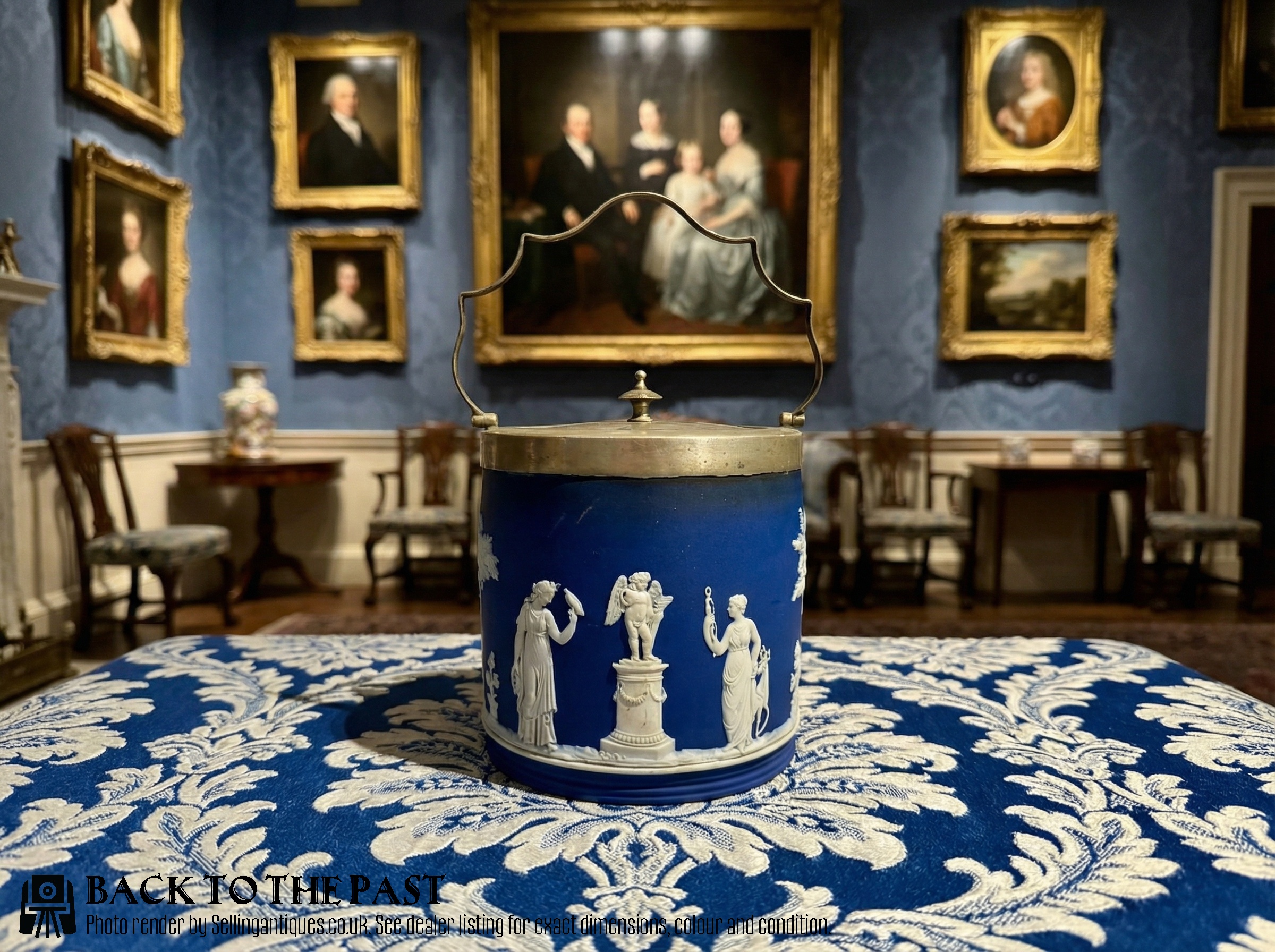
Wonderful Antique Wedgwood Jasper Ware Biscuit Barrel, 1880
Priced at £265 from Unique Antiques by Emma Jade
Josiah Wedgwood founded the company in Staffordshire in 1759. He started by refining traditional local earthenwares before developing new ceramic bodies.
Queen's Ware earned its name after Queen Charlotte ordered a tea set in 1765. This cream-coloured earthenware soon became the standard for dining tables across Europe.
Look closely at the classical influence. The late eighteenth century saw a shift towards Greek and Roman forms, driving the factory to produce basalt and jasper wares imitating ancient shapes.
Production expanded rapidly during the industrial revolution. Canals built near the Etruria works allowed heavy clay to arrive cheaply and fragile goods to leave safely.
Thomas Bentley partnered with the founder from 1769 to 1780. His connections in London society and keen eye for neoclassical design directed the ornamental production.
John Flaxman modelled many well-known reliefs in the late eighteenth century. His designs often feature mythological figures that became standard elements on Antique Wedgwood vases.
William Hackwood worked as a chief modeller for decades. He adapted classical casts and created original portraits for basalt and jasper medallions.
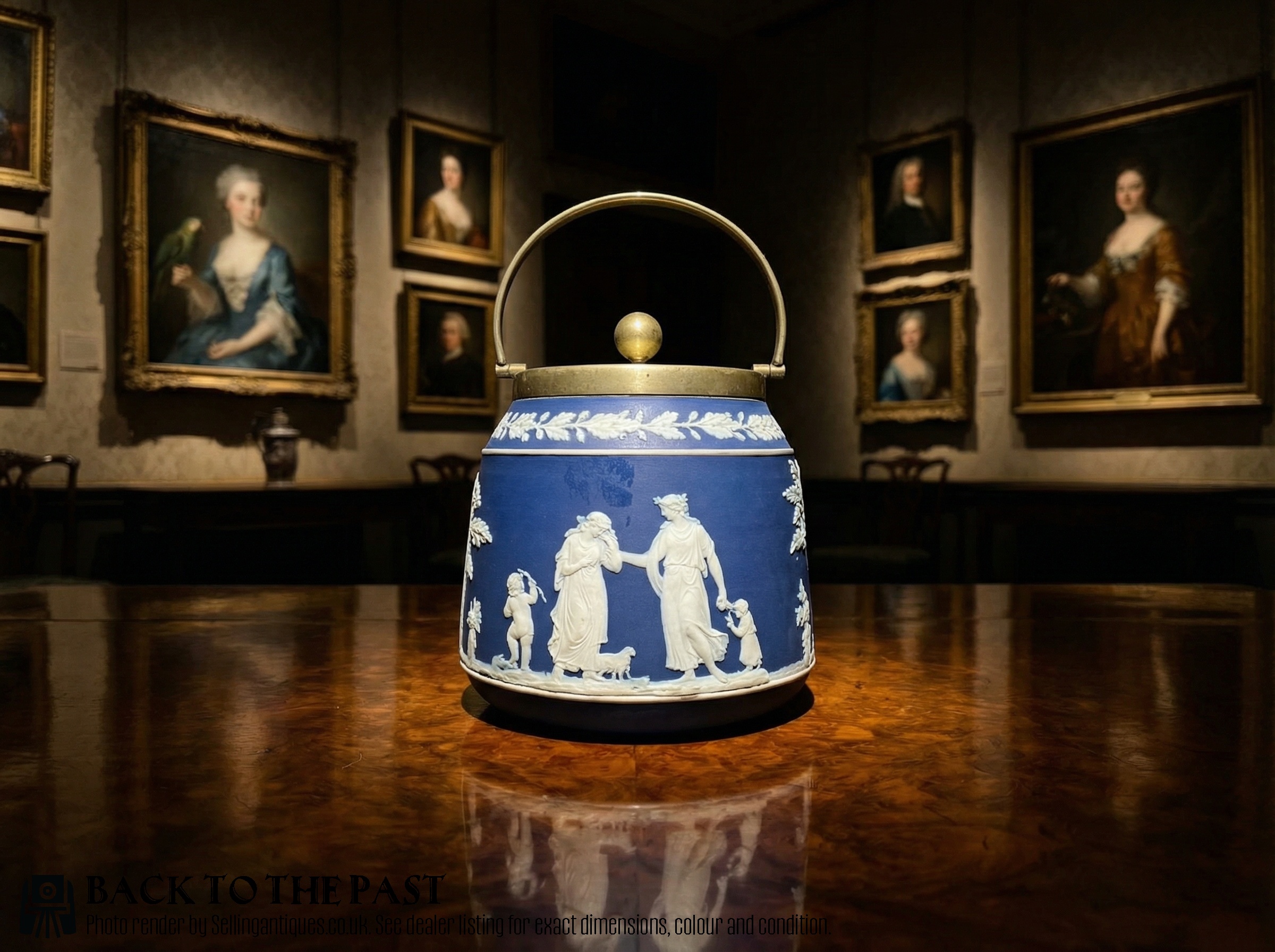
Antique Wedgwood Jasper Ware Biscuit Barrel, 1880
Priced at £265 from Unique Antiques by Emma Jade
The 2026 retail price guide for Antique Wedgwood is drawn from a proprietary archive of over 1.1 million retail prices indexed by Sellingantiques since 2003. This guide relies exclusively on their own internal data; no external sources or auction records are used.
Analysing nearly 25 years of UK antique market history alongside current retail values, the data indicates that typical UK retail prices for Antique Wedgwood range between £200 and £2,000. Entry-level prices generally fall under £200 and premium examples upwards of £2,000.
Applied reliefs stand out on many ornamental pieces. Workers pressed white clay into plaster moulds to create thin sprigs. These cut-outs were then attached to the damp vessel using water.
Check the factory mark on the base. Impressed lettering without a serif usually indicates an earlier date. The addition of 'England' points to the late nineteenth century.
Engine turning creates precise geometric patterns. A lathe cuts through a coloured slip layer to reveal the contrasting clay body underneath.
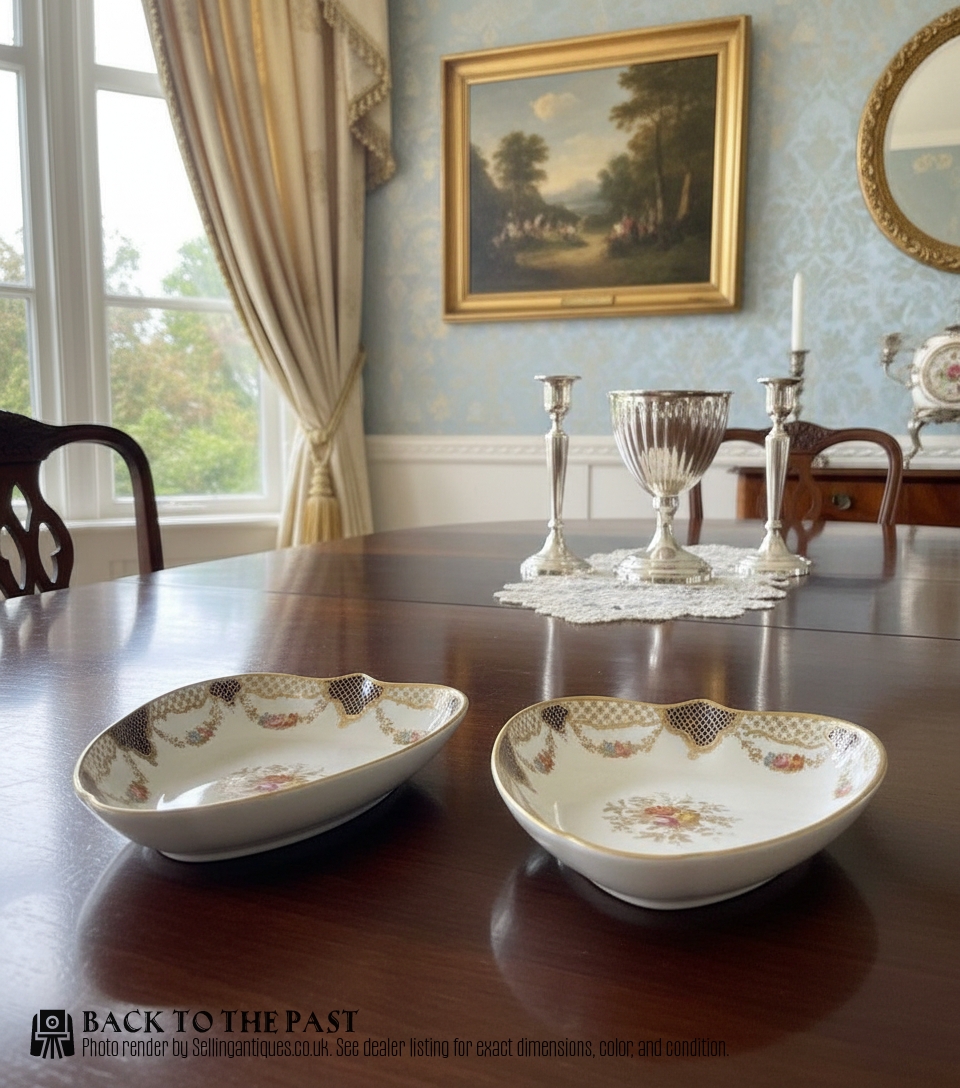
Superb Quality Pair of Antique Edwardian Hand Painted Wedgwood Shaped Dishes, 1900
Priced at £445 from London City Antiques
Throwing and turning defined the early production process. Potters formed the basic shape on a wheel. Once dry, they shaved the piece on a lathe to create crisp edges.
Moulding took over for complex neoclassical forms. Liquid slip or soft clay pressed into plaster casings allowed for consistent reproduction of elaborate handles and spouts.
Firing methods required strict control. The pyrometer allowed workers to measure kiln temperatures accurately, reducing the number of pieces lost to warping.
"The factory supplied large dinner services to Russian royalty. Catherine the Great ordered a set painted with over a thousand different British topographical views."
"Medical equipment formed part of their early catalogue. They made ceramic mortars and pestles that proved very resistant to acidic chemicals used by apothecaries."
"Many classical cameos were designed specifically to be set into steel or gold jewellery. Button makers and silversmiths bought them in thousands to mount in buckles and rings."
Based on almost 25 years of Sellingantiques UK antique market data, Antique Wedgwood appeared 997 times (out of 1,100,000 antiques) which gives it a rarity score of 82/100.
This score measures scarcity within the Sellingantiques archive only and is not a survey of the entire antiques market, so these statistics may not be indicative of the general availability of Antique Wedgwood elsewhere.
Warm water and a soft bristle brush usually do the trick. You'll want to avoid soaking them for long periods. If the white reliefs are particularly grubby, a weak solution of mild dish soap can help.
Rinse the item thoroughly afterwards. Leave it to dry in a warm room before putting it away.
That shiny interior is a standard clear glaze applied before the final firing. Potters added this to domestic basalts so the porous stoneware wouldn't absorb tea or hot water.
The matte exterior is the natural fired state of the clay. They left the outside unglazed to preserve the crisp details of the engine turning and imitate ancient metalwork.
Solid refers to clay mixed with metallic oxides so the tint runs through the entire thickness.
Dip means a white clay body was washed in a liquid slip of coloured clay. The core remains white.
The factory kept a huge library of master moulds. Workers could take sprigs from the same cast and apply them to various shapes.
Modellers frequently reworked popular figures to fit specific spaces. They might adjust an arm or reverse the orientation entirely so a pair of vases could feature figures facing each other.
Please note: This Antique Wedgwood guide and its associated pricing data are provided for general informational purposes only. It does not constitute formal financial, investment, or appraisal advice and should not be relied upon as the sole basis for any commercial activity, purchasing, or sales decisions. Sellingantiques.co.uk accepts no liability for any actions taken in reliance on this information. Always consult with a qualified professional or independent appraiser.
