




Antique Spode
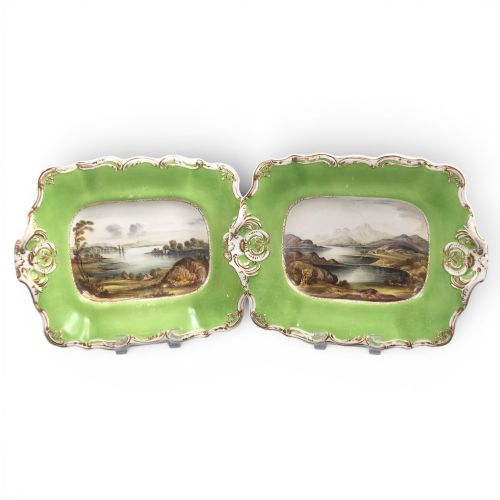
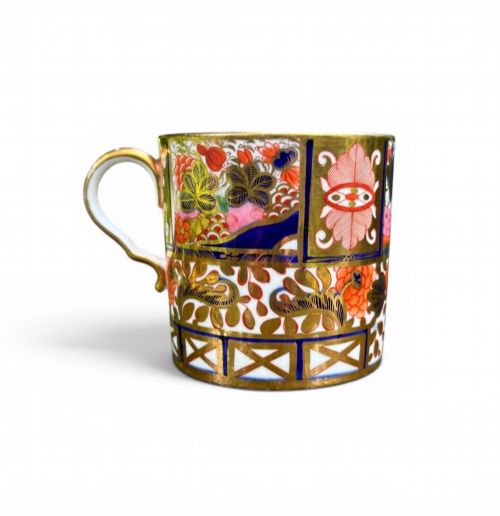
Staffordshire ceramics carrying the Spode name: painted and gilded porcelain for the tea and coffee table, blue and white printed earthenware, and the later Copeland output, made for the domestic table.
Antique Spode
Spode is a Staffordshire pottery, founded at Stoke-on-Trent in the later 18th century, making earthenware and, from around 1800, bone china for the household table. The name carried on through the 19th century under ownerships associated with the Copeland family, so Copeland and Copeland & Garrett wares sit in the same category.
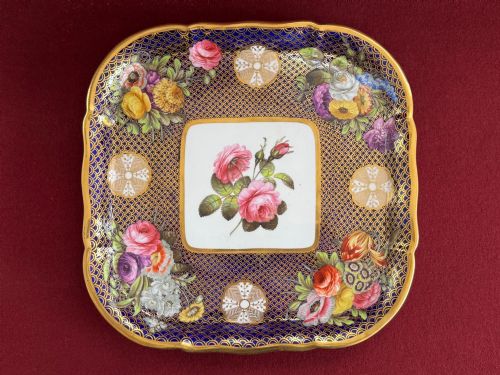
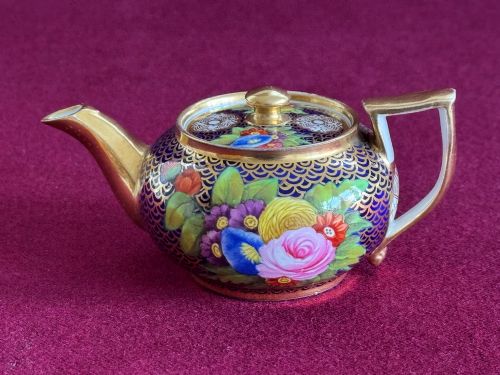
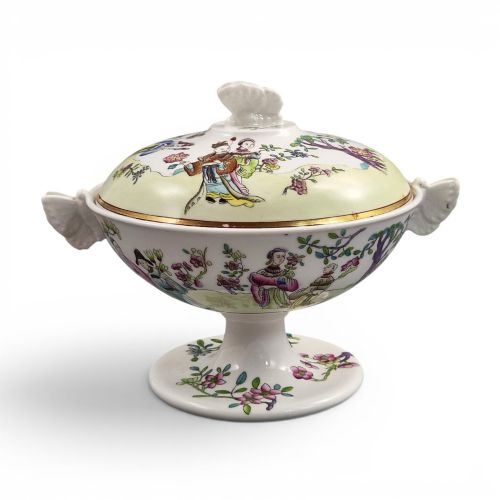
What comes up on Sellingantiques is overwhelmingly tableware and its accessories. Coffee cans and saucers, sucriers, teapots, dishes, platters, baskets and bowls, with dessert and dinner services at the larger end. The piece you are most likely to meet is a small early 19th-century porcelain tea or coffee item, identified in the title by a numbered pattern rather than by shape or mark. 'Pattern' appears in 55 of 142 titles, 'porcelain' in 49.
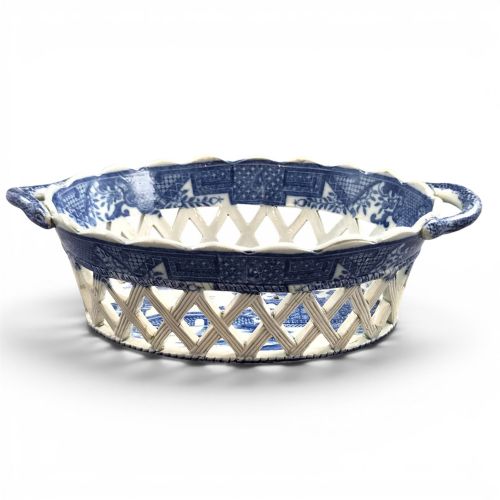
Beyond that core, the category divides into a few clear seams. Blue and white transfer-printed earthenware and stone china runs to roughly a sixth, with named printed patterns such as Bridge of Lucano, Caramanian, Tower, Greek and Indian Sporting. Imari and Japan-palette wares make a smaller consistent seam, from single coffee cans up to a five-piece amphora vase garniture. Copeland and Copeland & Garrett pieces account for about a sixth again.
Dating leans hard on the first third of the 19th century, with Georgian and Regency tags well ahead of Victorian, Edwardian or later. Only 27 of 142 listings carry a clean year, and the largest single period tag is the unspecific '19th Century', so much of what you read is a decade-band estimate, often given as a circa date in the title.
Where The Range Sits
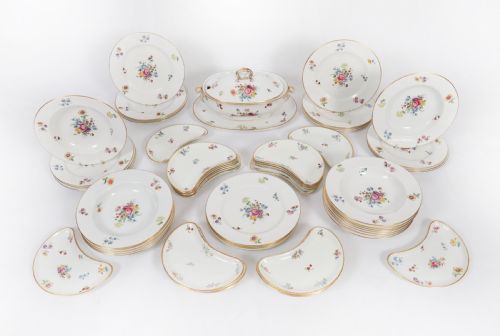
Scale and completeness do most of the work. Single coffee cans, milk jugs and sugar bowls sit at the bottom of the sampled range; multi-piece services occupy the top, including a 91-piece dinner service, a 60-piece one, and a dessert service laid for twelve. A hand-painted service will always sit above a printed dish.
Naming counts for a lot too. A title carrying a pattern number or a series name (1166, 967, Caramanian, Indian Sporting, Byron Views, Aesop's Fables) sits well above one reading simply 'Victorian Spode bowl'. The same goes for the body and process: felspar porcelain, stone china, creamware, pearlware and bat print all cluster in the upper half. Hand painting, gilding, botanical and armorial work and flower-encrusted modelling run above the plainer blue and white printed platters.
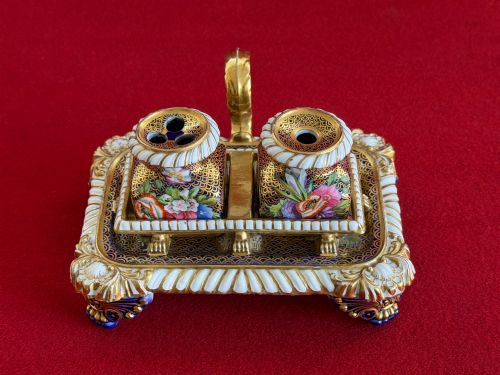
Then there are the odd forms. Footbaths turn up repeatedly for such an unusual shape, four in the samples, one in the Indian Sporting series at the very top of the range. Garden seats, ice pails, inkstands, trays and a creamware milk pail cluster in the highest band. 'Large' appears in ten titles, and it tends to mean what it says.
Antique Spode Retail Price Guide 2026
Typical UK retail prices for spode, calculated from the Sellingantiques database of over a million retail prices indexed since 2003. This retail price guide relies exclusively on Sellingantiques data; no external sources or auction records are used, so the figures do not describe the wider market.
One-offs to pass through: an Art Deco cockerel cocktail shaker, a creamware milk pail, a pearlware toast rack and a cottage pastille burner.
Copeland Spode
The Antique Spode Glossary
- Pattern number
- A painted or printed factory number, 319, 963, 967 or 1166, identifying the decoration. The commonest identifier in these titles, and 1166 alone recurs across a candlestick, an inkstand, a miniature basket, a 'toy' teapot, a bottle and stand and a large tray.
- Coffee can
- A straight-sided cylindrical cup without a saucer curve. Sold alone or as a can and saucer, and the most frequent form in the category.
- Sucrier
- A lidded sugar box or bowl, usually part of a tea service.
- Trio
- A teacup, coffee cup and single saucer from one service.
- Felspar porcelain
- A named porcelain body, used here on dishes, sucriers and dessert services.
- Bat print
- A finely stippled printing method using a gelatine 'bat'. Two coffee cans in the samples are described this way.
Antique Spode: Frequently Asked Questions
What does the pattern number on Spode mean?
It is a factory number for the decoration, painted or printed on the piece. Numbers such as 319, 557, 643, 963, 967, 1166 and 1916 all appear in listings on Sellingantiques.
It is the category's working language. The word 'pattern' turns up in 55 of 142 titles, and pieces are far more often identified by number than by shape or mark.
Is Spode porcelain or earthenware?
Both. The early painted and gilded tea and coffee wares are bone china and felspar porcelain, and 'porcelain' appears in 49 of 142 titles.
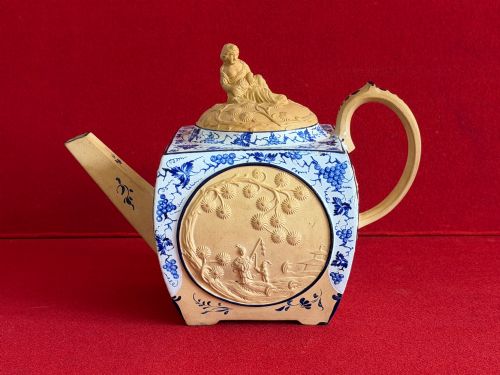
The blue and white group is transfer-printed earthenware and stone china. Creamware and pearlware also turn up, on a milk pail and a toast rack among other things.
How old is most antique Spode for sale?
The dated field runs from 1800 to 1940, but the weight is firmly on the first third of the 19th century. Georgian and Regency tags outnumber Victorian, Edwardian and later ones together.
Precision is another matter. Only 27 of 142 listings carry a clean year, and the biggest single tag is simply '19th Century'.
Why is Copeland listed under Spode?
The Spode name continued through 19th-century ownerships associated with the Copeland family, so Copeland and Copeland & Garrett wares belong in the same category.
They make up about a sixth of titles: dishes and platters, an Italian pattern comport and service, a jasperware biscuit barrel, garden seats and an Art Deco cocktail shaker.
Which blue and white patterns come up?
Named printed patterns in the samples include Bridge of Lucano, Caramanian, Tower, Greek, Girl at the Well, Death of the Bear, Lanje Lijsen and Indian Sporting.
They appear on dishes, platters and larger serving pieces, and on the odd form too. One of the two Chinese-style barrel garden seats carries the Tower pattern.
What unusual Spode shapes turn up?
Footbaths appear four times in the samples, which is a lot for such a form, and one in the Indian Sporting series sits at the very top of the range.
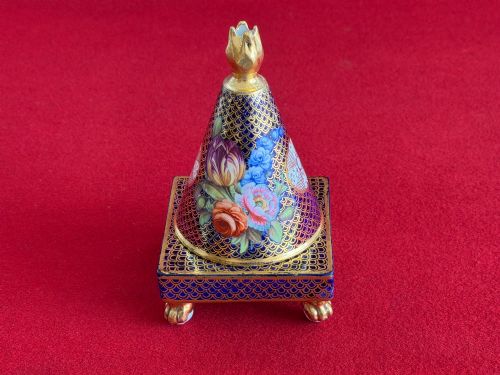
One-offs include a creamware milk pail, a pearlware toast rack, a pen tray, a violet holder, a silver-gilt mounted scent bottle, an inkstand and a cottage pastille burner.
Garden seats, ice pails and large trays fill out the same end.