


Antique Figures
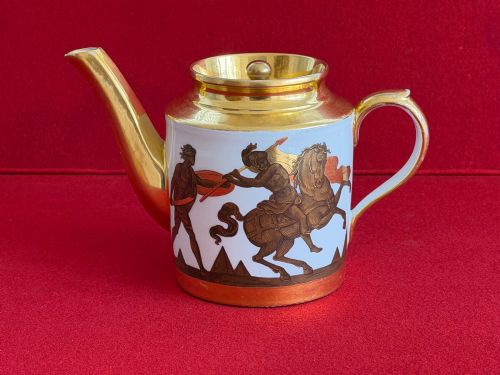
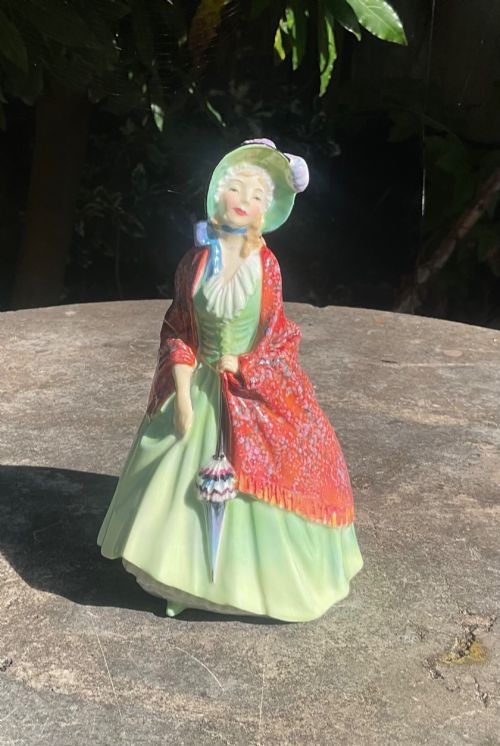
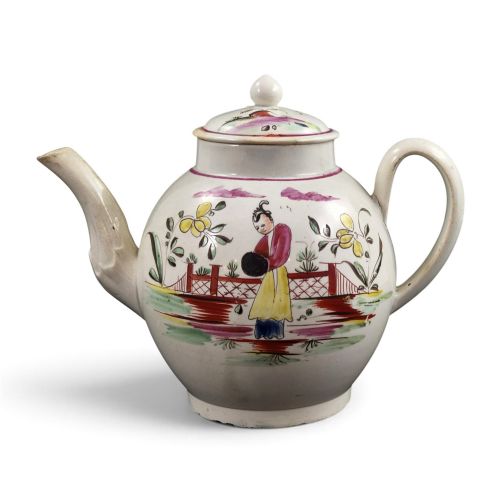
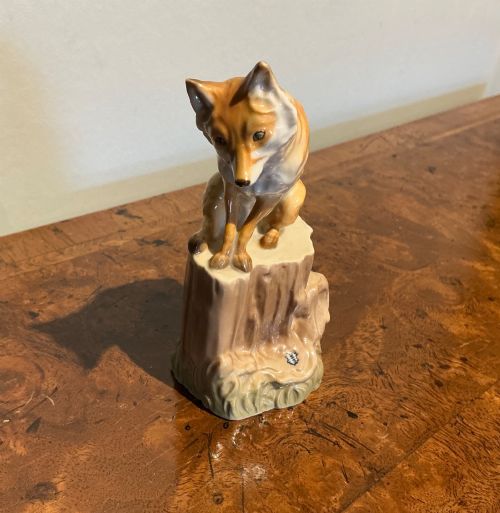
Modelled ceramic figures - people, animals and allegories in pottery, porcelain, parian, bisque and terracotta - made as mantel and table ornaments, and often doing a job as well.
Antique Figures
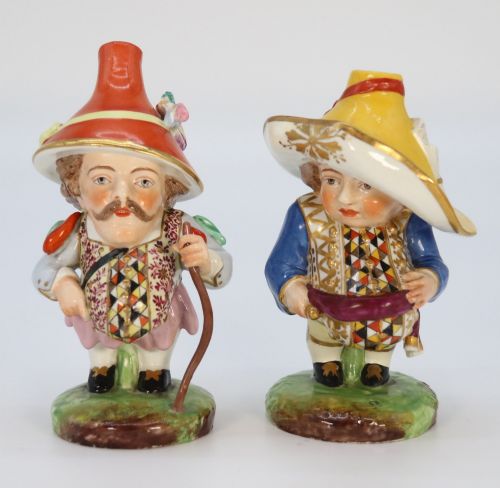
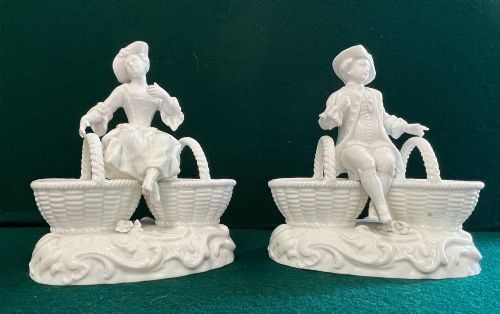
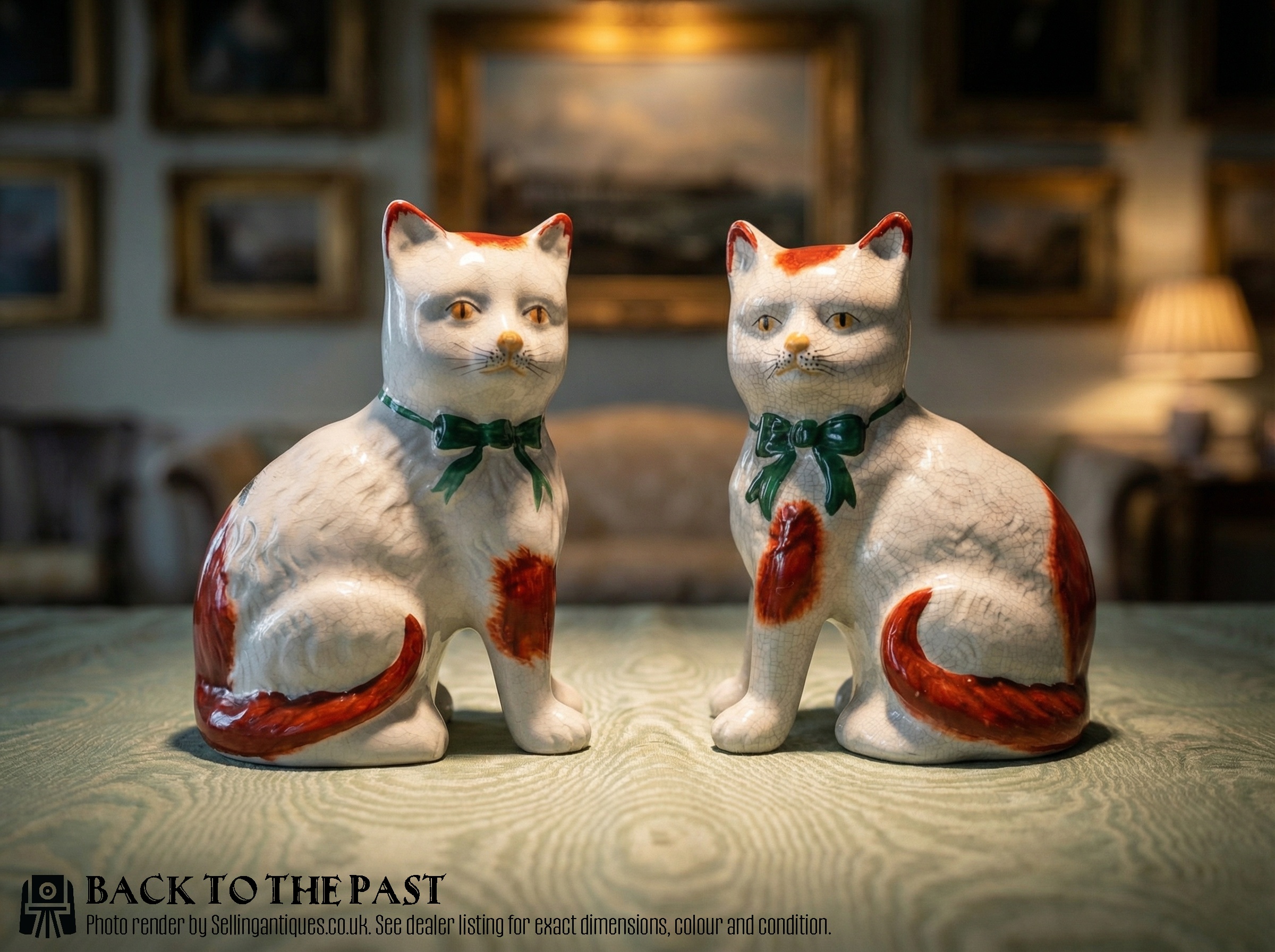
The word "figure" carries just under half the titles on Sellingantiques, with "figurine" adding a few more. A quarter say "pair", so the companion model is close to the default unit: lady and gentleman, shepherd and shepherdess, facing spaniels. A smaller run are groups, two or more figures on one base.
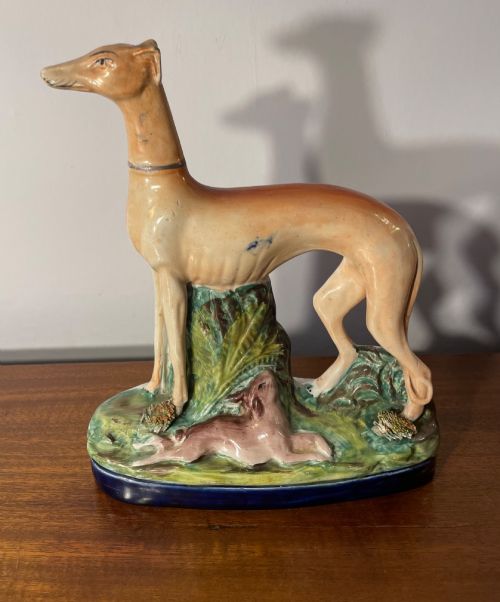
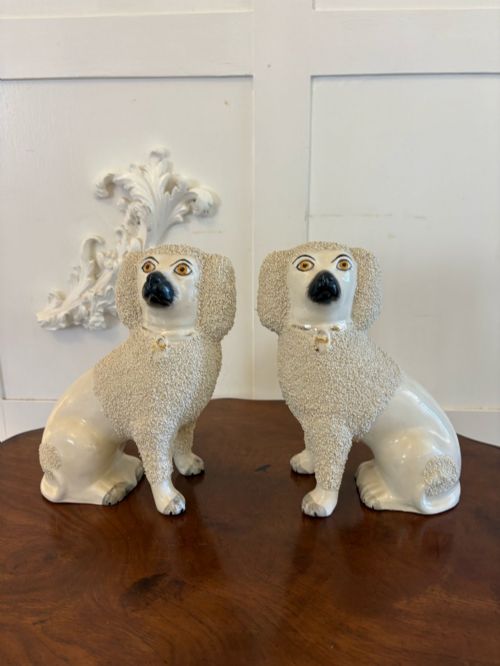
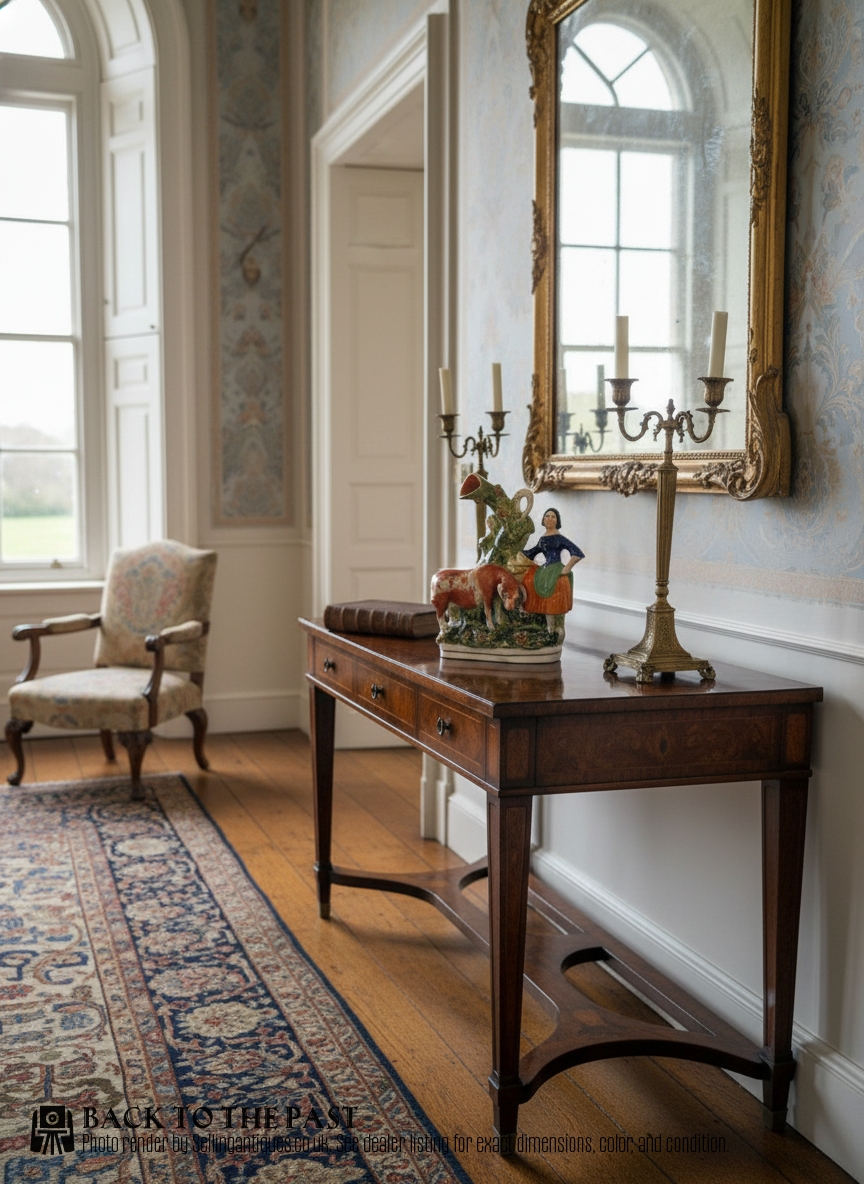
The Victorian Staffordshire earthenware figure dominates. "Staffordshire" appears in about a third of titles, and with it come portrait and theatrical subjects - Prince of Wales, Napoleon III, Shakespeare, Dick Turpin, Tom King, Moody and Sankey - alongside animals, spaniels and greyhounds above all. Flatbacks, modelled at the front and plain behind, were made to stand against a chimneypiece.
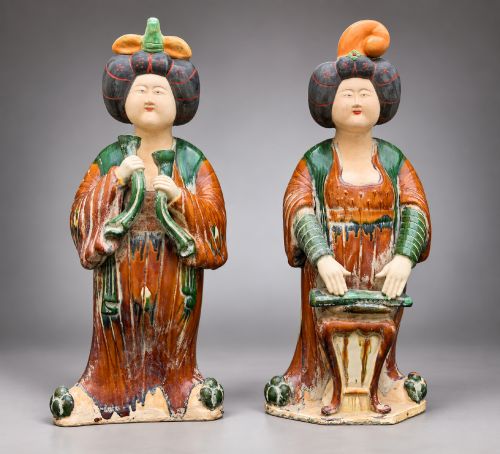
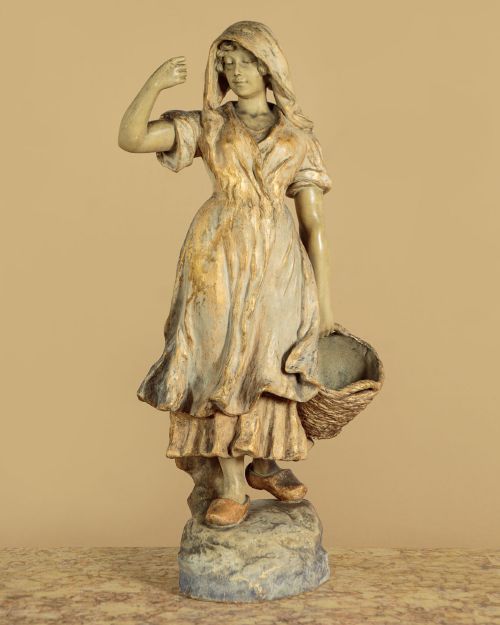
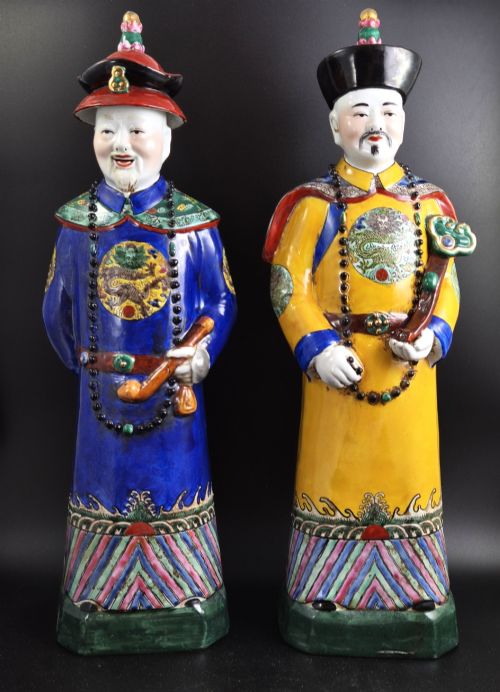
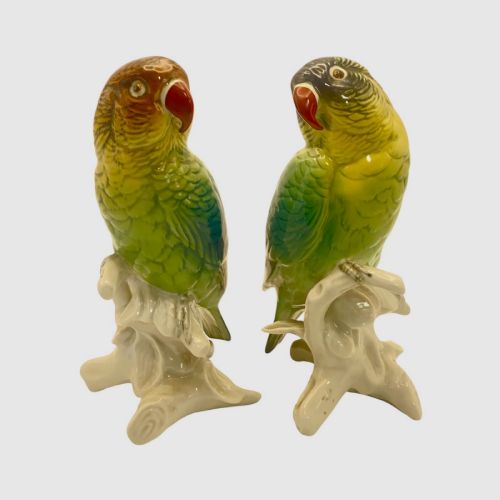
Porcelain runs close behind, roughly a quarter of the category, in English factory work and in Continental figures and groups from Germany and France. Parian, bisque and terracotta take a smaller share, in busts, biscuit figures, piano babies and larger studies. Chinese and Japanese figures are the least common origins recorded, among them Dehua blanc de chine, sancai tomb figures and Sumida Gawa wares.
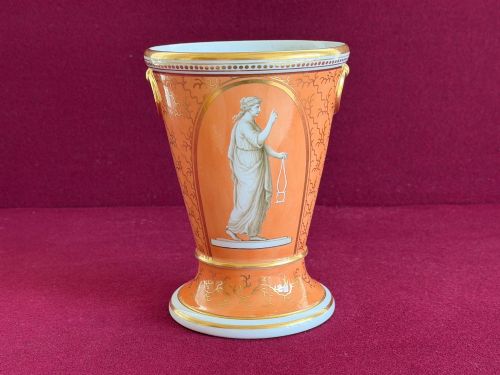
Dealer-entered dates run from 1700 to 1960, though much of the category is labelled by era rather than year: "19th Century" alone covers 335 listings and "Victorian" another 95. Where dates are committed to, the 1860s and 1880s are the densest decades, and 104 listings are given as 18th century. Many figures are also useful things: watch holders, spill vases, inkwells, quill and pen holders, money boxes, bookends, candlesticks.
What Sets Them Apart
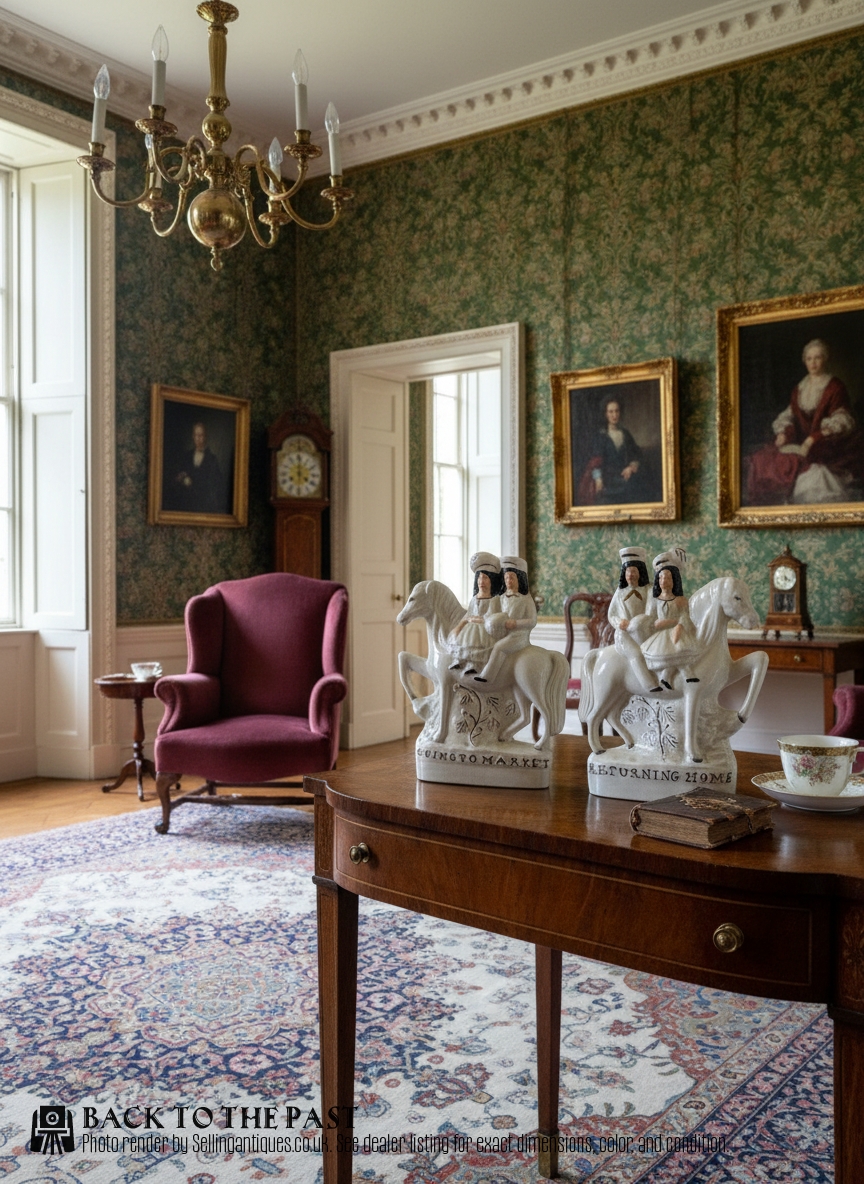
Completeness does most of the work. Pairs and full sets sit at the top of the range, and the upper reaches of what has sold are thick with them: Four Seasons sets, four-figure porcelain sets, a run of ten matched figures. A single survivor of a facing pair reads differently from the pair intact.
Scale and attribution pull in the same direction. "Large" appears in 145 titles, and heights get quoted as selling points when they run past 40 or 50cm; those tend to cluster at the dearer end. So do named factories with a named modeller and a shape or model number behind them, while an unattributed pair of 19th-century porcelain figures sits lower.
Date and subject account for the rest. Georgian and 18th-century porcelain sits above mid-Victorian Staffordshire, which fills the broad middle and lower reaches. Unusual subjects do the same thing: bull-baiting groups, a parrot on a hoop, nodding pagodas. Rarity language and museum provenance recur in the listings that sit highest.
Antique Figures Retail Price Guide 2026
Typical UK retail prices for figures, calculated from the Sellingantiques database of over a million retail prices indexed since 2003. This retail price guide relies exclusively on Sellingantiques data; no external sources or auction records are used, so the figures do not describe the wider market.
The top sale of the last year on Sellingantiques was a Royal Worcester pair of Japanese figures by Hadley, which sold in April 2026.
James Hadley·Goldscheider·Royal Dux
The Antique Figures Glossary
- Flatback
- A figure modelled in the round at the front and left plain behind, made to stand against a wall or chimneypiece. Twenty-five titles use the word.
- Pair
- Two figures made as facing companions, in 319 titles. Often described as lady and gentleman, shepherd and shepherdess, or matched animals.
- Figure group
- Two or more figures modelled on a single base. Forty-three titles use the phrase.
- Pearlware
- A whitened earthenware body behind many early Staffordshire figures, named in 31 titles.
- Parian
- Unglazed white porcelain with the look of marble, used for classical and portrait figures and busts. Bisque or biscuit is the matt unglazed porcelain equivalent.
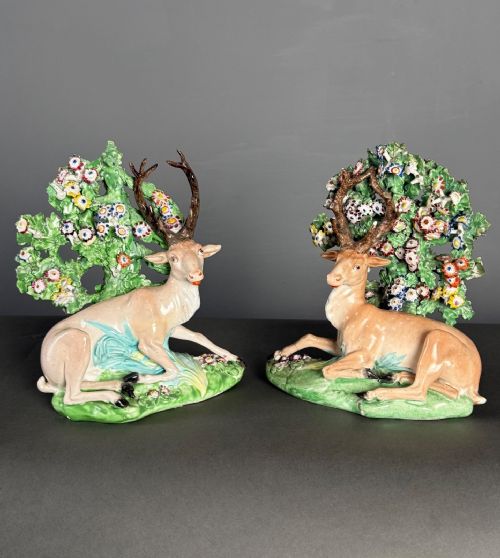
- Bocage
- The leafy or floral backdrop modelled behind a figure, a note that recurs in both pottery and porcelain entries.
Antique Figures: Frequently Asked Questions
What kinds of figures turn up most often?
Victorian Staffordshire earthenware leads. "Staffordshire" appears in about a third of titles, with portrait subjects, theatrical characters and animals, spaniels most of all.
Porcelain is the other large block, roughly a quarter, split between English factory figures and Continental figures and groups. Parian, bisque, terracotta and Asian ceramics make up the remainder.
Why do so many listings say pair?
Figures were commonly made as facing companions for either end of a mantel. Shepherd and shepherdess, lady and gentleman, or two animals turned toward each other.
A quarter of all titles on Sellingantiques carry the word, so the pair is close to the category's standard unit rather than an exception.
How old are these figures?
Dealer-entered dates run from 1700 to 1960. One outlier sits outside that span, an Egyptian faience shabti entered simply as "Before 1700".
Much of the category is dated by era: "19th Century" covers 335 listings, "Victorian" another 95, "18th Century" 104. Where a year is given, the 1860s and 1880s are the densest decades.
Are figures ever useful as well as decorative?
Often. The listings include watch holders, spill vases, quill and pen holders, inkwells, candlesticks, money boxes, bookends and a pepper pot, all modelled as figures.
One group even advertises soap.
Does size affect where a figure sits in the range?
Height gets quoted as a selling point when there is height to quote, and "large" appears in 145 titles.
The taller entries, 50cm harvesters, 52.5cm parian, French and German pairs at 60cm and above, cluster toward the top of the sampled range.
Which Asian figures appear in this category?
Chinese figures are named in 46 titles and Japanese in 33, making these the least common origins recorded against 101 titles that simply say English.
They include Tang-style sancai tomb figures, Dehua blanc de chine Guanyin, Sumida Gawa wares, and a pair of Japanese ceramic roof ornaments.