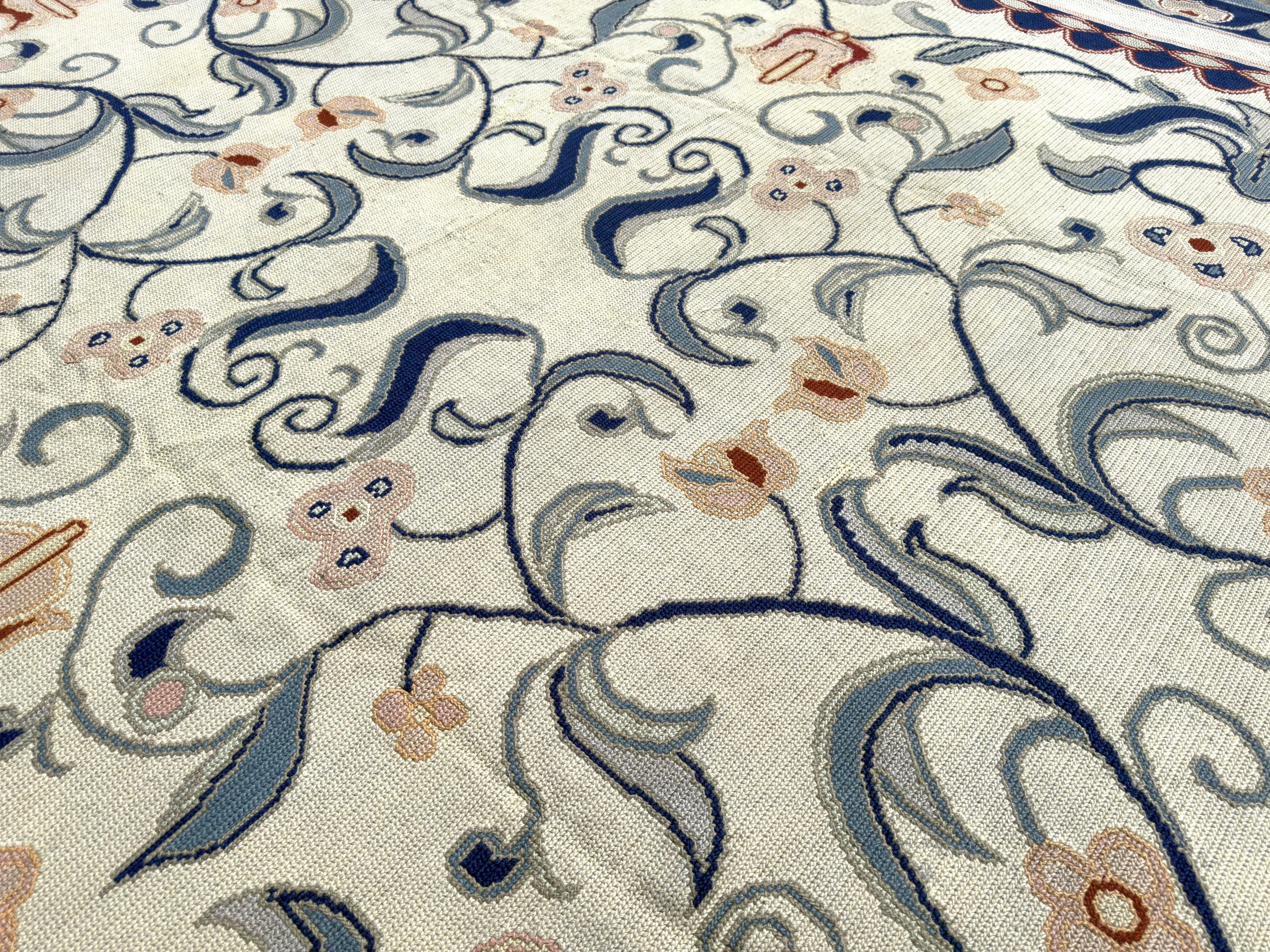
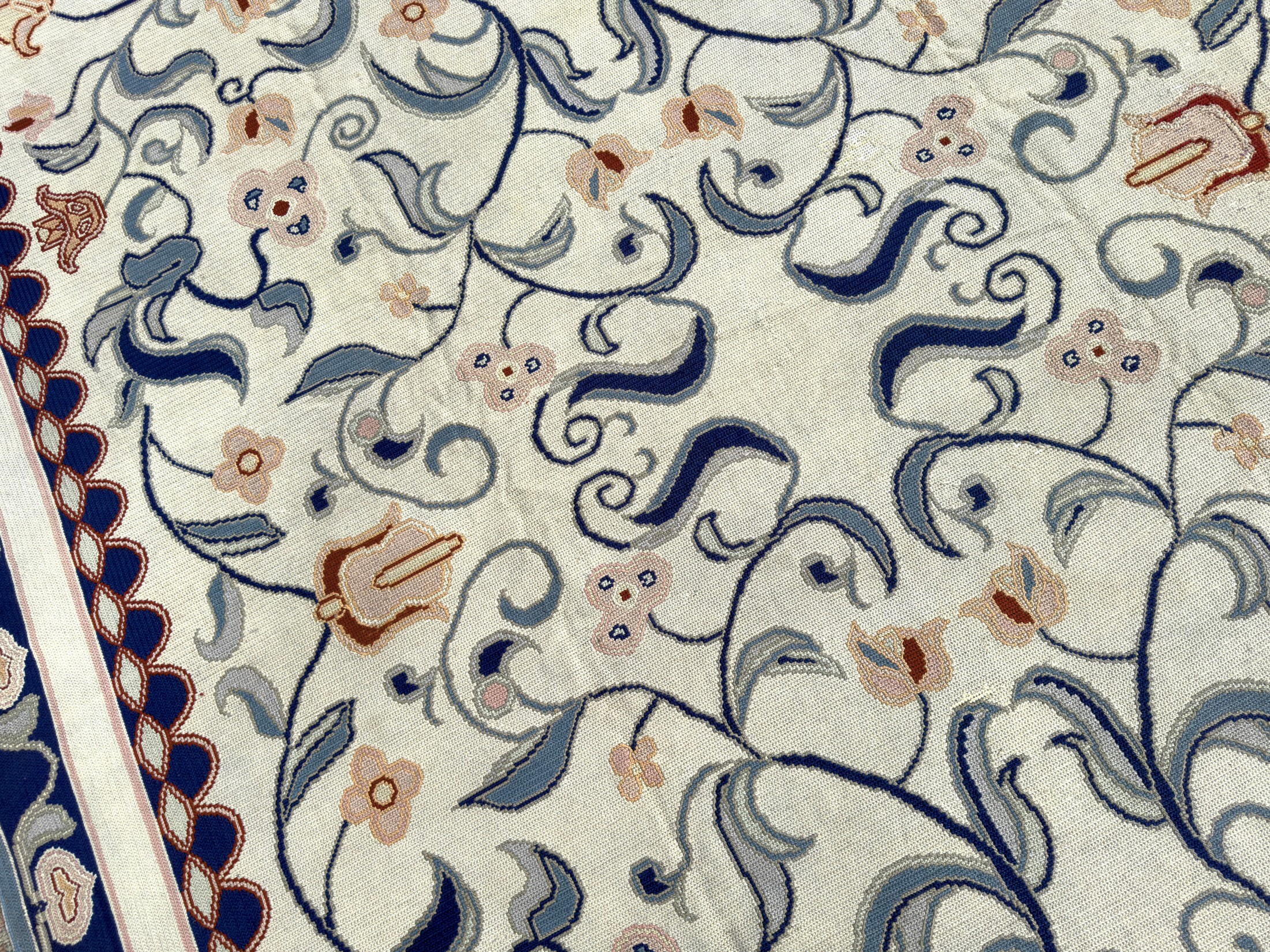
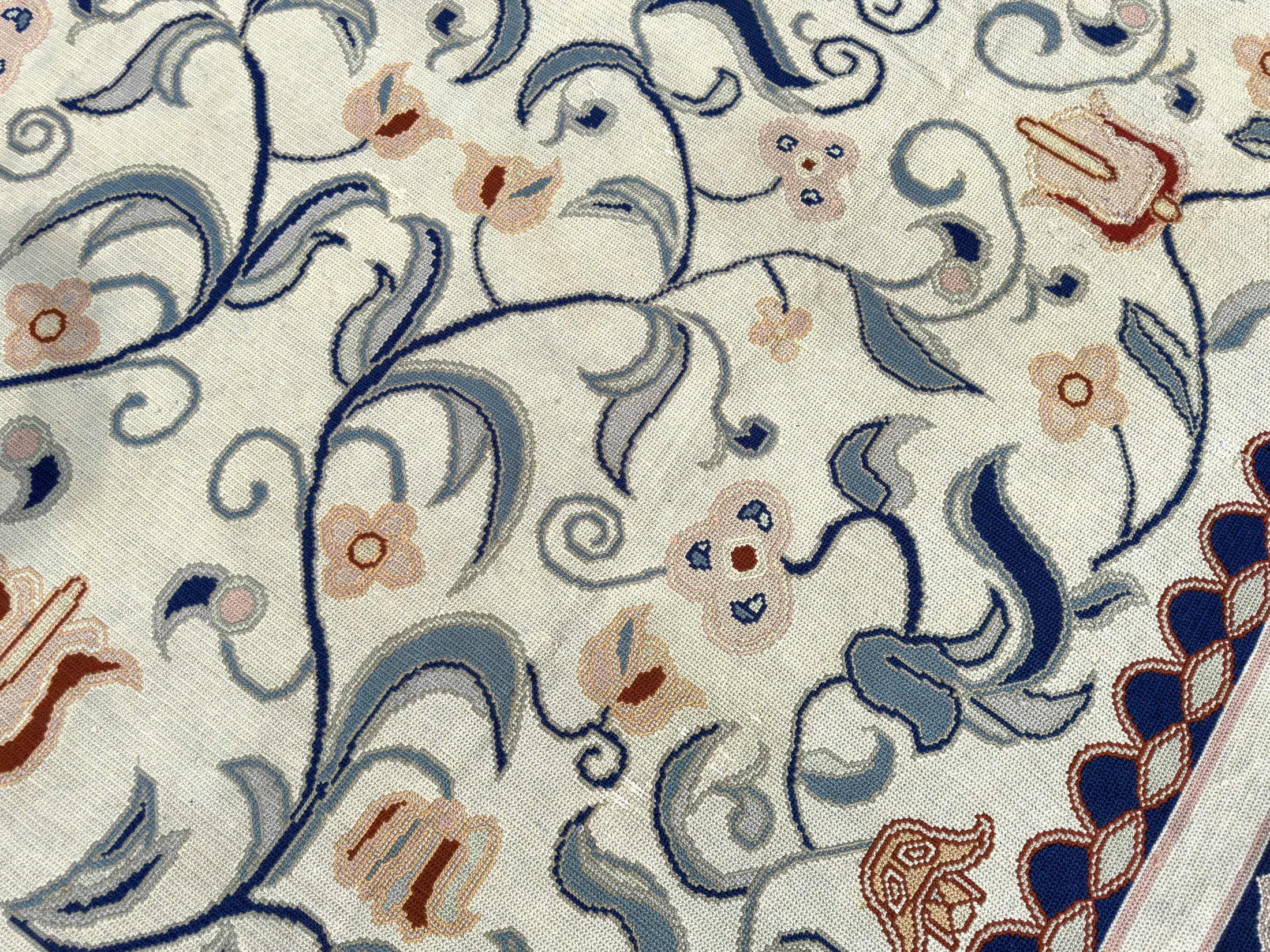
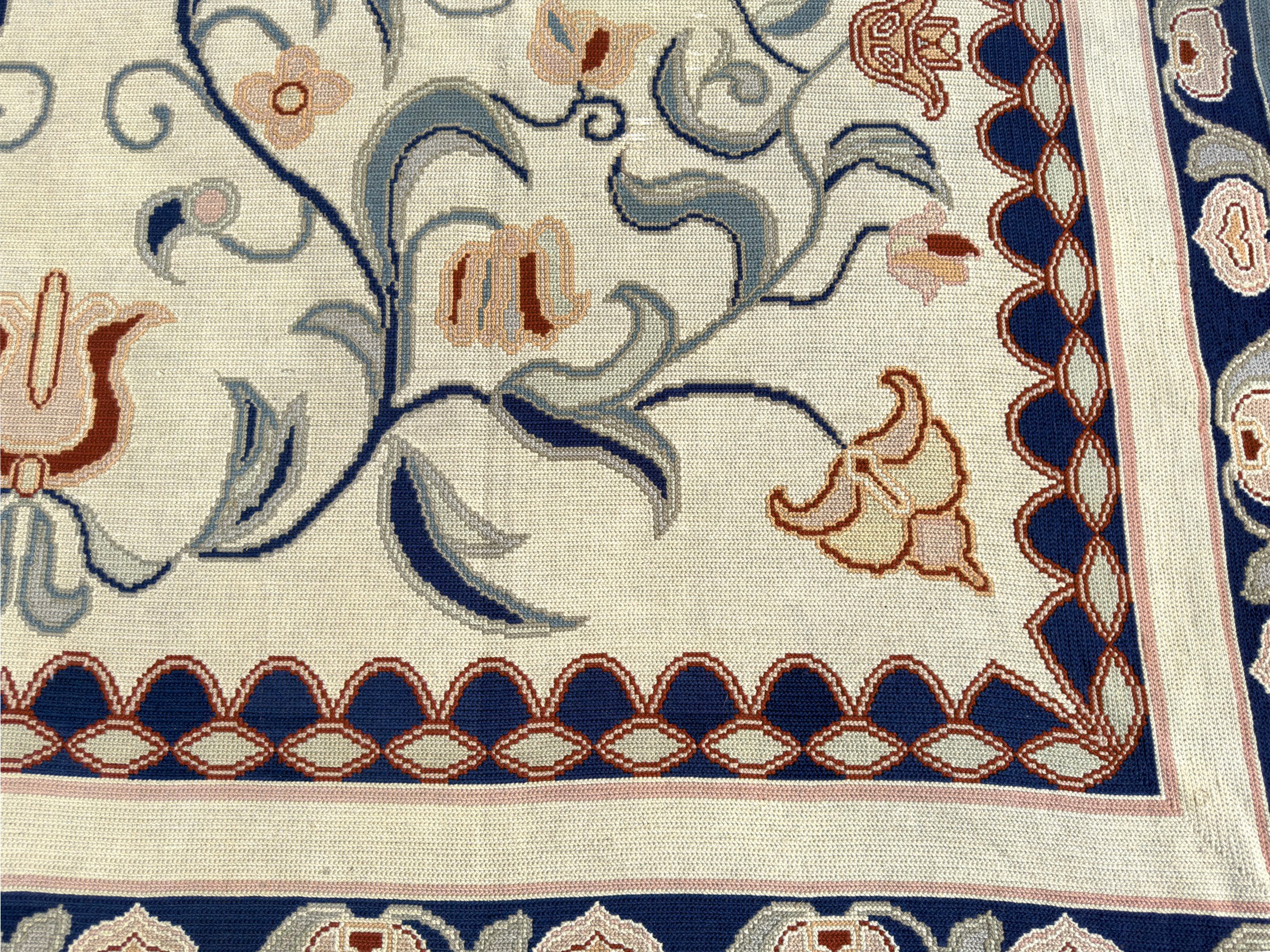
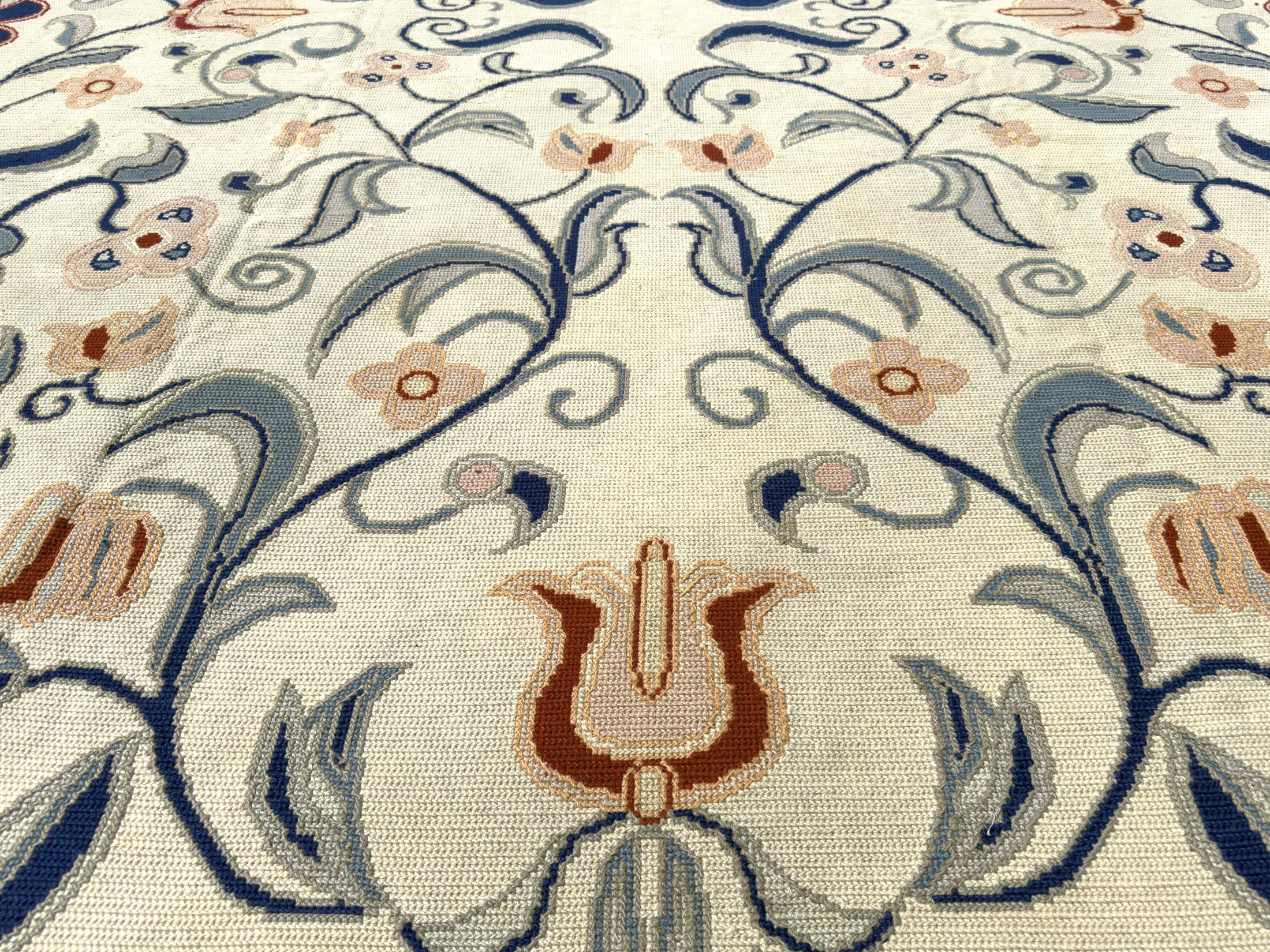
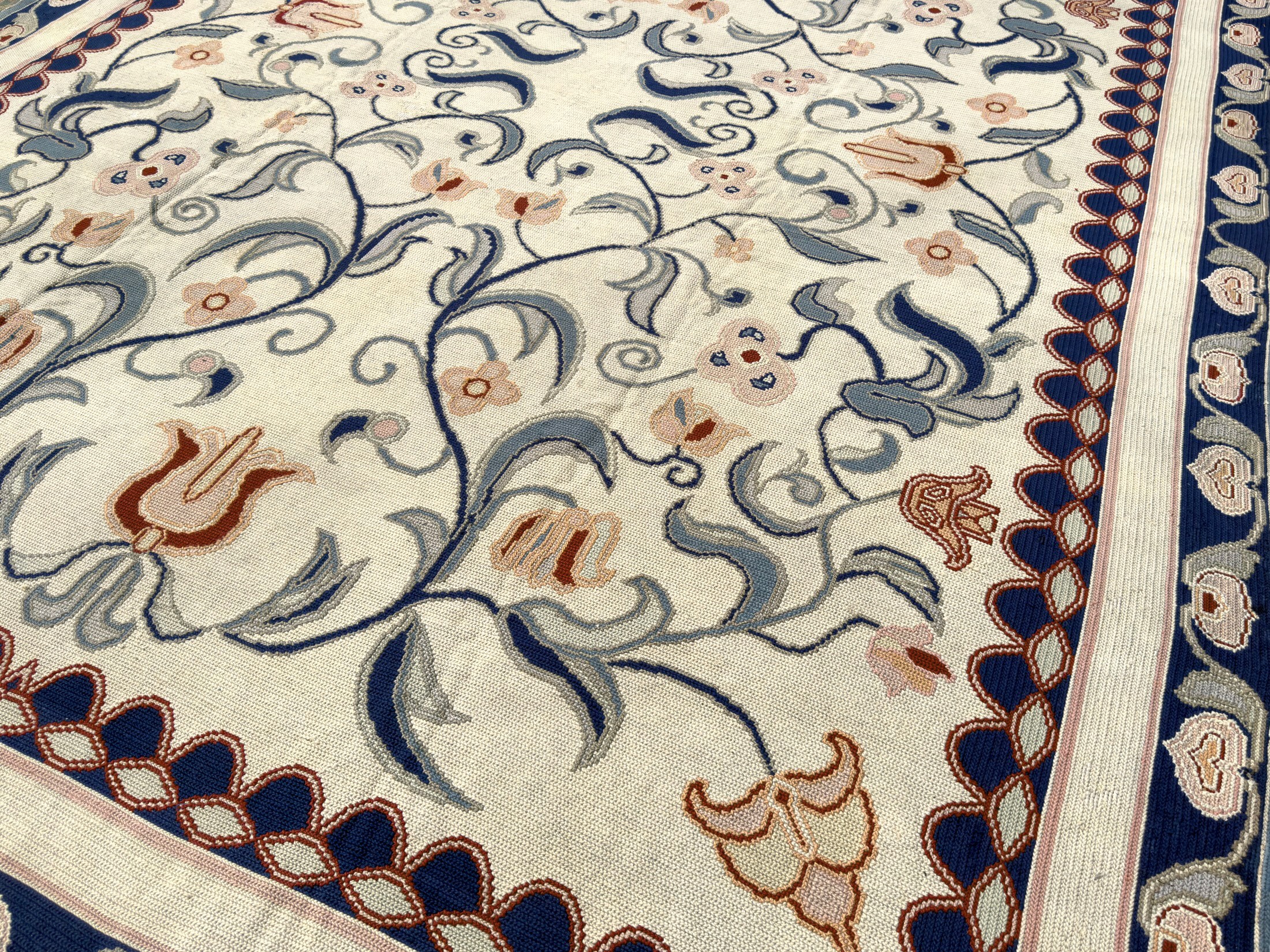
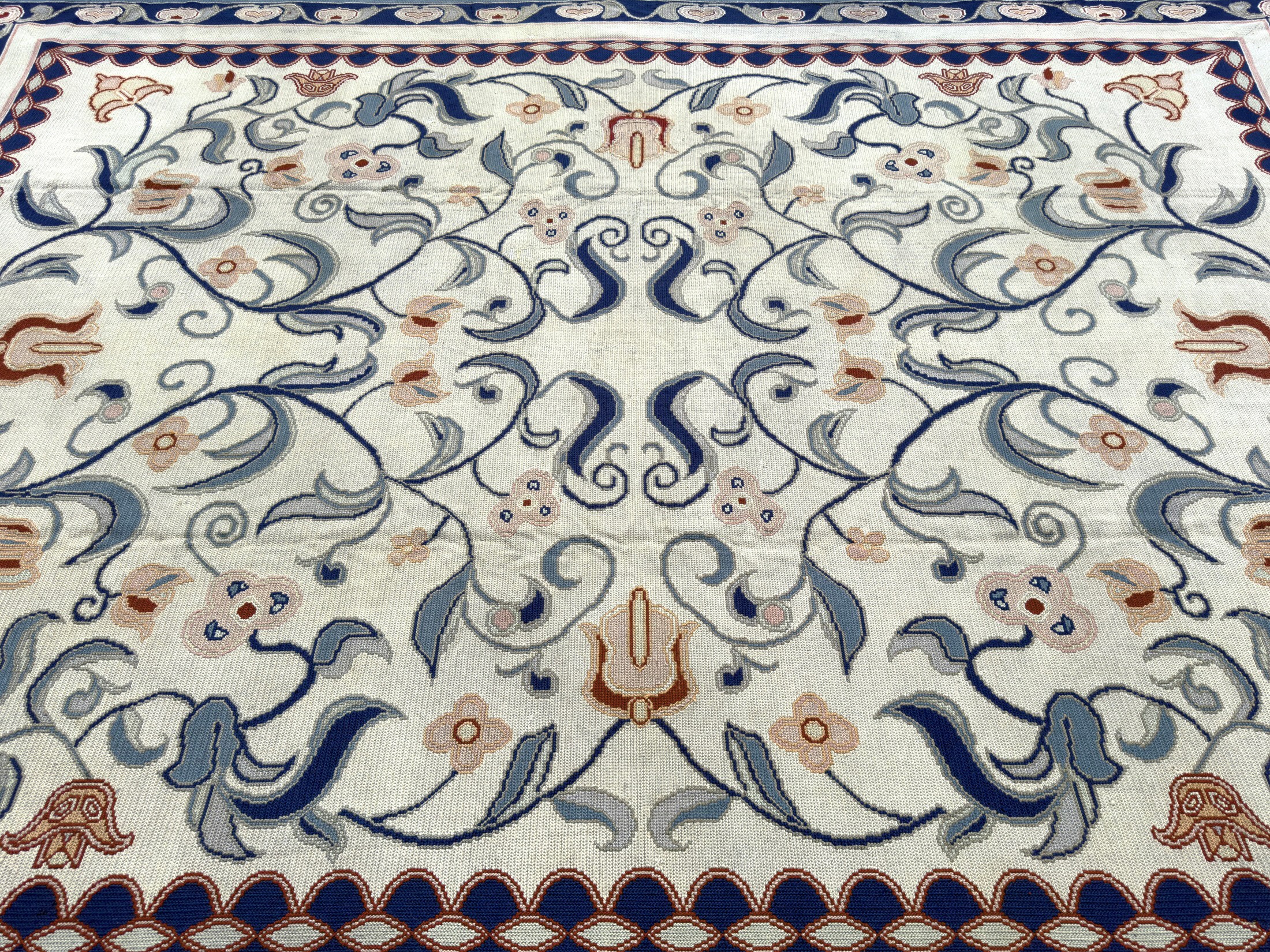
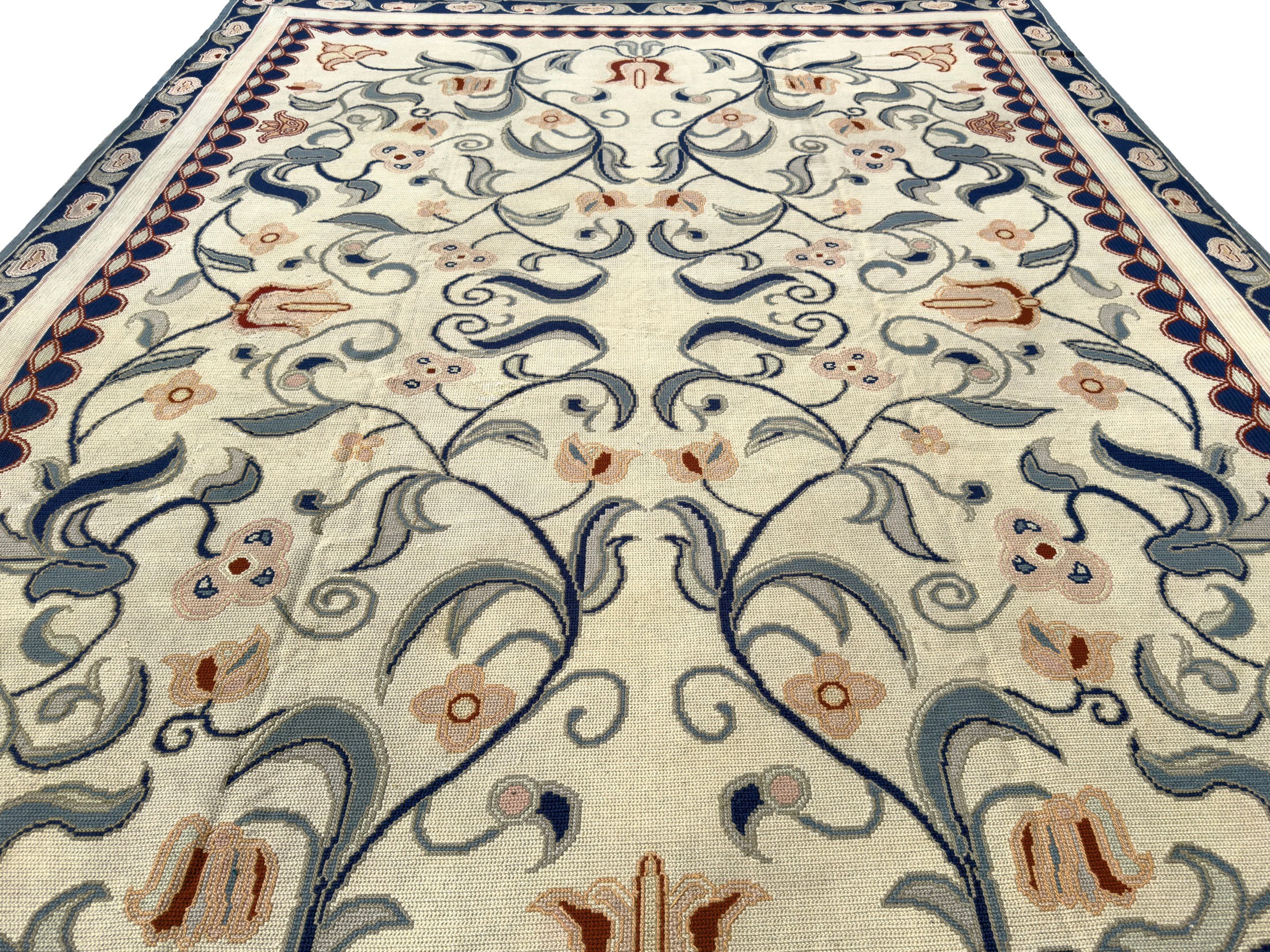
Farnham Antique Carpets has dated this Portuguese Needlepoint Rug to the 1940s.
In lovely condition for its age and a large needlepoint, which will sit flat on the floor with our sturdy underlay we supply.
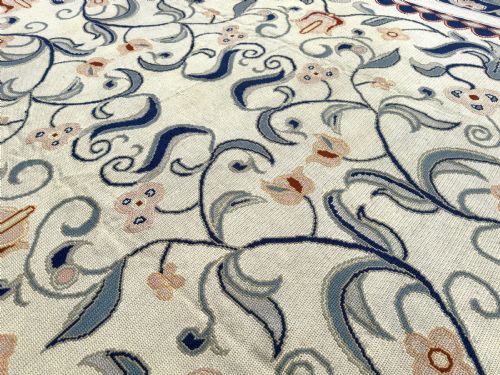
Portuguese Needlepoint carpets differ from traditional Persian carpet weaving in that they produced using a tapestry needle and are created using diagonal stitches on the carpet’s jute or wool canvas. They have a larger wool knot because of this technique. The elegant floral patterns are actually created by changing the colours of the wool. Where as traditional Persian carpets are woven on a vertical loom, where the warp is strung vertically and the weft and knots go across the warp.
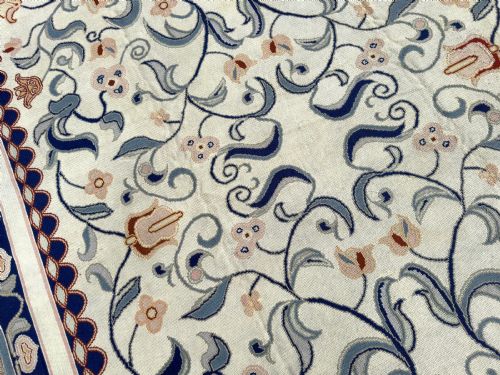
The tradition of weaving needlepoint rugs goes as far back as 1492 in Spain, Queen Isabella had weavers create beautiful chair coverings, bed head boards and floor coverings. Queen Isabella expelled the Jews in the same year and many of them ended up in Arraiolos in Southern-Portugal. They had little skills or resources being expelled so quickly, but the women brought their expertise and knowledge of weaving needlepoints with them. They started weaving needlepoint carpets to make a living and the women used to weave them in the village on the porch steps in the glorious sunshine! Many of the designs reflect tile work throughout Spain and Portuguese architecture. They are still woven in Portugal today, and you can see women weaving in groups producing beautiful carpets.
Farnham Antique Carpets has dated this Portuguese Needlepoint Rug to the 1940s.
Specialists in antique decorative carpets, rugs and runners.
You can view the stock and full dealer information on the Farnham Antique Carpets Profile Page
Farnham Antique Carpets is a registered member of LAPADA BADA
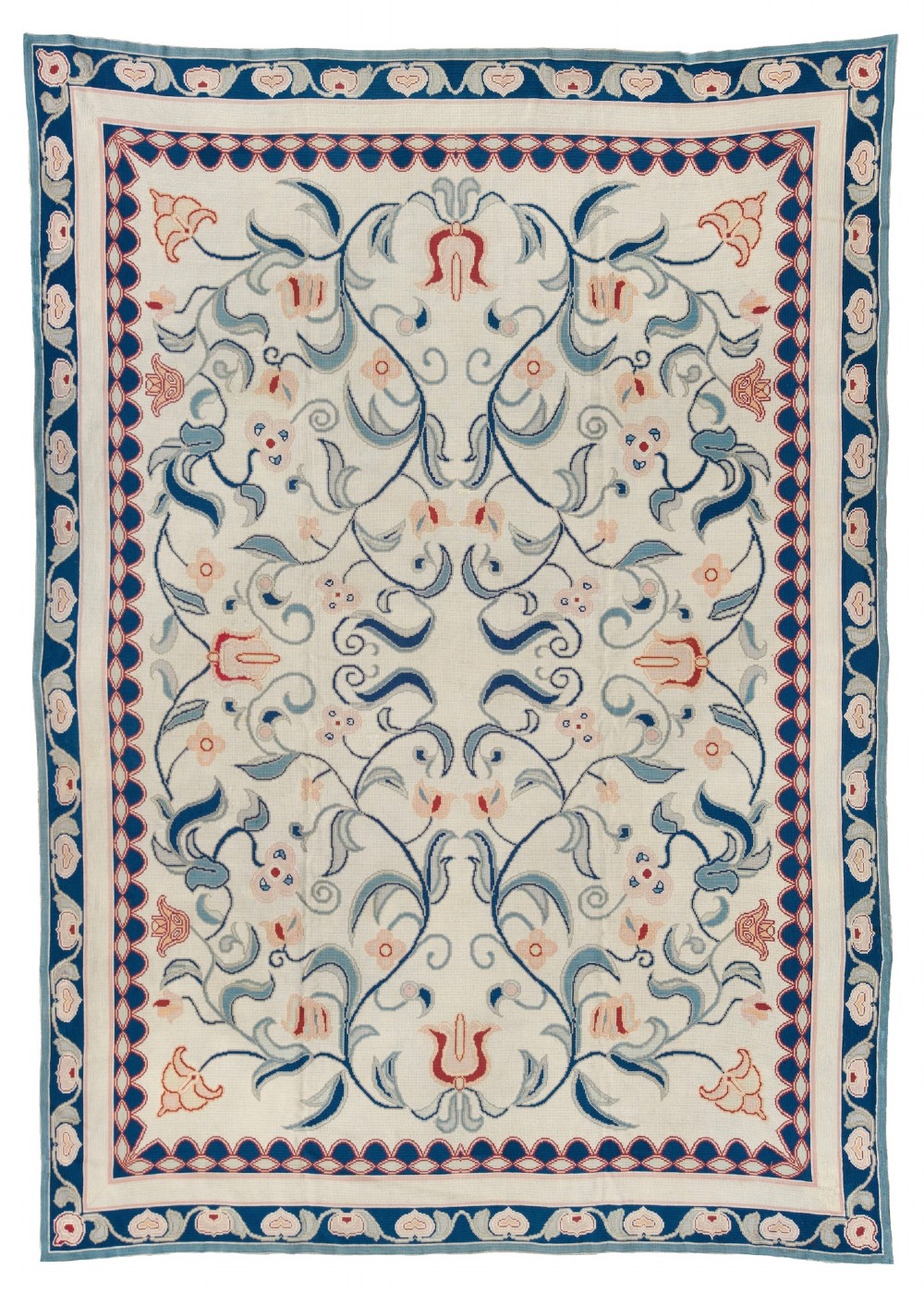
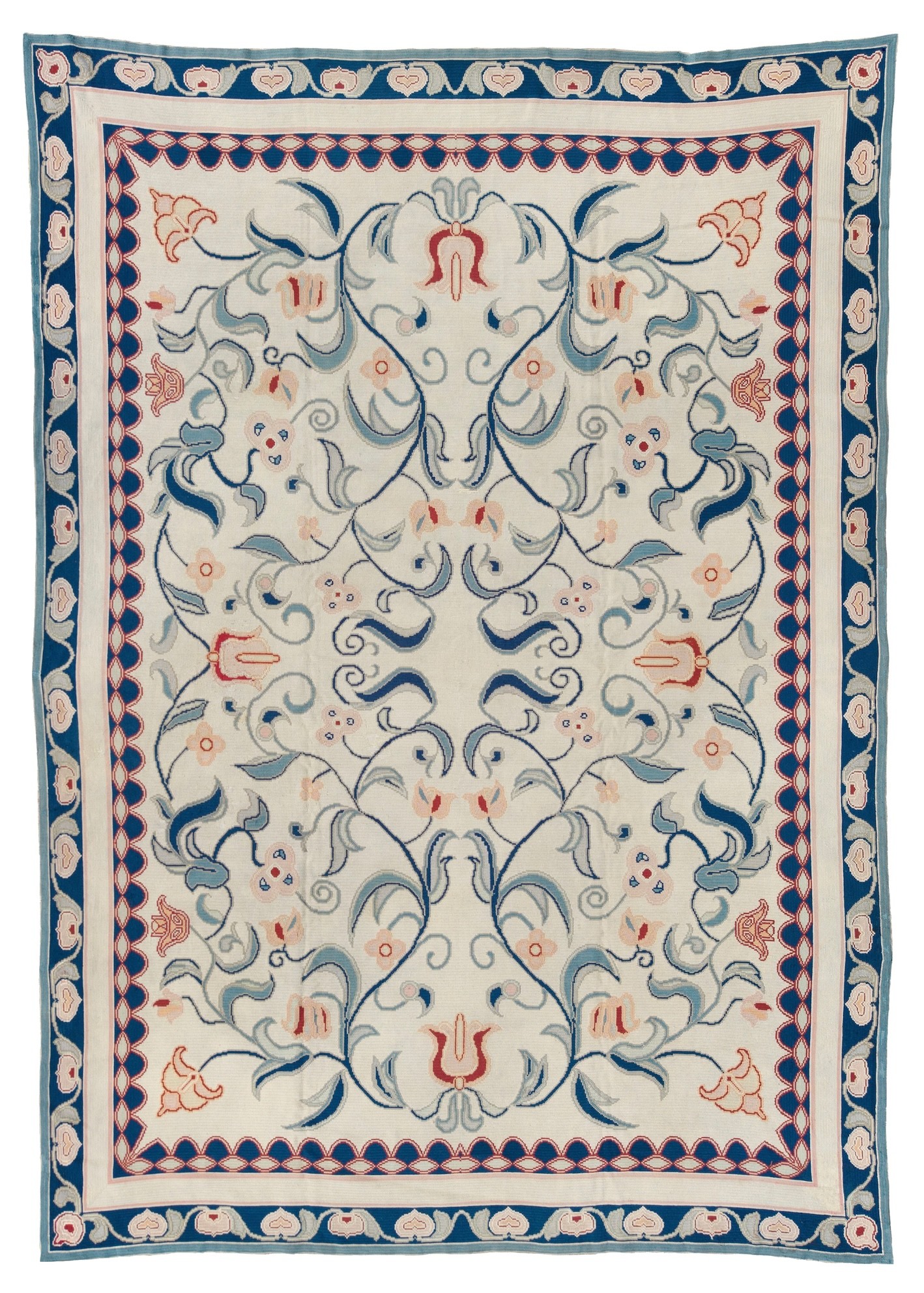
Portuguese Needlepoint