

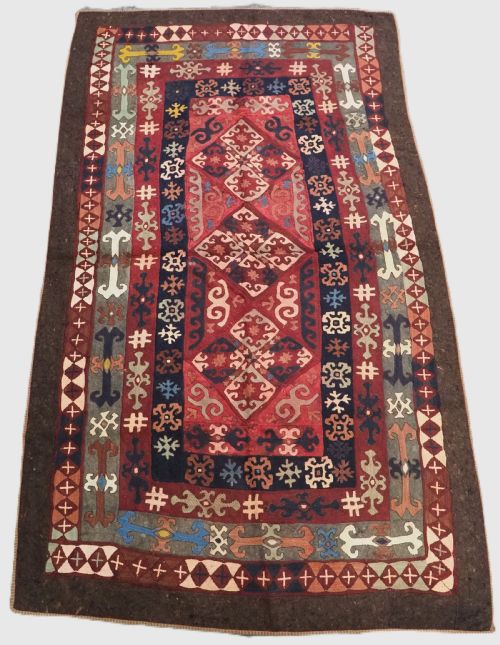


Traditional Embroidered Carpet
These traditional embroidered carpet pieces are textile works that bring texture and historic pattern into a room.
Traditional Embroidered Carpet
A traditional embroidered carpet brings together textile forms such as rugs, runner rugs, and area rugs created across various international centres. When you search for a traditional embroidered carpet, you encounter works spanning from the early decades of the twentieth century, specifically from nineteen hundred through to nineteen forty.
The assortment includes Portuguese needlepoint alongside Central Asian tribal rugs and Kashmiri chain stitch carpets. These examples demonstrate the diverse regional interpretations of decorative floor and wall coverings from the past century.
How they were made
Maker construction relies on base textiles such as wool, cotton, canvas, and felt as recorded in the evidence. Artisans applied embroidery and stitching techniques directly onto these foundational grounds to build up dense patterns.
Needlepoint work and chain stitch methods form the primary techniques utilised across these historic textiles. These processes demand careful hand manipulation of yarn to create durable decorative surfaces.
Traditional Embroidered Carpet Retail Price Guide 2026
Typical asking prices for traditional embroidered carpet among the pieces listed under this phrase on Sellingantiques today, from the lower quarter to the upper quarter. They describe what is for sale here now, not the wider market.
Every single piece on this page was made before modern mass production took over household floor coverings.
What varies in quality
Quality rests in the precision of the needlework and the complexity of the design layout, such as repeat patterns or regional motifs. Finer execution yields crisper floral or tribal elements across the textile surface.
The choice of foundation material and the density of the wool or cotton stitching dictate the substance of the rug. Tighter stitch counts create a more resilient textile that maintains its structural integrity over decades of use.
The Traditional Embroidered Carpet Glossary
- Needlepoint
- A type of canvas work embroidery stitched by hand to form dense pictorial or geometric surfaces. It provides a firm texture suitable for floor coverings.
- Chain stitch
- A looping stitch technique forming a series of connected loops that resemble a chain. This method builds raised linear patterns across Kashmiri and Central Asian textiles.
- Crewelwork
- Embroidery using wool yarn on a sturdy cloth foundation. This technique appears on wall hangings and decorative textiles from the early twentieth century.
- Canvas
- A heavy woven fabric used as the structural base for needlepoint and specific carpet types. It supports heavy yarn embroidery without distorting the design.
Traditional Embroidered Carpet: Frequently Asked Questions
Where were these carpets made?
The evidence shows origins spanning Portugal, Central Asia, and Kashmir during the early decades of the twentieth century. Each region utilised distinct local motifs and stitching techniques.
Portuguese pieces often feature needlepoint styles, whereas Central Asian and Kashmiri examples showcase tribal designs and chain stitch methods on felt or cotton.
How do I care for an embroidered rug?
Protect historic textiles from excessive friction and direct sunlight to preserve the wool and cotton fibres. Gentle vacuuming without a rotating brush helps maintain the surface.
Avoid harsh chemical cleaners on needlepoint and chain stitch carpets. Professional textile conservation cleaning is best for older pieces.
Can these hang on walls?
Certain pieces, such as crewelwork wall hangings and specific lighter carpets, suit vertical display. Proper mounting distributes the weight evenly across the textile.
Ensure hanging methods do not strain the canvas or felt backing. This protects the historic stitches from unnecessary tension.
What periods do these textiles represent?
The available pieces date from nineteen hundred through to nineteen forty. This timeframe captures early twentieth-century regional textile traditions.
Styles from this era include Portuguese needlepoint, Uzbek tribal rugs, and Kashmiri chain stitch designs reflecting distinct historical periods.