



Flat Weave Rug
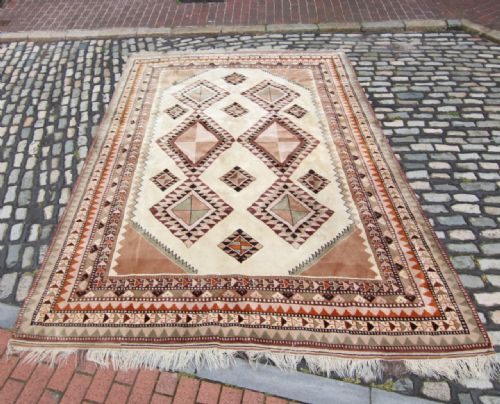
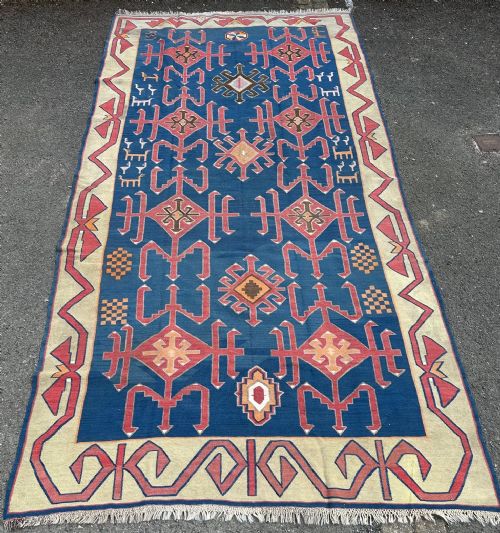
When choosing a flat weave rug, collectors encounter woven tribal textiles spanning Anatolian, Persian, and Caucasian traditions from the nineteenth and twentieth centuries.
Flat Weave Rug
A flat weave rug represents a tapestry-woven textile without a pile, produced by nomadic and village weavers across the Middle East, Caucasus, and Eastern Europe. These items serve utility and decoration, functioning as floor coverings, blankets, and storage containers like salt bags and saddlebags.
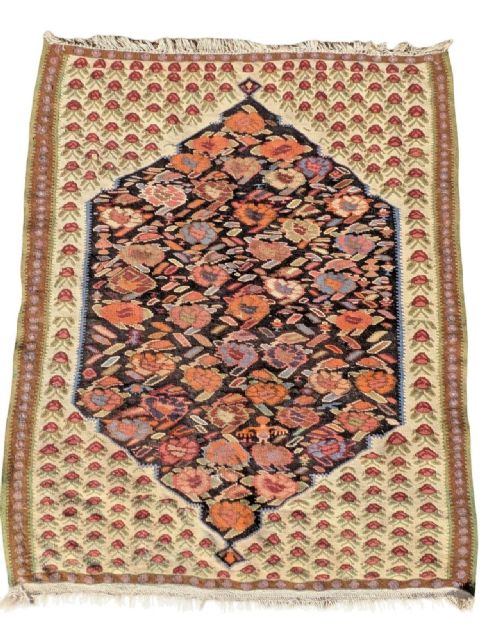
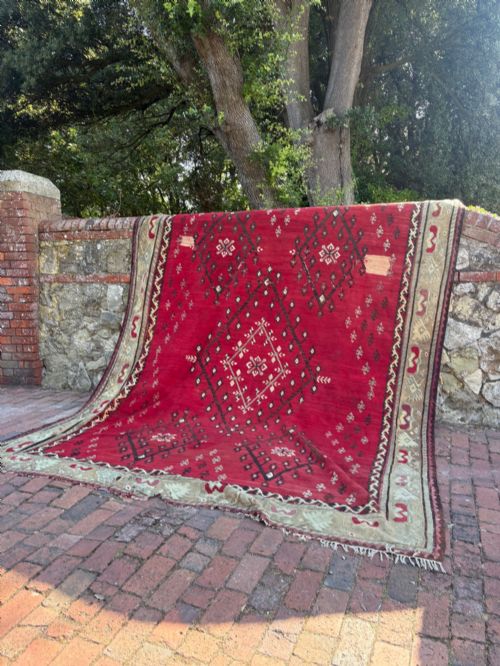
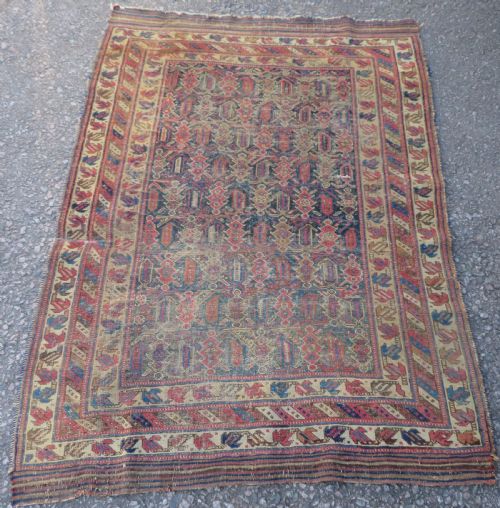
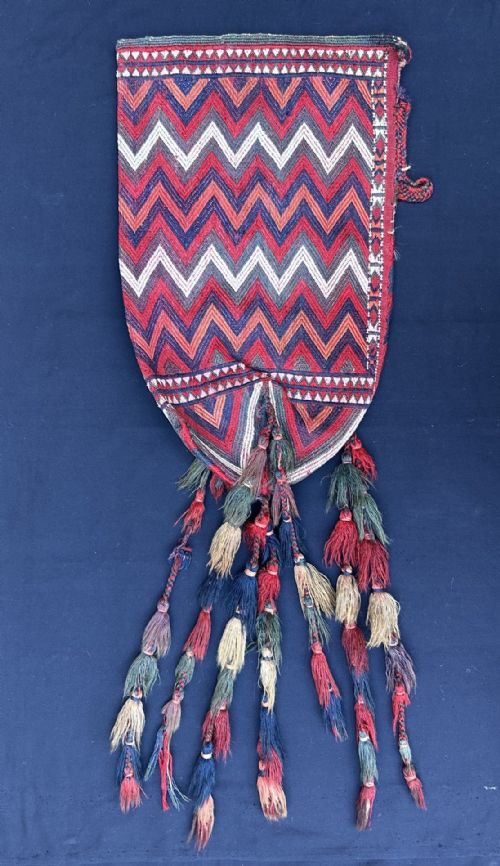
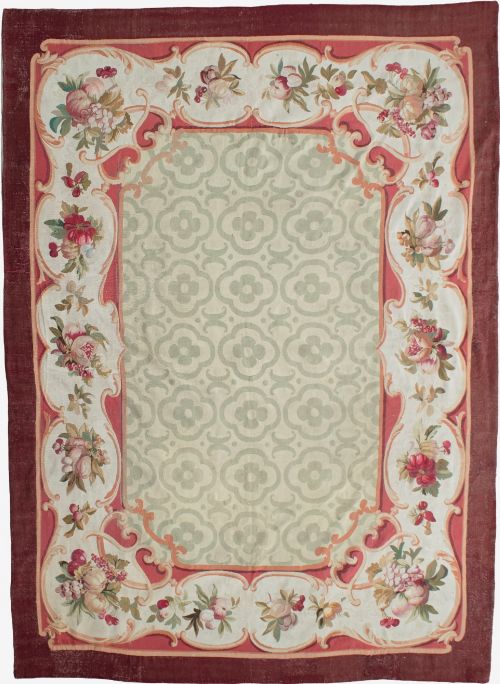
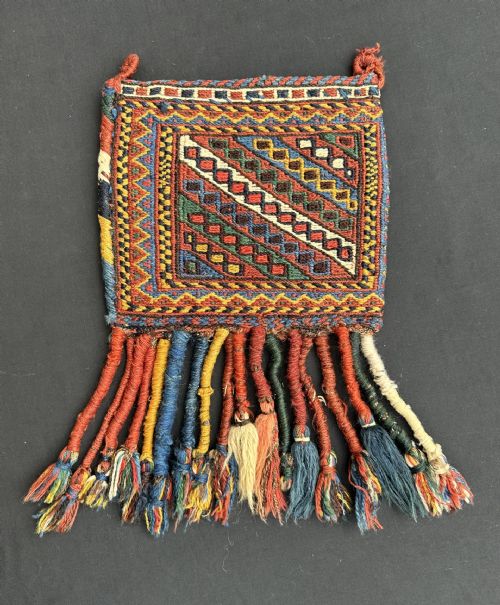
The selection here ranges from large carpets to smaller runner formats, cushions, and bag faces created by groups such as the Afshar, Shahsavan, and Turkmen. Examples from Anatolia and Persia often display geometric symbols, while European pieces from Bessarabia incorporate floral motifs.
How They Were Made
Weavers construct these textiles primarily using hand-spun wool and cotton, dyed with natural colorants to achieve earthy or vibrant palettes. The technique relies on passing the coloured weft threads tightly over the warp to create a flat surface without knots.
Specialised structures like soumak work involve wrapping weft threads around the warp to produce raised patterns and added durability. Many larger carpets and runners are woven in separate panels and joined down the centre to reach functional dimensions.
Nomadic weavers tucked bread dough inside flat-woven sofreh cloths before baking.
What Varies in Quality
Quality rests on the tightness of the weave, the clarity of the design structure, and the integrity of the natural dyes used. Tightly packed wefts create a firmer handle and sharper graphic definition in tribal patterns.
The choice of materials and the complexity of subsidiary techniques, such as brocading or sumak work, distinguish standard utility pieces from exceptional tribal examples. Original finishes like complete backs, tassels, and selvedges elevate the standing of a textile.
The Flat Weave Rug Glossary
- Kilim
- A flat-woven carpet or rug made without a pile. These textiles are produced across Anatolia, the Caucasus, and Central Asia with distinctive slit-weave techniques.
- Soumak
- A flat-weave technique where weft threads are wrapped over and under warp threads to produce a durable, textured surface. It frequently appears on storage bags and panels.
- Sofreh
- A flat-woven spread used for kneading dough or serving meals. These pieces often feature specific tribal motifs linked to domestic life.
- Torba
- A small Turkmen storage bag designed to be hung against a yurt wall. They display characteristic banded designs and tribal guls.
- Mafrash
- A large rectangular storage bale face used by nomadic tribes for bedding and belongings. Examples are often constructed in soumak work before being assembled into containers.
Flat Weave Rug: Frequently Asked Questions
How do I care for a flat weave rug?
Vacuum gently without a rotating brush to remove surface dust. Keep them out of direct sunlight to protect natural dyes from fading.
Rotate the textile periodically to ensure even wear across high-traffic areas. Professional cleaning is recommended when required to preserve the wool fibres.
Where were these rugs made?
These textiles originate from nomadic and village communities across Anatolia, Persia, the Caucasus, and Central Asia. Specific groups like the Afshar, Shahsavan, and Turkmen produced them within their regional territories.
Other examples stem from Eastern European regions such as Bessarabia and Ukraine, reflecting distinct local design traditions.
What is the difference between a rug and a bag face?
Rugs are woven as floor coverings or tent furnishings with dimensions suited for walking or sitting upon. They prioritize structural durability across larger surface areas.
Bag faces formed the decorative fronts of functional containers like saddlebags and storage bales. They feature denser, finer work intended for vertical display inside tents.
How are different tribal styles identified?
Tribal attribution relies on specific geometric motifs, border arrangements, and structural techniques associated with particular regions. For instance, Turkmen pieces often feature deep red palettes and distinct guls.
Caucasian and Anatolian examples utilise contrasting primary colours with sharp, angular motifs. Examining the weave structure provides further clues to geographic origin.