


Antique Senneh Rug
An antique senneh rug brings finely woven Persian artistry and traditional motifs into a room, offering durability and enduring visual character.
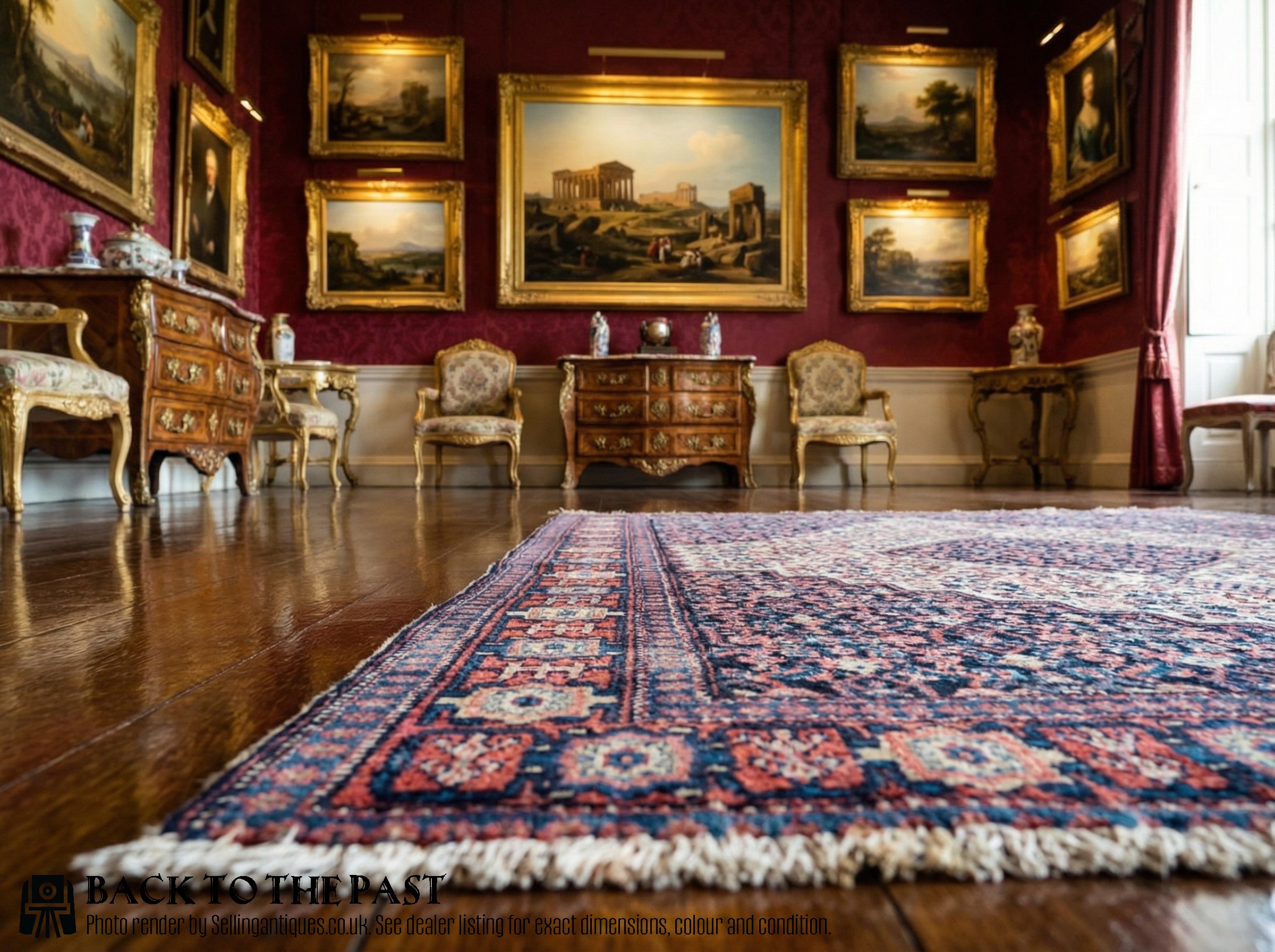
Antique Senneh Rug
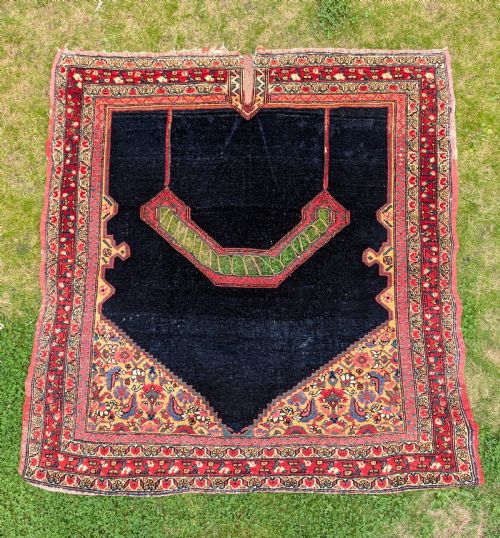
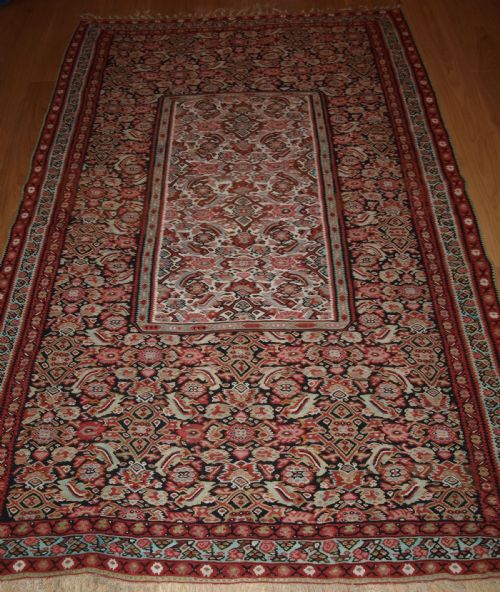
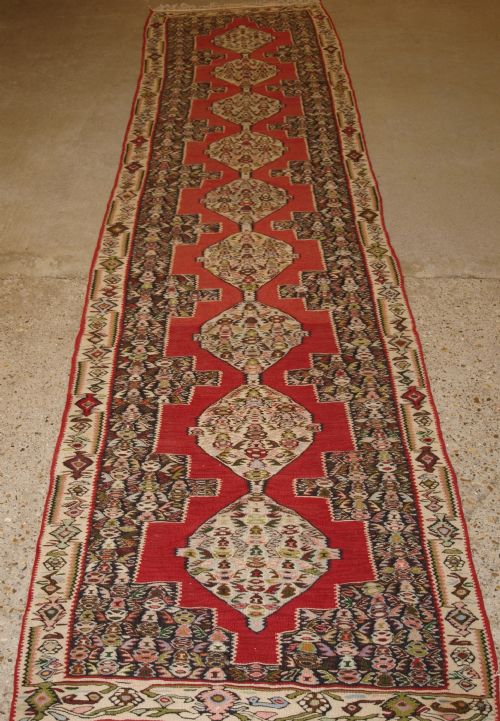
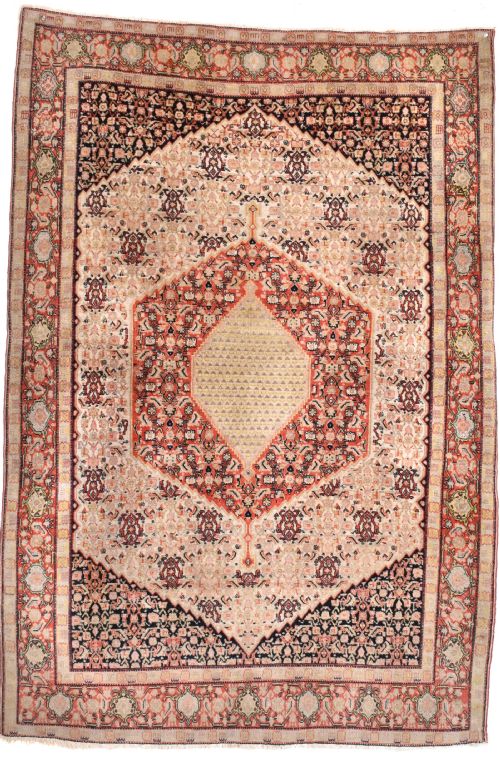
An antique senneh rug represents traditional Persian weaving originating from western Kurdistan, encompassing various formats such as standard area rugs, long runners, saddle covers, and flat-woven kilims. These textiles typically date from the nineteenth century into the early twentieth century, spanning decades of regional craftsmanship.
The most common version met on this page is a small to medium-sized wool rug featuring intricate repeating patterns, often woven with a cotton foundation. Collectors also encounter specialised formats like narrow kilim runners and saddle covers reflecting specific tribal origins.
The visual vocabulary relies heavily on classical Persian designs, including the Herati pattern, boteh motifs, and single or linked central medallions. Pieces span from ivory ground variations to rich dark fields characteristic of Persian Qajar and Kurdish workshops.
How they were made
Weavers constructed these pieces predominantly using wool and hand-spun wool for the pile, supported by cotton foundations in many examples. Certain specialised pieces, such as select nineteenth-century items, incorporated silk materials for added textural refinement.
Techniques combined pile weaving with flat-weave kilim construction, creating both plush surfaces and tightly bound reversible textiles. Artisans utilised dense knotting methods to achieve precise geometric and floral layouts across various formats.
Antique Senneh Rug Retail Price Guide 2026
Typical asking prices for senneh rug among the pieces listed under this phrase on Sellingantiques today, from the lower quarter to the upper quarter. They describe what is for sale here now, not the wider market.
Some nineteenth-century makers focused their craft entirely on equine comfort, producing durable saddle covers for Persian riders.
What varies in quality
Knot density and structural tightness dictate the crispness of the woven motifs, separating finely detailed examples from coarser tribal utility pieces. Tightly packed rows create durable foundations that preserve intricate patterns over generations of use.
The selection and consistency of natural dyes influence the visual depth of the field and borders, distinguishing complex multicoloured compositions from simpler dye work. Material quality also shifts between standard wool and finely spun hand-spun wool or silk.
The Antique Senneh Rug Glossary
- Kelim
- A flat-woven carpet or rug produced without a pile, traditionally utilised for runners and light coverings.
- Boteh
- A stylised almond or pear-shaped motif representing a floral spray or cypress tree, frequently repeated across the field.
- Herati
- A classic repeating ornamental pattern composed of a central rosette enclosed by a rectangle and flanked by leaf motifs.
- Kelleh
- A large rectangular carpet format, longer than it is wide, traditionally suited for specific room proportions.
- Pushti
- A small mat or rug size designed for intimate spaces or functional placement on furniture and saddles.
- Medallion
- A central decorative focal point set within the main field of the textile, often echoing corner spandrels.
Antique Senneh Rug: Frequently Asked Questions
How do I clean an antique senneh rug?
Professional specialist cleaning is essential to protect delicate wool, cotton, and silk fibres from chemical damage.
Regular gentle vacuuming without a beater bar removes surface dust safely between professional treatments.
Where were these rugs made?
Weavers produced these textiles in the town of Senneh and surrounding Kurdish regions of western Persia.
Tribal workshops passed down specific weaving methods and traditional designs across generations.
Are these rugs suitable for high traffic?
Densely knotted wool construction provides natural resilience that withstands moderate foot traffic in domestic settings.
Placing pieces in lower-traffic areas preserves delicate flat-weave kilims and older silk variations.
How do I identify the age?
Stylistic indicators, material composition, and structural characteristics help estimate the production period from the nineteenth to early twentieth century.
Natural dye palettes and hand-spun wool variations offer further clues regarding manufacturing dates.