




Hand Stitched Rug
These hand stitched rug examples bring enduring textile artistry into a room, offering tactile warmth and historic charm.
Hand Stitched Rug
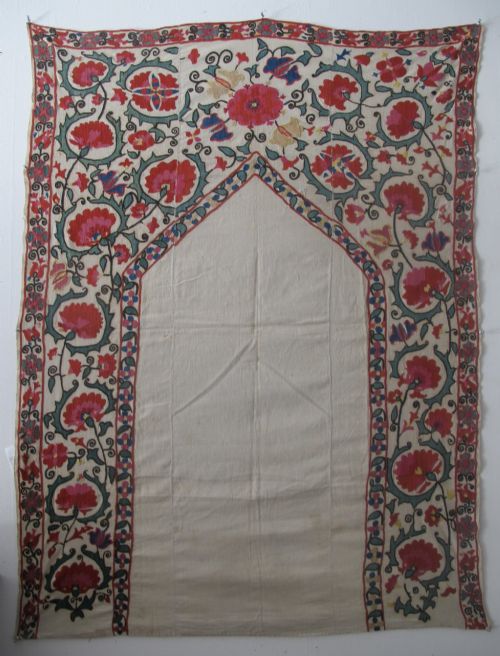
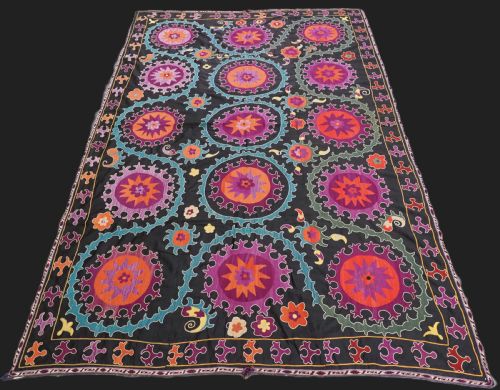
A hand stitched rug encompasses diverse historic needlework textiles, ranging from Portuguese Arraiolos and English needlepoint carpets to Central Asian Suzanis and Kashmiri chain stitch pieces. You will frequently encounter mid twentieth century Portuguese needlepoint examples alongside nineteenth century Central Asian tribal embroideries on this page.
The forms vary from small decorative wall hangings and torba ilgich bag faces to substantial area carpets designed for floor placement. Materials span cotton, wool, silk, and canvas grounds worked with contrasting threads.
Origins stretch across Portugal, England, Kashmir, and Central Asian regions including Uzbekistan. Each piece reflects traditional regional patterns and stitches preserved through generations.
How they were made
Maker execution relies on needlework applied to a foundation fabric. Artisans work silk or wool threads onto cotton, wool, canvas, or cotton canvas grounds.
Techniques combine flat stitches and looped pile methods. Examples show dense surface embroidery completely covering the ground cloth alongside open needlepoint arrangements.
Hand Stitched Rug Retail Price Guide 2026
Typical asking prices for hand stitched rug among the pieces listed under this phrase on Sellingantiques today, from the lower quarter to the upper quarter. They describe what is for sale here now, not the wider market.
Nomadic embroiderers often stitched tiny protective amulets directly into the borders of their Suzanis to ward off the evil eye.
What varies in quality
Quality rests on the density of the stitching and the precision of the needlework. Fully embroidered surfaces demand considerably more labour than partially worked grounds.
The choice of materials dictates the handling and visual depth of the textile. Silk thread on fine cotton or wool grounds creates sharper chromatic contrast than simpler utility threads.
The Hand Stitched Rug Glossary
- Suzani
- A type of embroidered tribal textile originating from Central Asia, typically worked in silk thread on a cotton foundation. These pieces often feature large floral medallions or architectural motifs.
- Arraiolos
- A tradition of Portuguese needlepoint carpet making dating back centuries. They utilise wool yarn on a linen or canvas ground.
- Chain stitch
- An embroidery technique where loops of thread are linked in a chain formation. This method produces raised linear patterns common in Kashmiri and Central Asian textiles.
- Ground
- The base fabric or foundation material upon which the embroidery or needlepoint stitches are applied. Grounds in these listings include cotton, wool, and canvas.
- Torba ilgich
- A specific Central Asian tribal bag hanging or trapping. These items display traditional regional patterns.
Hand Stitched Rug: Frequently Asked Questions
Where should I place a hand stitched rug?
These textiles suit low traffic floor areas or wall mounting where foot friction remains minimal. Smaller pieces function well as decorative wall hangings or table covers.
Protect delicate silk and wool threads from direct sunlight to preserve the original dye colours over time.
How do I clean a hand stitched rug?
Gentle surface dusting or light suction with a screened vacuum nozzle removes loose particles safely. Avoid vigorous shaking or mechanical beating which stresses historic foundation threads.
Professional textile conservators should handle any significant washing or structural repairs.
How do I identify the period of a piece?
Dating relies on examining the foundation materials, dye types, and regional stitch structures. Nineteenth century examples often display natural dyes and hand spun wool or cotton grounds.
Twentieth century pieces frequently show brighter synthetic palettes and more uniform factory spun backing fabrics.
What is the difference between a Suzani and a needlepoint?
Suzanis are Central Asian embroideries worked primarily in silk thread on cotton grounds, traditionally created as dowry items. Needlepoint carpets involve stitching yarn through an open weave canvas foundation.
Both fall under the wider heading of needlework textiles but originate from distinct regional crafting traditions.