
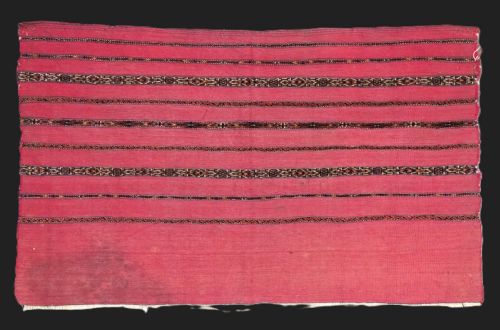


Wool Tapestry Carpet
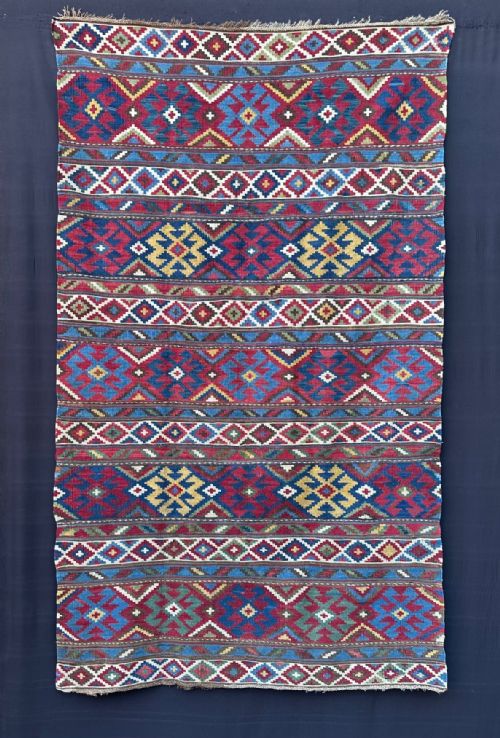
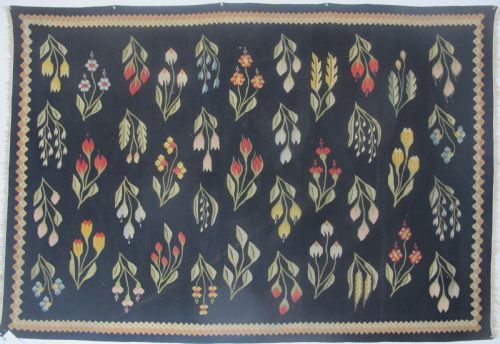
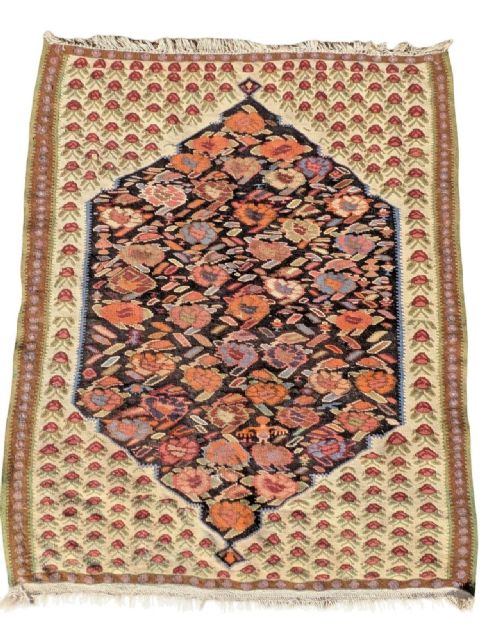
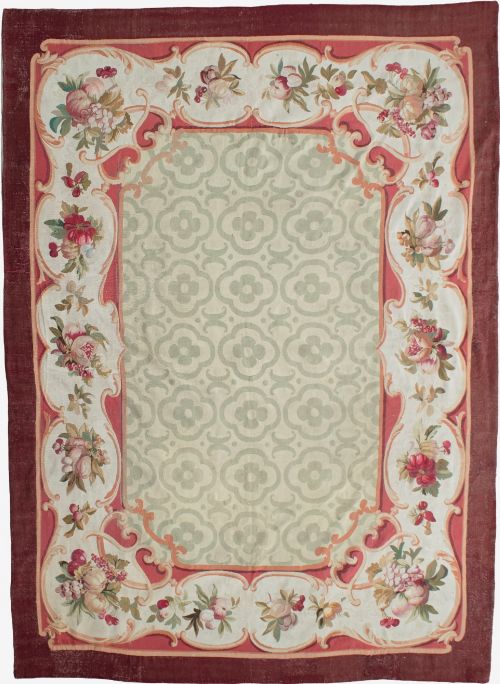
These wool tapestry carpet examples span tribal flatweaves and European floral room-sized textiles from the nineteenth and early twentieth centuries.
Wool Tapestry Carpet
When searching for a wool tapestry carpet, buyers encounter a diverse selection of floor coverings and wall hangings originating from European workshops, Persian regions, and Central Asian nomadic tribes. The selection ranges from nineteenth-century French Aubusson weaves and English needlepoint carpets to Bessarabian kilims and Turkmen tribal bag faces.
The most common pieces on this page are flatwoven kilims and embroidered textiles dating from the late nineteenth century to the early twentieth century. These items include geometric Uzbek panels, Caucasian Shirvan rugs, and floral Romanian pieces created for domestic utility or decorative display.
How they were made
These textiles rely principally on wool, cotton, and linen foundations utilising natural dyes for colour. Artisans constructed flatweaves through interlocking weft techniques, while needlepoint and crewelwork pieces employed wool yarns stitched onto canvas or linen grounds.
Nomadic and regional workshops incorporated supplementary materials such as camel hair and silk to add texture and durability to tribal trappings and floor coverings. Weavers built structure using cotton warp threads to support dense wool pile or flat surface designs.
The listings span from the mid-nineteenth century to the mid-twentieth century, featuring wool, cotton, camel hair, and natural dyes.
What varies in quality
Quality in these textiles depends upon the tightness of the weave, the clarity of the graphic or floral design, and the retention of natural dye colours. Finer knots and precise structural execution distinguish exceptional tribal pieces and European tapestries from standard domestic examples.
The integrity of the foundation materials and the complexity of the pattern deployment also dictate the standard of the piece. Well-preserved wool pile and intact edges demonstrate superior historical care and structural resilience.
The Wool Tapestry Carpet Glossary
- Kilim
- A flatwoven carpet or rug produced without a pile across various regions of Anatolia, the Caucasus, and Central Asia. These textiles feature sharp geometric patterns formed by leaving slits where different colour areas meet.
- Chuval
- A large tent bag face produced by Turkmen tribes, typically featuring guls and used for storage within a yurt. Collectors prize these panels for their intricate tribal iconography and fine wool execution.
- Aubusson
- A French tapestry-woven carpet or wall hanging named after the town of production. These pieces traditionally display French Rococo floral motifs and pastoral scenes executed on a flat weave.
- Needlepoint
- A type of embroidery stitched onto a canvas mesh ground to form dense floral or geometric carpets. English and Portuguese makers utilised this technique for floor coverings.
- Sofreh
- A woven spread or eating cloth used by nomadic groups in Afghanistan and surrounding areas. These textiles served domestic functions during meals and transit.
Wool Tapestry Carpet: Frequently Asked Questions
How do I clean a wool tapestry carpet?
Maintenance requires gentle vacuuming without a beater brush to protect the delicate flatweave or needlepoint structure. Professional textile cleaning is necessary for addressing ingrained dirt.
Harsh chemical treatments and excessive water immersion damage natural dyes and historic wool fibres. Regular shaking and careful rotation prevent uneven wear in domestic settings.
Can these rugs be placed on the floor?
Many of these items function effectively as floor coverings, though delicate needlepoint carpets and historic tribal bag faces suit low-traffic areas. Using an appropriate underlay prevents slipping and reduces abrasion.
Thicker kilims and durable wool carpets handle everyday foot traffic well in living spaces. Wall mounting provides an alternative display method for fragile panels and pictorial hangings.
How do I distinguish regional tribal styles?
Distinctions rely on specific colour palettes, structural weaves, and motif repetitions associated with particular groups. Turkmen pieces display characteristic guls, while Caucasian kilims favour bold geometric arrangements.
Central Asian Uzbek and Kazakh textiles often incorporate banded flatweave designs and embroidered highlights. Regional wool preparation and dye sources further define each geographic origin.
What is the difference between kilims and pile carpets?
Kilims are constructed entirely through flatweaving techniques without any raised pile surface. This creates a lightweight textile that is reversible and sits flat on the floor.
Pile carpets incorporate knotted vertical yarns that stand upright to form a dense surface. Flatweaves generally offer sharper graphic lines, whereas pile work allows for softer tonal transitions.