
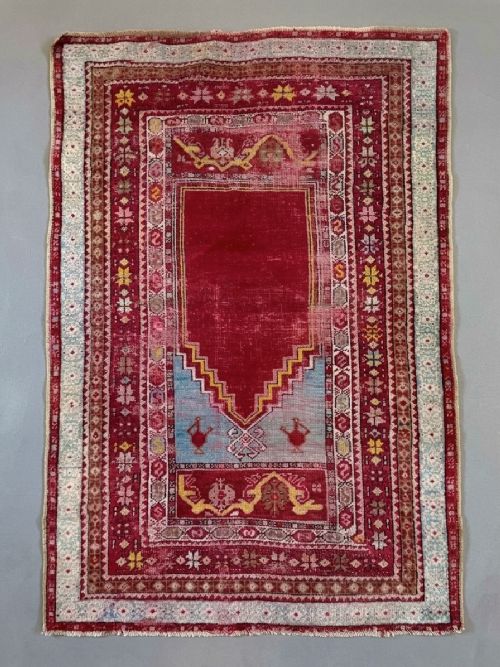
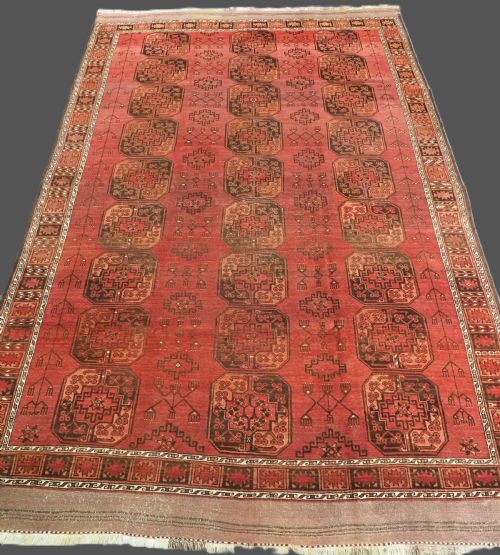
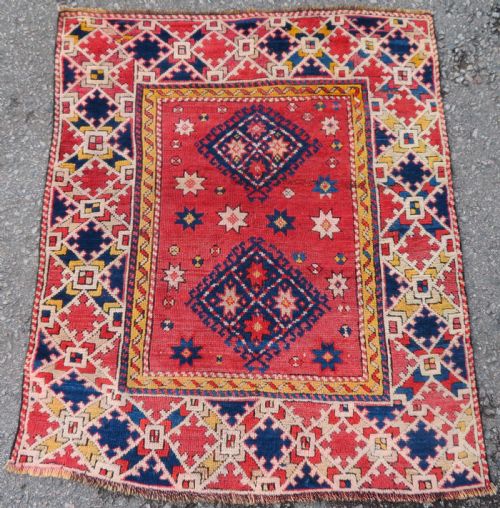
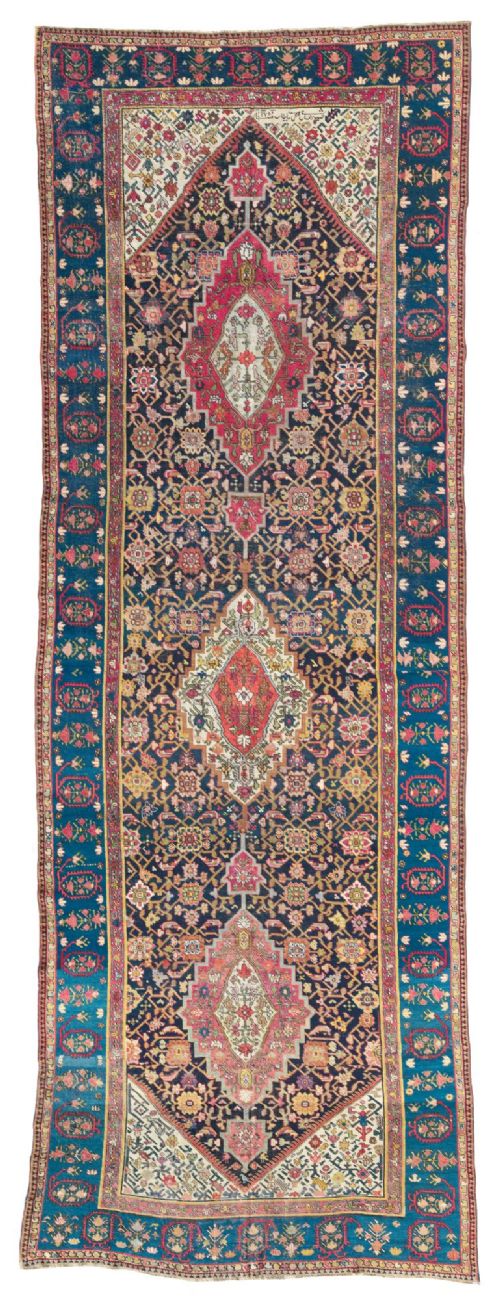
19th Century Carpet
This 19th century carpet selection brings together hand-knotted tribal and village floor coverings that ground a room with deep, saturated pattern.

19th Century Carpet
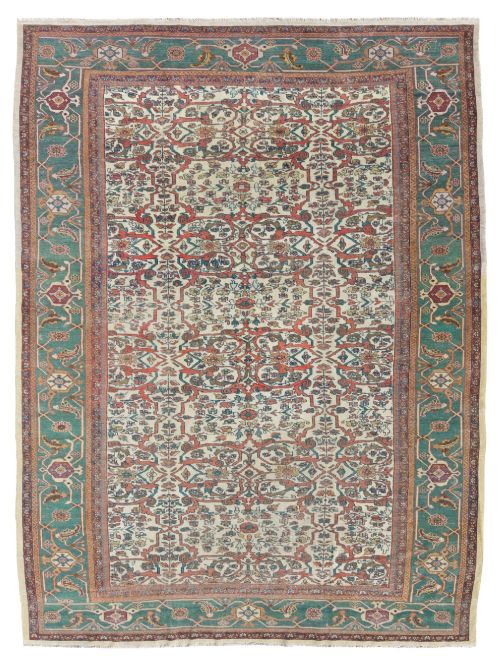
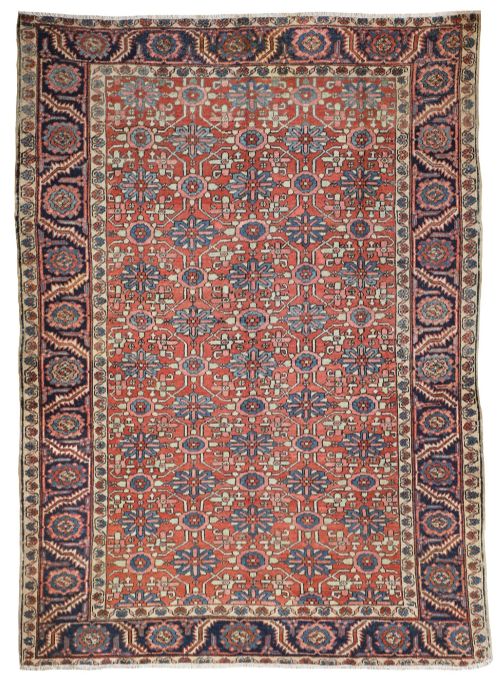
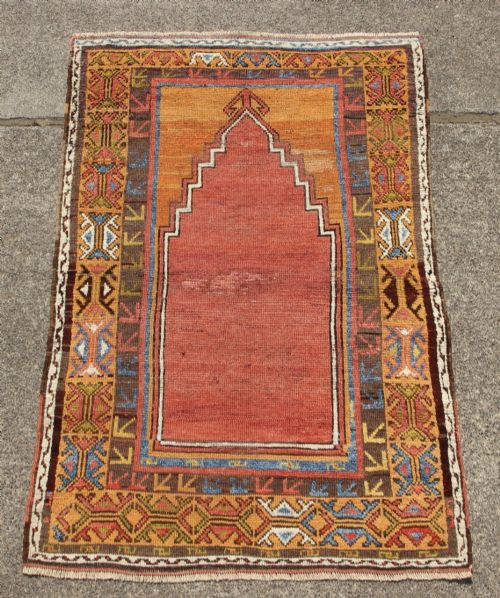
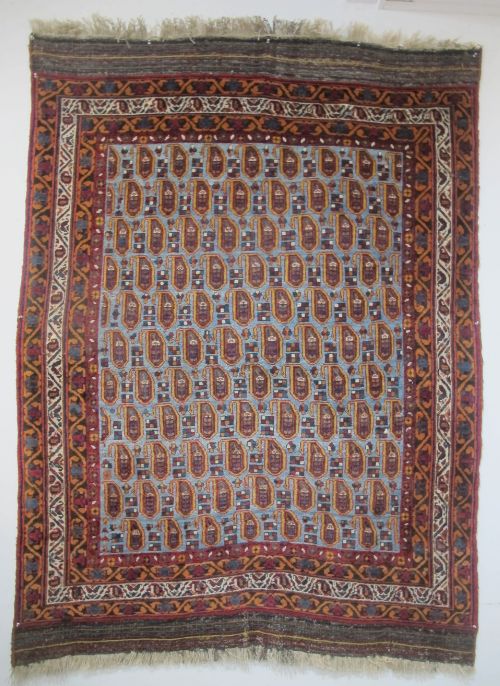
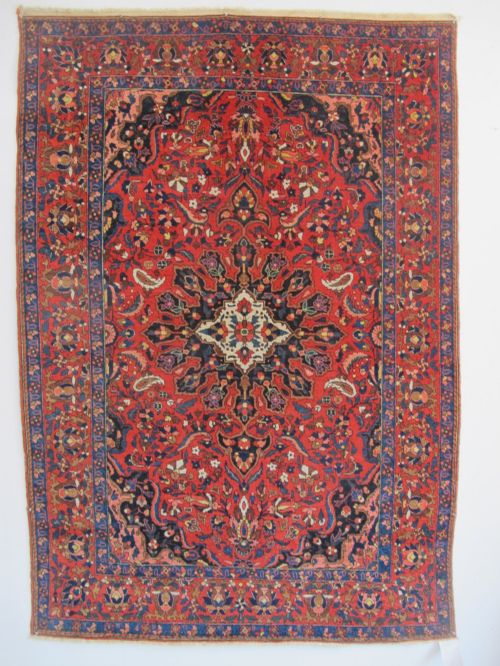
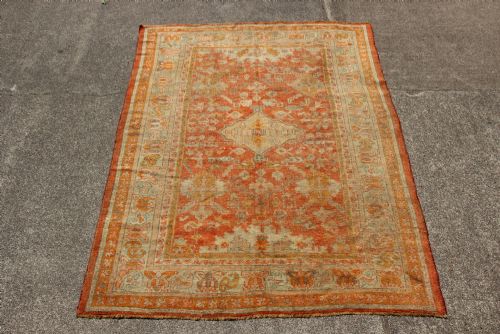
A 19th century carpet encompasses hand-woven floor coverings and village textiles created across Persia, the Caucasus, Anatolia, and Central Asia. These pieces range from compact tribal prayer rugs and saddle covers to room-sized Heriz, Sultanabad, and Oushak carpets.
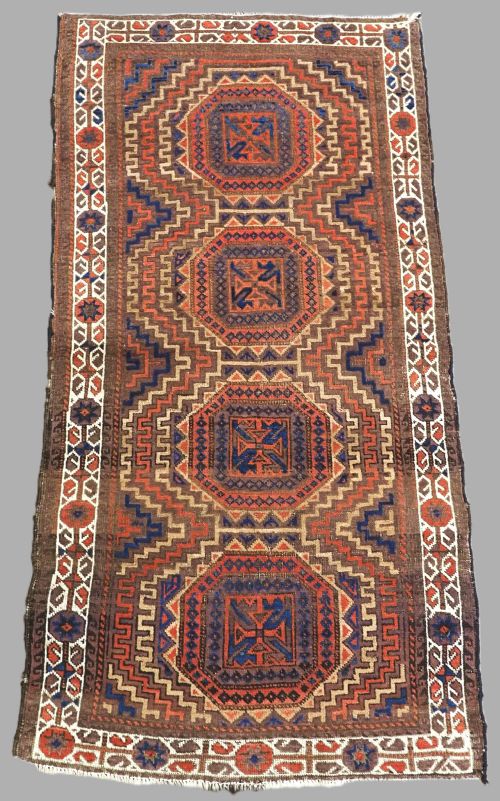
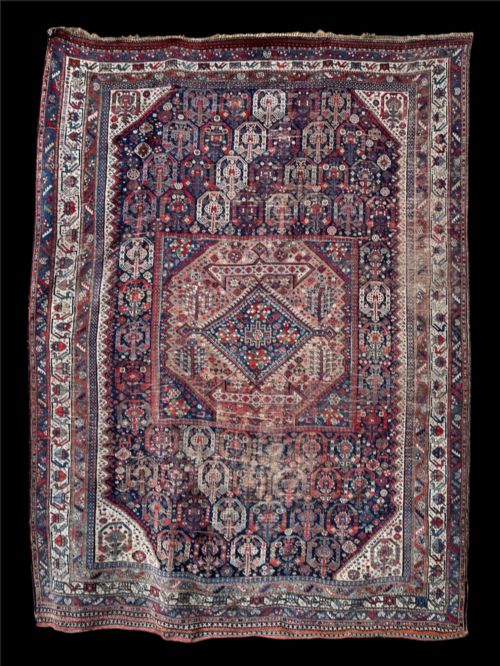
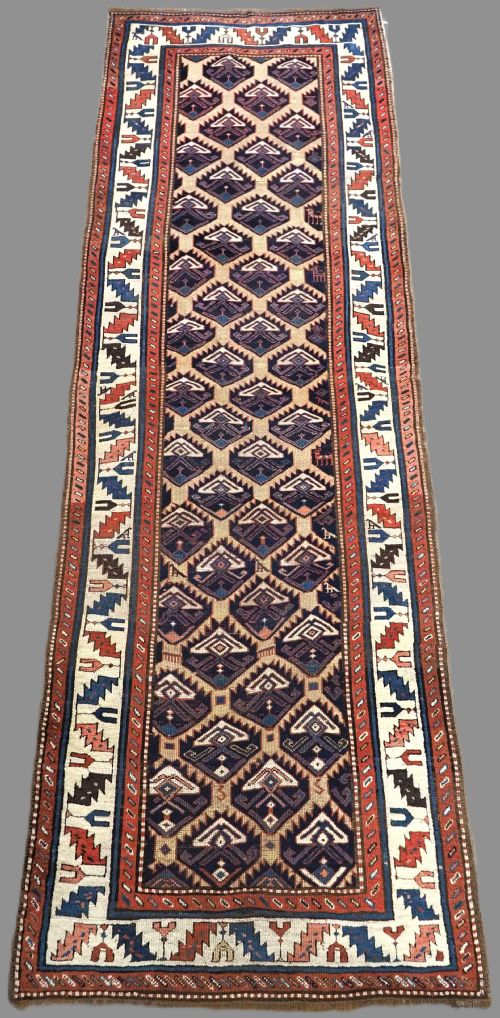
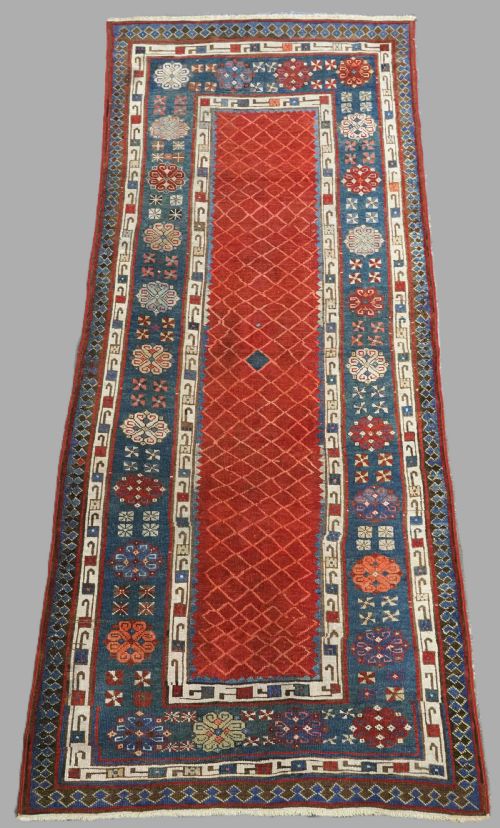
Buyers encounter formats woven by nomadic and village weavers, including long runners, kelleh carpets, and square formats featuring geometric medallions or all-over floral lattices. Turkmen main carpets and Caucasian scatter rugs are frequently met on this page.
Originating from tribal confederacies and weaving workshops, these textiles served both utilitarian domestic functions and decorative purposes within country houses and tribal dwellings. Their enduring appeal lies in their rich dye palettes and distinct regional iconography.
How They Were Made
Weavers constructed these pieces using hand-spun wool for the pile, foundation warps of cotton or wool, and occasionally supplementary cotton or silk. Natural dyes derived from local plants and insects provided the complex colour palettes found across these rugs.
The manual knotting technique secured the pile to the warp and weft threads, creating dense structures designed to endure heavy daily use. Specific regional looms utilised differing knot counts and weaving habits, resulting in varying pile depths and structural rigidity.
19th Century Carpet Retail Price Guide 2026
Typical asking prices for 19th century carpet among the pieces listed under this phrase on Sellingantiques today, from the lower quarter to the upper quarter. They describe what is for sale here now, not the wider market.
Listings feature wool, cotton, and natural dyes across Caucasian, Persian, and Turkmen tribal styles.
What Varies in Quality
Quality rests upon the fineness of the knotting, the purity of the natural wool, and the clarity of the dye work. Tightly packed knots and resilient hand-spun wool create a supple handle and a crisp definition in the geometric or floral motifs.
The depth and saturation of natural dyes dictate visual harmony, where variations in tone impart a vibrant character across the field. Superior execution preserves structural integrity and ensures the pile wears evenly over decades of domestic use.
John Hodder·CVS
The 19th Century Carpet Glossary
- Gul
- A repeating octagonal or medallion motif used frequently in Turkmen and Central Asian carpet design. These secondary motifs often identify the specific tribe or clan that wove the textile.
- Prayer rug
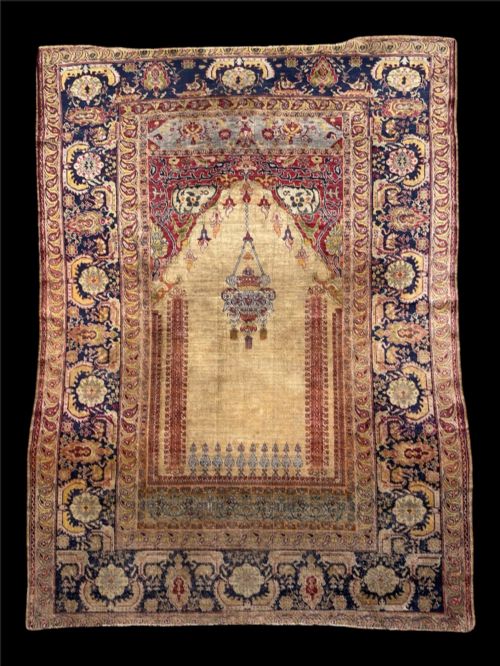
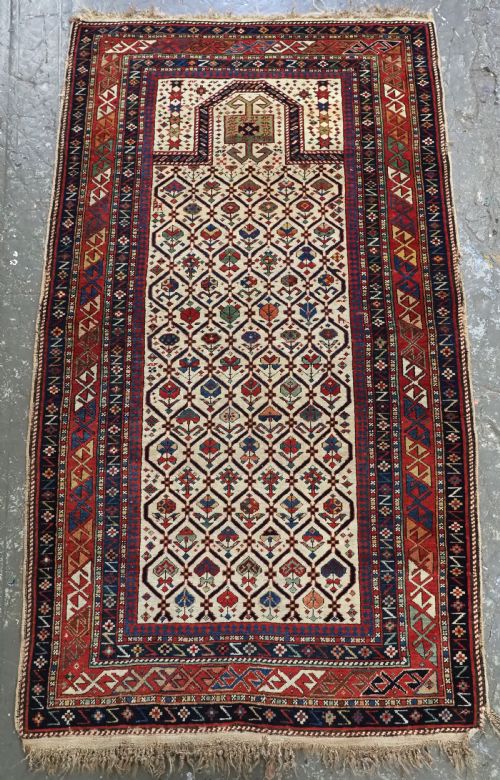
- A small rug featuring a mihrab or arch design at one end, oriented towards Mecca during daily prayers. These pieces were woven across Anatolia and the Caucasus.
- Kelleh
- A large, elongated format carpet traditionally used in Persian domestic interiors. These narrow room-sized rugs fit specific architectural spaces.
- Sumak
- A flat-weave technique where the coloured pattern wefts are wrapped around the warp threads to create a textured, durable surface. Caucasian examples display notable technical complexity.
- Torba
- A small Turkmen wall-hanging bag or storage sack produced with detailed pile-woven faces. These items functioned as household furnishings within nomadic tents.
19th Century Carpet: Frequently Asked Questions
How do I identify a tribal carpet?
Tribal carpets are identified by geometric guls, asymmetrical village motifs, and undyed or saturated natural wool. Their designs reflect the specific nomadic confederacy or region of origin rather than standardised court workshops.
These pieces often display abrash, which is a subtle shift in colour caused by different dye batches, adding depth to the nomadic field.
Where were these carpets woven?
Production spanned Persia, the Caucasus, Anatolia, and Central Asia, encompassing distinct village and tribal weaving traditions. Major centres included Heriz, Sultanabad, Ushak, and the territories inhabited by Yomut and Tekke Turkmen tribes.
Each geographical area developed characteristic colour palettes and structural materials that distinguish its weavings today.
What materials were used?
The pile is almost exclusively hand-spun wool, occasionally supplemented by silk in fine prayer rugs and pictorial examples. Foundations rely on cotton or wool warps and wefts, dependent on the region and the nomad or village workshop.
Natural dyes provide the foundational reds, blues, and yellows that define the antique palette.
How should I care for a antique carpet?
Protect the textile by placing a breathable, high-quality underlay beneath it to prevent slipping and reduce abrasion against hard floors. Vacuum gently with suction only, avoiding beater bars that can damage delicate hand-spun wool piles.
Rotate the carpet periodically to ensure even exposure to foot traffic and natural light.