





Antique Khamseh Rug
An antique khamseh rug brings the rich nomadic heritage of South-West Persia directly into a room through deeply expressive tribal weaving.
Antique Khamseh Rug
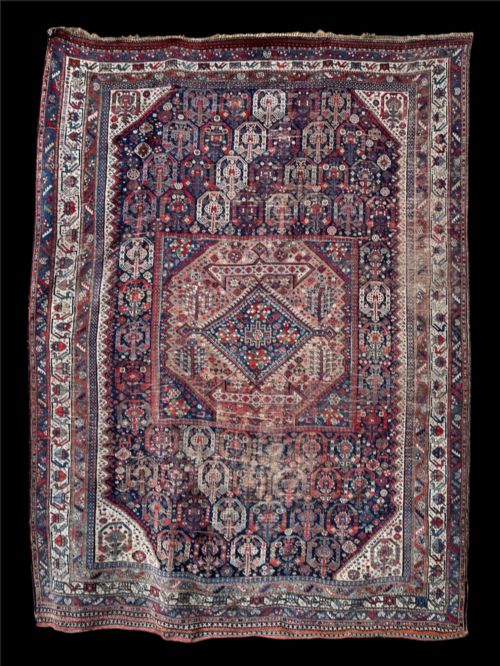
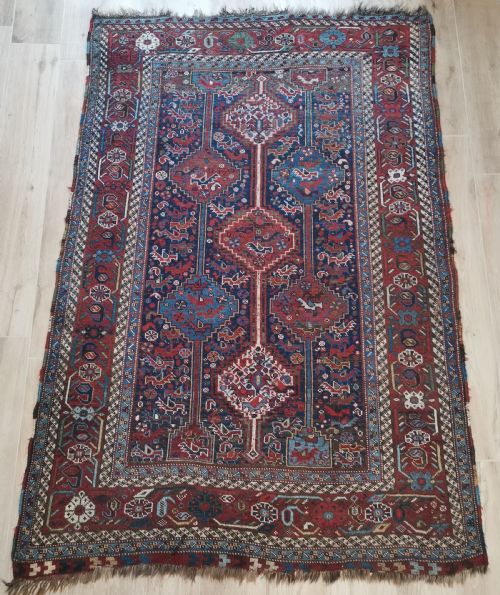
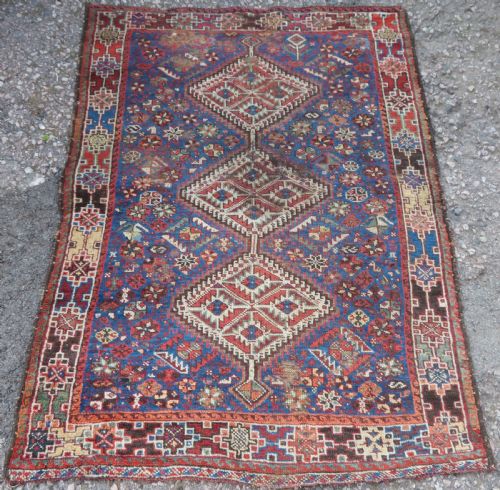
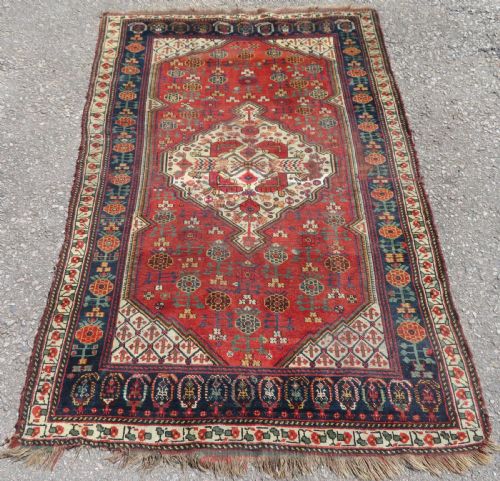
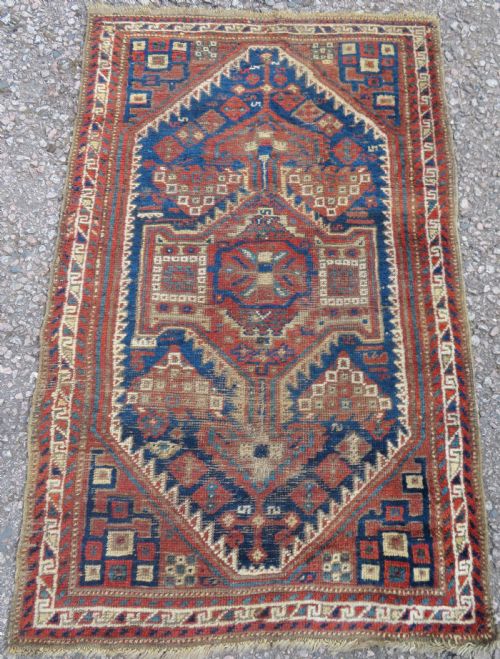
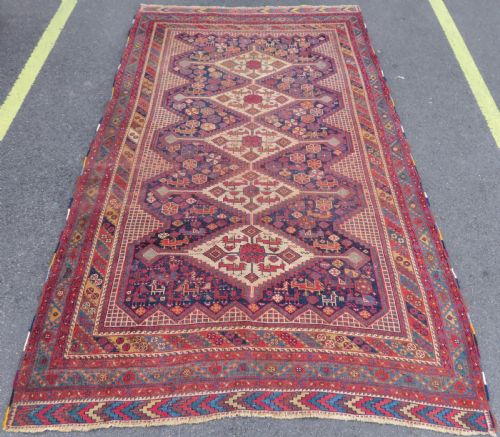
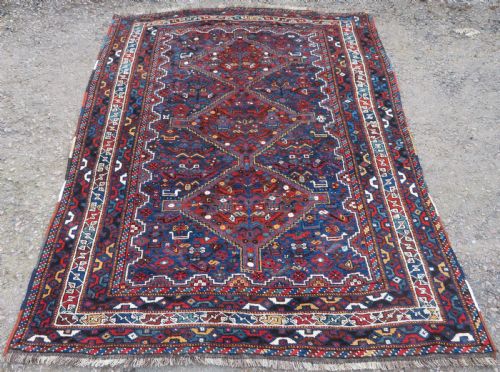
An antique khamseh rug is a tribal textile created by the confederated tribes of the Fars province in South-West Persia. These pieces reflect the distinct cultural merging of Arab, Basseri, Baharlu, Arab-Jabbareh, and other regional nomadic groups.
Buyers will encounter various formats on this page, ranging from intimate saddlebags and small scatter rugs to larger room-size carpets and elongated kelleh formats. Many examples display signature motifs such as repeating birds, locally known as chicken or morgh designs, alongside pomegranates and intricate geometric medallions.
Dating primarily from the late nineteenth and early twentieth centuries, these floor coverings offer a direct link to authentic tribal weaving traditions. They serve both as functional floor coverings and as deeply symbolic historical artefacts.
How they were made
The foundation of these textiles typically relies on hand-spun wool and cotton, providing a sturdy base for dense pile weaving. Artisans utilised hand-spun wool for the pile, allowing the material to take rich saturation from natural dyes.
Weavers constructed these pieces on portable horizontal looms set up in nomadic camps, employing traditional hand-knotting techniques passed down through generations. The integration of wool warp and weft threads ensured the rugs maintained structural flexibility suited to a mobile lifestyle.
Antique Khamseh Rug Retail Price Guide 2026
Typical asking prices for khamseh rug among the pieces listed under this phrase on Sellingantiques today, from the lower quarter to the upper quarter. They describe what is for sale here now, not the wider market.
The inventory records formats ranging from small saddlebag faces and intimate scatter rugs to expansive room-size carpets.
What varies in quality
Quality in these textiles often rests upon the intricacy and clarity of the tribal iconography, such as the sharpness of bird or tree of life motifs. Finer knot density and precise execution of complex geometric borders distinguish master weavers from standard village producers.
The depth and preservation of natural dyes heavily influence the overall visual impact of a piece. Examples that retain vibrant, harmonious palettes demonstrate superior initial material selection and expert dye preparation.
The Antique Khamseh Rug Glossary
- Confederacy
- A political and social union of multiple independent tribes, such as the Khamseh group in Persia. This alliance brought together diverse weaving traditions under one regional banner.
- Khorjin
- A traditional double-sided saddlebag utilised by nomadic peoples for transport during migrations. Surviving bag faces retain complete panels of intricate tribal design.
- Kelleh
- A long, narrow format of carpet traditionally suited to the proportions of Persian domestic architecture. These runner-like proportions frame specific geometric medallions effectively.
- Morgh
- A stylized bird motif frequently appearing in regional weaving, often colloquially referred to by collectors as a chicken design. These figures are arranged in rows or linked medallions.
- Boteh
- An ancient teardrop or almond-shaped motif representing a floral spray or cypress tree. It remains a fundamental building block of Persian textile ornamentation.
Antique Khamseh Rug: Frequently Asked Questions
What is an antique khamseh rug?
An antique khamseh rug is a hand-knotted tribal textile produced by the confederated nomadic tribes of South-West Persia during the nineteenth and early twentieth centuries. These pieces are celebrated for their rich cultural symbolism and geometric artistry.
Weavers from groups such as the Baharlu, Basseri, and Arab-Jabbareh contributed distinct motifs to these textiles, creating a diverse visual vocabulary. Collectors prize them for their authentic expression of nomadic life.
How were these rugs used originally?
Originally, these textiles served essential daily functions within nomadic and village households across the Fars province. They functioned as comfortable floor coverings inside tents, seating areas, and practical containers like saddlebags for travel.
Due to their durability, heavy traffic areas within nomadic camps relied on the sturdy wool pile. Over time, these utilitarian objects gained recognition as significant works of tribal art.
How do I style an antique khamseh rug?
Living with these rugs involves placing them in spaces where their rich colours and tribal motifs can act as a grounding focal point. Smaller formats work well as wall hangings or accent pieces in studies and hallways.
Larger carpets suit living rooms and dining areas, anchoring modern or traditional furniture arrangements. Allowing adequate surrounding floor space highlights the intricate border work and field designs.
How can I tell different tribal designs apart?
Distinguishing between specific tribal designs requires examining the primary motifs, border patterns, and overall palette composition. Pieces associated with specific sub-tribes often feature signature elements like repeating bird figures or specific medallion structures.
Observing the handling of wool and structural characteristics also provides clues to regional origin within South-West Persia. Comparing known examples helps identify the subtle stylistic shifts between different confederacy groups.