320  PAGES BROWSED TODAY PAGES TODAY • 0 ANTIQUES UPLOADED TODAYNEW ARRIVALS
GIFTS
LATEST STOCK
Sort Order
Items Per Page
Browse Categories
Sort order
Relevant Links
Items per page
ID #SA1173675
SOLD
Email Phone
Save
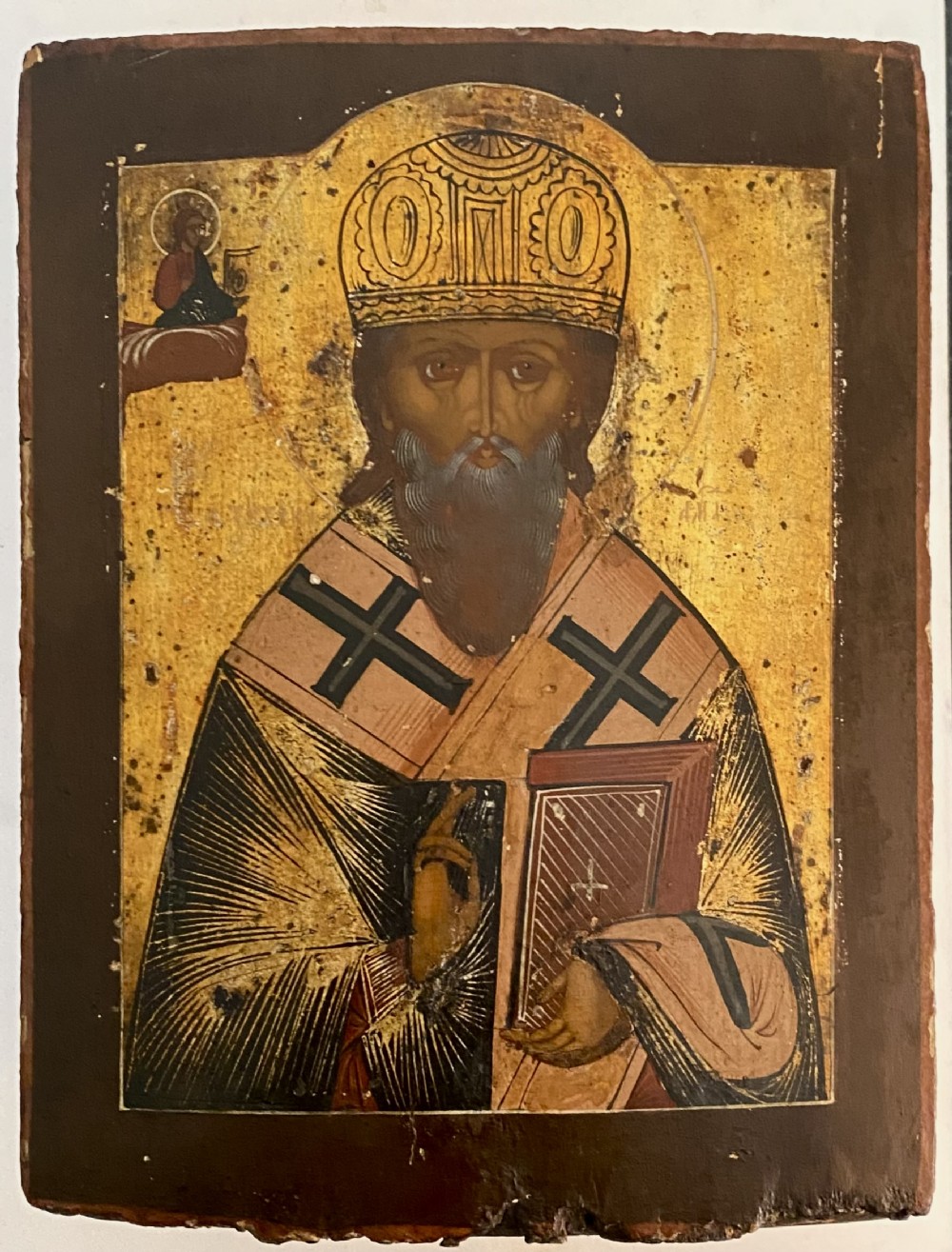
Eastern Orthodox Icon of St Spyridon
Sold by Jane Short Antiques
sold SA1173675
Sorry, but this item has been sold.
Jane Short Antiques

Jane Short Antiques

Sellingantiques Verified Since Mar 2020
Browse dealers 193 items
  • About Us
    30 years of expertise in 17th- to early 20th-century furniture and fine art
Id #SA1173675
PDF SHARE
SAVE

Eastern Orthodox Icon of St Spyridon

19th century
Sold 29 December 2025 · Jane Short Antiques
This “Eastern Orthodox Icon of St Spyridon” found a buyer.

It was listed by Jane Short Antiques. Sold pieces stay on Sellingantiques as a record of what has passed through, and the next one is rarely far away.

Description

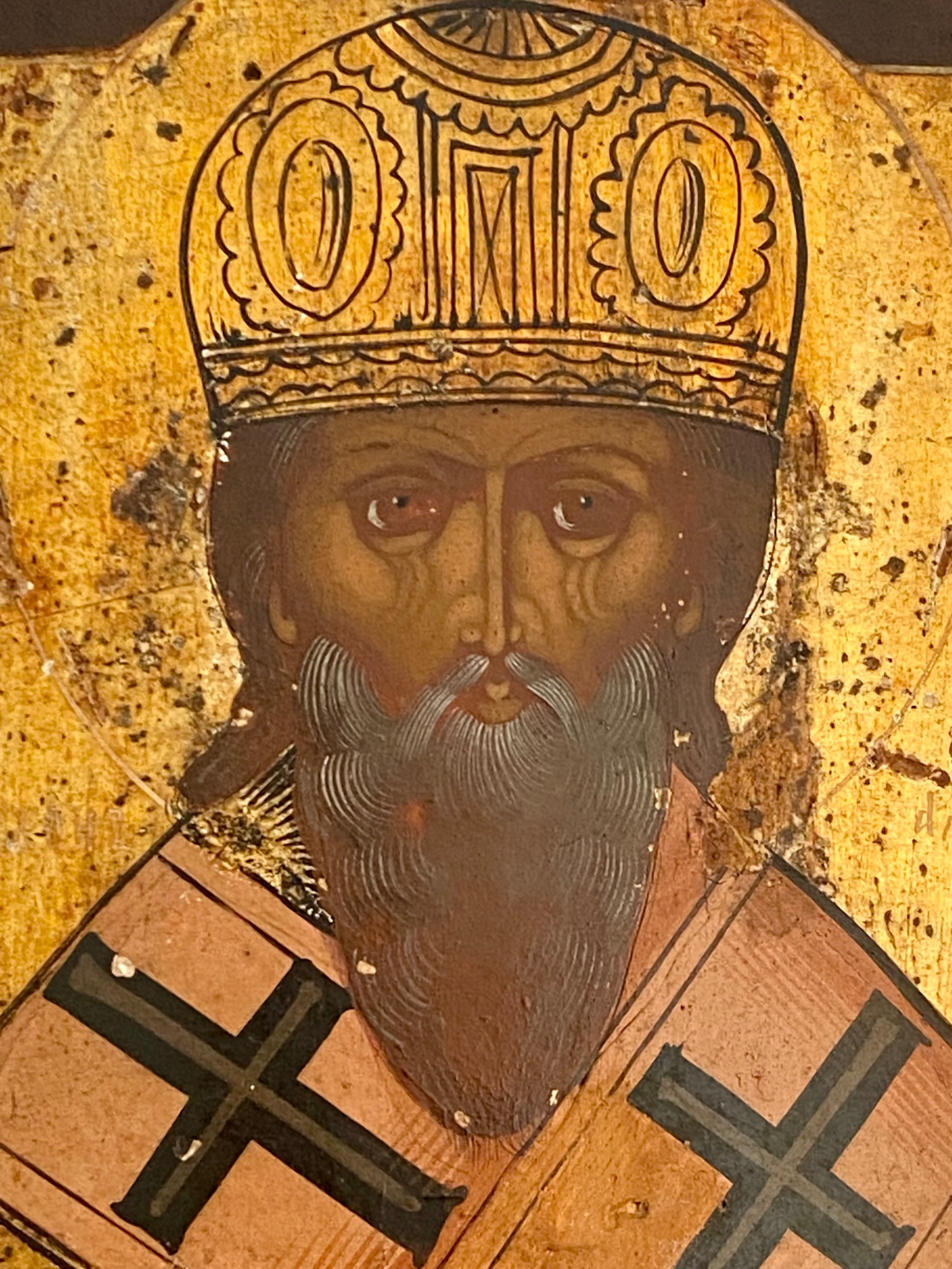
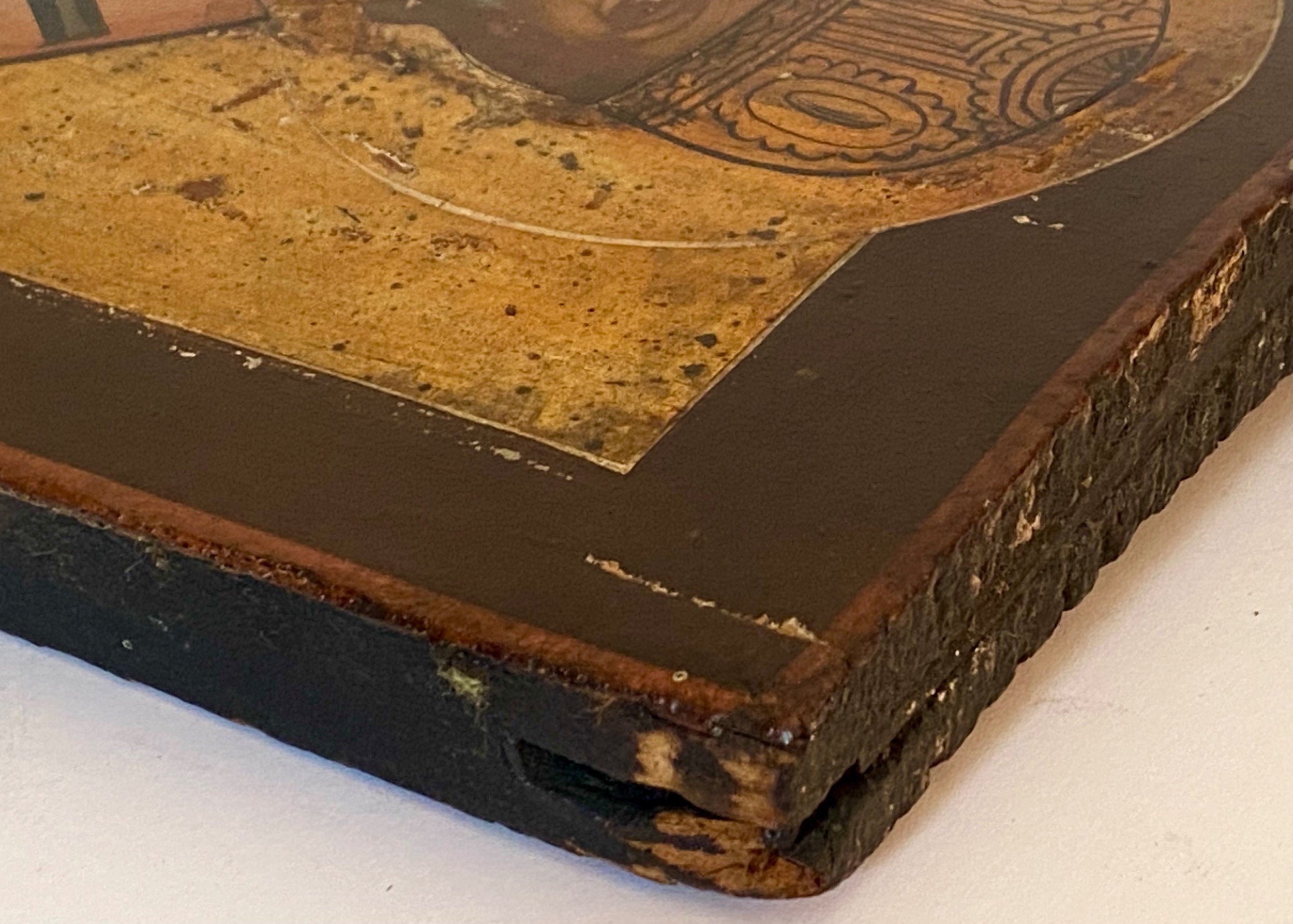
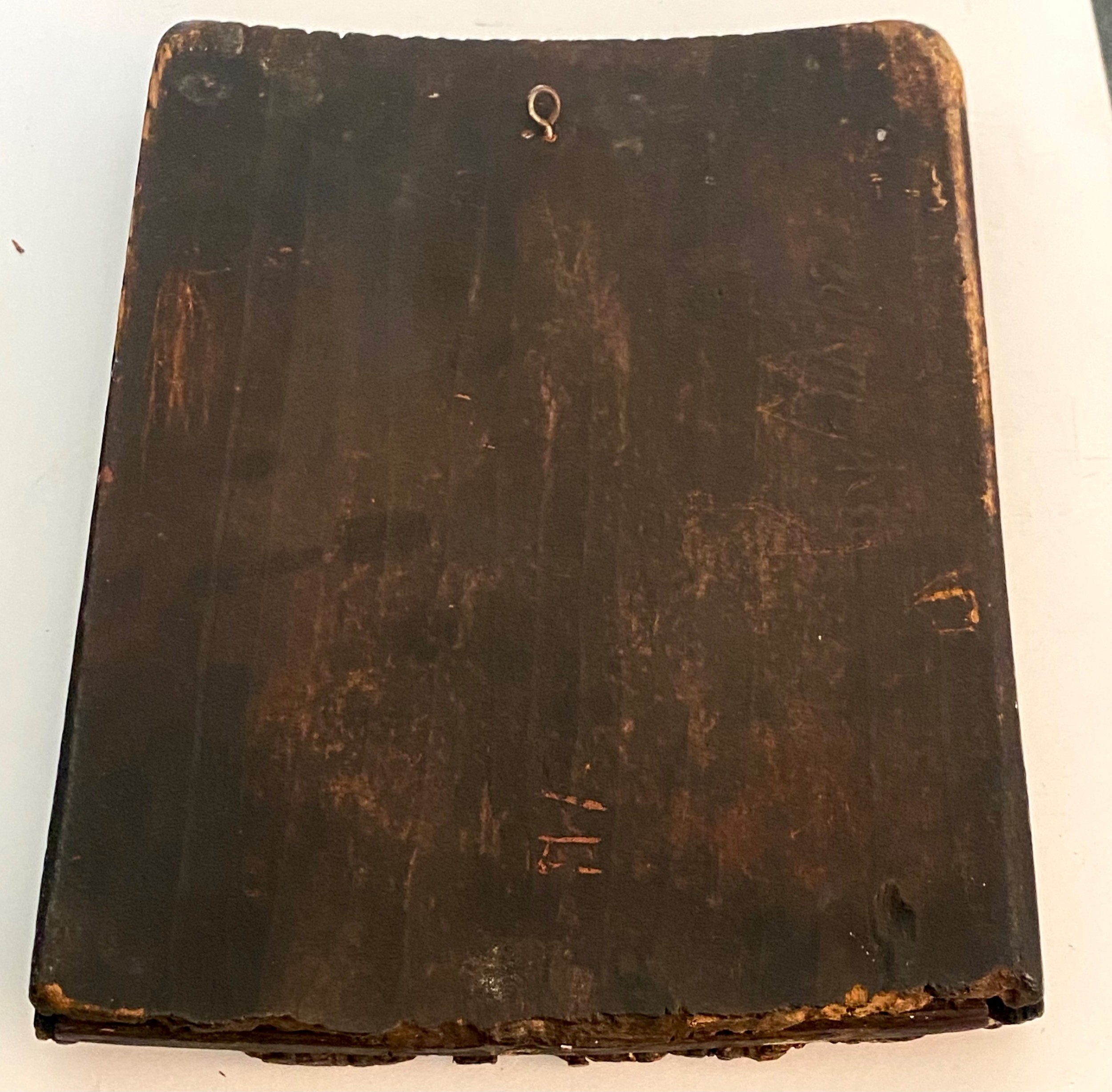
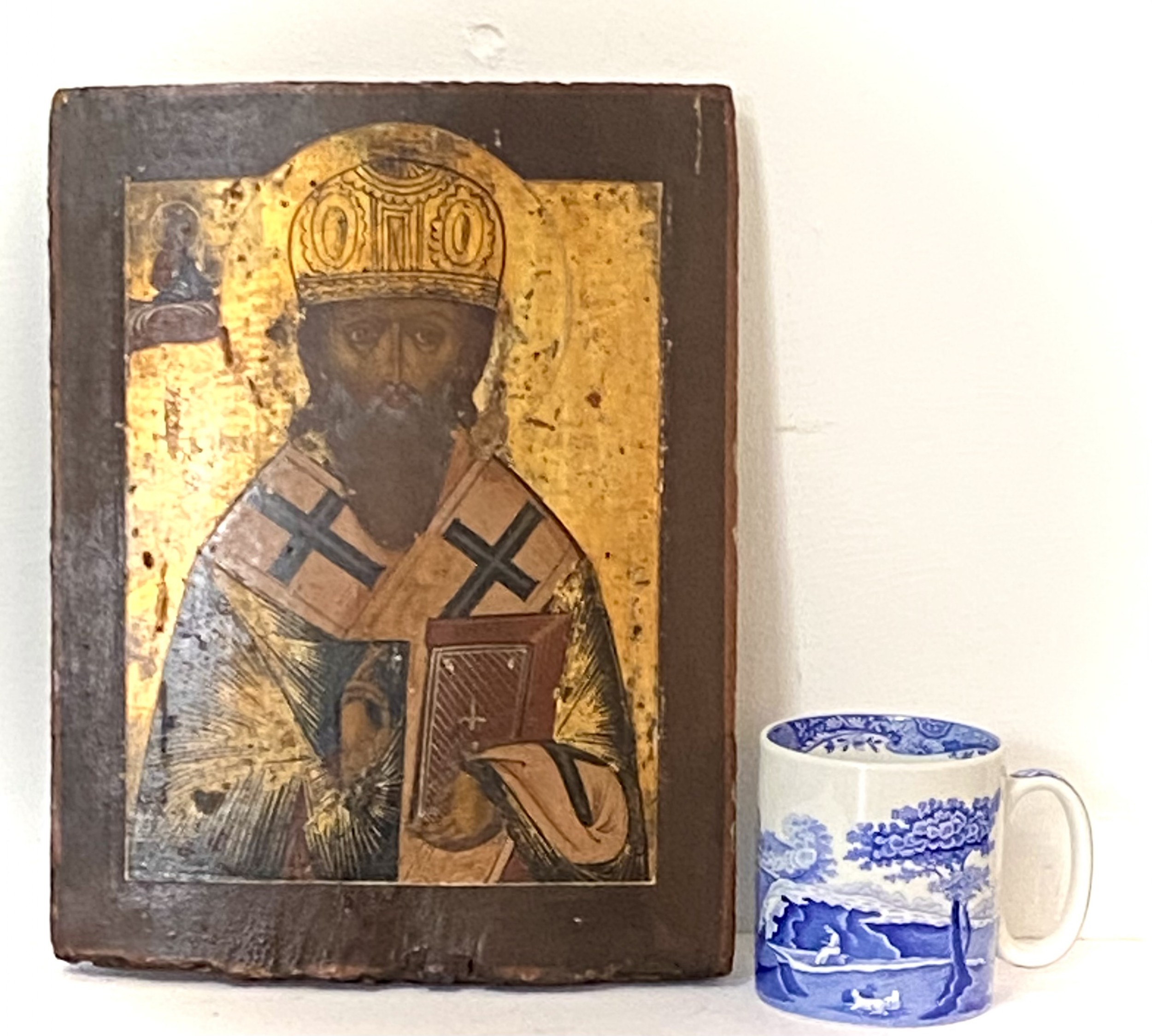
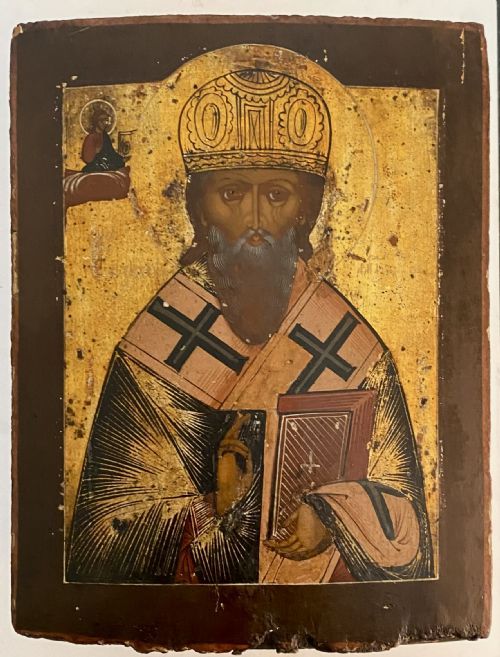
An orthodox painted wooden panel of St Spyridon. It is in original condition with no restoration whatsoever. It is probably Greek.

Life of St Spyridon

Spyridon was born in Assia, in Cyprus. He worked as a shepherd and was known for his great piety.
He married and had one daughter, Irene.

Upon the death of his wife, Spyridon entered a monastery, and their daughter entered a convent.

Spyridon eventually became Bishop of Trimythous, or Tremithous (today called Tremetousia), in the district of Larnaca. He took part in the First Ecumenical Council of Nicaea (325), where he was instrumental in countering the theological arguments of Arius and his followers.
He reportedly converted a pagan philosopher to Christianity by using a potsherd to illustrate how one single entity (a piece of pottery) could be composed of three unique entities (fire, water, and clay); a metaphor for the Christian doctrine of the Trinity.
As he was speaking, in order to explain the trinity, he grabbed a shard of roof tile (some accounts of this event say that it was a brick he held in his hand). He spoke "in the name of the father" and it is said to have miraculously burst into flame, "and of the son", then water began to drip on the ground, "and of the holy spirit" whereupon only dust remained in his hand.
After the council, Spyridon returned to his diocese in Tremithous. He had earlier fallen into disfavor during the persecutions of the emperor Maximinus, but died peacefully in old age.

Spyridon was popular in Byzantine literature. A poem, now lost, was dedicated to him by his pupil Triphyllius. It inspired two 7th-century vitae, one by Theodore of Paphos (c. 655) and another possibly by Leontios of Neapolis. The former was used by Symeon the Metaphrast. Arabic and Georgian hagiographies also survive.

We can deliver free of charge in UK mainland and can calculate the cost for international delivery.

Physical Dimensions
Height
28cm (11.02")
Width
22cm (8.66")
Depth
3cm (1.18")
Declaration

Jane Short Antiques has dated this Eastern Orthodox Icon to the 19th Century.

Reference Numbers
Sellingantiques Reference
SA1173675
Dealers Internal Reference
A4777
Description
An orthodox painted wooden panel of St Spyridon. It is in original condition with no restoration whatsoever. It is probably Greek.

Life of St Spyridon

Spyridon was born in Assia, in Cyprus. He worked as a shepherd and was known for his great piety.

fig 1. An antique wooden Eastern Orthodox icon depicting Saint Spyridon in liturgical vestments against a gilded background.
fig 1. Eastern Orthodox Icon of St Spyridon

He married and had one daughter, Irene.

Upon the death of his wife, Spyridon entered a monastery, and their daughter entered a convent.

“
Spyridon eventually became Bishop of Trimythous, or Tremithous (today called Tremetousia), in the district of Larnaca.
Jane Short Antiques

He took part in the First Ecumenical Council of Nicaea (325), where he was instrumental in countering the theological arguments of Arius and his followers.

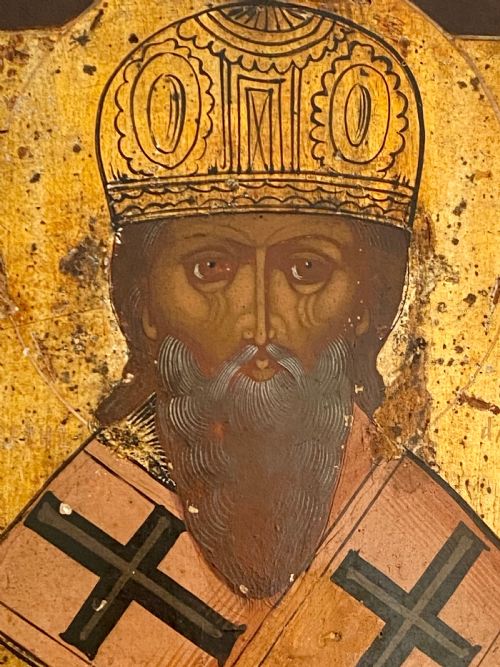
fig 2. An antique wooden Eastern Orthodox icon depicting Saint Spyridon in liturgical vestments against a gilded background.
fig 2. Eastern Orthodox Icon of St Spyridon

He reportedly converted a pagan philosopher to Christianity by using a potsherd to illustrate how one single entity (a piece of pottery) could be composed of three unique entities (fire, water, and clay); a metaphor for the Christian doctrine of the Trinity.

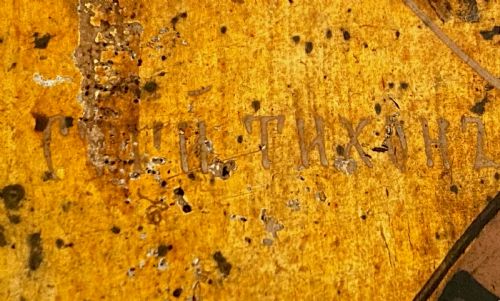
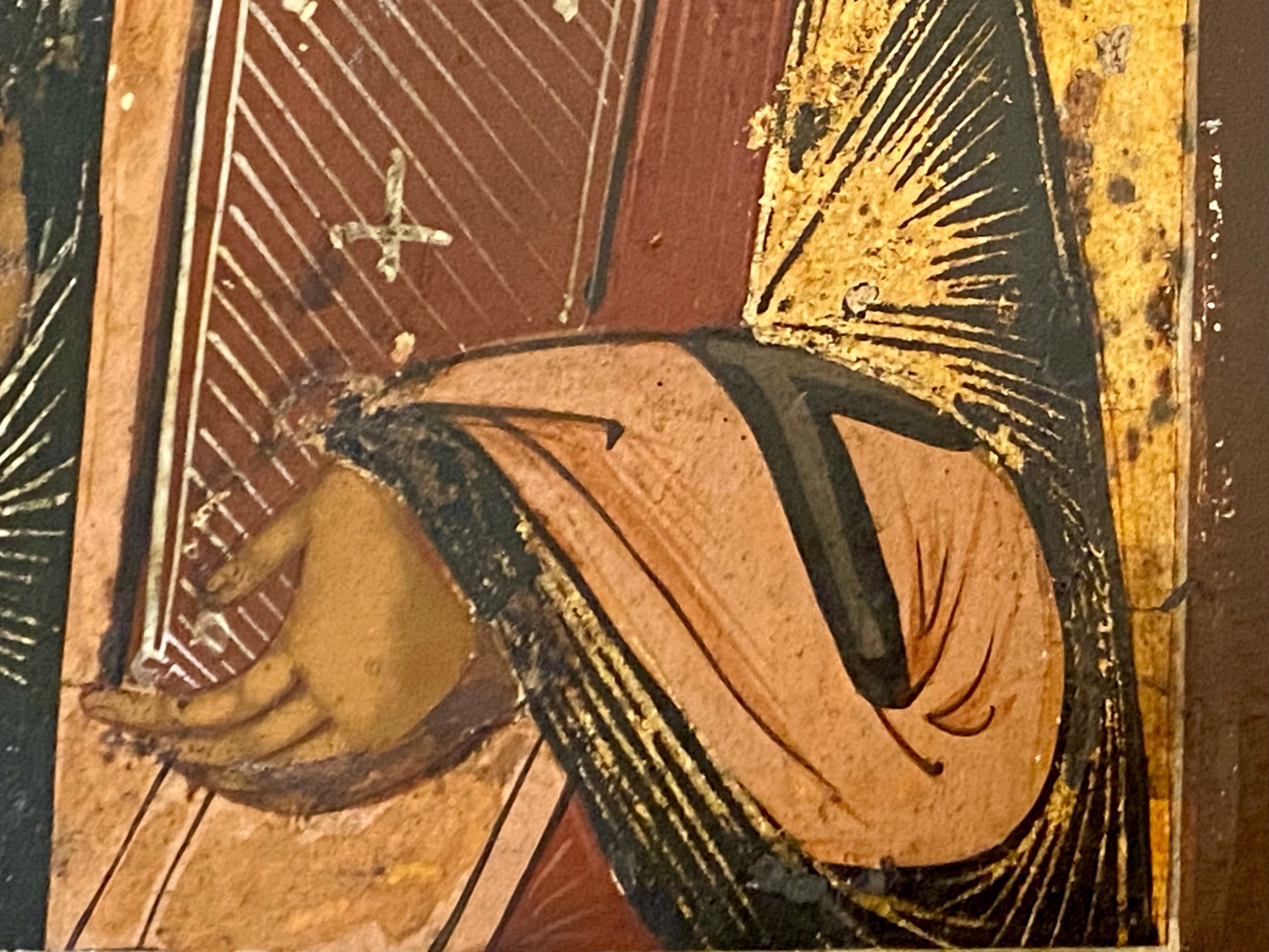
fig 3. An antique wooden Eastern Orthodox icon depicting Saint Spyridon in liturgical vestments against a gilded background.
fig 3. Eastern Orthodox Icon of St Spyridon

As he was speaking, in order to explain the trinity, he grabbed a shard of roof tile (some accounts of this event say that it was a brick he held in his hand). He spoke "in the name of the father" and it is said to have miraculously burst into flame, "and of the son", then water began to drip on the ground, "and of the holy spirit" whereupon only dust remained in his hand.

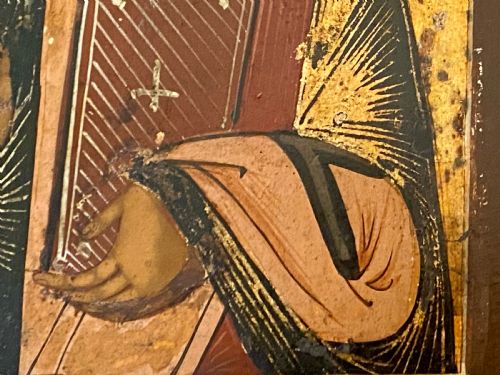
fig 4. An antique wooden Eastern Orthodox icon depicting Saint Spyridon in liturgical vestments against a gilded background.
fig 4. Eastern Orthodox Icon of St Spyridon

After the council, Spyridon returned to his diocese in Tremithous. He had earlier fallen into disfavor during the persecutions of the emperor Maximinus, but died peacefully in old age.

Spyridon was popular in Byzantine literature. A poem, now lost, was dedicated to him by his pupil Triphyllius. It inspired two 7th-century vitae, one by Theodore of Paphos (c. 655) and another possibly by Leontios of Neapolis. The former was used by Symeon the Metaphrast. Arabic and Georgian hagiographies also survive.

We can deliver free of charge in UK mainland and can calculate the cost for international delivery.

Height
28cm (11.02")
Width
22cm (8.66")
Depth
3cm (1.18")
Date of Manufacture

Jane Short Antiques has dated this Eastern Orthodox Icon to the 19th Century.

Reference Numbers
Sellingantiques Ref
SA1173675
Dealers Internal Ref
A4777
Jane Short Antiques
Jane Short Antiques
Sellingantiques verified Since Mar 2020

30 years of expertise in 17th- to early 20th-century furniture and fine art

Dealer Profile

You can view the stock and full dealer information on the Jane Short Antiques Profile Page
PDF SHARE
SAVE
An antique wooden Eastern Orthodox icon depicting Saint Spyridon in liturgical vestments against a gilded background. SOLD6+ MONTHS AGO
1 / 8
Archive I An antique wooden Eastern Orthodox icon depicting Saint Spyridon in liturgical vestments against a gilded background. SOLD6+ MONTHS AGO

Eastern Orthodox Icon of St Spyridon
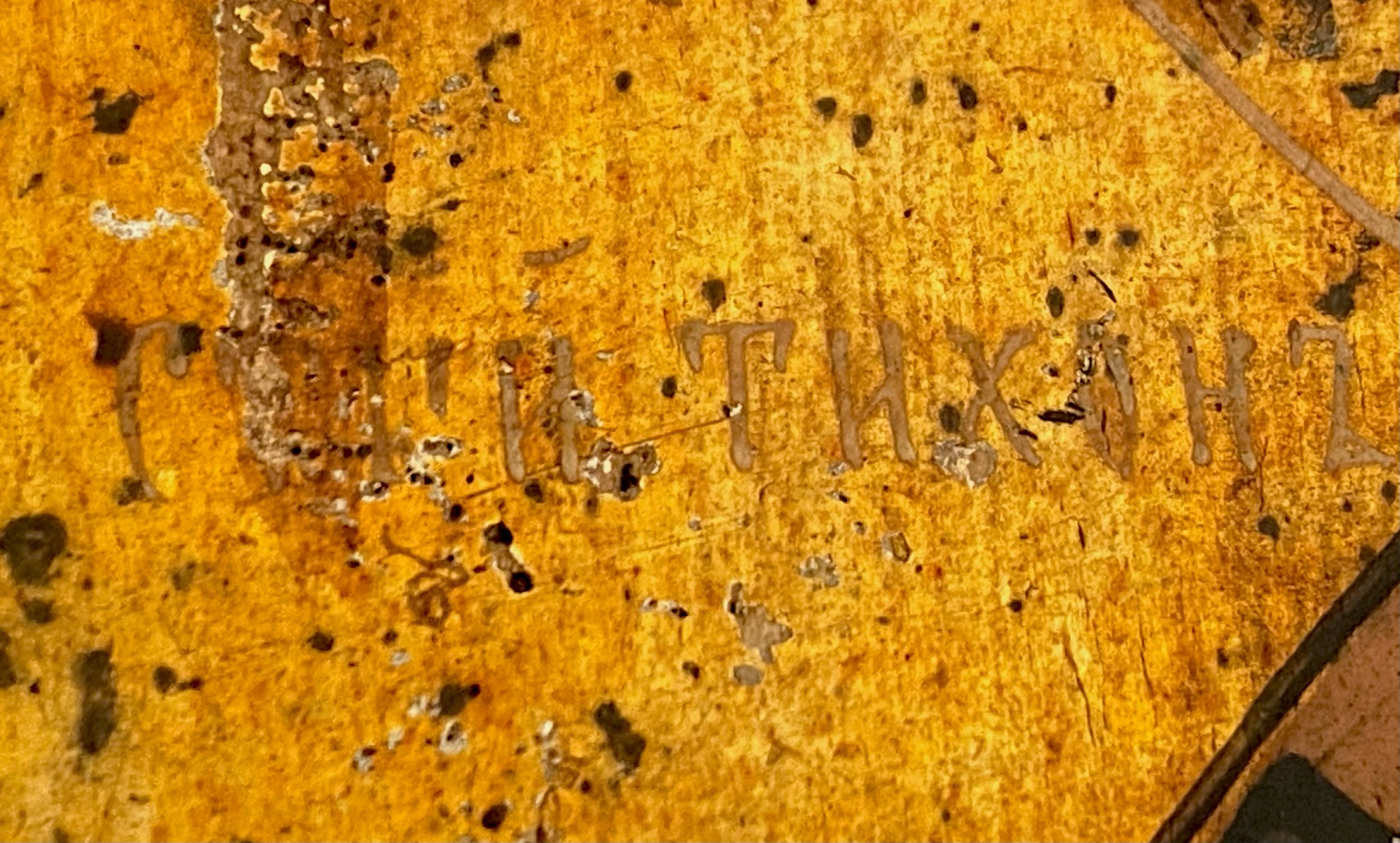
Archive II An antique wooden Eastern Orthodox icon depicting Saint Spyridon in liturgical vestments against a gilded background. View II
Archive III An antique wooden Eastern Orthodox icon depicting Saint Spyridon in liturgical vestments against a gilded background. View III
Archive IV An antique wooden Eastern Orthodox icon depicting Saint Spyridon in liturgical vestments against a gilded background. View IV
Archive V An antique wooden Eastern Orthodox icon depicting Saint Spyridon in liturgical vestments against a gilded background. View V
Archive VI An antique wooden Eastern Orthodox icon depicting Saint Spyridon in liturgical vestments against a gilded background. View VI
Archive VII An antique wooden Eastern Orthodox icon depicting Saint Spyridon in liturgical vestments against a gilded background. View VII
Archive VIII An antique wooden Eastern Orthodox icon depicting Saint Spyridon in liturgical vestments against a gilded background. View VIII
Enlarged Archival View
Location
Sudbury
Suffolk
United Kingdom
Verified Since Mar 2020
Items For Sale 193
Items Sold 948
Jane Short Antiques
Jane Short Antiques
Verified Since Mar 2020
View Dealer Info
Location: Sudbury, Suffolk, United Kingdom
Verified
Mar 2020
For Sale
193
Sold
948
An antique wooden Eastern Orthodox icon depicting Saint Spyridon in liturgical vestments against a gilded background.
Eastern Orthodox Icon of St Spyridon
Ref: SA1173675
An antique wooden Eastern Orthodox icon depicting Saint Spyridon in liturgical vestments against a gilded background.
Detail View 1
Detail View 2
Detail View 3
Detail View 4
Detail View 5
Detail View 6
Detail View 7
Archival Detail
Every single antique dealer on our platform is individually approved by our internal team. We verify their professional trade history, ethical standards, and photographic quality to ensure a secure, high-standard buying environment. Upon joining, every dealer agrees to a strict 9-point code of conduct. While issues can occasionally arise, our dealers typically resolve them swiftly and directly with the buyer. In fact, since our founding in 2002, Sellingantiques has only had to step in to help resolve an issue on roughly five occasions—a true testament to the quality of our dealers and their dedication to your happiness.
Our dealers are highly experienced in packing and shipping fragile, high-value antiques. Because you are in direct contact with the dealer, you will be able to easily go through all available shipping and insurance options together to ensure your item arrives safely.
Antiques are the ultimate green purchase. By choosing historical pieces over newly manufactured goods, you completely eliminate the carbon footprint of modern mass production while preserving exceptional, timeless craftsmanship.
Written by Sellingantiques from the dealer’s photographs and listing
  • ObjectReligious Icons
  • Period19th century
  • StyleEastern Orthodox
  • MaterialWood, Gesso, Gold Leaf, Tempera
  • ColourGold and Brown
  • MotifsGilded halo, Liturgical vestments with crosses, Holding a gospel book, Cincture and mitre
  • SizeH 28 cm (11 in) x W 22 cm (9 in) x D 3 cm (1 in)

Eastern Orthodox icons originated in the early centuries of Christianity, serving as visual representations of sacred figures intended to aid in prayer and contemplation within both churches and domestic settings.

Traditional icons are typically painted with egg tempera and gold leaf on a prepared wooden panel, often reinforced with wooden braces on the reverse to prevent warping over time.

Authentic antique icons often exhibit natural wood ageing, craquelure in the paint layer, hand-carved panels, and traditional pigment characteristics consistent with specific historical periods and regional iconographic schools.

An antique icon can be displayed as a focal point on a mantelpiece or integrated into a curated gallery wall, contrasting traditional sacred art with contemporary minimalist surroundings.

Wooden icons should be kept away from direct sunlight, extreme temperature fluctuations, and high humidity to prevent wood movement, paint flaking, and degradation of the gold leaf.
items
Add keywords to the filter
Price
£100
£250000
Era
Period
Style
Material
Origin
Stock Location
Recently Added
Online Payments
Categories