



Religious Art Panel
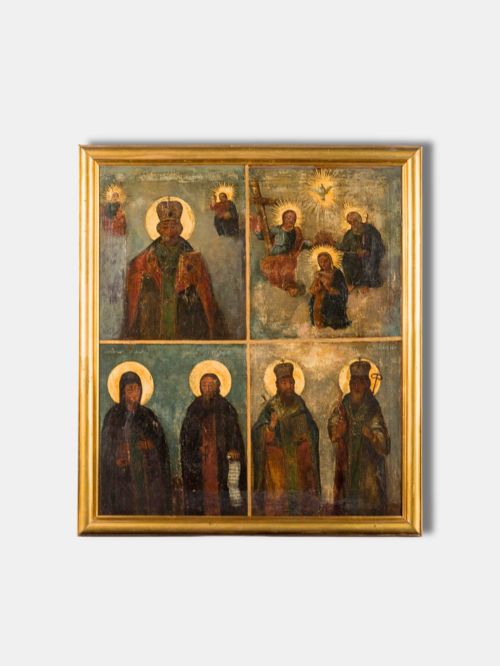
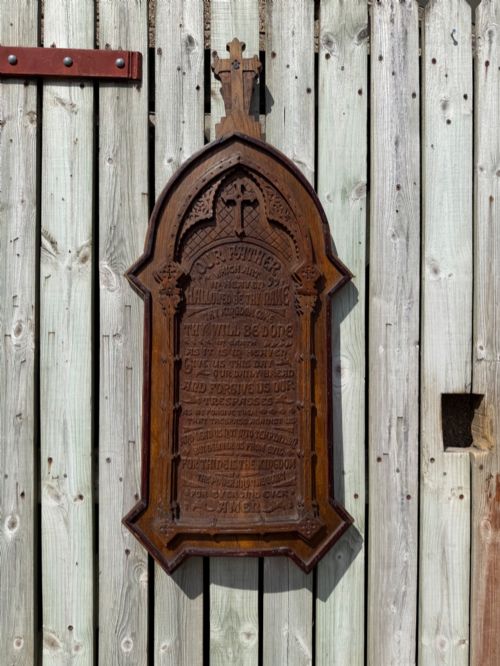
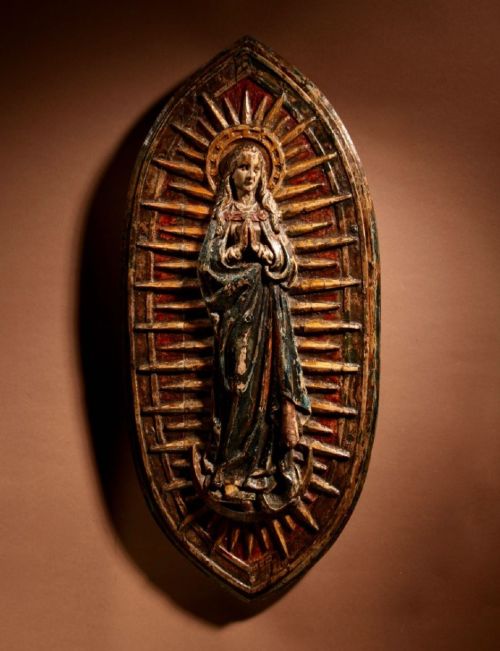
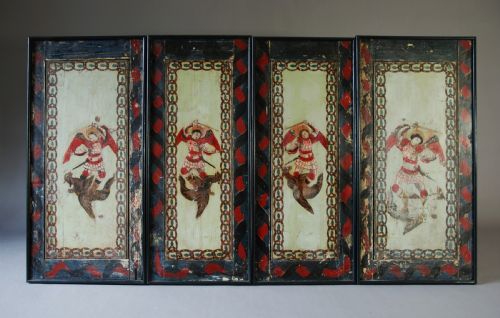
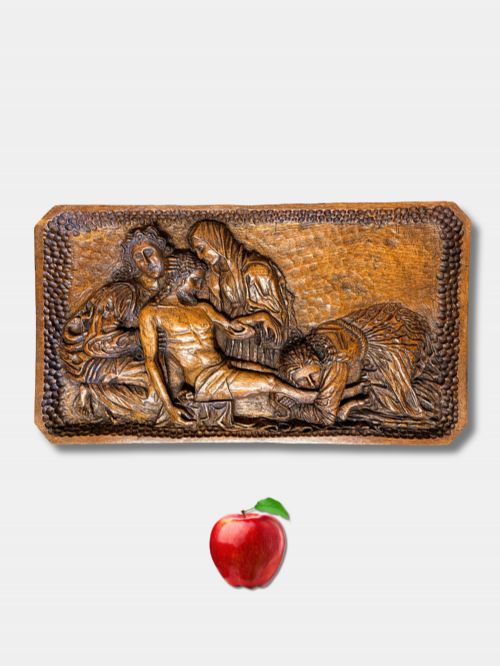
These pieces of religious art panel material range from carved oak altarpieces to Russian icons, offering direct touchpoints with centuries of devotion and domestic prayer.
Religious Art Panel
A religious art panel brings centuries of sacred imagery and domestic devotion into a domestic setting. These works span carved oak wall plaques, painted canvas panels, silk embroideries, and Russian icons.
The selections encountered here stretch from the sixteenth century through to the Edwardian era, taking in Flemish carvings, Italian oils, and English needlework pictures. Each object serves as a physical fragment of historical worship, whether sourced from a grand altarpiece or a modest tin tabernacle.
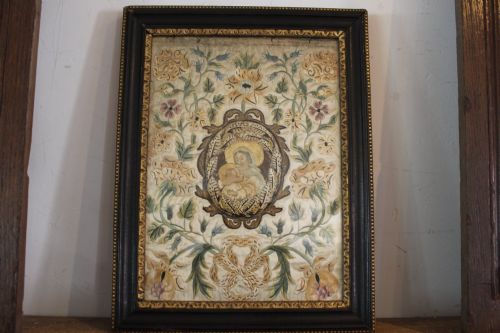
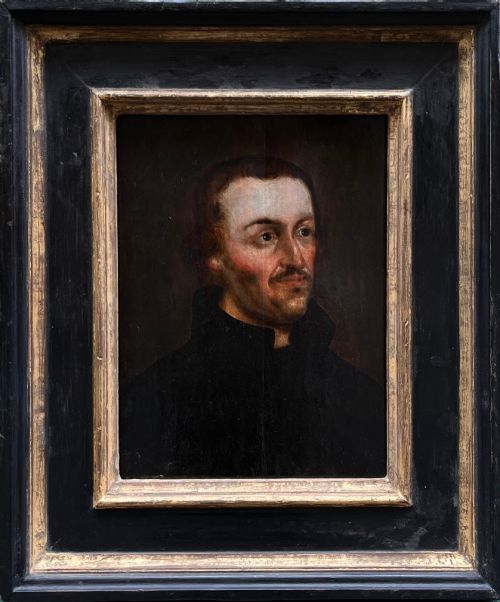
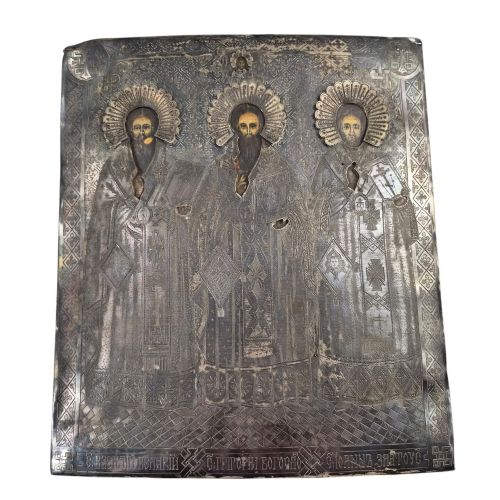
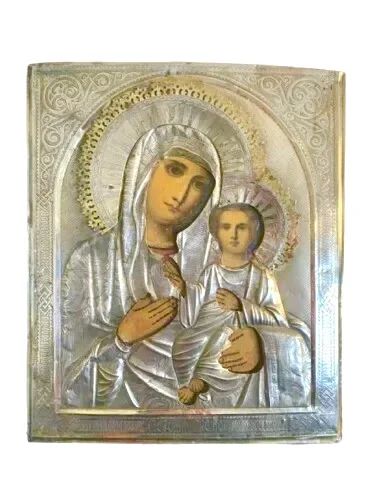
Buyers will find everything from naively painted pine panels depicting saints to elaborate silver-riza icons and detailed silk embroidery. The category embraces diverse regional traditions, uniting European woodworking, Russian icon painting, and American pyrography under one heading.
How They Were Made
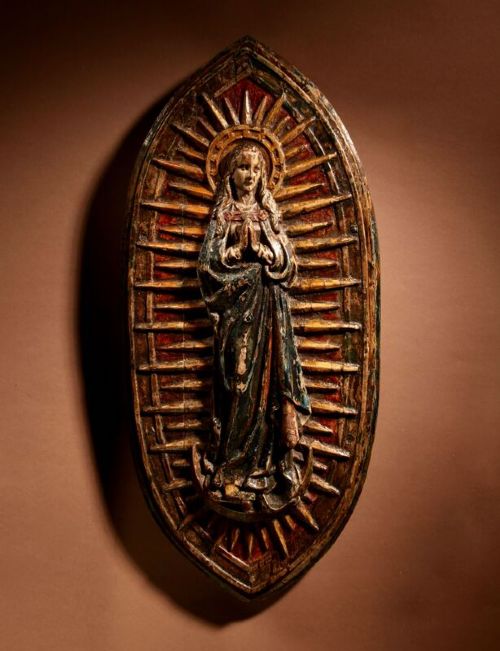
Makers shaped these panels using traditional carpentry and joinery, working with solid timbers like oak, pine, chestnut, and gessoed wood grounds. Sculptural pieces rely on deep relief carving and polychrome paint applications, sometimes augmented by gold leaf.
Painted works utilise tempera, oil paint, and pigment directly onto wood or canvas substrates. Finer icons and plaques incorporate precious metals such as silver and gilt, alongside mother-of-pearl or delicate silk embroidery threads.
Religious Art Panel Retail Price Guide 2026
Typical asking prices for religious art panel among the pieces listed under this phrase on Sellingantiques today, from the lower quarter to the upper quarter. They describe what is for sale here now, not the wider market.
Listings feature wood, oak, silver, and tempera, spanning periods from the sixteenth century through the Edwardian era.
What Varies in Quality
The distinction between ordinary and exceptional panels rests in the confidence of the hand and the preservation of the original surface. Master carvers or trained iconographers achieved depth and expression that lesser workshop copies miss entirely.
Materials dictate the upper tier, where genuine gold leaf, period silver riza work, or intact polychrome pigments elevate a piece. Evidence of structural alterations or heavy overpainting shifts an item away from its original state.
Heinrich Grünbaum·Volga Masters
The Religious Art Panel Glossary
- Icon
- A traditional devotional painting, typically on wood, associated with Eastern Orthodox Christian traditions. These panels often layer tempera and gold leaf over gesso.
- Riza
- A protective metal cover placed over an icon, usually stamped in silver or brass. It leaves the faces and hands of the holy figures visible while shielding the rest of the painted panel.
- Polychrome
- The practice of decorating architectural elements, sculptures, or wooden panels in a variety of colours. Medieval and Baroque carvers frequently applied paint over gesso grounds.
- Pyrography
- The art of decorating wood or other materials by burning a design on the surface with a heated metallic point. This technique appears in nineteenth-century decorative panels.
- Altarpiece
- A structured work of art set above and behind an altar in a Christian church. Central panels often depict specific saints, the Virgin Mary, or scenes from the Passion.
Religious Art Panel: Frequently Asked Questions
How were old icons mounted?
Older icons and painted panels were typically prepared on solid wooden boards fitted with wooden batons on the reverse. These bracing strips helped prevent the timber from warping as humidity changed.
Master iconographers applied layers of linen and gesso to the wood before painting with tempera and gold leaf. This solid construction allowed many wooden panels to survive intact for centuries.
Where did tin tabernacle panels come from?
Tin tabernacles were prefabricated corrugated iron churches erected across Britain during the Victorian era. Their interiors often featured illuminated religious texts and wall-mounting panels to inspire the congregation.
These painted or printed panels served a didactic purpose in temporary or mission spaces. Today, they survive as distinct examples of nineteenth-century communal worship.
How do I care for a wooden panel?
Wooden panels and icons require stable indoor humidity and protection from direct sunlight. Sudden environmental shifts can cause old timber to split or tempera paint to flake.
Dust them gently with a dry, soft cloth and avoid chemical cleaning agents. Preserving the original surface requires keeping the piece away from damp walls and heat sources.