


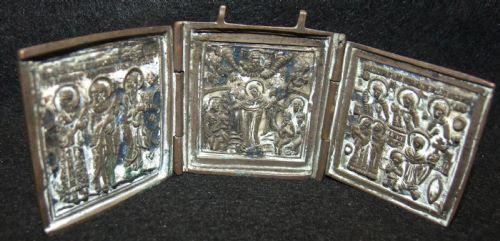


Russian Orthodox Icon
A Russian Orthodox icon brings sacred devotion into the home through painted wood, gilt and bronze.
Russian Orthodox icon forms and periods
A Russian Orthodox icon is a sacred image painted on wood or cast in brass, serving as an object of veneration and prayer. These devotional pieces draw collectors seeking traditional religious art rooted in centuries of spiritual practice.
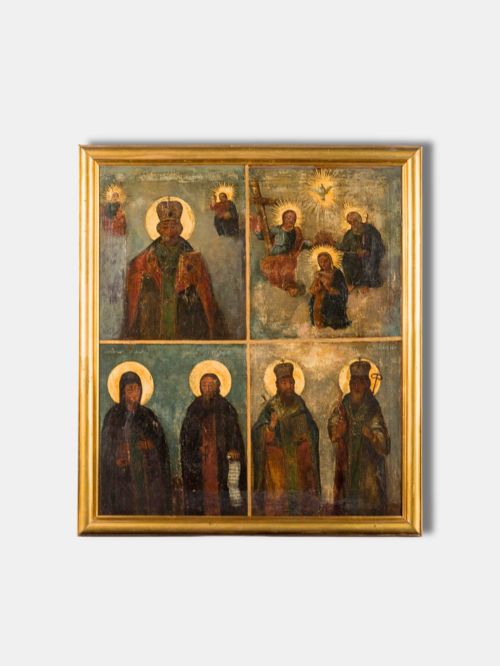
The selection ranges from panel paintings executed in egg tempera and gold leaf to portable bronze and enamel brass icon plaquettes. Examples span from the seventeenth century through to the early twentieth century, showing both devotional scenes and specific saints.
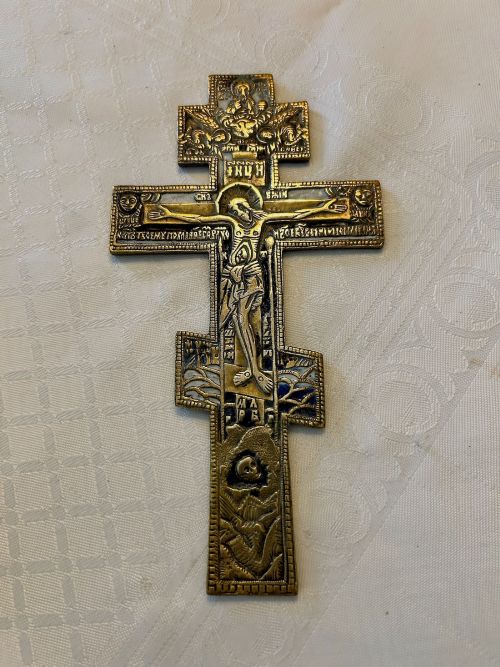
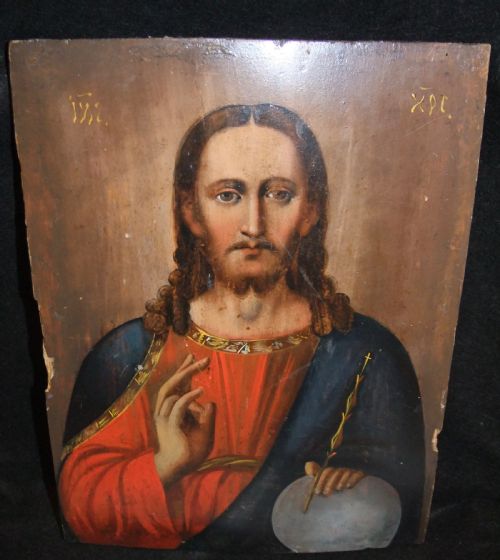
Panel paintings frequently present subjects such as Christ Pantocrator, the Crucifixion, and Easter with the Passion of Christ. Brass and enamel pieces often depict the Mother of God, including variants like Our Lady of Kazan and Joy to All Who Sorrow.
Materials and construction
Painters built up religious icons using tempera and egg tempera on wood panels or canvas surfaces. Artisans incorporated gold leaf, silver and gilt to illuminate sacred figures and backgrounds.
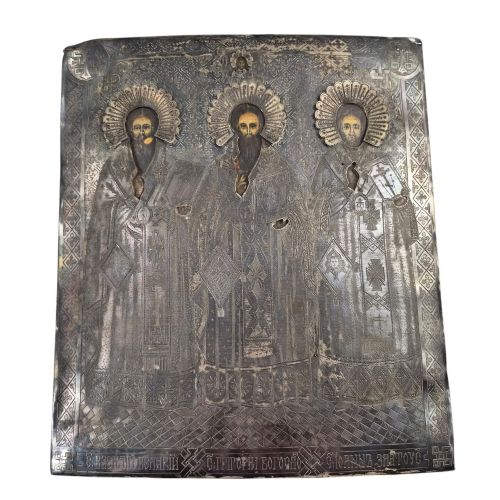
Metal versions were cast in brass, frequently enhanced with blue enamelling to highlight details on crucifixion crosses and devotional plaquettes. Some examples combine painted panels with protective metal oklad coverings.
Retail Price Guide 2026
Typical UK retail prices for russian orthodox icon, calculated from the Sellingantiques database of over a million retail prices indexed since 2003. This retail price guide relies exclusively on Sellingantiques data; no external sources or auction records are used, so the figures do not describe the wider market.
Listings feature works spanning from the seventeenth century through to the early twentieth century, utilising wood, tempera, gold leaf, bronze and brass.
Judging quality and execution
The distinction between standard works and finer examples lies in the precision of the brushwork and the depth of detail within the tempera or enamel. Superior pieces display refined facial expressions and careful handling of gold leaf and silver elements.
Material choice and preservation also define the hierarchy, with intact canvas or wood panels and well-preserved brass casting sitting at the higher end. The sophistication of secondary ornamentation, such as enamel work on brass crosses, elevates specific pieces.
The Russian Orthodox Icon Glossary
- Tempera
- A permanent, fast-drying painting medium consisting of coloured pigment mixed with a water-soluble binder such as egg yolk. This technique creates the durable, matte surfaces seen on early wood panels.
- Oklad
- A protective metal cover placed over an icon, typically leaving only the face and hands of the figures visible. These coverings are often worked in precious metals or brass.
- Christ Pantocrator
- An icon depicting Christ as ruler of the universe, typically shown holding a book and raising his right hand in blessing. It is a central subject in Orthodox Christian art.
- Plaquette
- A small flat plate of metal used for devotional items and portable icons. Brass versions frequently feature detailed casting and enamel work.
- Egg Tempera
- A traditional paint medium made by blending pigments with egg. It allows for the intricate layering and fine detail characteristic of historic icon painting.
Frequently Asked Questions
What is a Russian Orthodox icon?
A Russian Orthodox icon is a sacred painting or cast metal object used for prayer and veneration in the Orthodox tradition. These pieces depict Christ, the Virgin Mary, saints, and biblical narratives according to strict canonical designs.
Materials commonly include wood, egg tempera, gold leaf, and brass. They served as focal points for domestic devotion as well as communal worship.
How were icons displayed in the home?
Icons were traditionally placed in the red corner or beautiful corner of a room, which was the focal point for domestic prayer. Families gathered before these sacred images for daily devotions.
Portable brass icons and plaquettes allowed individuals to maintain their spiritual practices while travelling. Larger panel paintings remained stationary in homes or religious settings.
How do I date an antique icon?
Dating relies on stylistic shifts, painting techniques, and the materials used in the wooden panels or metal castings. Earlier pieces from the seventeenth and eighteenth centuries often show distinct regional painting hands and preparation methods.
Nineteenth and early twentieth-century examples introduce different colour palettes and industrial metalworking techniques, such as specific enamelling methods on brass crosses.
What is the difference between painted and brass icons?
Painted icons are executed in tempera and gold leaf on wood panels or canvas, offering rich figurative detail and painterly depth. Brass icons are cast metal objects, often featuring relief work and blue enamelling for portable use.
While painted panels focus on artistic brushwork and liturgical colour, brass plaquettes prioritize durability and intricate cast ornamentation.