




Painted Wooden Icon
A painted wooden icon brings devotion and rich polychrome pigment into a room, offering centuries of spiritual and artistic tradition.
Painted Wooden Icon
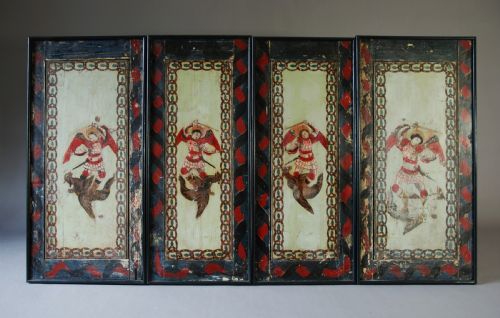
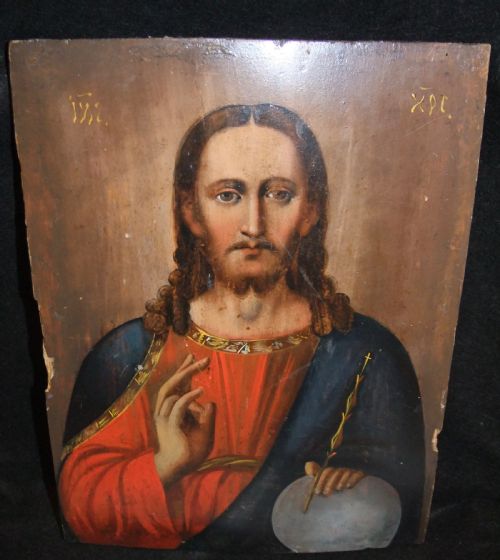
A painted wooden icon serves as a focal point for domestic devotion and religious artwork, taking the form of wall art, home altars, and panel paintings. Buyers seeking a painted wooden icon will encounter works spanning from the seventeenth century through the early twentieth century.
The selections on this page lean heavily toward Russian Orthodox and folk art traditions, alongside continental and Spanish folk art examples. Forms range from single saint panels and framed scenes of the Passion to larger carvings and sets of decorative pine panels.
Most examples rely on tempera paint, oil, or polychrome on wood, frequently accented with gold leaf or gilt. These pieces bridge the gap between high ecclesiastical workshops and naive folk traditions.
Materials and construction
Makers constructed these works primarily using wood panels, frequently employing pine as a base for tempera paint, polychrome pigment, and oil. Artisans applied these paints directly to prepared wooden surfaces, often incorporating carved wood elements or brass fittings.
Gilding and gold leaf frequently enhance the painted surfaces, catching light in dim devotional spaces. The application method shifts between the refined brushwork of official Russian Orthodox iconographers and the simpler execution found in folk art panels.
St Roche appears carrying a stout walking stick, forever accompanied by the loyal dog that saved him with bread.
Assessing quality and execution
Quality reveals itself in the fidelity of the brushwork and the preservation of the original tempera or polychrome paint. Finer panels display careful anatomical rendering and deliberate layering of gold leaf, whereas folk interpretations embrace a more naive execution.
The integrity of the wooden support dictates much of the physical quality, with sound panels holding paint layers more securely over the centuries. Original framing and untouched surface patinas further separate standard workshop pieces from masterworks.
Volga Masters Circle
The Painted Wooden Icon Glossary
- Tempera
- A permanent, fast-drying painting medium consisting of coloured pigment mixed with a water-soluble binder, commonly used on early wooden panels.
- Polychrome
- The practice of decorating architectural elements, sculptures, and wooden panels in a variety of vivid colours.
- Gold leaf
- Gold beaten into extremely thin sheets, applied to wooden panels and icons to create luminous halos and backgrounds.
- Icon
- A religious work of art, most commonly depicting Jesus Christ, saints, or angels, intended for veneration in homes or churches.
- Home altar
- A small devotional structure or cabinet designed to house religious artwork and icons within a domestic interior.
Painted Wooden Icon: Frequently Asked Questions
What is a painted wooden icon?
A painted wooden icon is a sacred artwork depicting holy figures, created using pigments on a wooden panel for prayer and contemplation.
These pieces function as portable shrines or wall art, carrying centuries of religious and cultural heritage.
How do I date an old icon?
Dating relies on examining the wood preparation, pigment types, and stylistic conventions associated with specific centuries and regions.
Ecclesiastical records, inscriptions, and changes in painting technique also help narrow down the period of creation.
Where were these icons displayed?
Owners placed them in domestic corner shrines, home altars, or mounted them directly onto walls within living spaces.
They served as focal points for daily prayer and marked significant religious events within the household.
How should I clean wood panels?
Wooden panels require gentle dusting with a dry, soft cloth to protect delicate tempera and gold leaf layers.
Avoid liquid cleaners, moisture, and direct sunlight, which can cause the old paint and wood to crack.