







Orthodox Religious Icon
These orthodox religious icon examples bridge centuries of devotion, offering tangible connection to Russian Orthodox traditions through tempera, wood, and silver.
Orthodox Religious Icon
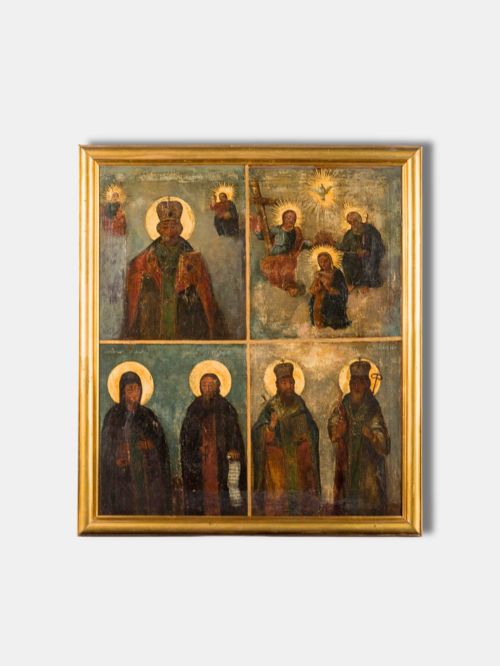
When searching for an orthodox religious icon, you encounter sacred panel paintings and metalwork rooted in Russian Orthodox tradition. The pieces span from the seventeenth century through the early twentieth century, showing centuries of devotional artistry.
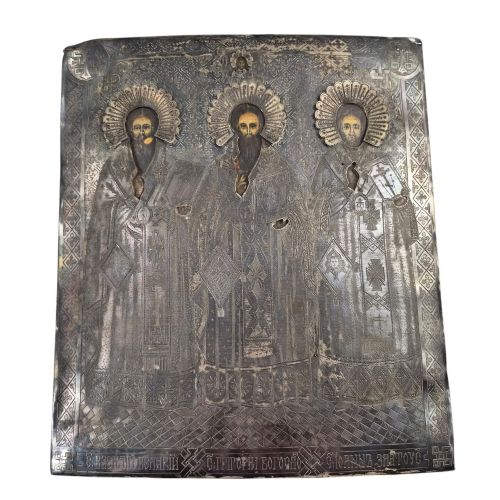
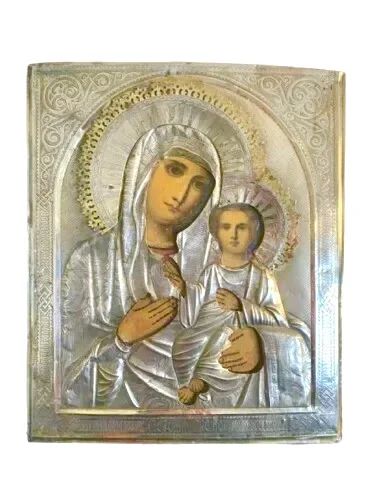
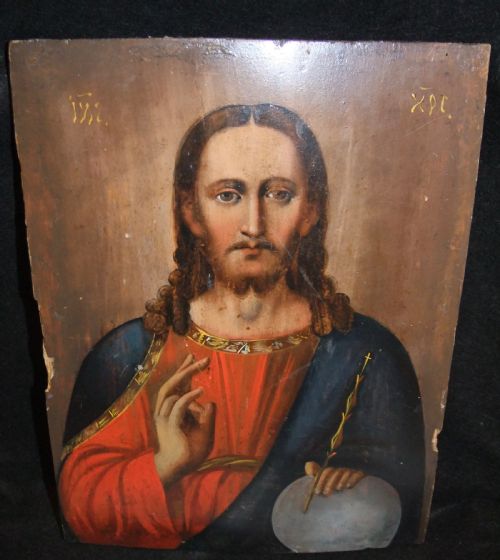
You are most likely to meet nineteenth-century painted wooden panels depicting subjects such as Christ Pantocrator, saints, or scenes like Easter with the Passion of Christ. These works range from simple hand-painted panels to elaborate compositions housed beneath protective metal oklads or rizas.
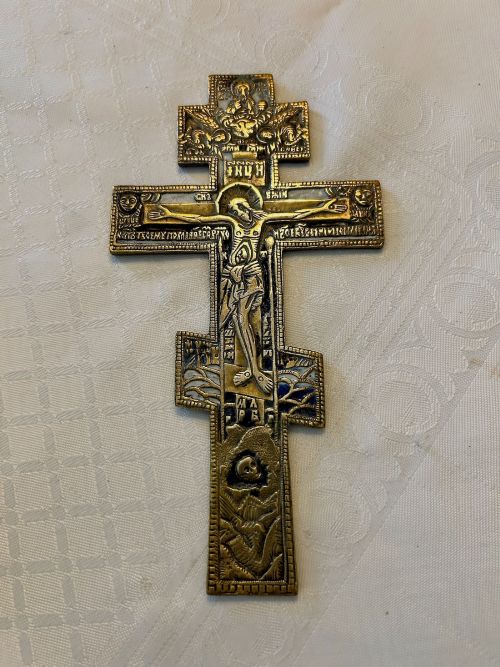
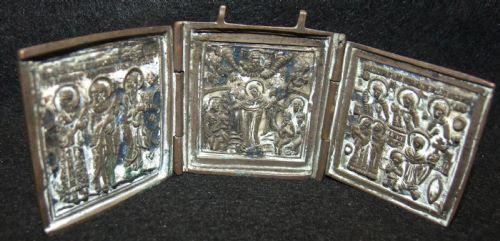
Alongside flat panels, the selection includes portable folding triptychs and cast bronze crosses enriched with blue enamel. Such objects served both domestic prayer corners and travel needs for practitioners across generations.
What varies in quality
The presence and execution of precious metal coverings, such as a silver riza by a named maker or detailed blue enamel work on a bronze cross, elevate the status and visual richness of the piece.
Listings span the eighteenth, nineteenth, and early twentieth centuries, recording materials from tempera and gold leaf to bronze, silver, and enamel.
Heinrich Grünbaum·Volga Masters
The Orthodox Religious Icon Glossary
- Tempera
- A permanent, fast-drying painting medium consisting of pigmented powder mixed with a water-soluble binder such as egg yolk. This technique creates a durable matte surface favoured by traditional icon painters.
- Oklad
- A protective metal cover placed over an icon, leaving visible only the painted faces and hands of the sacred figures. These covers are frequently fashioned from silver, brass, or gilt metal.
- Riza
- An alternative term for an oklad, specifically denoting the metal revetment that shields the surface of an icon. Many examples feature repoussé or chased decoration.
- Triptych
- A picture or relief carving on three panels, hinged together side by side and folded in on each other. Portable versions served as travel icons for private devotion.
- Pantocrator
- An iconic depiction of Christ as ruler of all, typically shown holding a book and raising his right hand in blessing. This subject appears frequently across nineteenth-century panels.
Orthodox Religious Icon: Frequently Asked Questions
What is an orthodox religious icon?
An orthodox religious icon is a sacred image representing Christ, the Virgin Mary, saints, or biblical events, traditionally painted on wood panels or cast in metal.
These pieces function as focal points for prayer within Russian Orthodox homes and churches, serving as windows to the divine.
Were icons used for travel?
Portable folding triptychs and small cast crosses were specifically designed for personal devotion while away from home.
These compact metal objects allowed practitioners to maintain their prayer routines during journeys.
What materials make up these icons?
The primary components include wooden panels prepared with gesso, painted using tempera or oil, and highlighted with gold leaf.
Metal examples incorporate cast bronze, brass, silver, and coloured enamel work.
How should I care for an antique icon?
Antique wooden panels require stable indoor humidity and temperature to prevent wood movement and paint flaking.
Keep them away from direct sunlight and avoid applying cleaning products to delicate tempera or metal surfaces.