





Orthodox Religious Art
Orthodox religious art offers devotional panel paintings and oklads spanning the eighteenth, nineteenth, and early twentieth centuries.
Orthodox Religious Art
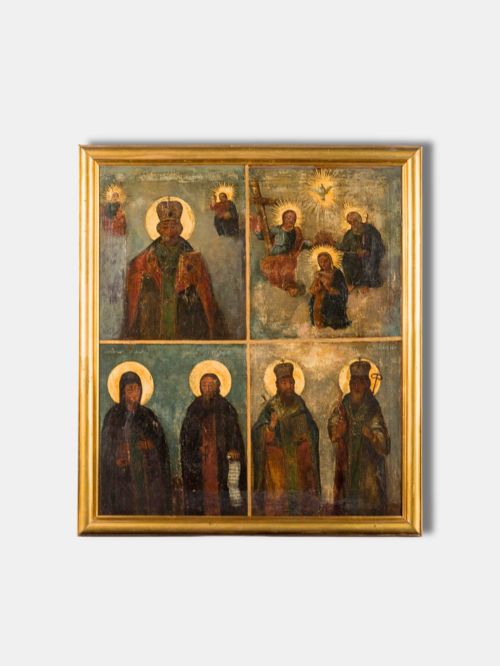
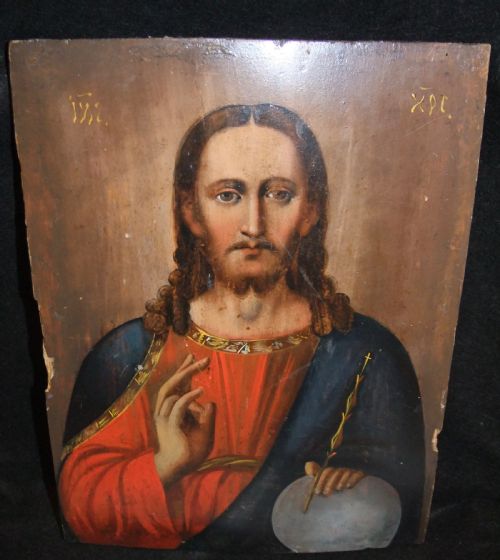
Orthodox religious art comprises panel paintings, wall art, and sacred artefacts originating primarily from Russian traditions across the eighteenth, nineteenth, and early twentieth centuries. Pieces range from framed oil on wood panels to complex devotional panels depicting subjects such as Christ Pantocrator, the Crucifixion, and Easter with the Passion of Christ.
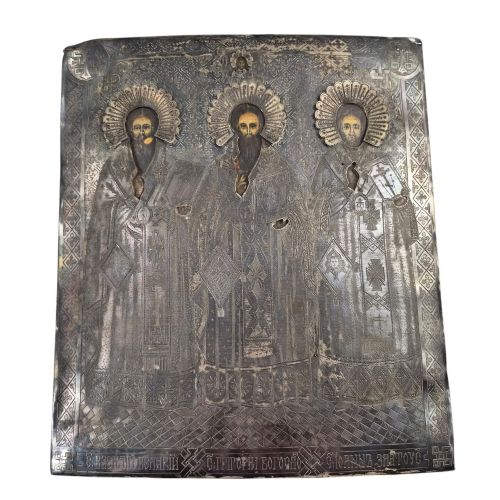
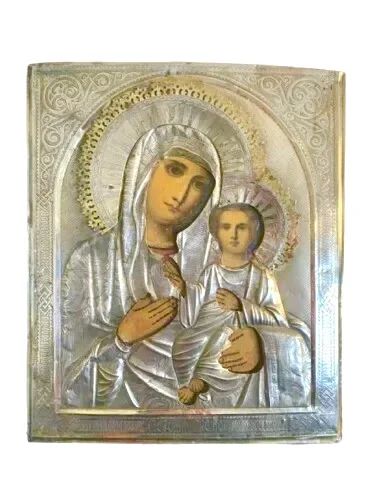
The most common examples on this page are nineteenth-century Russian icons executed on wood panels, often featuring traditional imagery associated with Russian Orthodox and Imperial Russian styles. These works frequently incorporate protective metal covers known as oklads or rizas in silver and brass alongside the underlying painted surface.
How they were made
Makers produced these works using tempera, egg tempera, oil, and gold leaf applied to wood panels or canvas supports. Many examples feature carved wooden panels prepared as the foundation for detailed sacred portraiture and narrative scenes.
Precious metals such as silver and gilt wood enhance the visual impact of the works. Metal components like oklads and rizas were meticulously fashioned to encase parts of the painted panel while leaving specific sacred faces and hands visible.
Angels mounted on wood panels share space with intricate silver rizas.
What varies in quality
The sophistication of the brushwork and the precision of the gilding set individual pieces apart. Finer examples display meticulous detail in facial expressions and vestments, reflecting the skill of regional workshops and named makers.
The integration of metalwork also dictates overall distinction. Superior items feature finely chased silver or brass oklads that complement the underlying tempera rather than obscuring its artistic merit.
Heinrich Grünbaum·Volga Masters
The Orthodox Religious Art Glossary
- Icon
- A devotional panel painting depicting sacred figures or biblical narratives within Eastern Christian traditions. These works serve as focal points for prayer and reflection.
- Oklad
- A protective metal cover placed over an icon, typically leaving only the faces and hands of the sacred figures exposed. It is often made of silver or brass.
- Riza
- An alternative term for an oklad, functioning as a metal revetment that shields and decorates the painted surface beneath.
- Tempera
- A permanent, fast-drying painting medium consisting of coloured pigments mixed with a water-binder such as egg yolk. This technique creates a durable matte finish seen on early panel paintings.
- Gilt Wood
- Wood that has been treated with a thin layer of gold leaf or gold paint to impart a luminous metallic sheen. This method highlights specific architectural or divine elements within the composition.
Orthodox Religious Art: Frequently Asked Questions
What is an Orthodox icon?
An Orthodox icon is a sacred panel painting used for prayer within Eastern Christian traditions. These devotional works depict Christ, saints, and biblical narratives.
Created using tempera and gold leaf on wood, they function as windows to the divine rather than mere decorative art.
What is an oklad?
An oklad is a metal covering fastened over the surface of an icon to protect and adorn the painting. They are usually fashioned from silver or brass.
These metal revetments leave the faces and hands of the painted figures visible while adding sculptural depth to the artwork.
How are periods identified?
Periods are determined by stylistic markers, material preparation, and documentation associated with specific centuries. Eighteenth-century pieces often display distinct workshop characteristics.
Nineteenth and early twentieth-century examples incorporate evolving framing techniques and varied applications of oil and tempera.
How should these pieces be displayed?
These works require stable indoor environments away from direct sunlight and excessive humidity. Proper placement protects the delicate tempera and wood panels from warping.
Wall mounting or secure framing ensures the pieces can be safely appreciated as historical panel paintings.