29,012  PAGES BROWSED TODAY PAGES TODAY • 105 ANTIQUES UPLOADED TODAYNEW ARRIVALS
GIFTS
105 ITEMS ADDED TODAY
Sort Order
Items Per Page
Antiques dealer?
Join as a Seller
Browse Categories
Sort order
Relevant Links
Items per page
sold SA1119366
Sorry, but this item has been sold.
Regent Antiques

Regent Antiques

Sellingantiques Verified Since Sep 2016
Browse dealers 639 items
  • About Us
    We specialise in english and continental furniture, silver, porcelain and decorative items.
  • Trade Associations
    Regent Antiques is a registered member of LAPADA  CINOA
Id #SA1119366
SHARE
SAVE

Antique Silver & Ebonised Watch Opera Cane Walking Stick 19th C

19th century
Sold 27 January 2025 · Regent Antiques
This “Antique Silver & Ebonised Watch Opera Cane Walking Stick 19th C” found a buyer.

It was listed by Regent Antiques. Sold pieces stay on Sellingantiques as a record of what has passed through, and the next one is rarely far away.

Description

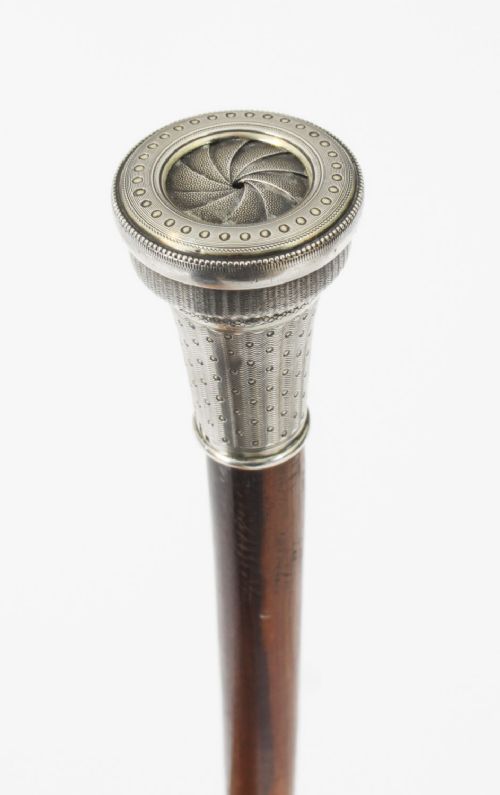
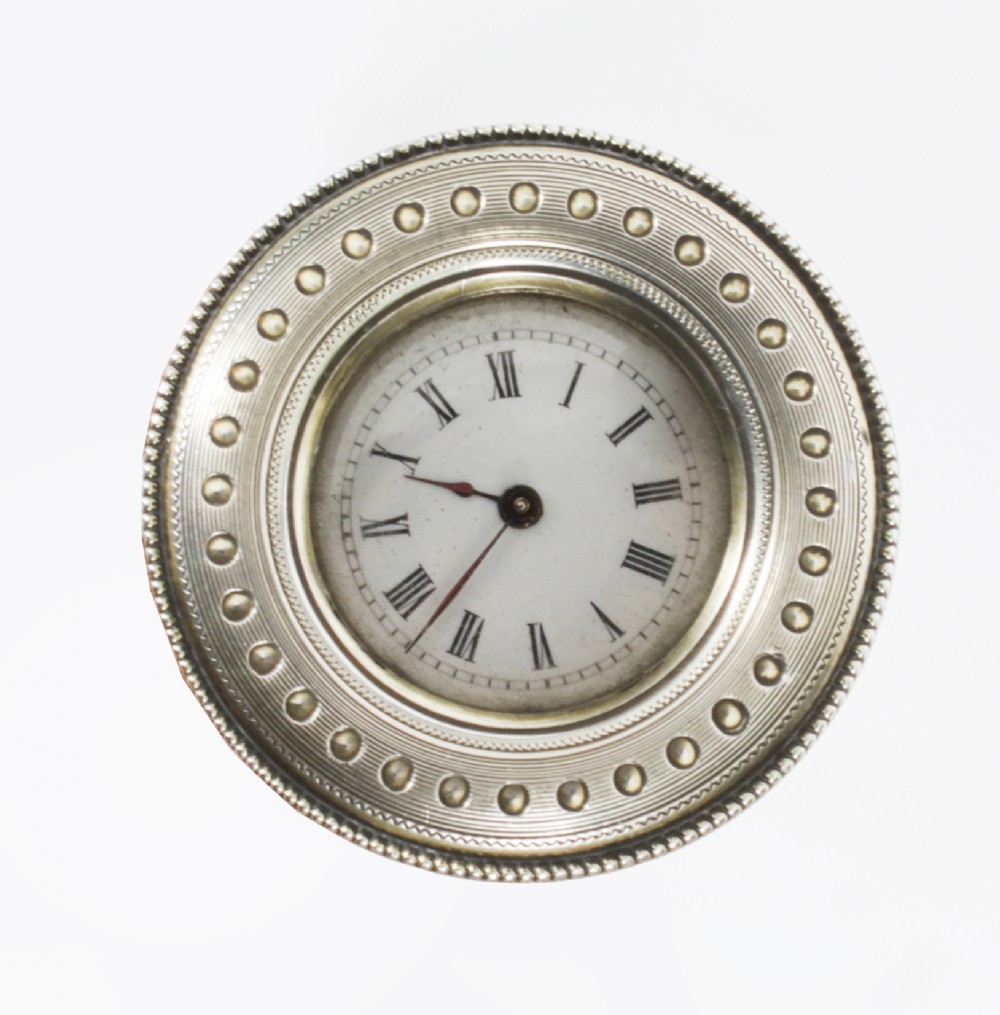
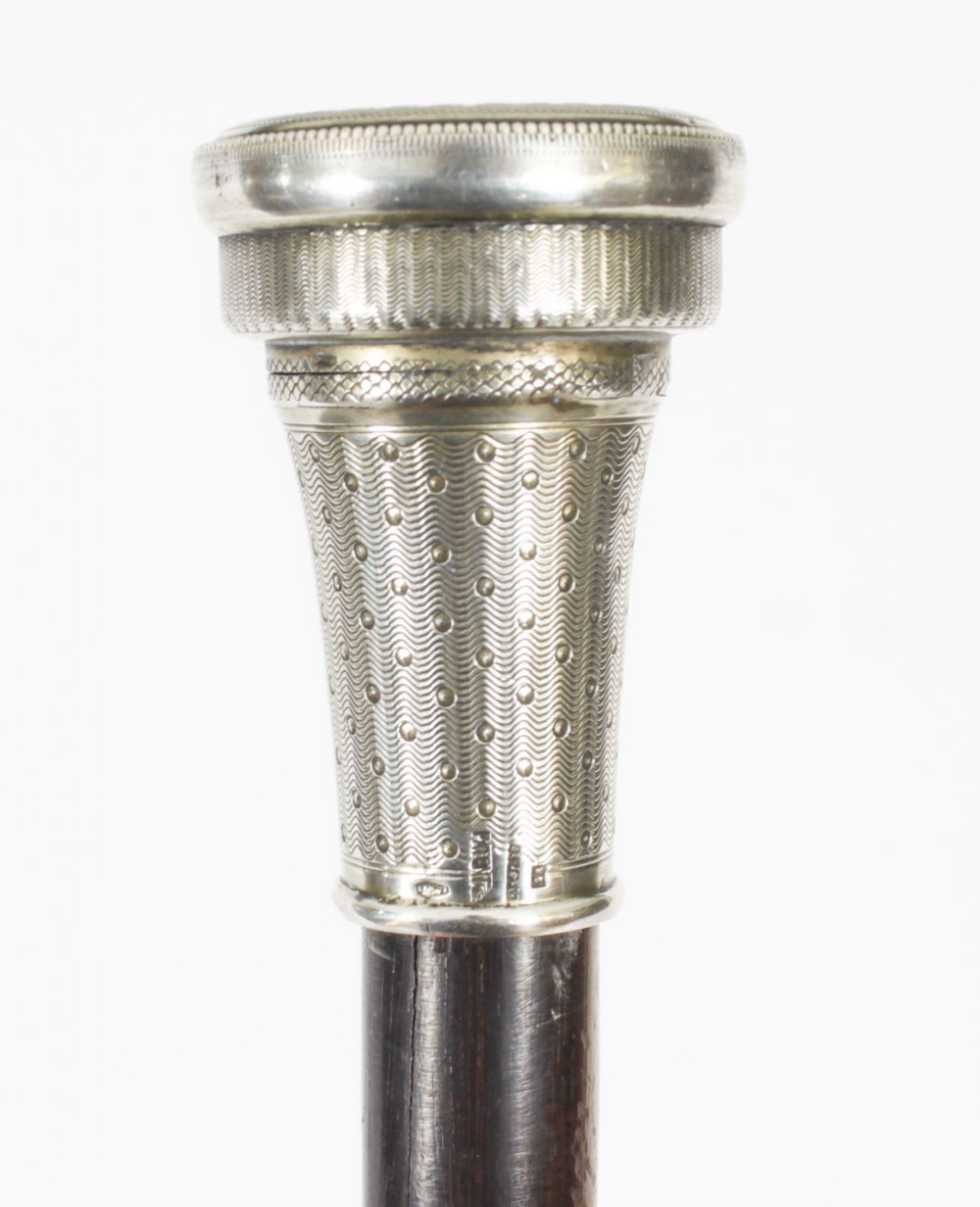
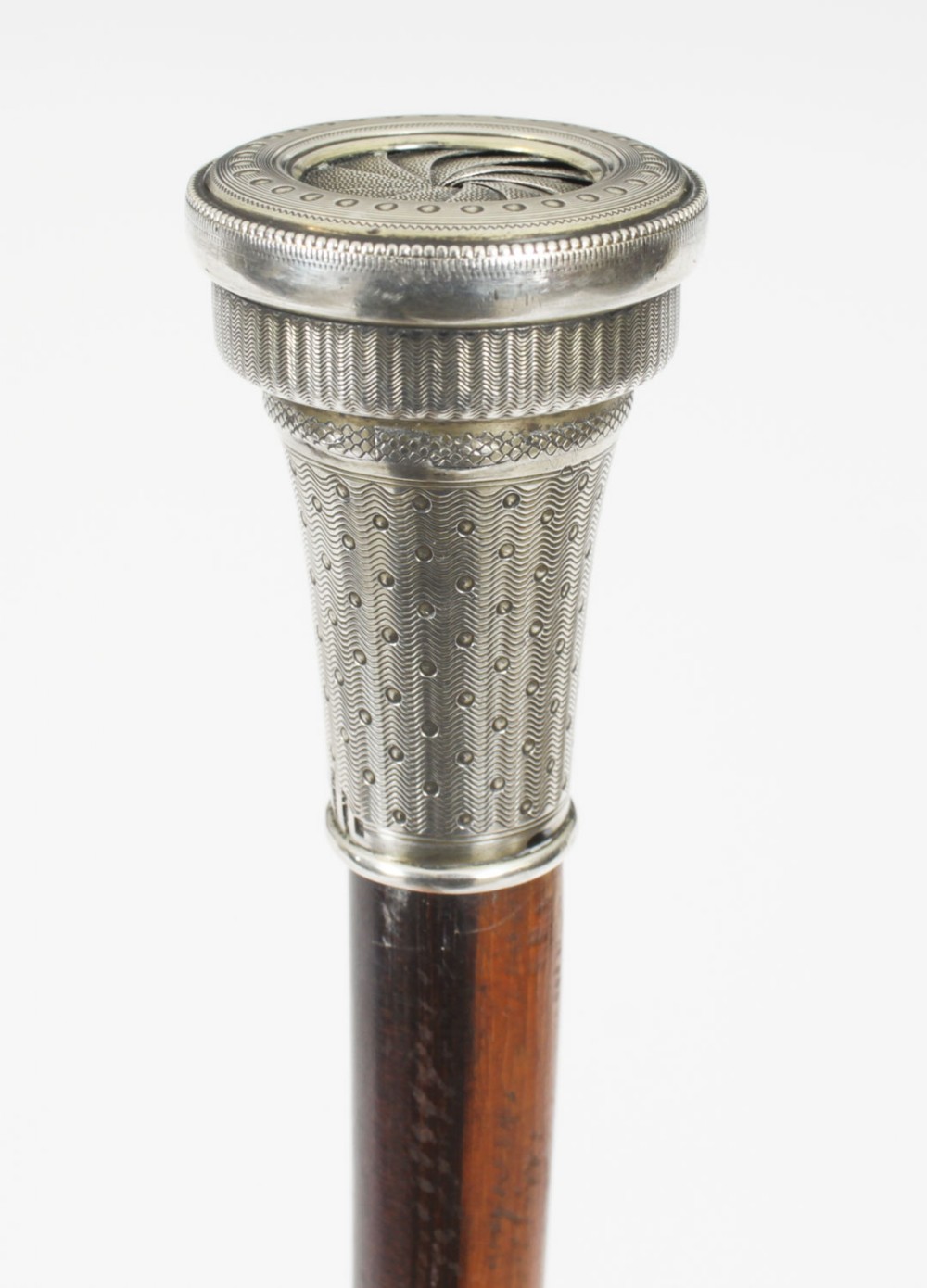
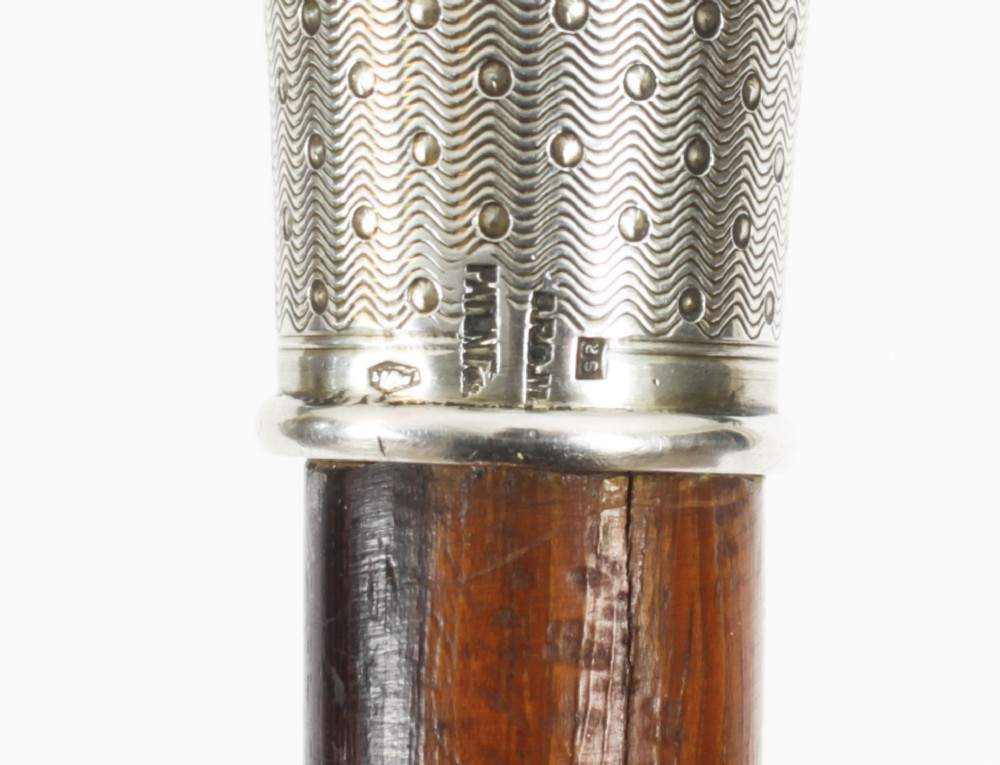
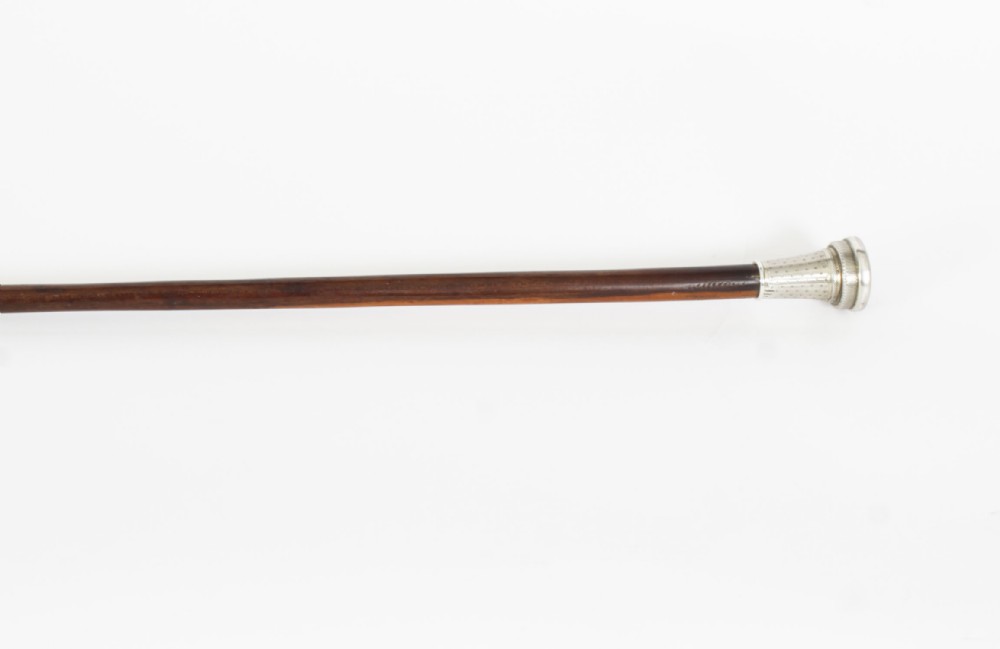
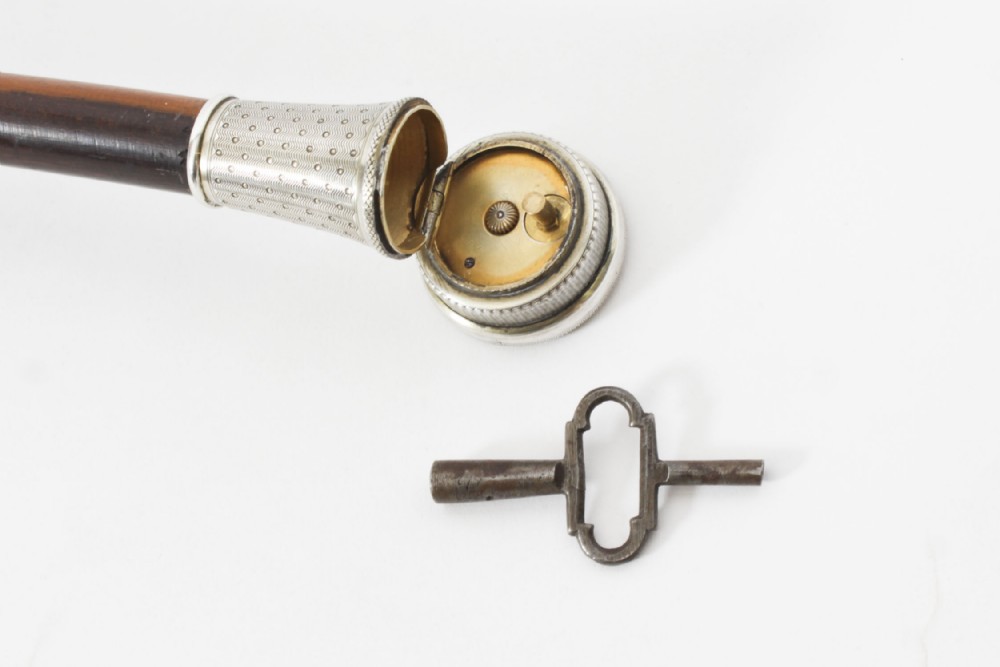
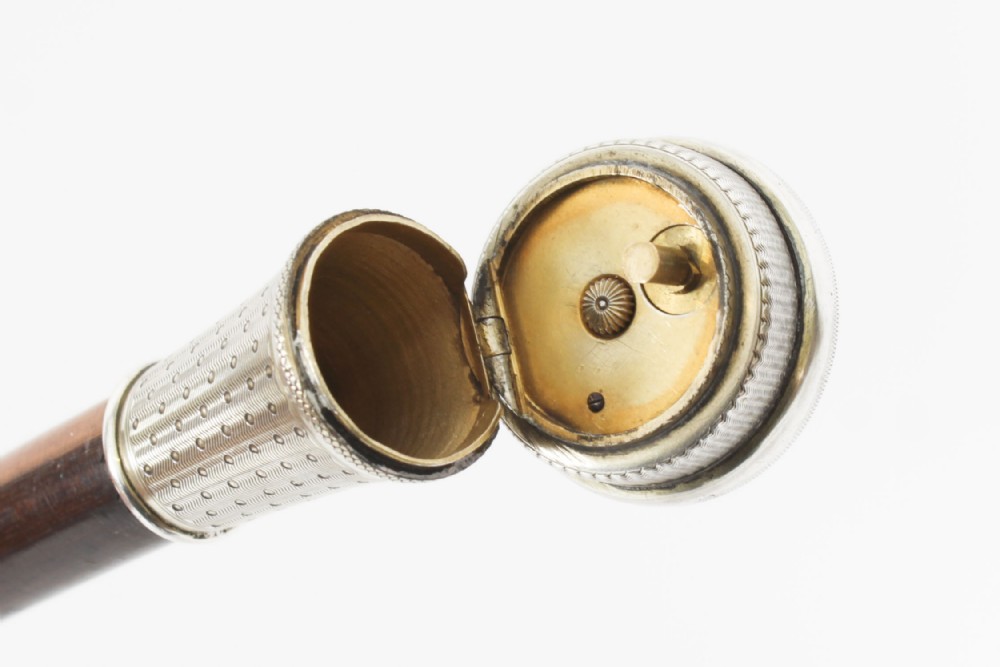
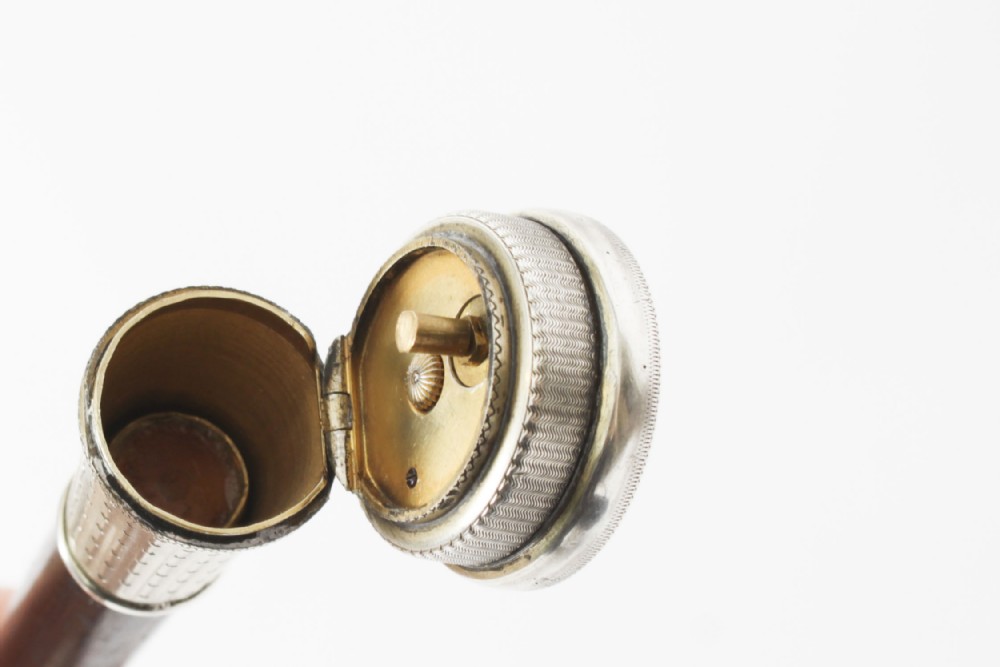
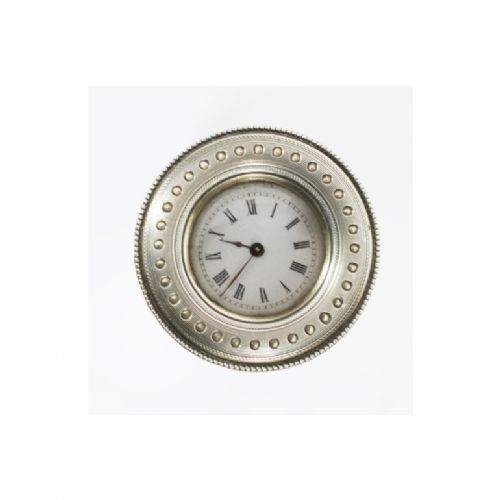
This is a beautiful and distinctive antique Gentlemans ebonised gadget walking stick with an exquisite silver watch fashioned into the handle which bears Swiss silver hallmarks.

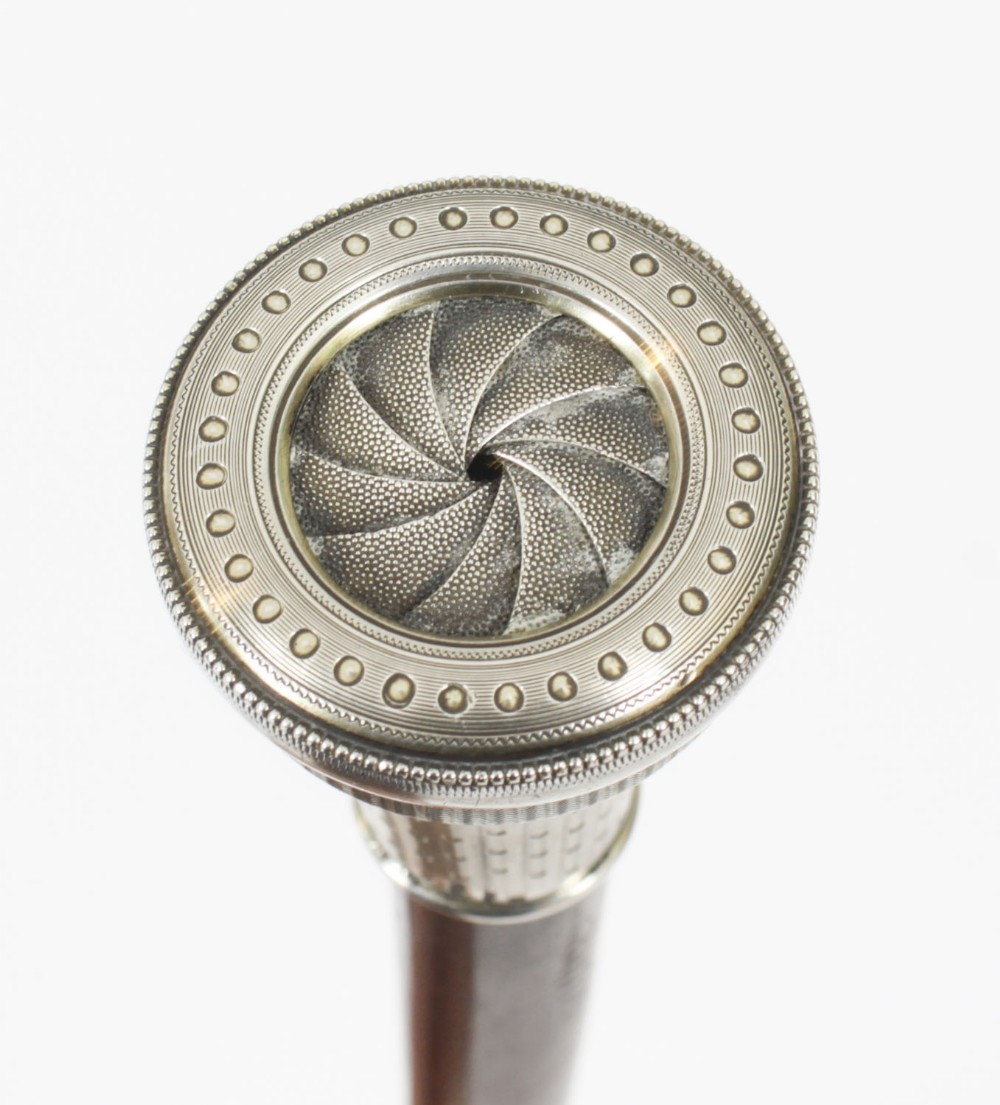
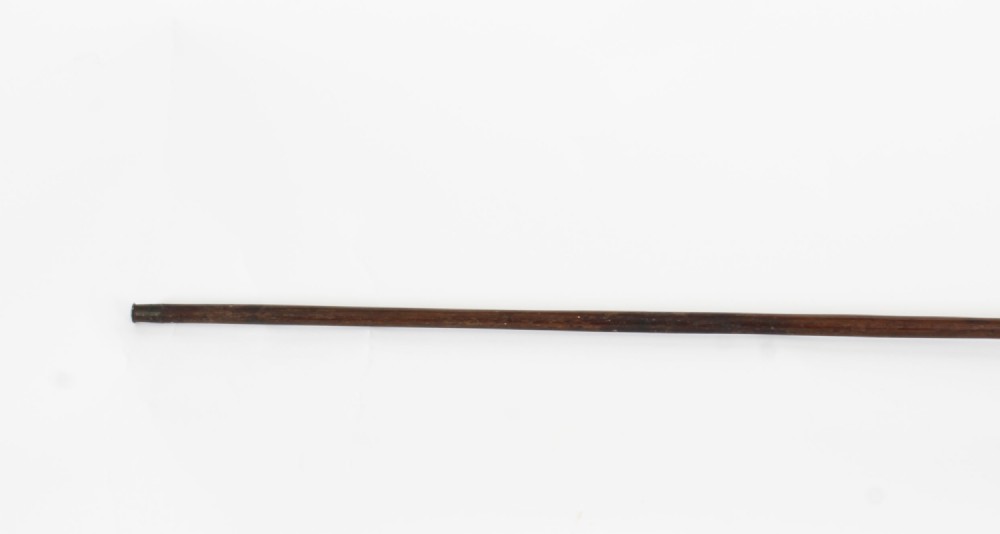
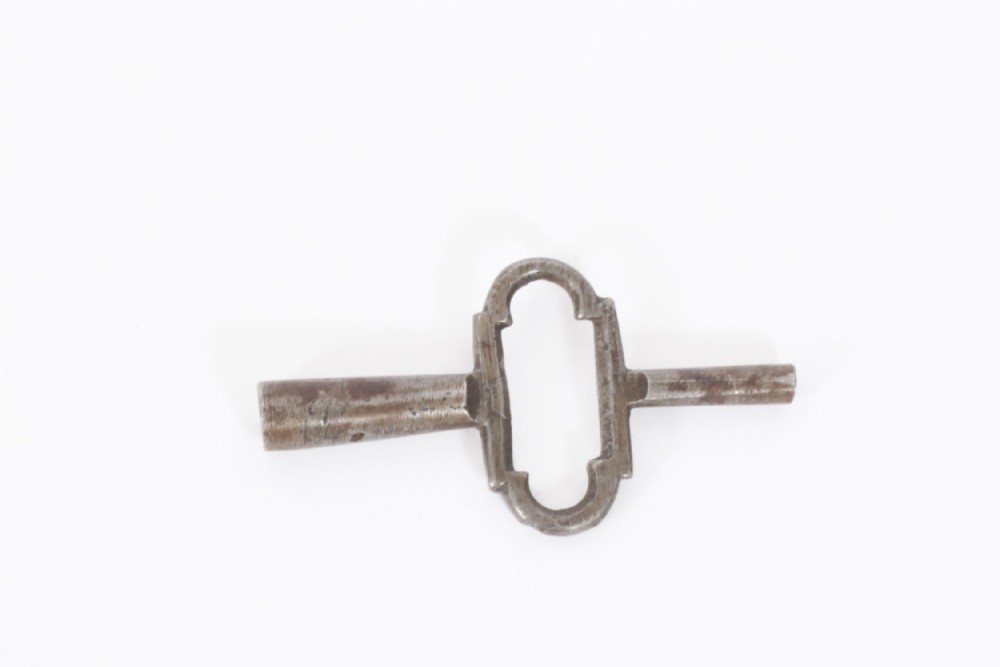
The ornate decorative engine turned Swiss silver pommel containing a watch movement enclosed by a camera-style diaphragm with leaf shutter action on a gentle tapering ebonized shaft. The white enamel dial with Roman Numerals.

It is a lovely item and as such would be appreciated by any collector of watches, walking sticks or canes.

Condition:

In excellent condition, been professionally cleaned and polished and the watch movement serviced in our workshops. Please see photos for confirmation.


Dimensions in cm:

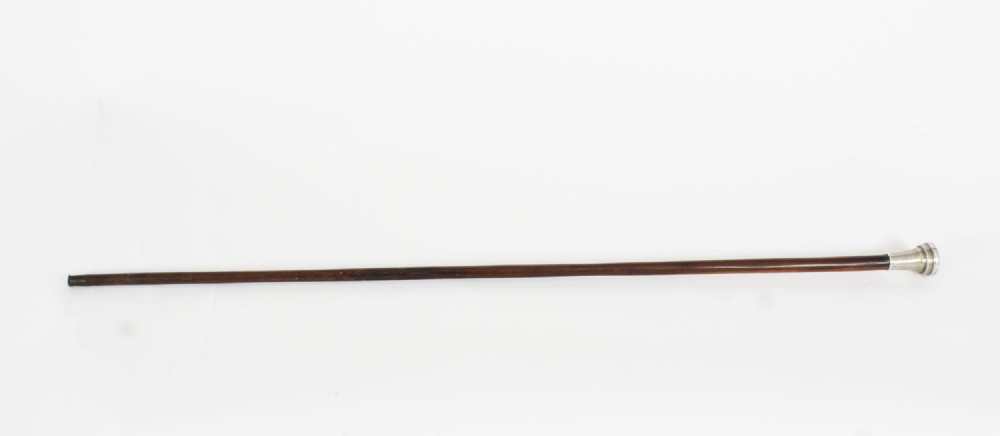
Height 87 cm x Width 3.5 cm x Depth 3.5 cm

Dimensions in inches:

Height 2 foot, 10 inches x Width 1 inch x Depth 1 inch

The numeric system represented by Roman numerals originated in ancient Rome and remained the usual way of writing numbers throughout Europe well into the Late Middle Ages. Numbers in this system are represented by combinations of letters from the Latin alphabet. Roman numerals, as used today, employ seven symbols, each with a fixed integer value, as follows: I for 1; V for 5, X for 10; L for 50; C for 100; D for 500; and M for 1000.  

The use of Roman numerals continued long after the decline of the Roman Empire. From the 14th century on, Roman numerals began to be replaced in most contexts by the more convenient Arabic numerals; however, this process was gradual, and the use of Roman numerals persists in some minor applications to this day.

Our reference: A4269

Date of Manufacture

Regent Antiques has dated this Antique Silver Topped Cane to the 19th Century.

Physical Dimensions
Height
87cm (34.25")
Width
3.5cm (1.38")
Depth
3.5cm (1.38")
Reference Numbers
Sellingantiques Reference
SA1119366
Dealers Internal Reference
A4269
Close-up of an antique walking stick featuring an intricate silver handle with a circular mechanical iris design atop an ebonised wood shaft.Detail view 1Detail view 2Detail view 3Detail view 4Detail view 5Detail view 6Detail view 7Detail view 8Detail view 9Detail view 10Detail view 11Detail view 12Detail view 13Detail view 14
SOLD6+ MONTHS AGO
1 / 15
19th Century · SA1119366
Antique Silver & Ebonised Watch Opera Cane Walking Stick 19th C
Sorry, but this item has been sold.
Description
This is a beautiful and distinctive antique Gentlemans ebonised gadget walking stick with an exquisite silver watch fashioned into the handle which bears Swiss silver hallmarks.

The ornate decorative engine turned Swiss silver pommel containing a watch movement enclosed by a camera-style diaphragm with leaf shutter action on a gentle tapering ebonized shaft. The white enamel dial with Roman Numerals.

It is a lovely item and as such would be appreciated by any collector of watches, walking sticks or canes.

Condition:

In excellent condition, been professionally cleaned and polished and the watch movement serviced in our workshops. Please see photos for confirmation.


Dimensions in cm:

Height 87 cm x Width 3.5 cm x Depth 3.5 cm

Dimensions in inches:

Height 2 foot, 10 inches x Width 1 inch x Depth 1 inch

The numeric system represented by Roman numerals originated in ancient Rome and remained the usual way of writing numbers throughout Europe well into the Late Middle Ages. Numbers in this system are represented by combinations of letters from the Latin alphabet. Roman numerals, as used today, employ seven symbols, each with a fixed integer value, as follows: I for 1; V for 5, X for 10; L for 50; C for 100; D for 500; and M for 1000.  

The use of Roman numerals continued long after the decline of the Roman Empire. From the 14th century on, Roman numerals began to be replaced in most contexts by the more convenient Arabic numerals; however, this process was gradual, and the use of Roman numerals persists in some minor applications to this day.

Our reference: A4269
Date19th Century
Height87cm (34.25")
Width3.5cm (1.38")
Depth3.5cm (1.38")
ReferenceSA1119366
Dealer's referenceA4269
Regent Antiques
Regent AntiquesSellingantiques verified since Sep 2016

We specialise in english and continental furniture, silver, porcelain and decorative items.

Member of LAPADA CINOA

SHARE
SAVE
Archive I Close-up of an antique walking stick featuring an intricate silver handle with a circular mechanical iris design atop an ebonised wood shaft. SOLD6+ MONTHS AGO

Antique Silver & Ebonised Watch Opera Cane Walking Stick 19th C

Archive II Close-up of an antique walking stick featuring an intricate silver handle with a circular mechanical iris design atop an ebonised wood shaft. View II
Archive III Close-up of an antique walking stick featuring an intricate silver handle with a circular mechanical iris design atop an ebonised wood shaft. View III
Archive IV Close-up of an antique walking stick featuring an intricate silver handle with a circular mechanical iris design atop an ebonised wood shaft. View IV
Archive V Close-up of an antique walking stick featuring an intricate silver handle with a circular mechanical iris design atop an ebonised wood shaft. View V
Archive VI Close-up of an antique walking stick featuring an intricate silver handle with a circular mechanical iris design atop an ebonised wood shaft. View VI
Archive VII Close-up of an antique walking stick featuring an intricate silver handle with a circular mechanical iris design atop an ebonised wood shaft. View VII
Archive VIII Close-up of an antique walking stick featuring an intricate silver handle with a circular mechanical iris design atop an ebonised wood shaft. View VIII
Archive IX Close-up of an antique walking stick featuring an intricate silver handle with a circular mechanical iris design atop an ebonised wood shaft. View IX
Archive X Close-up of an antique walking stick featuring an intricate silver handle with a circular mechanical iris design atop an ebonised wood shaft. View X
Archive XI Close-up of an antique walking stick featuring an intricate silver handle with a circular mechanical iris design atop an ebonised wood shaft. View XI
Archive XII Close-up of an antique walking stick featuring an intricate silver handle with a circular mechanical iris design atop an ebonised wood shaft. View XII
Archive XIII Close-up of an antique walking stick featuring an intricate silver handle with a circular mechanical iris design atop an ebonised wood shaft. View XIII
Archive XIV Close-up of an antique walking stick featuring an intricate silver handle with a circular mechanical iris design atop an ebonised wood shaft. View XIV
Archive XV Close-up of an antique walking stick featuring an intricate silver handle with a circular mechanical iris design atop an ebonised wood shaft. View XV
Enlarged Archival View
Location
Manor Warehouse
318 Green Lanes
London
N4 1BX
United Kingdom
Verified Since Sep 2016
Items For Sale 639
Items Sold 2,756
Regent Antiques
Regent Antiques
Verified Since Sep 2016
View Dealer Info
Location: Manor Warehouse, 318 Green Lanes, London, N4 1BX, United Kingdom
Verified
Sep 2016
For Sale
639
Sold
2,756
Close-up of an antique walking stick featuring an intricate silver handle with a circular mechanical iris design atop an ebonised wood shaft.
Antique Silver & Ebonised Watch Opera Cane Walking Stick 19th C
Ref: SA1119366
Close-up of an antique walking stick featuring an intricate silver handle with a circular mechanical iris design atop an ebonised wood shaft.
Detail View 1
Detail View 2
Detail View 3
Detail View 4
Detail View 5
Detail View 6
Detail View 7
Detail View 8
Detail View 9
Detail View 10
Detail View 11
Detail View 12
Detail View 13
Detail View 14
Archival Detail
Every single antique dealer on our platform is individually approved by our internal team. We verify their professional trade history, ethical standards, and photographic quality to ensure a secure, high-standard buying environment. Upon joining, every dealer agrees to a strict 9-point code of conduct. While issues can occasionally arise, our dealers typically resolve them swiftly and directly with the buyer. In fact, since our founding in 2002, Sellingantiques has only had to step in to help resolve an issue on roughly five occasions—a true testament to the quality of our dealers and their dedication to your happiness.
Our dealers are highly experienced in packing and shipping fragile, high-value antiques. Because you are in direct contact with the dealer, you will be able to easily go through all available shipping and insurance options together to ensure your item arrives safely.
Antiques are the ultimate green purchase. By choosing historical pieces over newly manufactured goods, you completely eliminate the carbon footprint of modern mass production while preserving exceptional, timeless craftsmanship.
Written by Sellingantiques from the dealer’s photographs and listing
  • ObjectWalking Sticks
  • Period19th century
  • StyleVictorian
  • MaterialSilver, Ebonised wood
  • ColourSilver and Black
  • MotifsRepousse detailing, Aperture iris mechanism, Stippled texture
  • SizeH 87 cm (34 in) x W 3.5 cm (1 in) x D 3.5 cm (1 in)

An antique watch cane is a specialised walking stick featuring an integrated pocket watch or iris-style shutter mechanism set into the handle, popular during the 19th and early 20th centuries as a functional novelty for gentlemen.

Traditional walking sticks from this era typically feature shafts made from ebonised wood, hardwoods like malacca or partridge wood, paired with handles crafted from solid silver, gold, horn, or carved ivory.

Authentication involves examining the handle for historical hallmarks indicating metal purity, makers marks, and date letters, alongside inspecting the construction methods, wear patterns on the ferrule, and the patina of the wood shaft.

Antique canes are typically displayed in historical umbrella stands in hallways, mounted vertically or horizontally on study walls using specialised brackets, or placed within decorative ceramic jars in a gentlemans library setting.

Preservation requires keeping the item away from direct sunlight and fluctuating humidity to prevent the wood from splitting or warping, gently dusting silver components with a soft microfiber cloth, and avoiding abrasive metal polishes.
items
Add keywords to the filter
Price
£100
£250000
Era
Period
Style
Material
Origin
Stock Location
Recently Added
Online Payments
Categories