



Silver Top Stick
A silver top stick brings together functional support, martial readiness and decorative metalwork from the nineteenth and early twentieth centuries.
Silver Top Stick
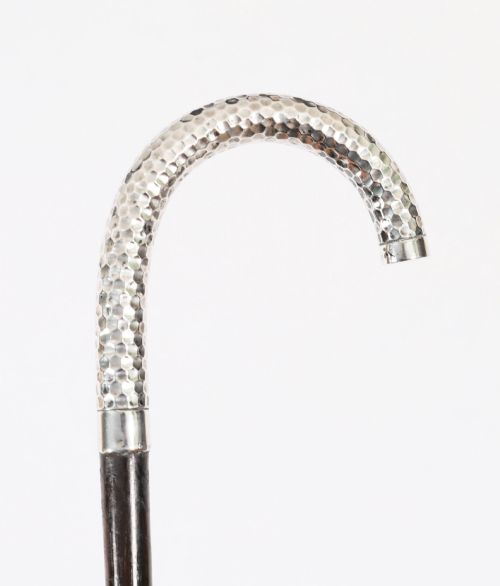
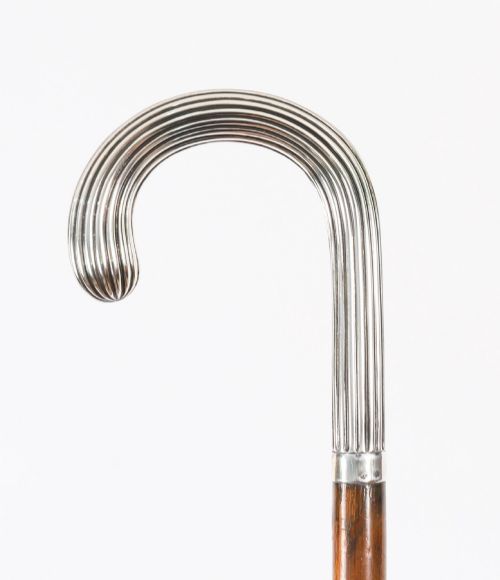
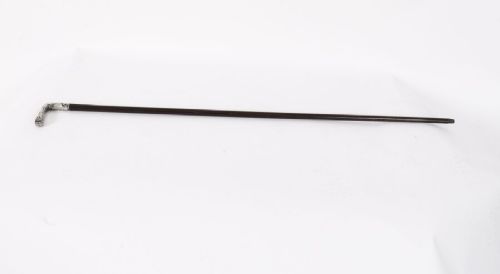
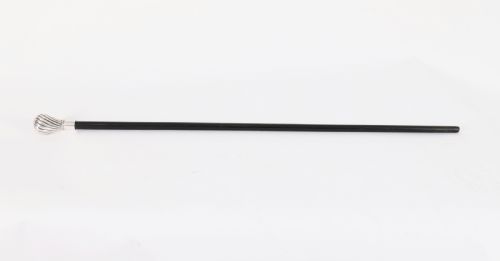
A silver top stick typically combines a supportive shaft of wood with a decorative handle or grip cast in silver, sterling silver or silver plate. These items include traditional walking sticks, canes, swagger sticks used by military personnel, and concealed blade sword sticks.
The objects date primarily from the nineteenth century through the Edwardian period, incorporating Victorian, continental and Asian export styles. Buyers encounter everything from simple ebony shafts with plain silver collars to elaborate French handles and Chinese export silver bamboo canes.
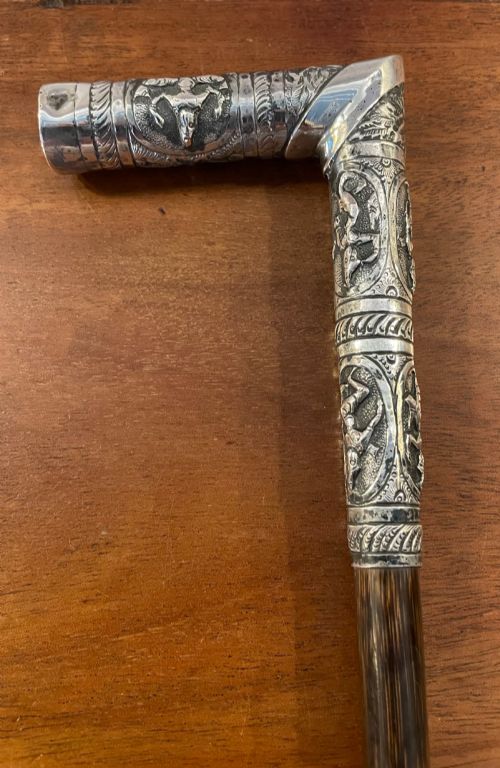
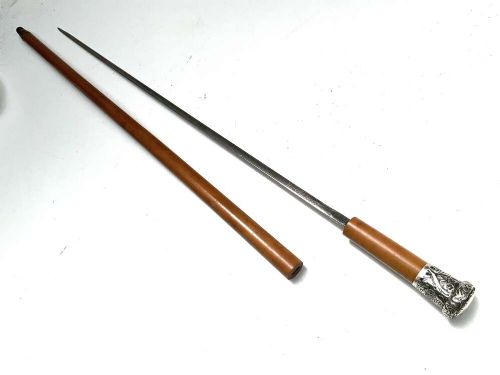
Specialised examples house functional items within the shaft or handle, such as mechanical watches, opera glasses or Toledo steel sword blades. The variety spans everyday gentlemen's accessories to formal pieces featuring figural animal heads and intricate repoussé ornamentation.
Materials and construction methods
Shafts rely on resilient natural materials including malacca, snakewood, palm wood, bamboo, ebony and ebonised hardwood, selected for straight grain and structural strength. Metal shafts of steel and brass also appear alongside wooden supports.
Handles and tops utilise sheet silver or cast silver shaped through repoussé work, chasing and engraving. Silversmiths affixed these decorative grips to the wooden stems using internal collars, pins and adhesives, frequently adding hallmarks for city and year.
Some walking sticks double as mechanical watch holders or conceal hidden Toledo steel blades inside.
Factors of distinction
Quality rests in the weight and purity of the silver top, where thick gauge metal and deep, crisp hand-chased relief outlast thin plating and pressed sheet metal. Maker attribution, such as signed Asian export pieces or London hallmarked mounts, elevates historical interest.
The integrity of the shaft dictates practical worth, favouring straight, unwarped timbers and tight joints between the silver grip and the wood. Complex internal mechanisms, including functional watch movements or hidden blades, demand precise engineering that remains intact.
Wang Hing And Company·Briggs Of London·Barker Brothers·Elkington·Cailar Bayard
The Silver Top Stick Glossary
- Repoussé
- Metalworking technique where the silver is hammered into relief from the reverse side. This method creates dimensional floral or figural scenes on the handle.
- Malacca
- A slender rattan cane imported from Southeast Asia, prized for its mottled brown skin and flexibility. It serves as a primary shaft material for walking sticks.
- Swagger stick
- A short, light cane carried by military officers as an emblem of authority. These often feature distinctive regimental metal tops.
- Hallmark
- An official stamp applied to precious metals indicating standard of purity, assay office and date letter. British pieces frequently display these on the silver collar.
- Knop
- A rounded knob or decorative swelling on the handle of a stick. Silver knops take shapes ranging from plain spheres to carved animal heads.
Silver Top Stick: Frequently Asked Questions
What is a silver top stick?
A silver top stick is a walking aid, swagger stick or concealed weapon featuring a decorative handle made of silver or silver plate. These accessories were common in the nineteenth and early twentieth centuries for gentlemen and military personnel.
The silver portion often displays hallmarks, intricate engraving or figural casting shaped like animals and human heads. The shafts use hardwoods such as ebony, malacca and bamboo to provide durable support.
How do I know the date?
Dating relies heavily on silver hallmarks stamped onto the metal collar or handle, which indicate specific assay offices and year letters. Stylistic clues such as Art Nouveau curves or Victorian military associations also narrow down the era.
Changes in material popularity, from mid-nineteenth-century dark woods to Edwardian bamboo and silver combinations, help confirm the manufacturing period. Archival comparisons with similar dated pieces provide further verification.
Are these sticks sturdy enough to use?
Most antique walking sticks remain structurally sound and capable of light support if the wooden shaft and internal joins are secure. Buyers should inspect the timber for dryness and check that the silver top is firmly attached to the cane.
Heavier sword sticks and complex pieces with mechanical elements function best as collectible display items rather than daily walking aids. Preserving the original finish and structural integrity avoids unnecessary wear.
What are sword sticks?
Sword sticks are walking canes with a hidden steel blade concealed inside the wooden shaft. A locking mechanism or simple friction fit keeps the blade secure until the handle is pulled.
These pieces were carried for personal defence during the Victorian and Edwardian eras. They combine the outward appearance of a standard gentleman's cane with martial utility.