1,687  PAGES BROWSED TODAY PAGES TODAY • 0 ANTIQUES UPLOADED TODAYNEW ARRIVALS
GIFTS
LATEST STOCK
Sort Order
Items Per Page
Antiques dealer?
Join as a Seller
Browse Categories
Sort order
Relevant Links
Items per page
ID #SA1092628
SOLD
Email Phone
Save
Antique Porcelain Figurine of the God of Wisdom, Satsuma, Japan, Edo Period (1603-1868)
Sold by Gillers Antiques Ltd
sold SA1092628
Sorry, but this item has been sold.
Gillers Antiques Ltd

Gillers Antiques Ltd

Sellingantiques Verified Since Mar 2023
Browse dealers 400 items
Id #SA1092628
PDF SHARE
SAVE

Antique Porcelain Figurine of the God of Wisdom, Satsuma, Japan, Edo Period (1603-1868)

19th century
Sold 13 September 2024 · Gillers Antiques Ltd
This “Antique Porcelain Figurine of the God of Wisdom, Satsuma, Japan, Edo Period (1603-1868)” found a buyer.

It was listed by Gillers Antiques Ltd. Sold pieces stay on Sellingantiques as a record of what has passed through, and the next one is rarely far away.

Description

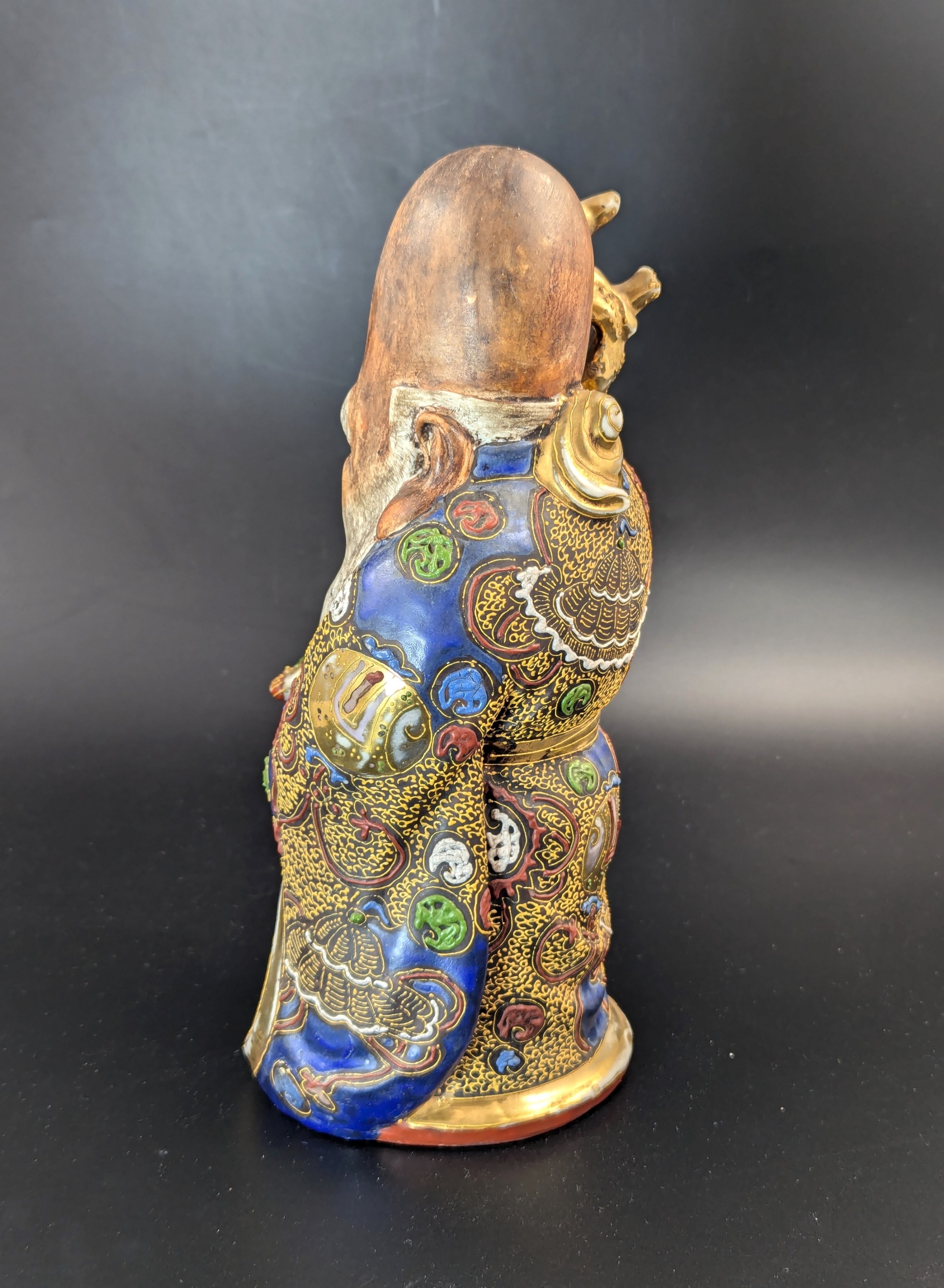
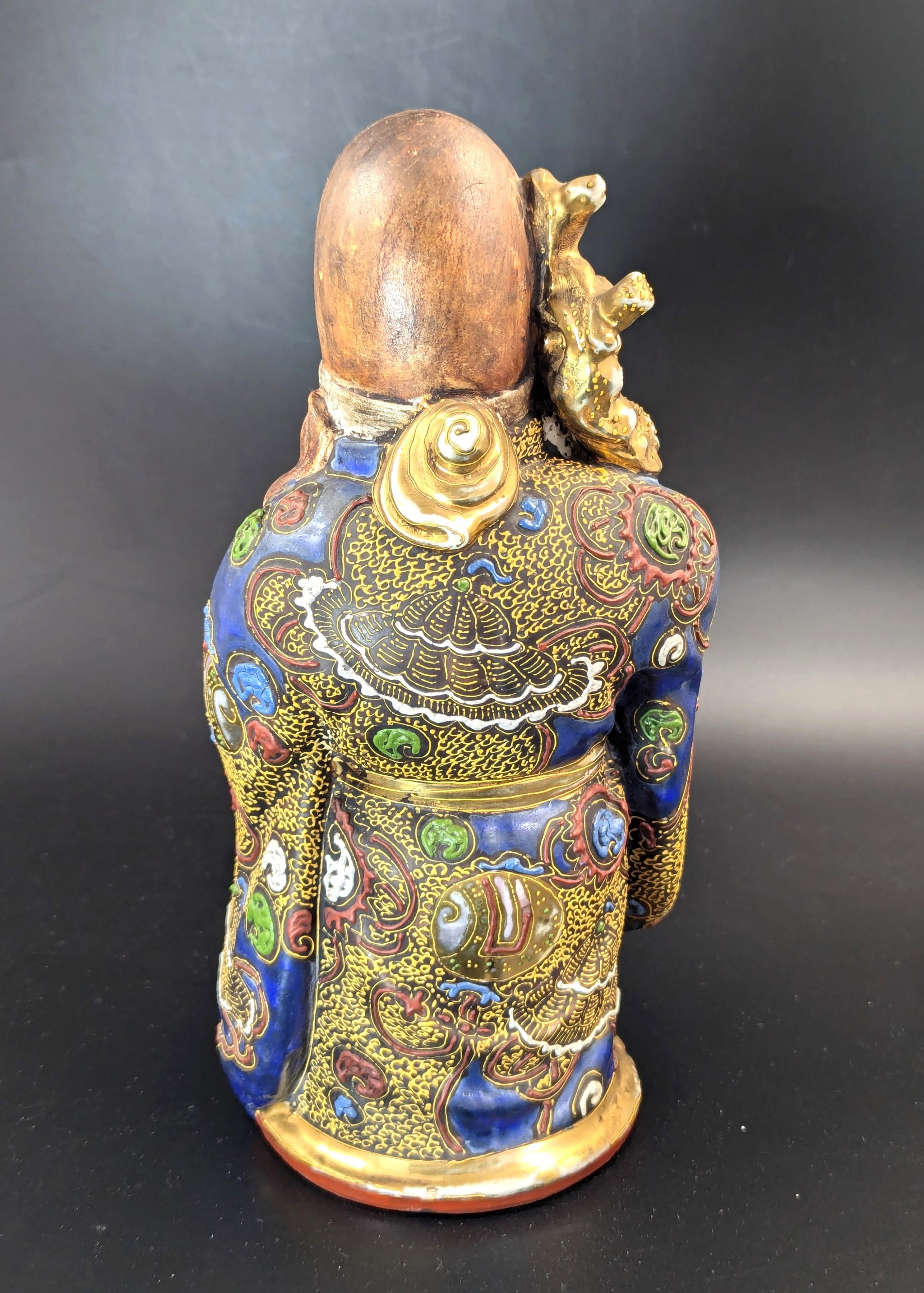
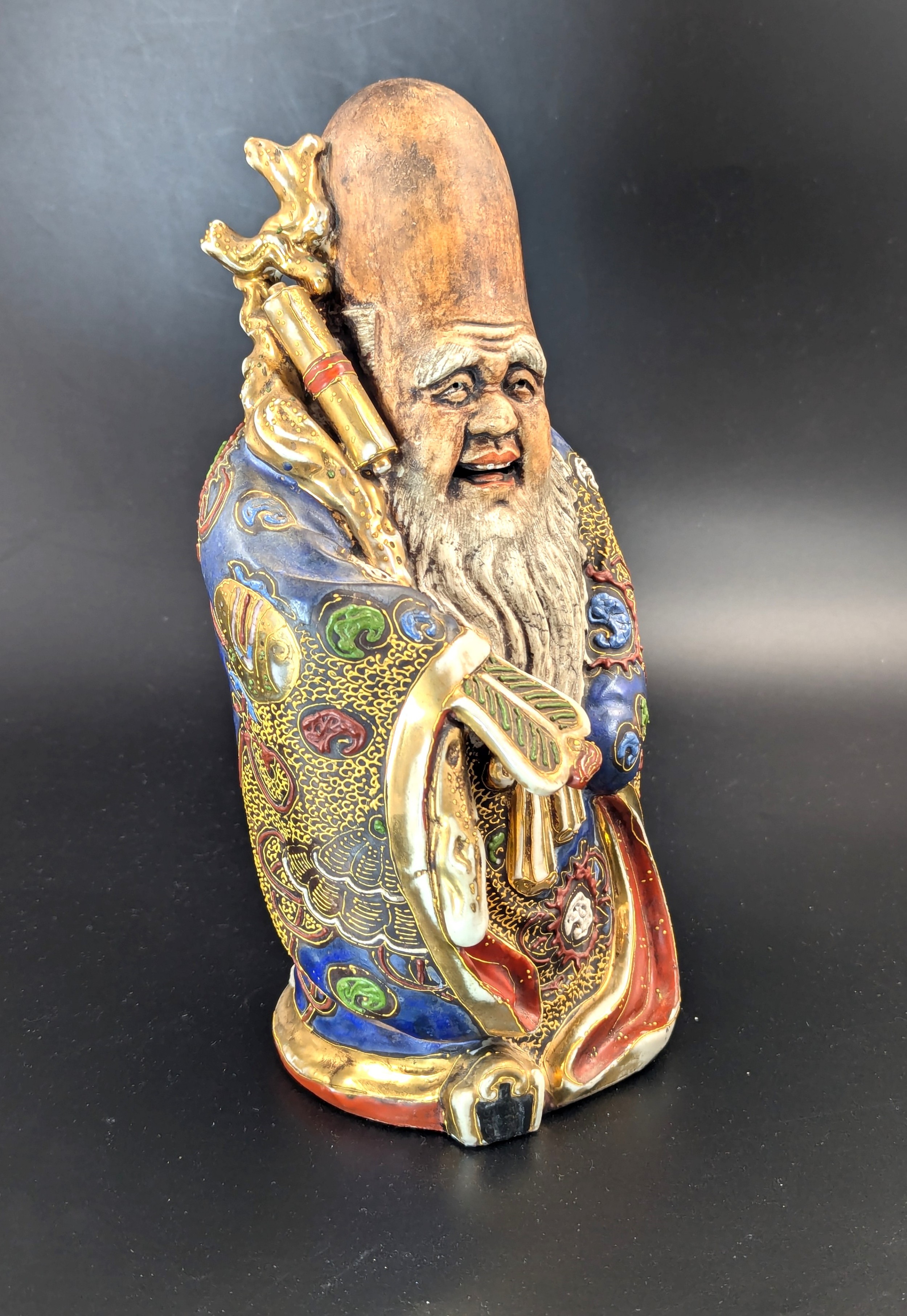
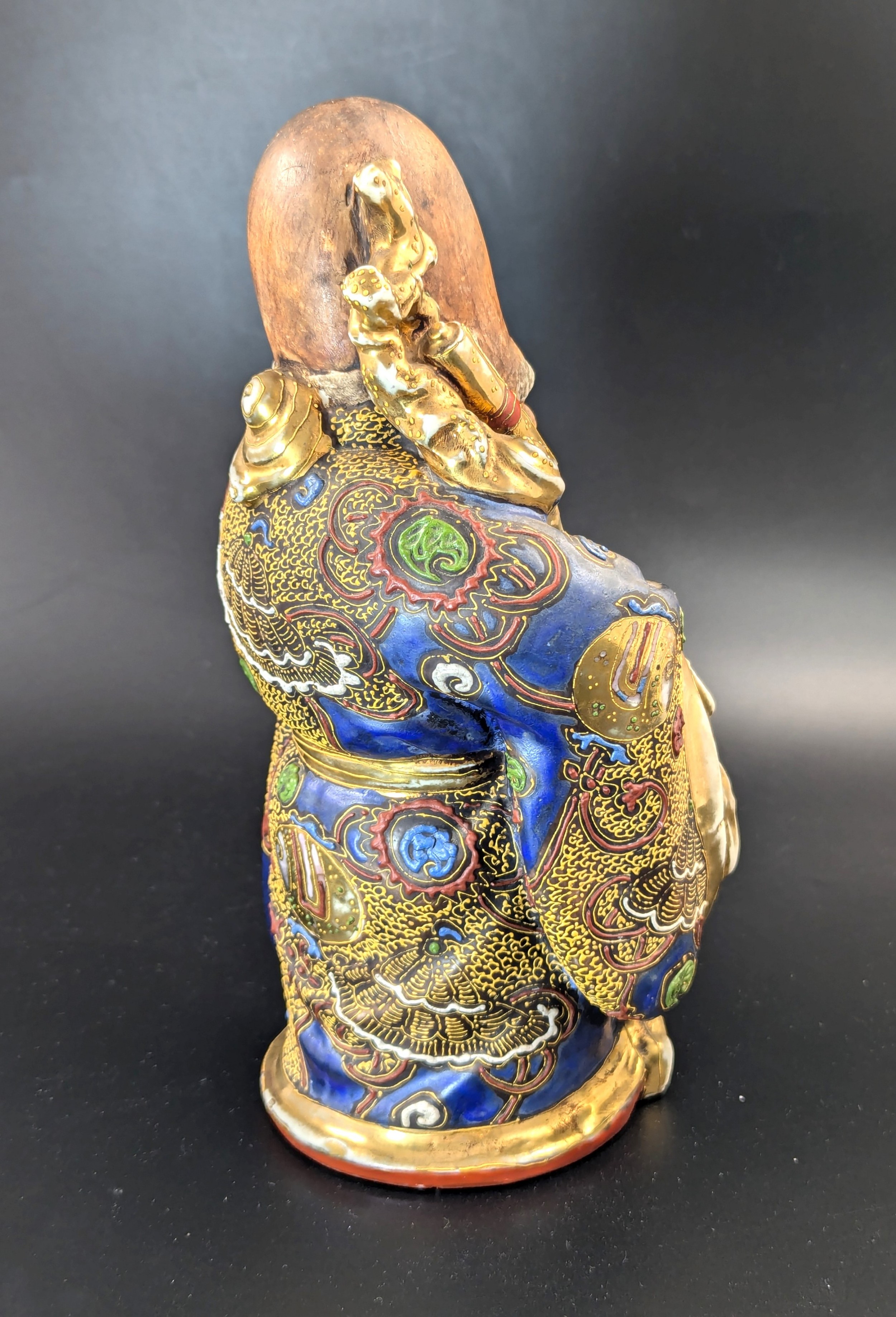
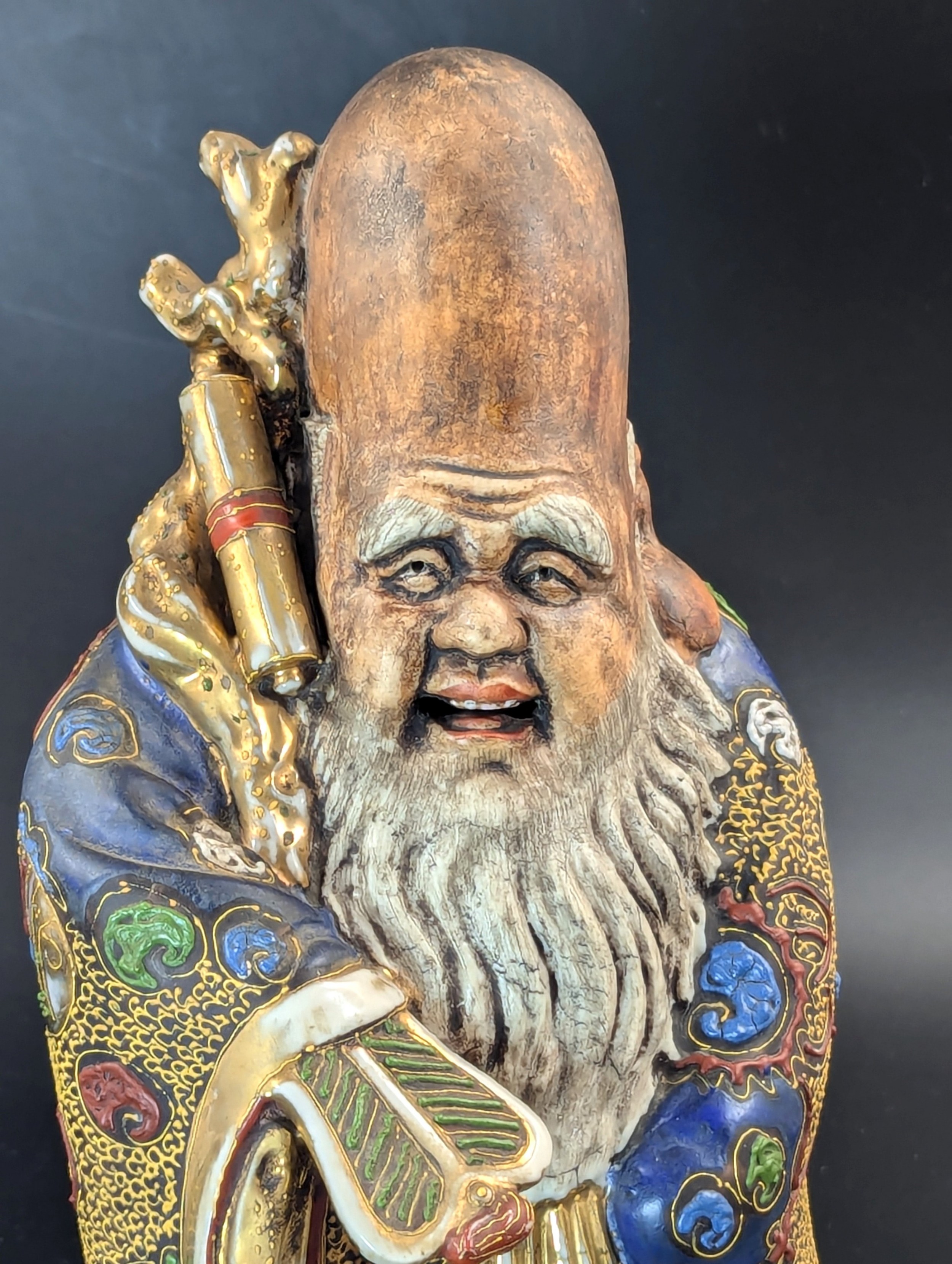
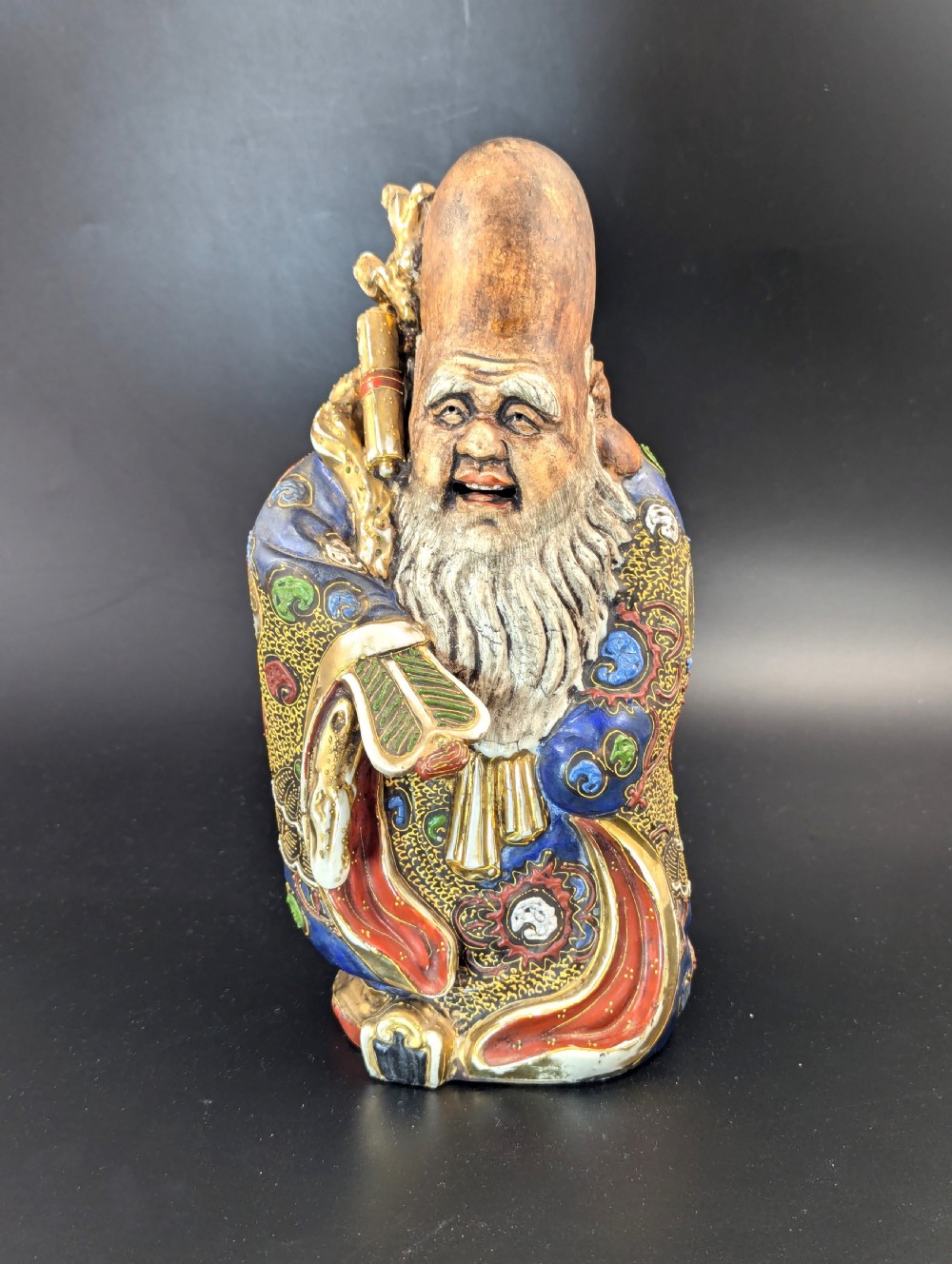
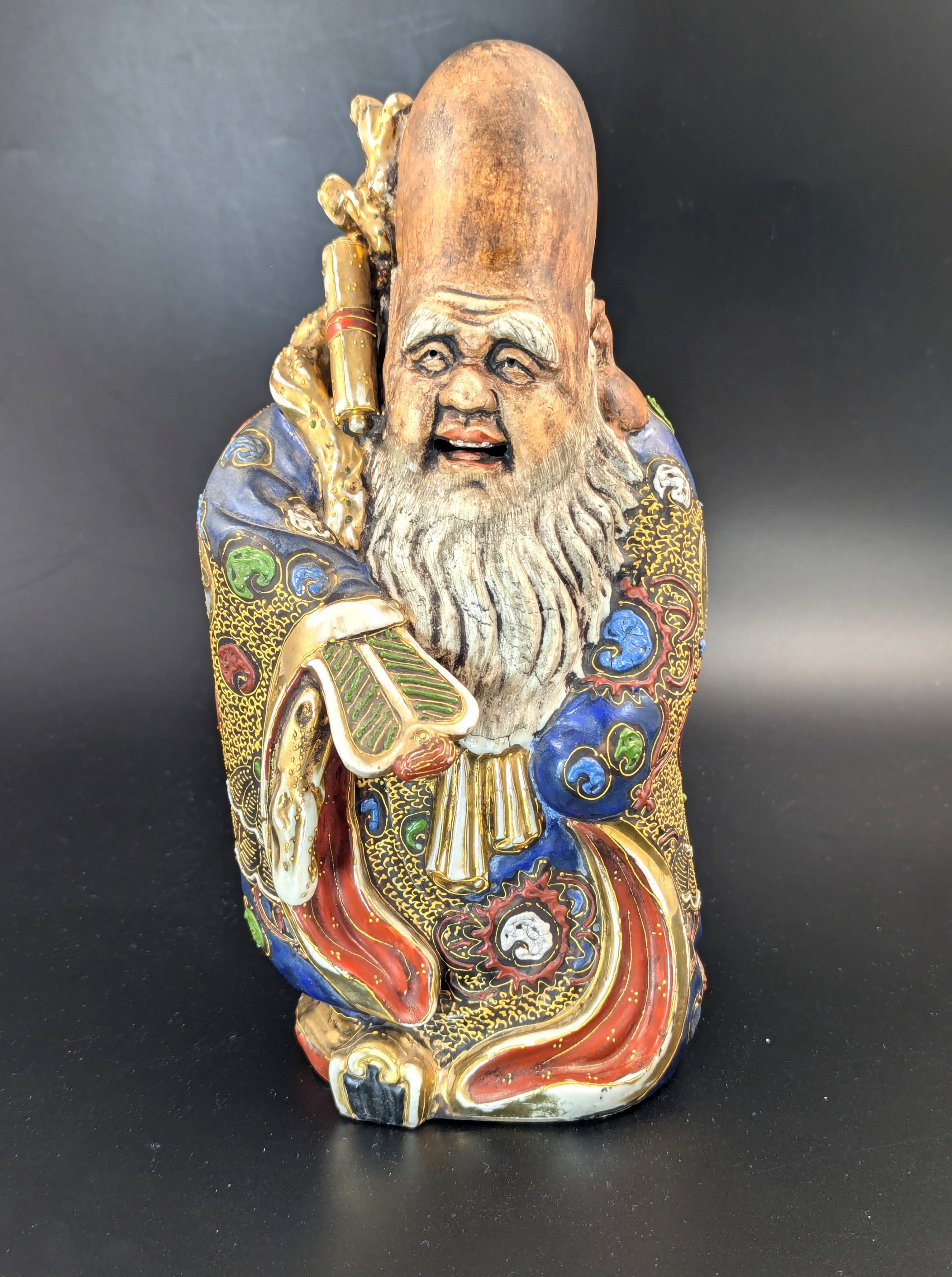
A rare porcelain figurine of Fukurokuju, one of the Seven Gods of Happiness and the deity of longevity, wisdom, and health. Fukurokuju is depicted with a wanderer's staff over his shoulder, from which hangs a magical golden scroll. According to tradition, this scroll contains the recipe for longevity and holds the lifespan information of every person. The figurine features richly decorated attire, meticulously hand-painted with intricate patterns that showcase the high level of craftsmanship involved.
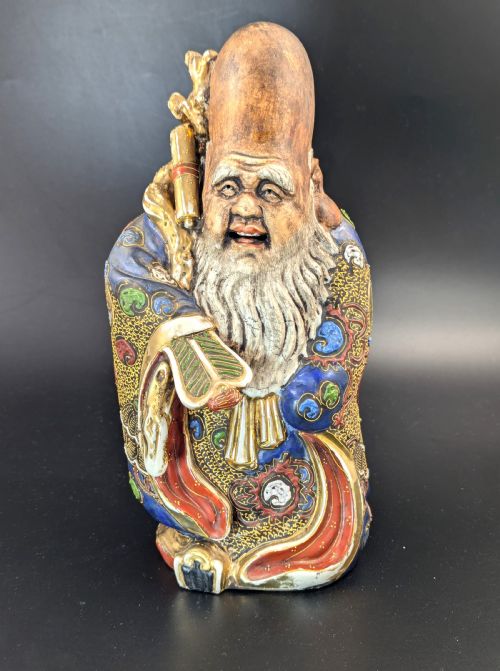
Fukurokuju is known as the god of wisdom, symbolized by his elongated head, as well as health and happiness. He is also regarded as the patron saint of chess players. Typically portrayed as a reclusive monk, his high, elongated forehead, long grey beard, and extended earlobes are masterfully rendered in this piece. This figurine is an exquisite example of Satsuma craftsmanship, featuring detailed hand modeling, gilding, and relief polychrome painting.
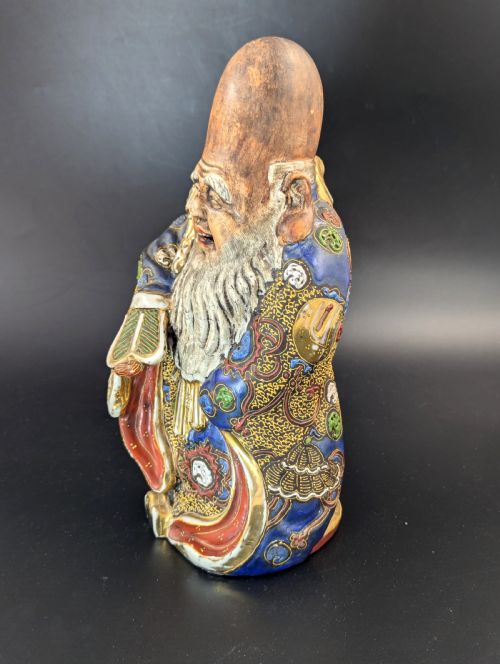
Satsuma ware originated in Japan during the seventeenth century in the southern region of Kyushu, under the control of the Shimazu clan (Satsuma-han, now known as Kagoshima and surrounding areas). Its history dates back to around 1600 when the pottery was generally plain and made from dark clay, quite different from the more elaborate pieces produced later for export.
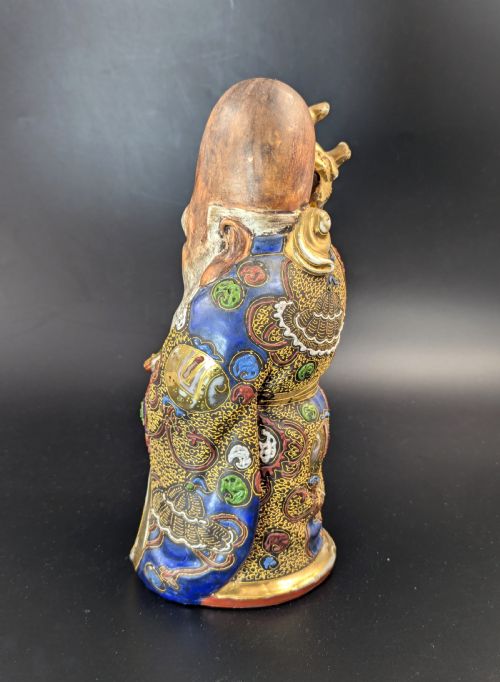
Satsuma ware first gained international attention at the 1867 Paris Exposition, where it was a star attraction, helping to establish the aesthetic that became most familiar in the West. The export style of Satsuma ware reflected international tastes of the time, with many pieces featuring panels depicting typical Japanese scenes such as pagodas, cherry blossoms, birds, flowers, and noblemen in traditional attire.
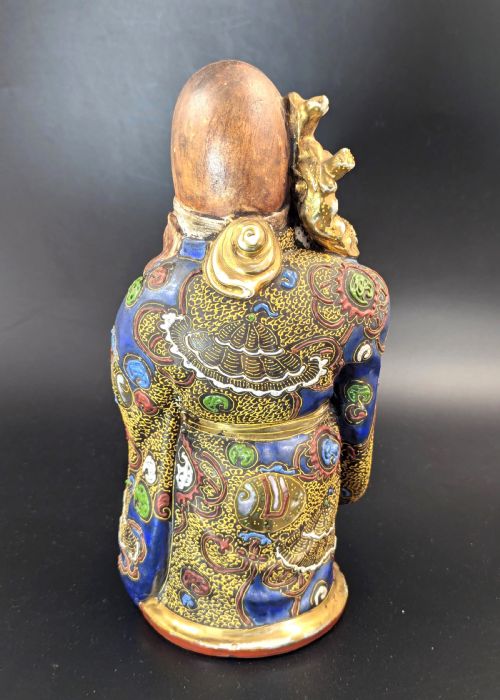
Satsuma ware reached the height of its popularity during the early Meiji period, around 1885. However, by the 1890s, the market became saturated with cheaper, mass-produced pieces that lacked the quality of earlier works. Despite losing favor with critics, Satsuma ware remained popular with the general public and continued to be produced into the 20th century, with some factories operating as late as the 1980s.
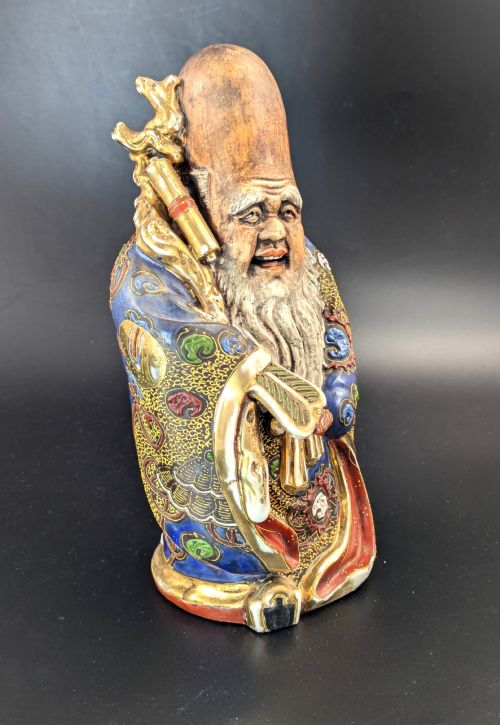
Satsuma products are highly valued in the antique porcelain market, with increasing demand in recent years.

Dimensions:

Height: 24 cm

Width: 13 cm

Depth: 10.5 cm

Weight: 927 grams

Condition:

Noticeable loss of gilding and minor paint loss. Otherwise, in good condition with no breaks, cracks, or restorations.
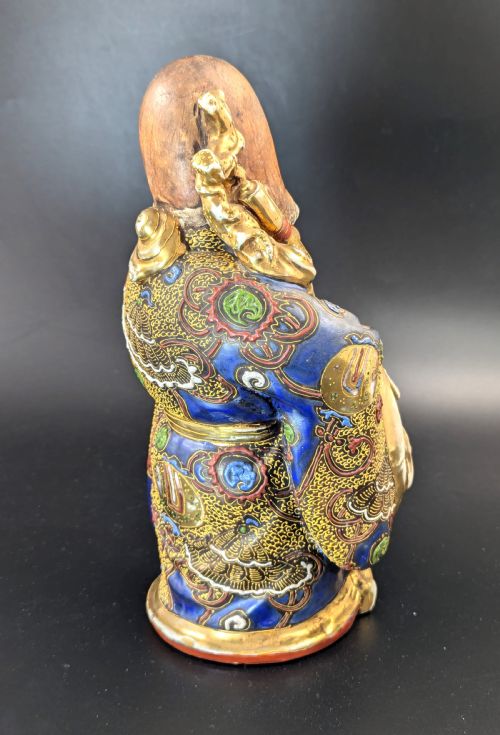
Please review the accompanying photographs carefully, as they form an integral part of this description. The item will be shipped with full tracking and insurance. Note that shipping costs include labor, packaging, and postage.

Date of Manufacture

Gillers Antiques Ltd has dated this Antique Satsuma Figurine to the 19th Century.

Reference Numbers
Sellingantiques Reference
SA1092628
Description
A rare porcelain figurine of Fukurokuju, one of the Seven Gods of Happiness and the deity of longevity, wisdom, and health.
“
Fukurokuju is depicted with a wanderer's staff over his shoulder, from which hangs a magical golden scroll.
Gillers Antiques Ltd

According to tradition, this scroll contains the recipe for longevity and holds the lifespan information of every person. The figurine features richly decorated attire, meticulously hand-painted with intricate patterns that showcase the high level of craftsmanship involved.

fig 1. An antique hand-painted ceramic figurine depicting a robed deity with a prominent forehead and long beard, decorated with blue, red, and gold patterns.
fig 1. Antique Porcelain Figurine of the God of Wisdom, Satsuma, Japan, Edo Period (1603-1868)

Fukurokuju is known as the god of wisdom, symbolized by his elongated head, as well as health and happiness. He is also regarded as the patron saint of chess players. Typically portrayed as a reclusive monk, his high, elongated forehead, long grey beard, and extended earlobes are masterfully rendered in this piece. This figurine is an exquisite example of Satsuma craftsmanship, featuring detailed hand modeling, gilding, and relief polychrome painting.

fig 2. An antique hand-painted ceramic figurine depicting a robed deity with a prominent forehead and long beard, decorated with blue, red, and gold patterns.
fig 2. Antique Porcelain Figurine of the God of Wisdom, Satsuma, Japan, Edo Period (1603-1868)

Satsuma ware originated in Japan during the seventeenth century in the southern region of Kyushu, under the control of the Shimazu clan (Satsuma-han, now known as Kagoshima and surrounding areas). Its history dates back to around 1600 when the pottery was generally plain and made from dark clay, quite different from the more elaborate pieces produced later for export.

fig 3. An antique hand-painted ceramic figurine depicting a robed deity with a prominent forehead and long beard, decorated with blue, red, and gold patterns.
fig 3. Antique Porcelain Figurine of the God of Wisdom, Satsuma, Japan, Edo Period (1603-1868)

Satsuma ware first gained international attention at the 1867 Paris Exposition, where it was a star attraction, helping to establish the aesthetic that became most familiar in the West. The export style of Satsuma ware reflected international tastes of the time, with many pieces featuring panels depicting typical Japanese scenes such as pagodas, cherry blossoms, birds, flowers, and noblemen in traditional attire.

fig 4. An antique hand-painted ceramic figurine depicting a robed deity with a prominent forehead and long beard, decorated with blue, red, and gold patterns.
fig 4. Antique Porcelain Figurine of the God of Wisdom, Satsuma, Japan, Edo Period (1603-1868)

Satsuma ware reached the height of its popularity during the early Meiji period, around 1885. However, by the 1890s, the market became saturated with cheaper, mass-produced pieces that lacked the quality of earlier works. Despite losing favor with critics, Satsuma ware remained popular with the general public and continued to be produced into the 20th century, with some factories operating as late as the 1980s.

fig 5. An antique hand-painted ceramic figurine depicting a robed deity with a prominent forehead and long beard, decorated with blue, red, and gold patterns.
fig 5. Antique Porcelain Figurine of the God of Wisdom, Satsuma, Japan, Edo Period (1603-1868)

Satsuma products are highly valued in the antique porcelain market, with increasing demand in recent years.

Dimensions:

Height: 24 cm

Width: 13 cm

Depth: 10.5 cm

Weight: 927 grams

Condition:

Noticeable loss of gilding and minor paint loss. Otherwise, in good condition with no breaks, cracks, or restorations.

fig 6. An antique hand-painted ceramic figurine depicting a robed deity with a prominent forehead and long beard, decorated with blue, red, and gold patterns.
fig 6. Antique Porcelain Figurine of the God of Wisdom, Satsuma, Japan, Edo Period (1603-1868)

Please review the accompanying photographs carefully, as they form an integral part of this description. The item will be shipped with full tracking and insurance. Note that shipping costs include labor, packaging, and postage.

Date of Manufacture

Gillers Antiques Ltd has dated this Antique Satsuma Figurine to the 19th Century.

Reference Numbers
Sellingantiques Ref
SA1092628
Gillers Antiques Ltd
Sellingantiques verified Since Mar 2023
Dealer Profile

You can view the stock and full dealer information on the Gillers Antiques Ltd Profile Page
PDF SHARE
SAVE
An antique hand-painted ceramic figurine depicting a robed deity with a prominent forehead and long beard, decorated with blue, red, and gold patterns. SOLD6+ MONTHS AGO
1 / 9
Archive I An antique hand-painted ceramic figurine depicting a robed deity with a prominent forehead and long beard, decorated with blue, red, and gold patterns. SOLD6+ MONTHS AGO

Antique Porcelain Figurine of the God of Wisdom, Satsuma, Japan, Edo Period (1603-1868)
Archive II An antique hand-painted ceramic figurine depicting a robed deity with a prominent forehead and long beard, decorated with blue, red, and gold patterns. View II
Archive III An antique hand-painted ceramic figurine depicting a robed deity with a prominent forehead and long beard, decorated with blue, red, and gold patterns. View III
Archive IV An antique hand-painted ceramic figurine depicting a robed deity with a prominent forehead and long beard, decorated with blue, red, and gold patterns. View IV
Archive V An antique hand-painted ceramic figurine depicting a robed deity with a prominent forehead and long beard, decorated with blue, red, and gold patterns. View V
Archive VI An antique hand-painted ceramic figurine depicting a robed deity with a prominent forehead and long beard, decorated with blue, red, and gold patterns. View VI
Archive VII An antique hand-painted ceramic figurine depicting a robed deity with a prominent forehead and long beard, decorated with blue, red, and gold patterns. View VII
Archive VIII An antique hand-painted ceramic figurine depicting a robed deity with a prominent forehead and long beard, decorated with blue, red, and gold patterns. View VIII
Archive IX An antique hand-painted ceramic figurine depicting a robed deity with a prominent forehead and long beard, decorated with blue, red, and gold patterns. View IX
FURTHER BROWSING

Visitors also looked at these ⇣

Enlarged Archival View
Telephone 07738 009924
Location
Buckland House
Buntingford
Hertfordshire
SG9 0PY
United Kingdom
Verified Since Mar 2023
Items For Sale 400
Items Sold 581
Gillers Antiques Ltd
Verified Since Mar 2023
View Dealer Info
Location: Buckland House, Buntingford, Hertfordshire, SG9 0PY, United Kingdom
Verified
Mar 2023
For Sale
400
Sold
581
An antique hand-painted ceramic figurine depicting a robed deity with a prominent forehead and long beard, decorated with blue, red, and gold patterns.
Antique Porcelain Figurine of the God of Wisdom, Satsuma, Japan, Edo period (1603-1868)
Ref: SA1092628
An antique hand-painted ceramic figurine depicting a robed deity with a prominent forehead and long beard, decorated with blue, red, and gold patterns.
Detail View 1
Detail View 2
Detail View 3
Detail View 4
Detail View 5
Detail View 6
Detail View 7
Detail View 8
Archival Detail
Every single antique dealer on our platform is individually approved by our internal team. We verify their professional trade history, ethical standards, and photographic quality to ensure a secure, high-standard buying environment. Upon joining, every dealer agrees to a strict 9-point code of conduct. While issues can occasionally arise, our dealers typically resolve them swiftly and directly with the buyer. In fact, since our founding in 2002, Sellingantiques has only had to step in to help resolve an issue on roughly five occasions—a true testament to the quality of our dealers and their dedication to your happiness.
Our dealers are highly experienced in packing and shipping fragile, high-value antiques. Because you are in direct contact with the dealer, you will be able to easily go through all available shipping and insurance options together to ensure your item arrives safely.
Antiques are the ultimate green purchase. By choosing historical pieces over newly manufactured goods, you completely eliminate the carbon footprint of modern mass production while preserving exceptional, timeless craftsmanship.
Written by Sellingantiques from the dealer’s photographs and listing
  • ObjectFigurines
  • Period19th century
  • StyleJapanese Traditional
  • MaterialPorcelain, Enamel, Gold Leaf
  • ColourMulticolour
  • MotifsDetailed facial features, Robed garments, Gilded ornamentation, Polychrome patterns

Satsuma ware is a type of Japanese pottery originating from Satsuma Province in Kyushu, traditionally characterised by an ivory-coloured, crackle-glaze earthenware body embellished with enamels and gilding. While production began earlier, pieces created during the Edo period are particularly prized for their craftsmanship.

These figures are typically crafted from clay or porcelain, finished with a fine crackle-glaze, and hand-painted using mineral-based polychrome enamels and raised gold leaf accents to create intricate surface patterns.

Authenticity is evaluated by examining the fineness of the crackle-glaze, the weight and porosity of the ceramic body, the hand-painted detailing under magnification, and often the presence of artist or kiln signatures on the base.

Position the piece as a focal point on a plain wooden console table or inside a glass-fronted cabinet, allowing its detailed coloration and texture to stand out against a minimalist backdrop.

Keep the item out of direct sunlight to prevent pigment fading, dust gently with a soft dry brush, and avoid using liquid cleaners or water on unglazed or crackled surfaces.
items
Add keywords to the filter
Price
£100
£250000
Era
Period
Style
Material
Origin
Stock Location
Recently Added
Online Payments
Categories