





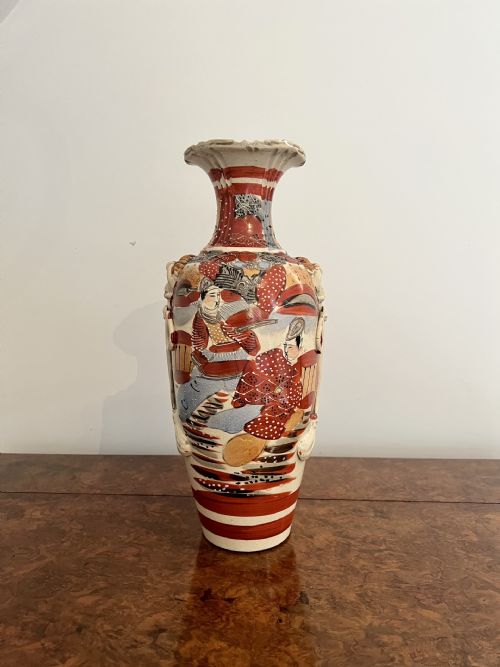


Satsuma Porcelain Figure
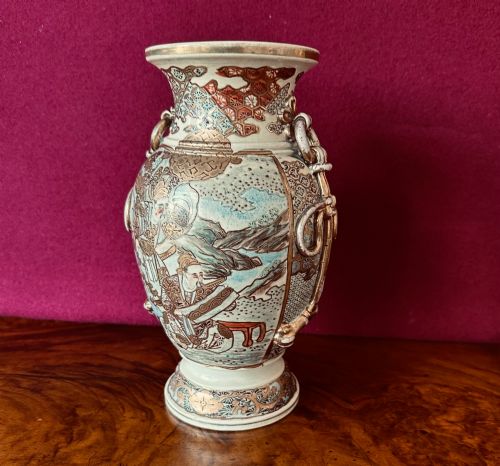
These satsuma porcelain figure pieces are hand-painted Japanese ceramics adorned with gold leaf, most frequently seen as Meiji period okimono and deity sculptures.
Satsuma Porcelain Figure
A satsuma porcelain figure represents traditional deities, monks, and figures from Japanese mythology and history, often modelled as okimono or decorative sculptures. When you search for a satsuma porcelain figure, you encounter works spanning the Edo period through the Meiji period and late Victorian era.
The objects on this page include depictions of figures such as Daikoku, Hotei, and the Daruma monk alongside court figures and bijin. These works demonstrate the narrative depth found in Japanese ceramic arts from the nineteenth century.
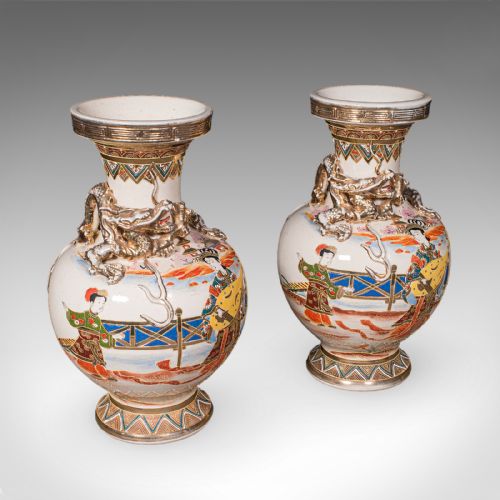
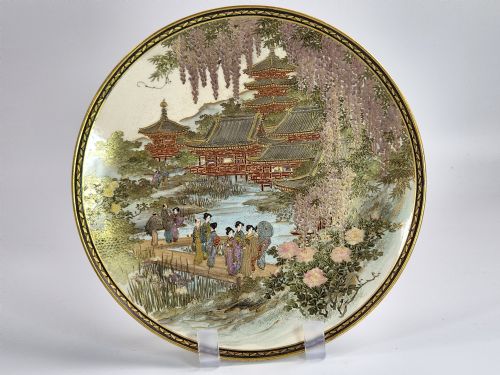
Vessels and plates also appear alongside the standalone figurines, frequently decorated with complex multi-figure scenes and moriage relief work. The dominant forms originate from Japanese workshops dating from eighteen-ninety through to nineteen-twenty.
How they were made
Potters built these pieces using earthenware and porcelain, applying fine glazes as a base for subsequent enamel painting. Artisans then added intricate detail through meticulous hand painting and heavy gilding.
Gold leaf and raised enamel, known as moriage, create the distinctive tactile surface texture characteristic of these pieces. Wood often forms the base or support for certain sculptural groupings where the ceramic meets a wooden stand.
Satsuma Porcelain Figure Retail Price Guide 2026
Typical asking prices for satsuma porcelain figure among the pieces listed under this phrase on Sellingantiques today, from the lower quarter to the upper quarter. They describe what is for sale here now, not the wider market.
Daruma monks stare out with unblinking ceramic intensity, reminding every viewer that stubborn persistence eventually achieves enlightenment.
What varies in quality
Quality rests upon the precision of the hand-painted brushwork and the restraint or generosity of the gilt and enamel application. Pieces bearing recognizable signatures from established makers demonstrate superior execution in facial expression and garment fold.
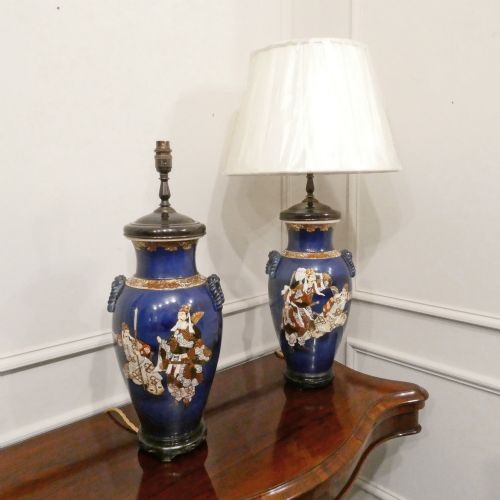
The definition in the moulding of the okimono distinguishes fine sculptural work from standard production pieces. Complexity in the multi-figure compositions and the subtlety of the cobalt ground integration also elevate the standing of an individual piece.
Kinkozan Kyoto Satsuma·Kizan·Tokyo Taizan·Meizan
The Satsuma Porcelain Figure Glossary
- Okimono
- A small Japanese ornamental carving or figurine designed for display in an alcove. These sculptures typically depict deities, historical figures, or animals.
- Moriage
- A type of raised enamel decoration applied to ceramics to create a textured, three-dimensional surface. Artisans use this technique to accentuate robes and decorative borders.
- Meiji Period
- The era in Japanese history spanning from eighteen-sixty-eight to nineteen-twelve, marked by extensive international trade and highly detailed decorative arts. This period produced the majority of the figurative ceramics seen here.
- Bijin
- A traditional Japanese representation of a beautiful woman, frequently featured in classical painting and ceramic artwork. These figures typically wear elaborate traditional court robes.
- Daikoku
- One of the Seven Lucky Gods in Japanese mythology, commonly depicted as a prosperous figure sitting on rice bales. Sculptures of this deity symbolize wealth and good fortune.
Satsuma Porcelain Figure: Frequently Asked Questions
What is a satsuma figure?
A satsuma figure is a Japanese ceramic sculpture or okimono decorated with intricate enamel and gold leaf.
These pieces typically portray historical personages, deities, or monks originating from the Meiji period and the nineteenth century.
How do I identify Meiji period pieces?
Meiji period pieces are identified by dense hand-painted enamelwork, extensive gilding, and specific signatures on the base.
They reflect the artistic output of Japanese kilns during an era of significant global export and technical refinement.
Where were satsuma ceramics made?
Satsuma ware originated in Satsuma Province on the island of Kyushu, though production later expanded to major centres like Kyoto and Tokyo.
Kyoto workshops in particular produced highly polished decorative pieces for international markets.
How should I display figures at home?
Display these figures away from direct sunlight and excessive humidity to protect the delicate gold leaf and enamel surface.
Place them on stable wooden surfaces where the detailed hand-painted scenes can be examined closely.