41,508  PAGES BROWSED TODAY PAGES TODAY • 194 ANTIQUES UPLOADED TODAYNEW ARRIVALS
GIFTS
194 ITEMS ADDED TODAY
Sort Order
Items Per Page
Browse Categories
Sort order
Relevant Links
Items per page
ID #SA1168003
FOR SALE
£1,200
Email Phone
Save
Satsuma, 1890–1900. Exceptional Multi-figure Plate by the Renowned Master Senzan
For sale by Gillers Antiques Ltd
Id #SA1168003
PDF SHARE
SAVE

Satsuma, 1890–1900. Exceptional Multi-figure Plate by the Renowned Master Senzan

19th century
Description

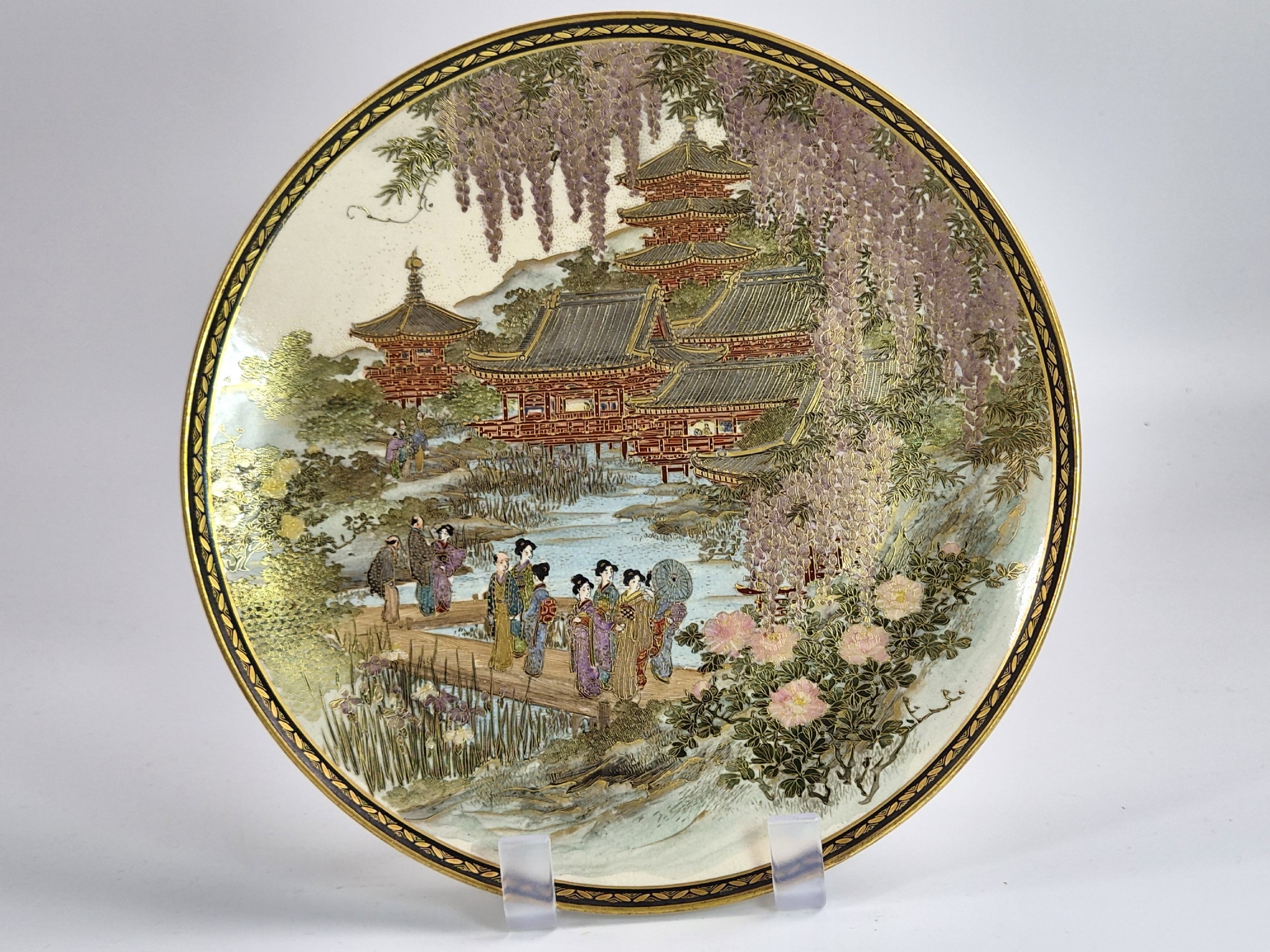
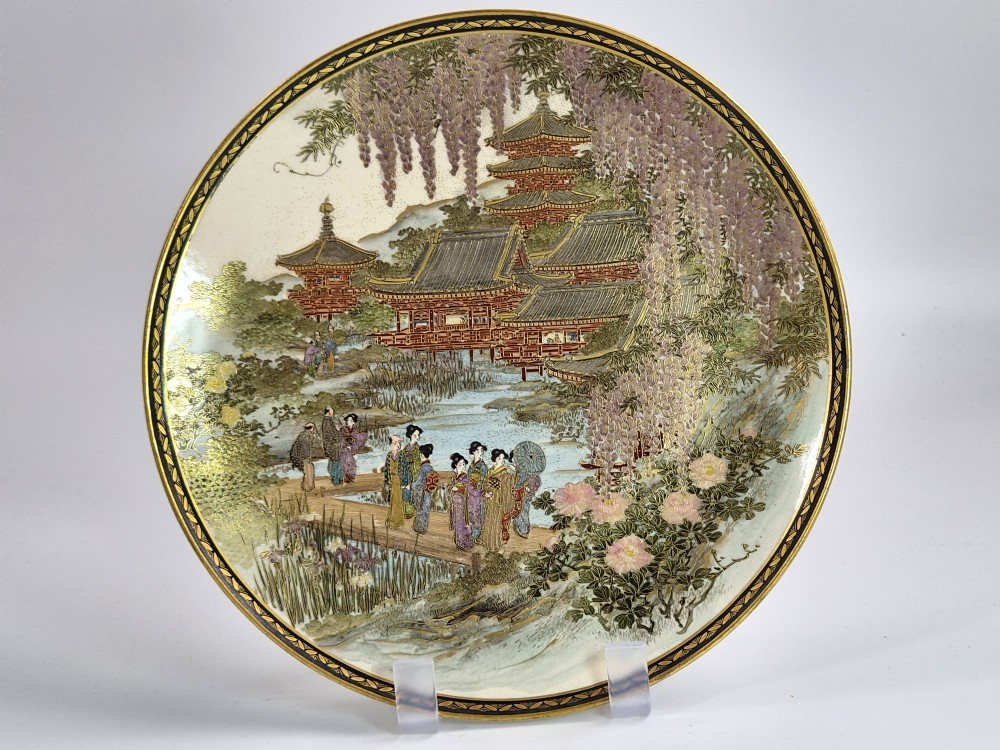
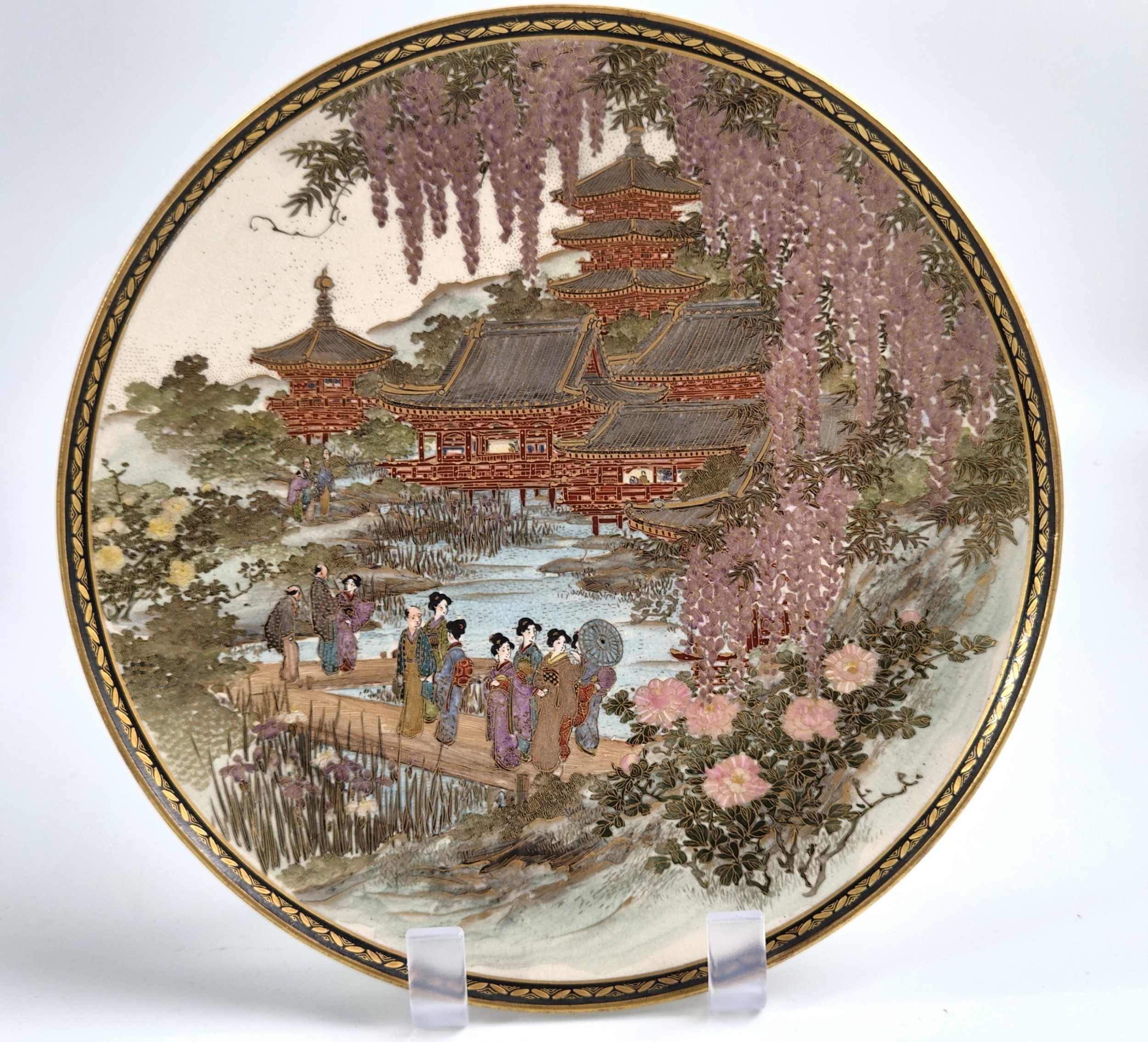
Japan, Meiji period, 1890–1900. An outstanding plate by the renowned Satsuma master Senzan, of a quality that will appeal to the discerning collector of Meiji ceramics.

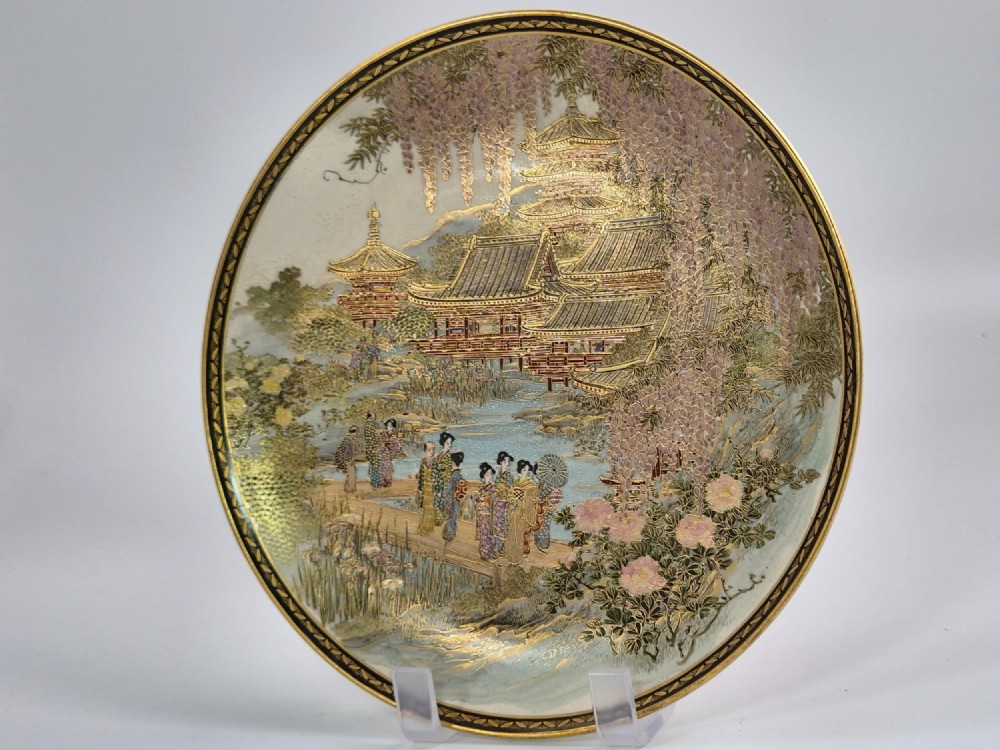
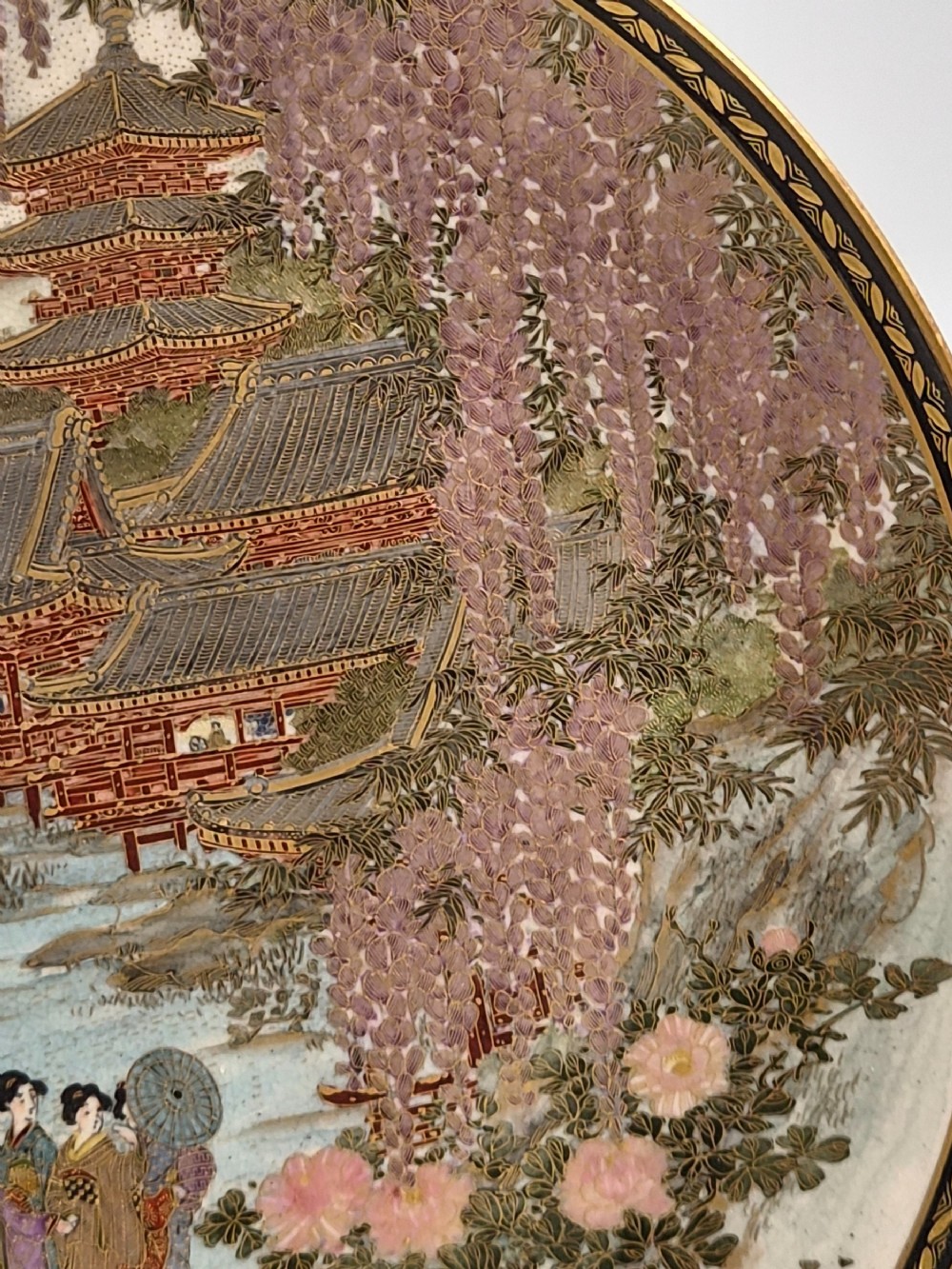
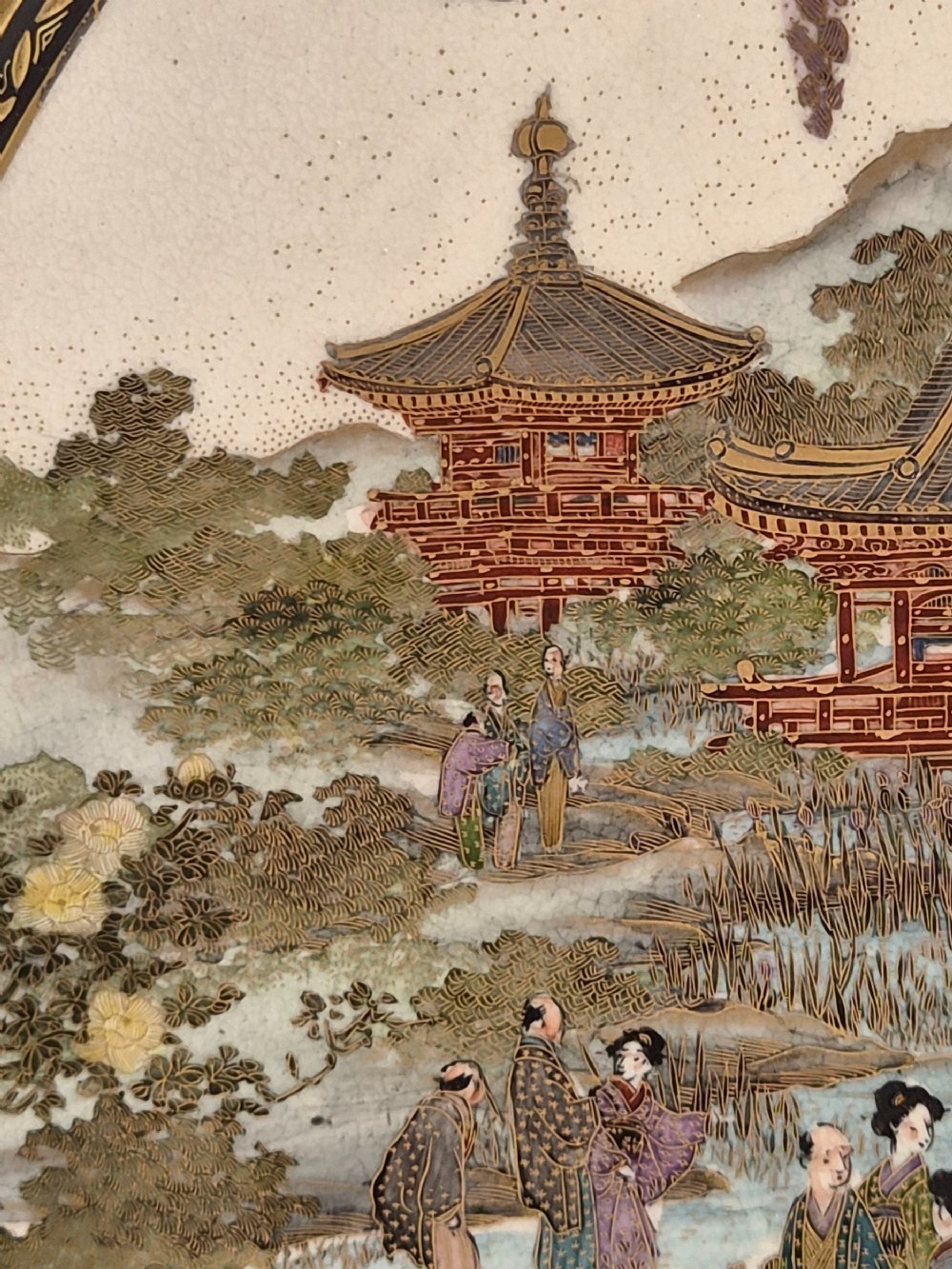
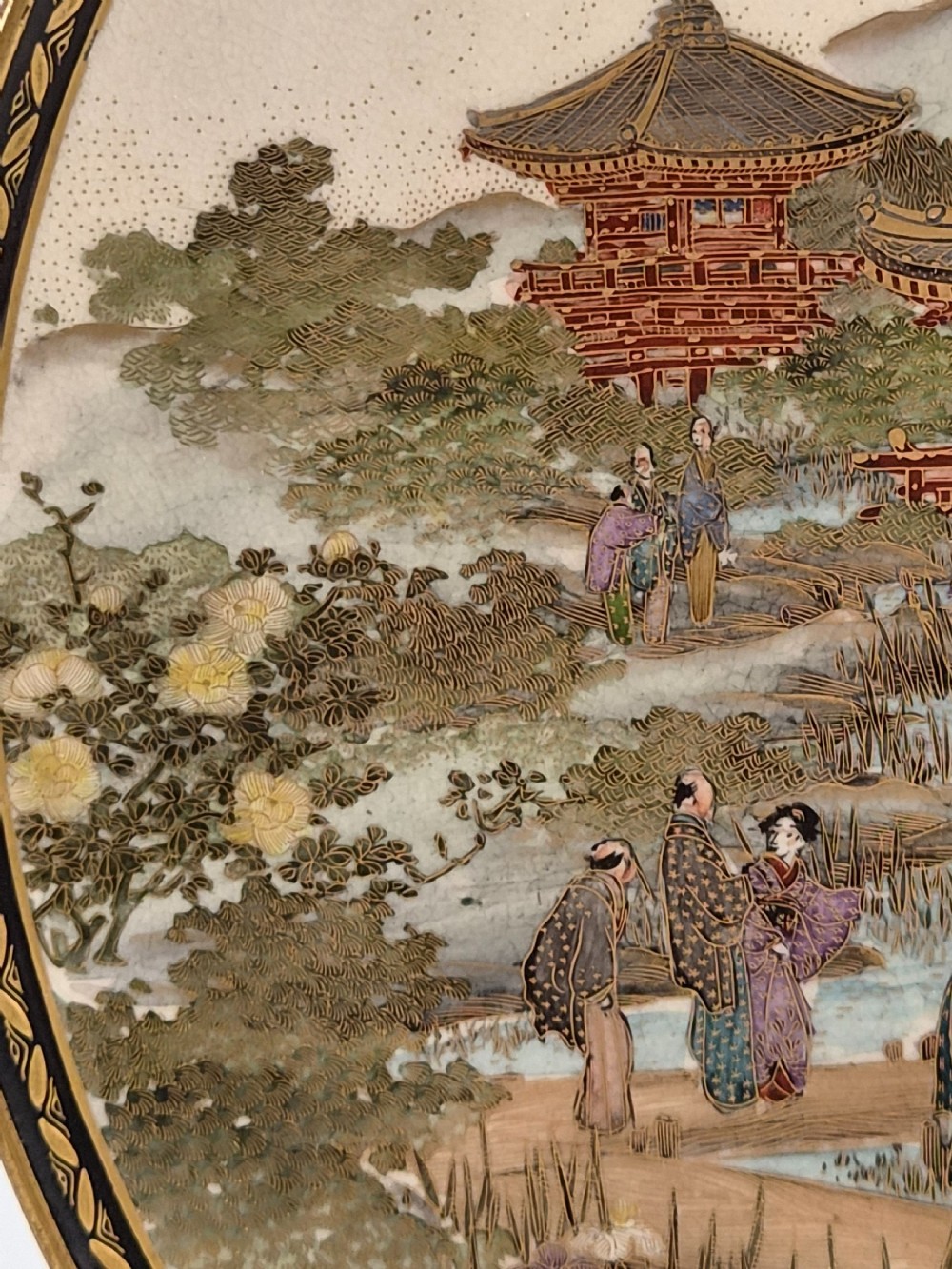
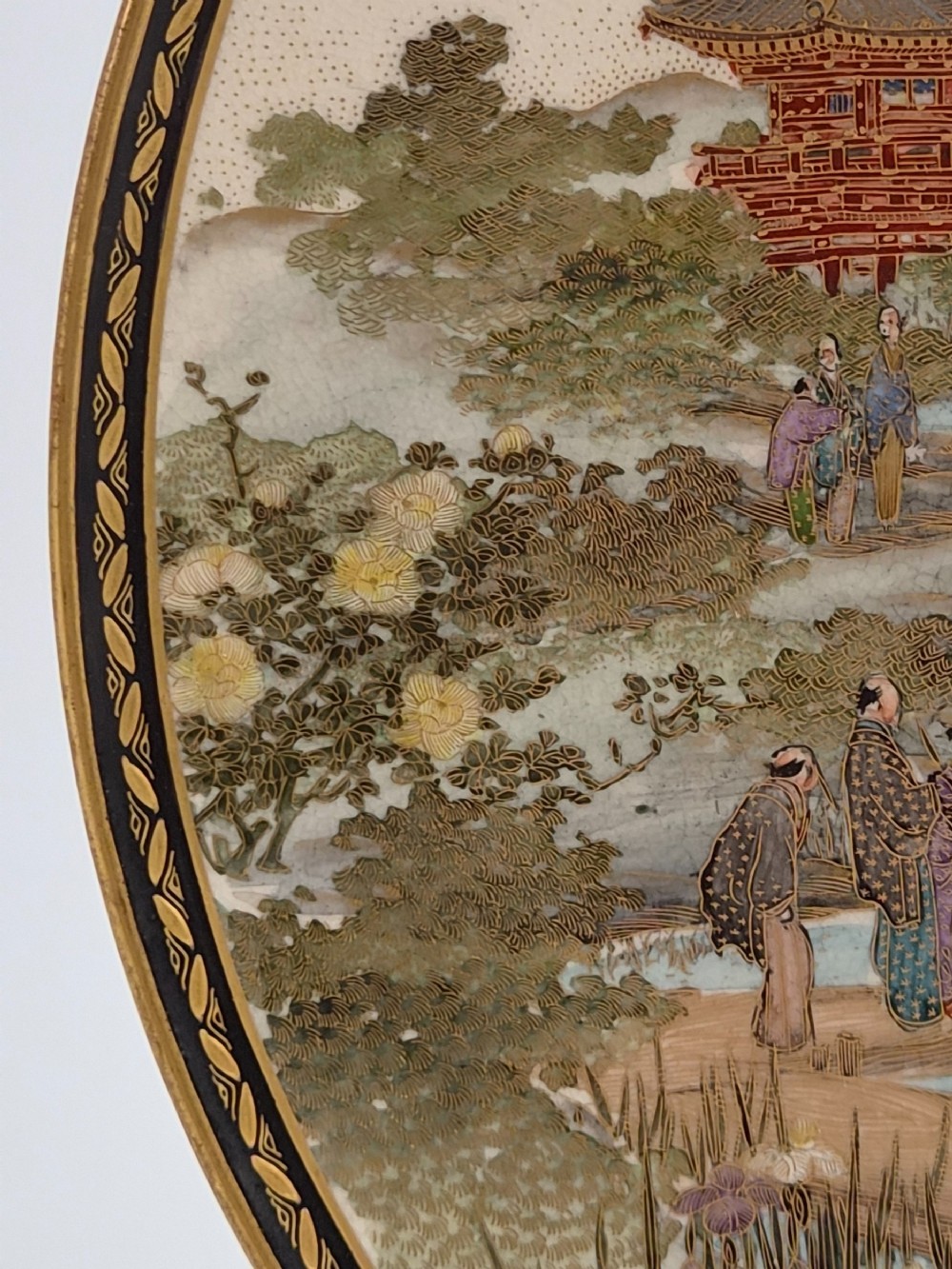
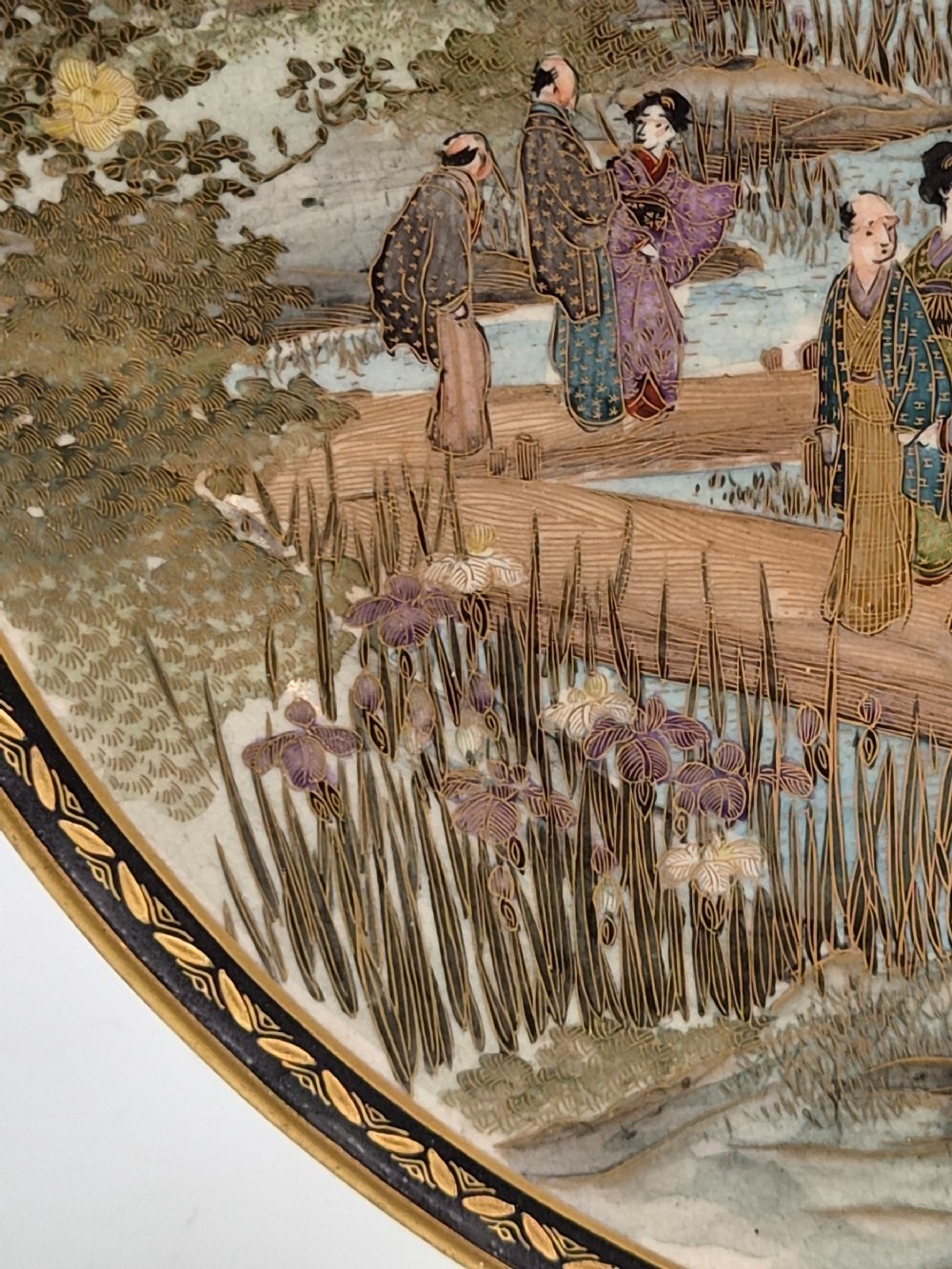
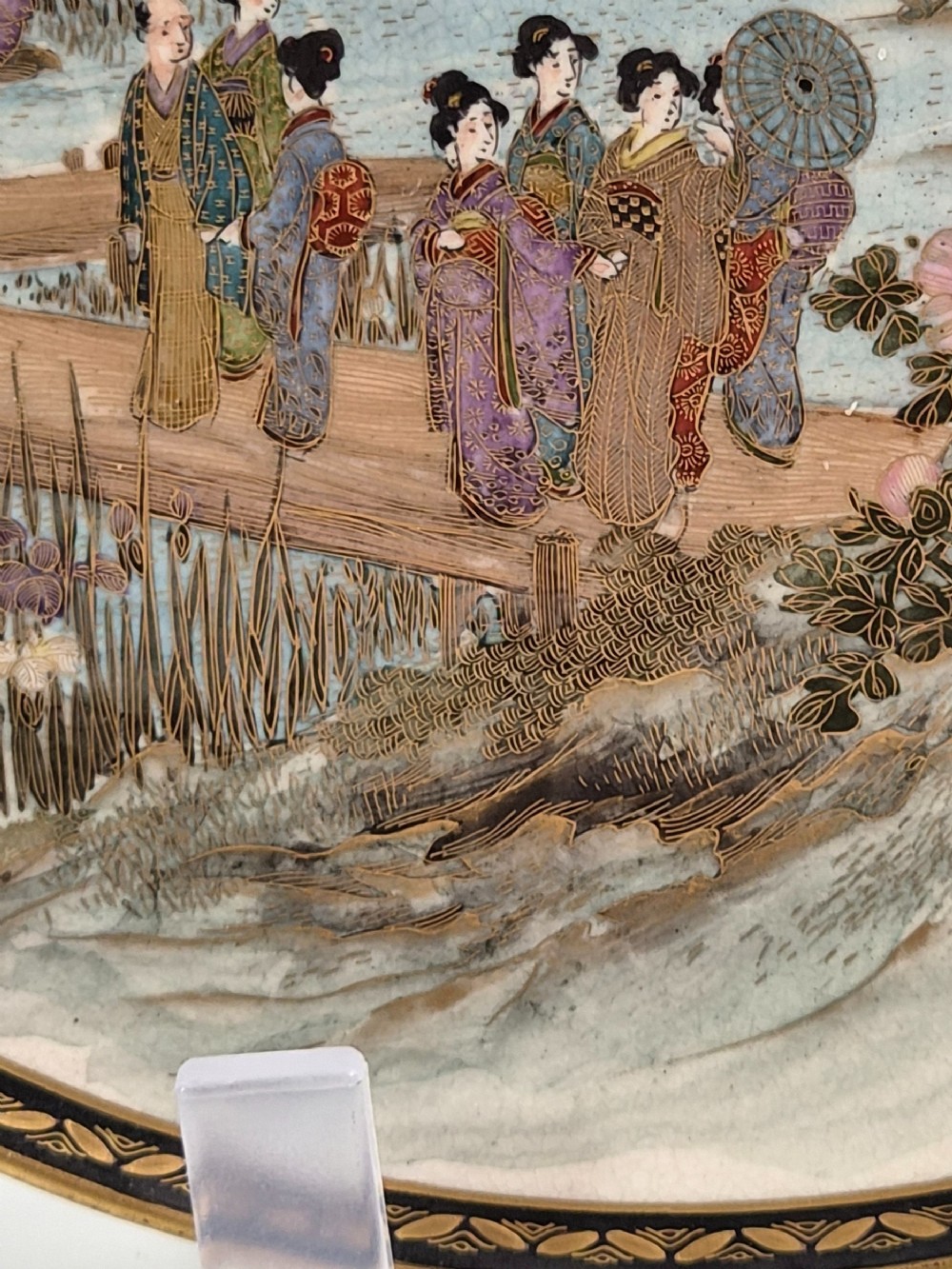
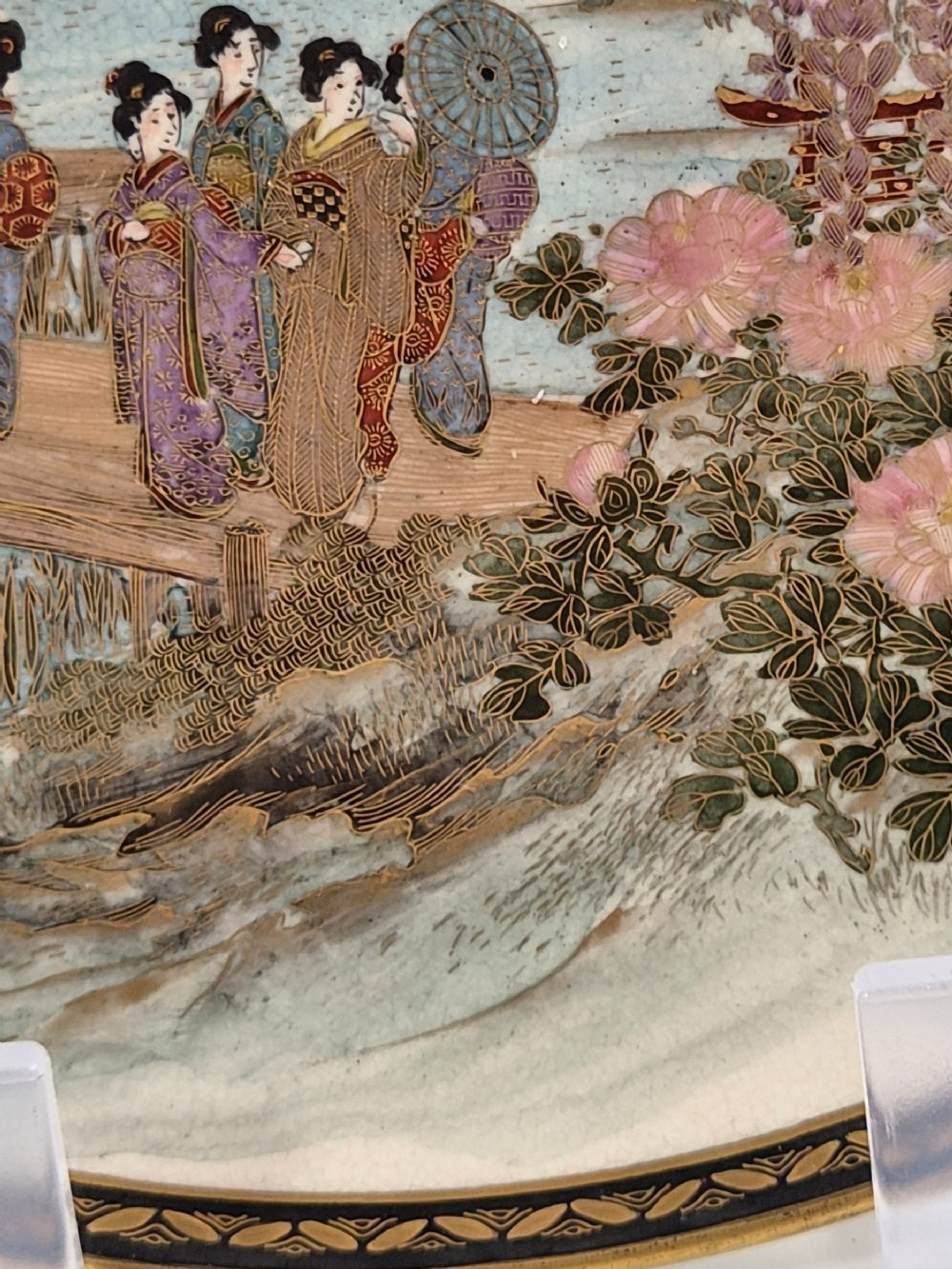
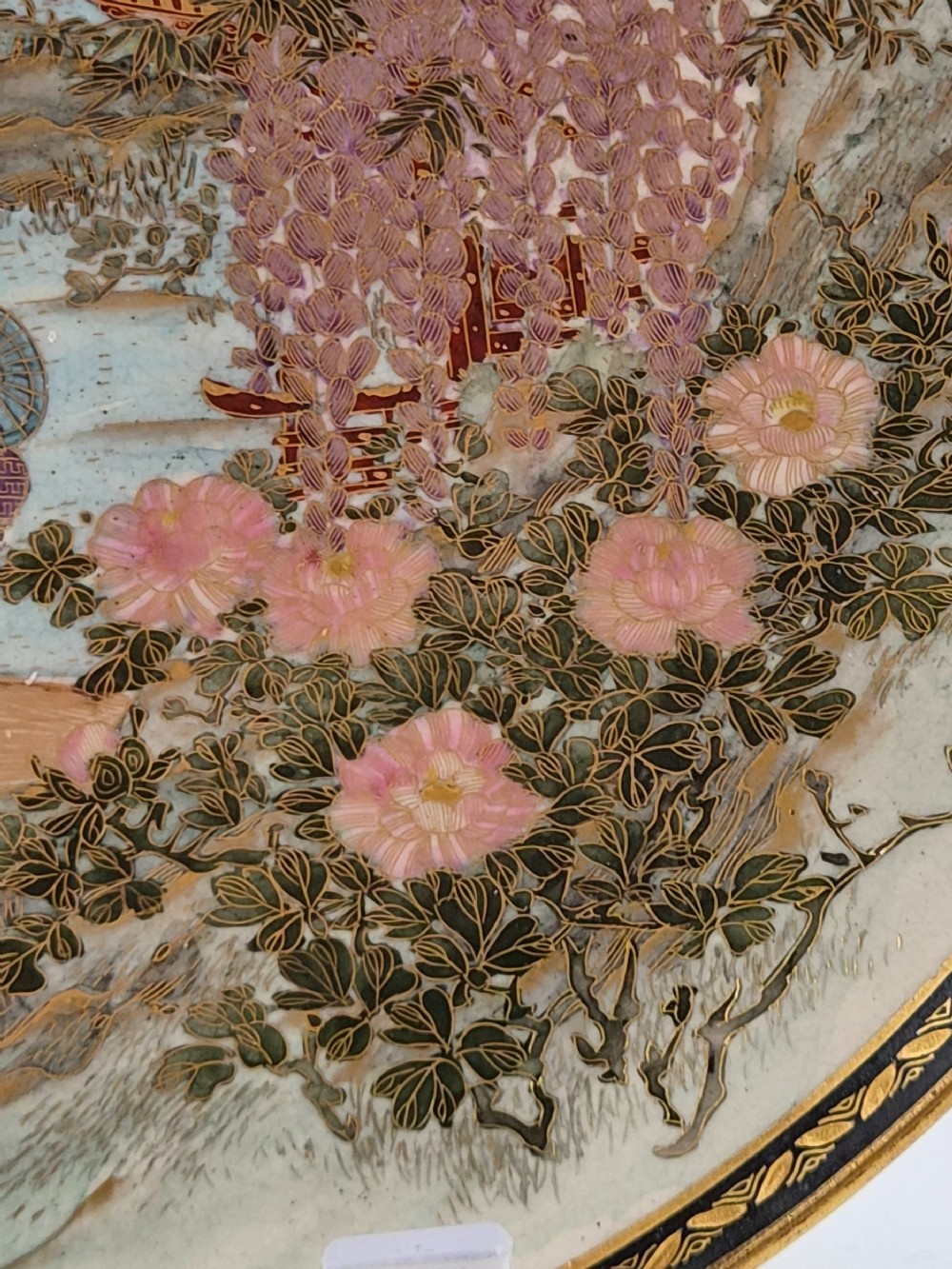
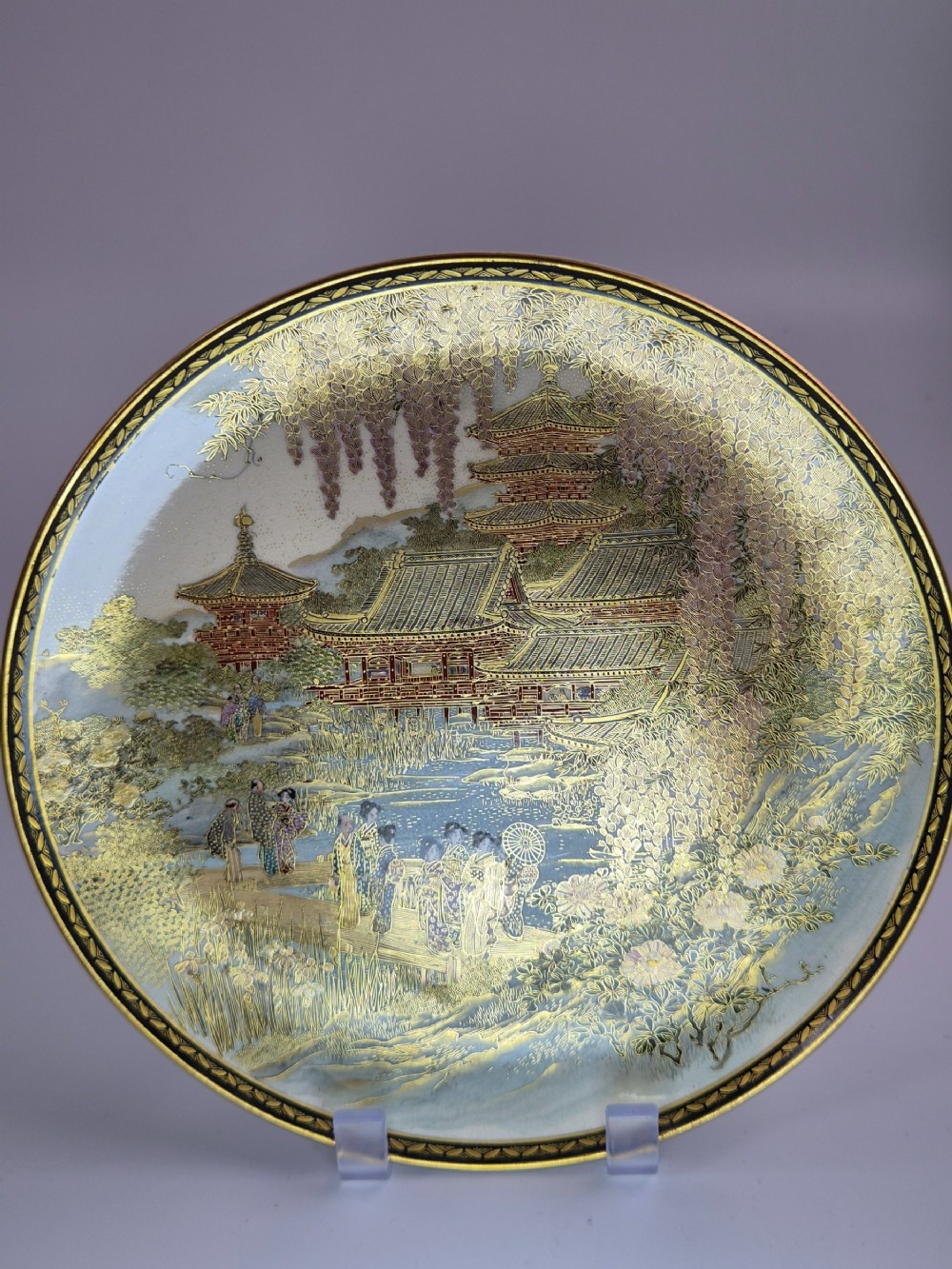
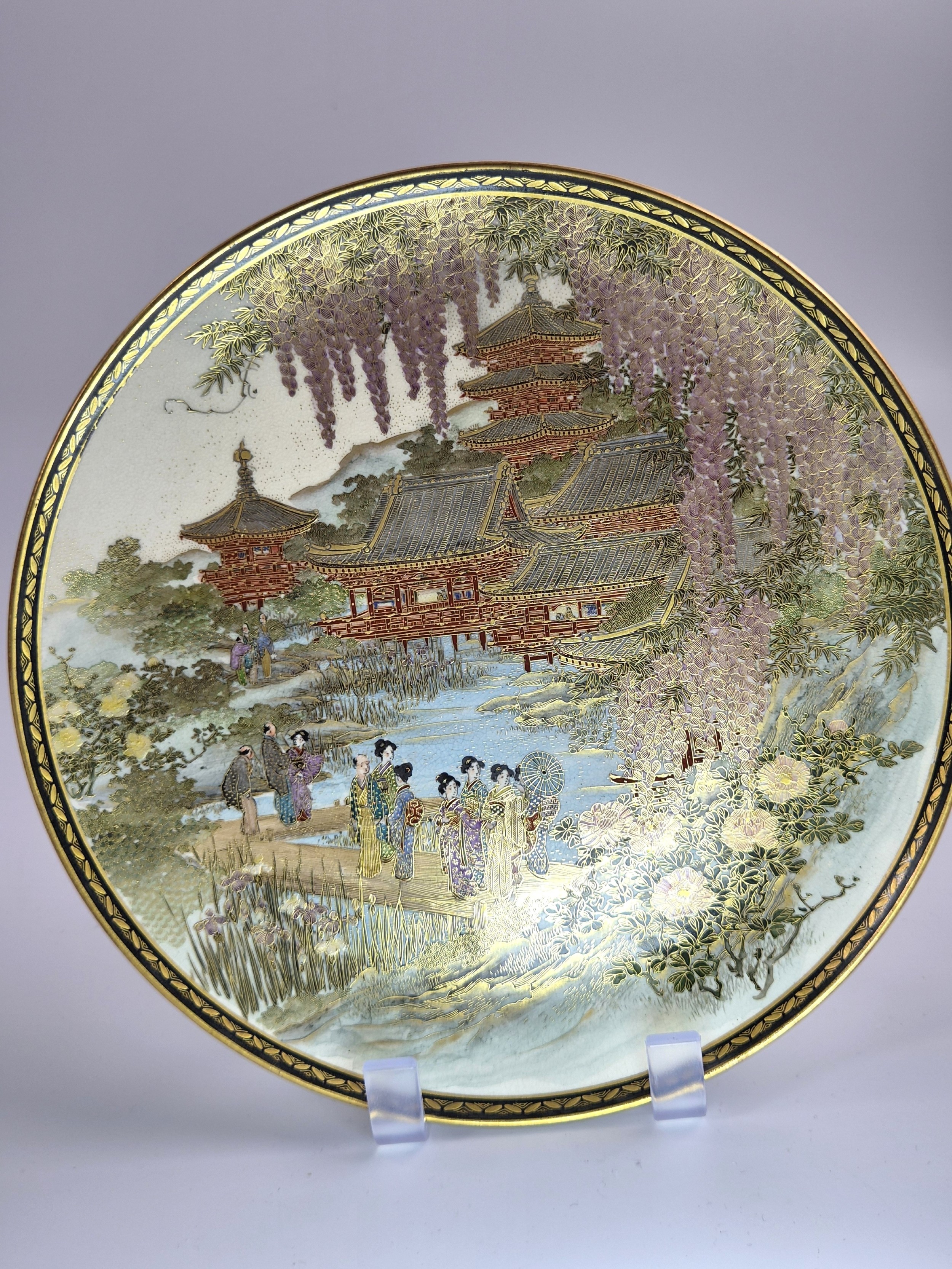
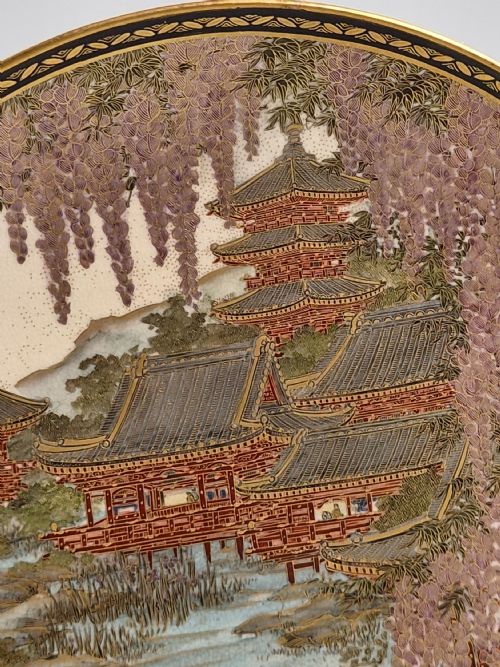
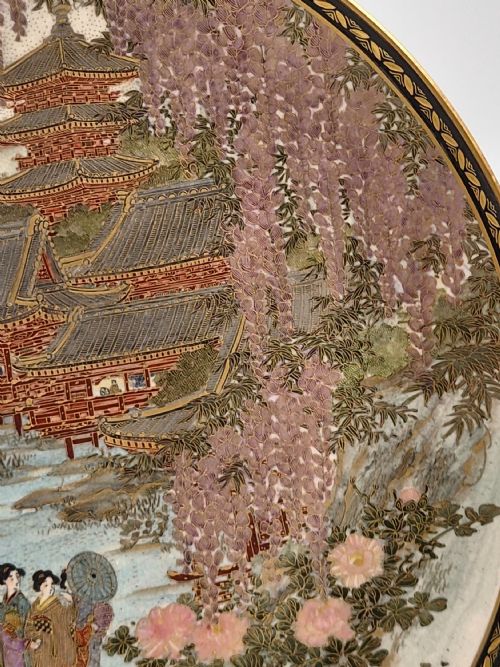
The painting depicts a spring excursion to temple grounds. Ten elegant figures, one lady carrying a parasol, stand on plank bridges above a pond among irises. Three more walk a distant path, and tiny figures can be made out in the pavilion windows. Beyond rise scarlet halls on stilts, an eight-sided pagoda and a three-tiered pagoda, framed from above by cascades of wisteria with red gates glimpsed through the blossom. Pink and yellow peonies bloom in the foreground. The bridges among irises recall the classic yatsuhashi motif of Japanese art.
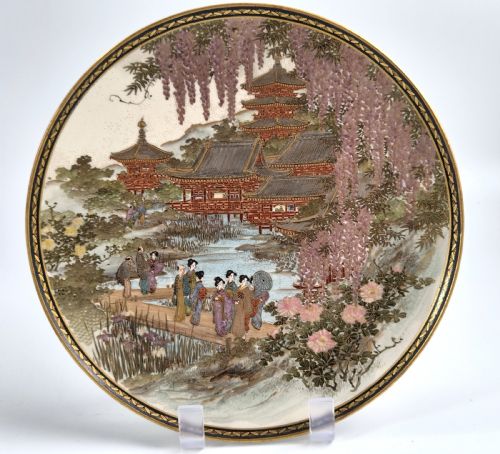
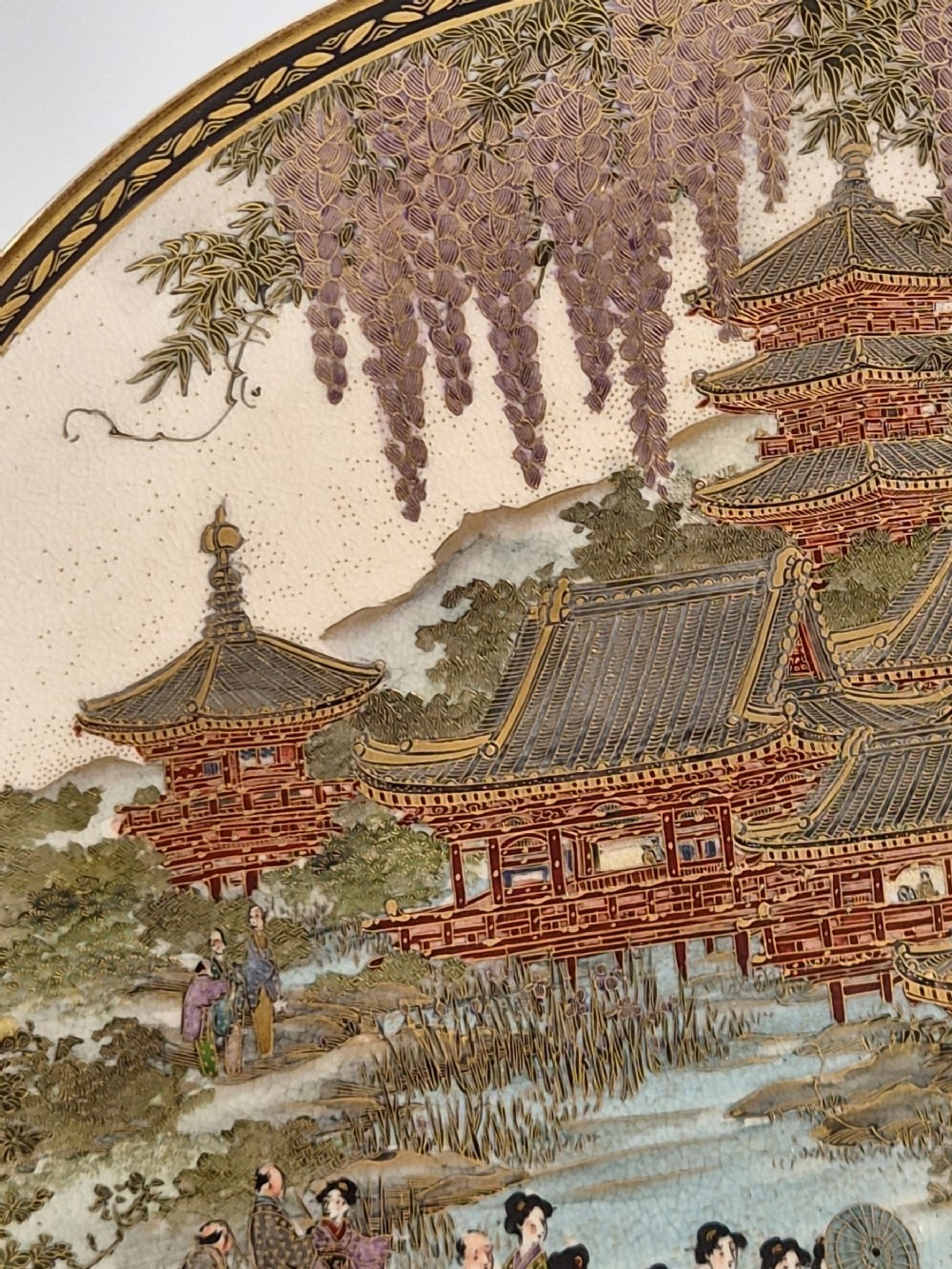
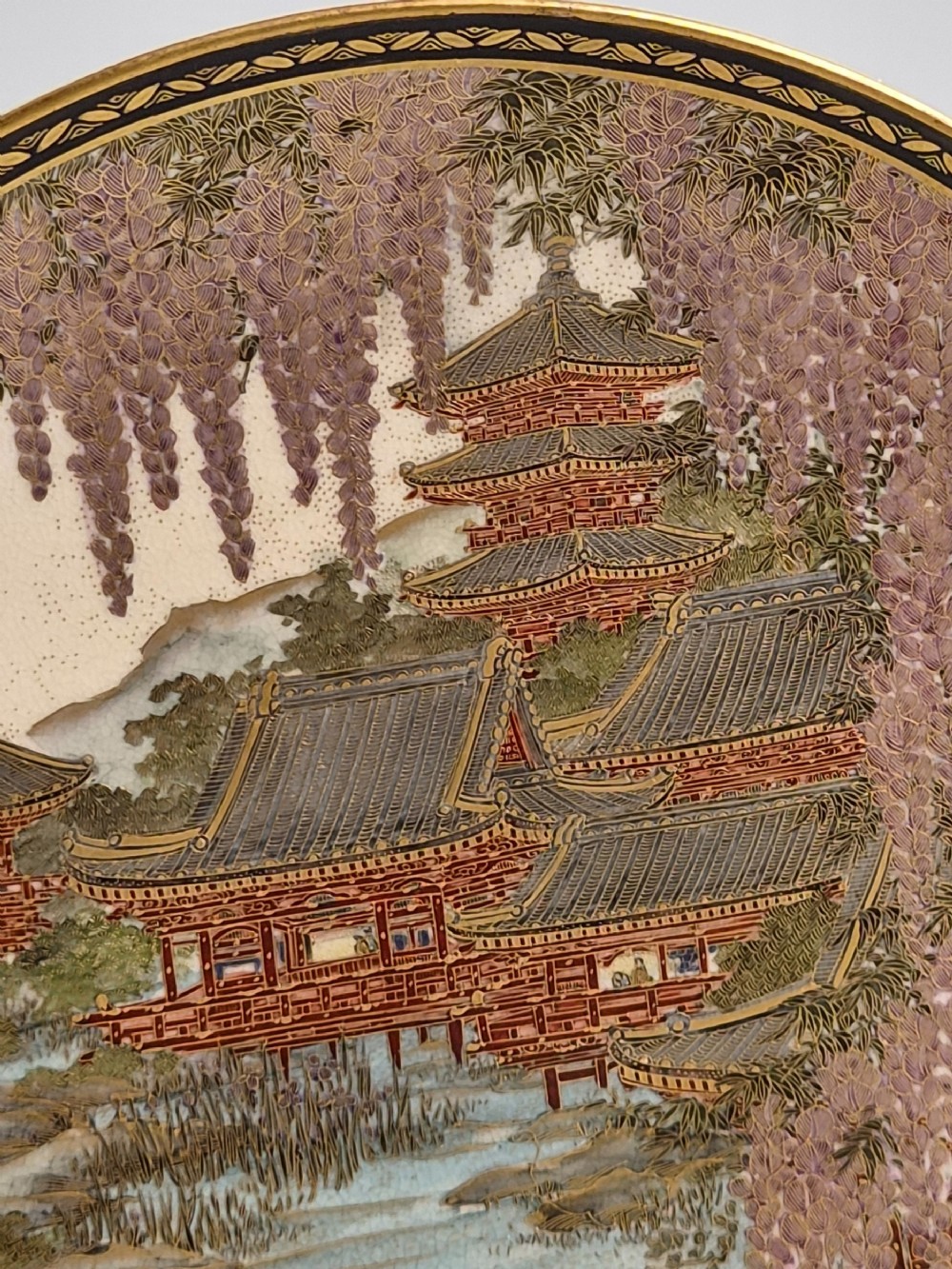
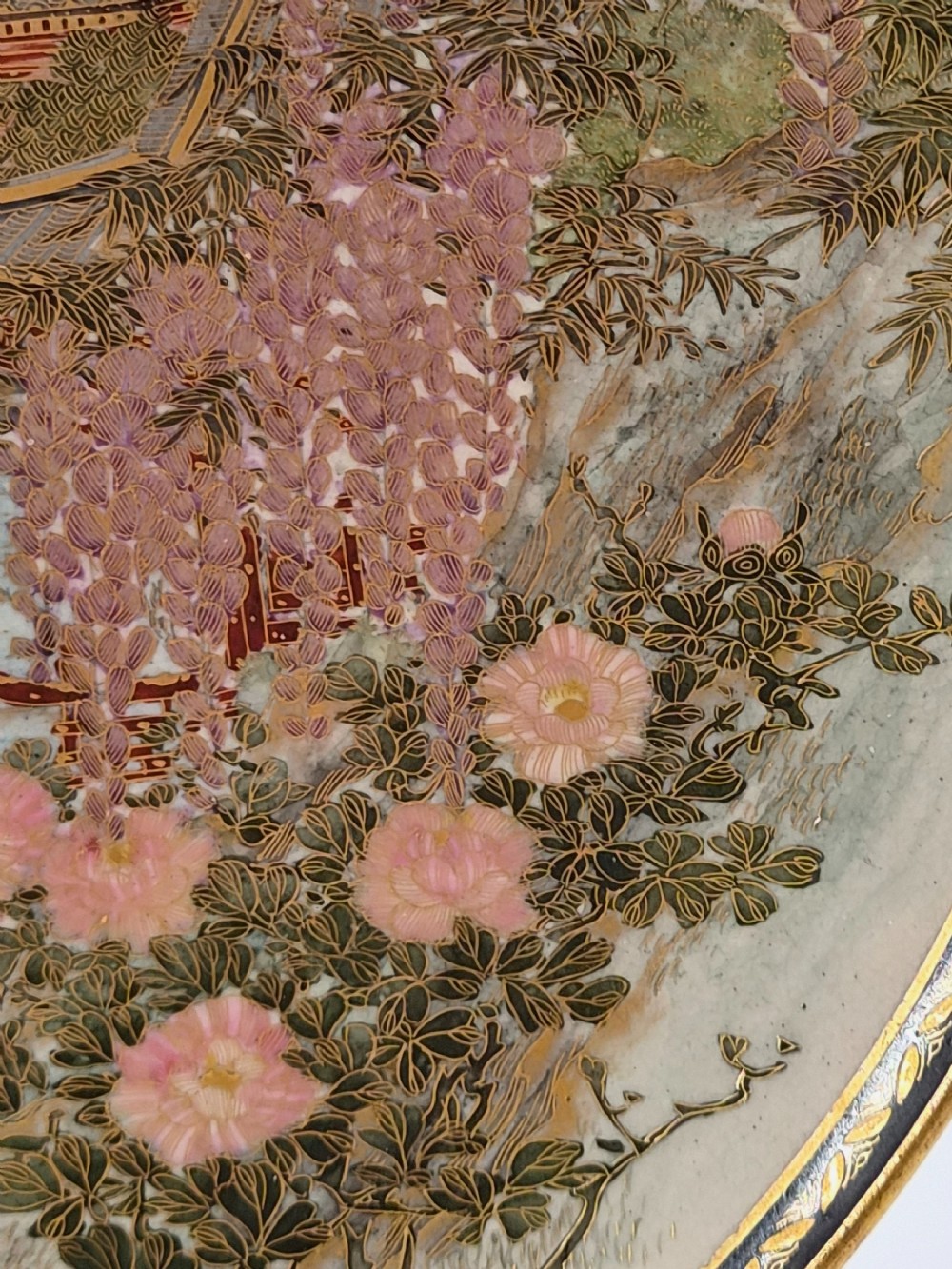
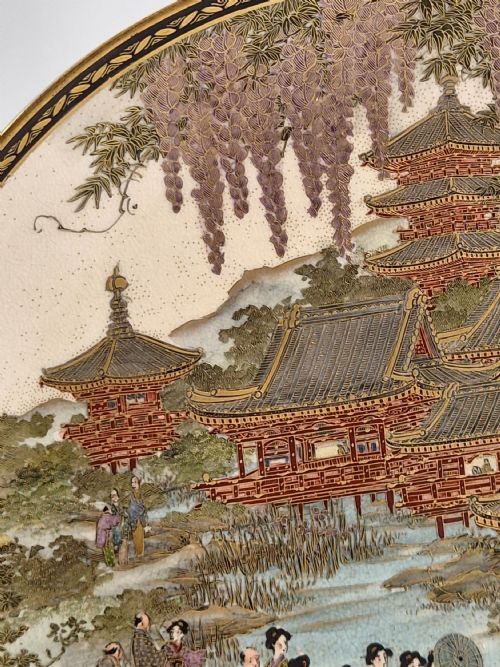
The execution rewards study under a loupe. Each kimono carries its own pattern, and each wisteria petal and leaf is outlined in gold and finely hatched. The roofs are painted tile by tile, while the wisteria and peonies stand in raised enamel. Minute gold dots across the sky gather into haze at the horizon.
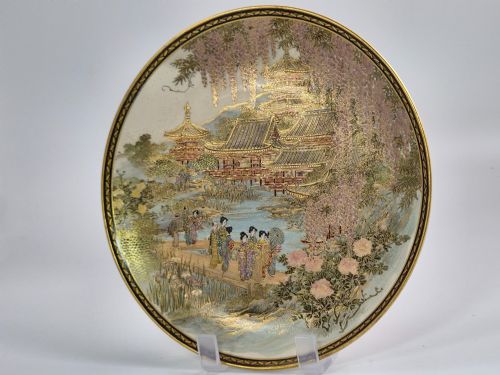
The gilding is of exceptional density, rarely seen even in the finest works: there is more gold here than colour. Matte and burnished gold bring the scene to life at every turn of the plate. The rim bears a black band with gold leaves and a gold edge.
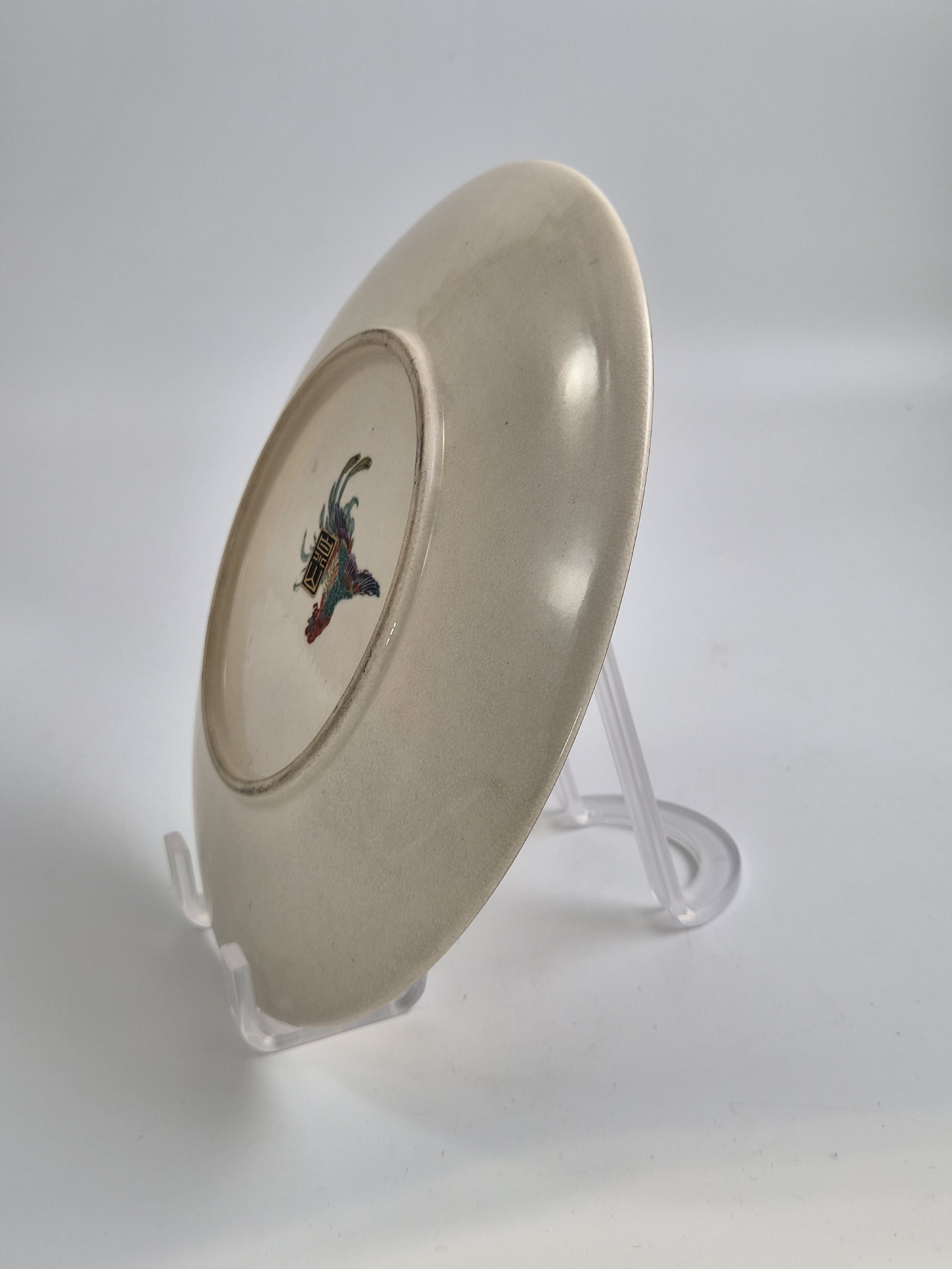
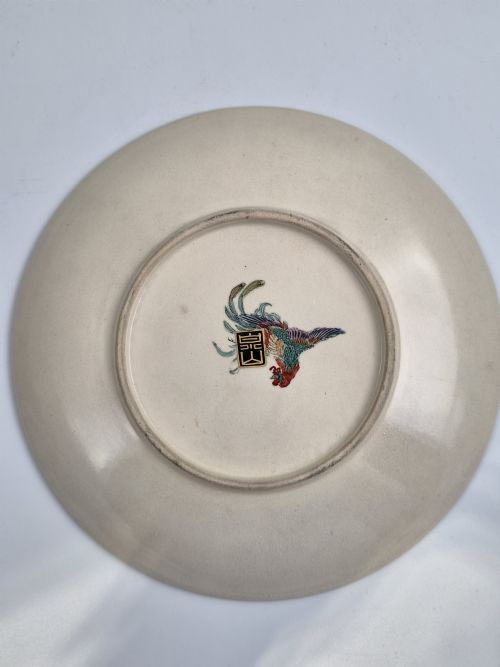
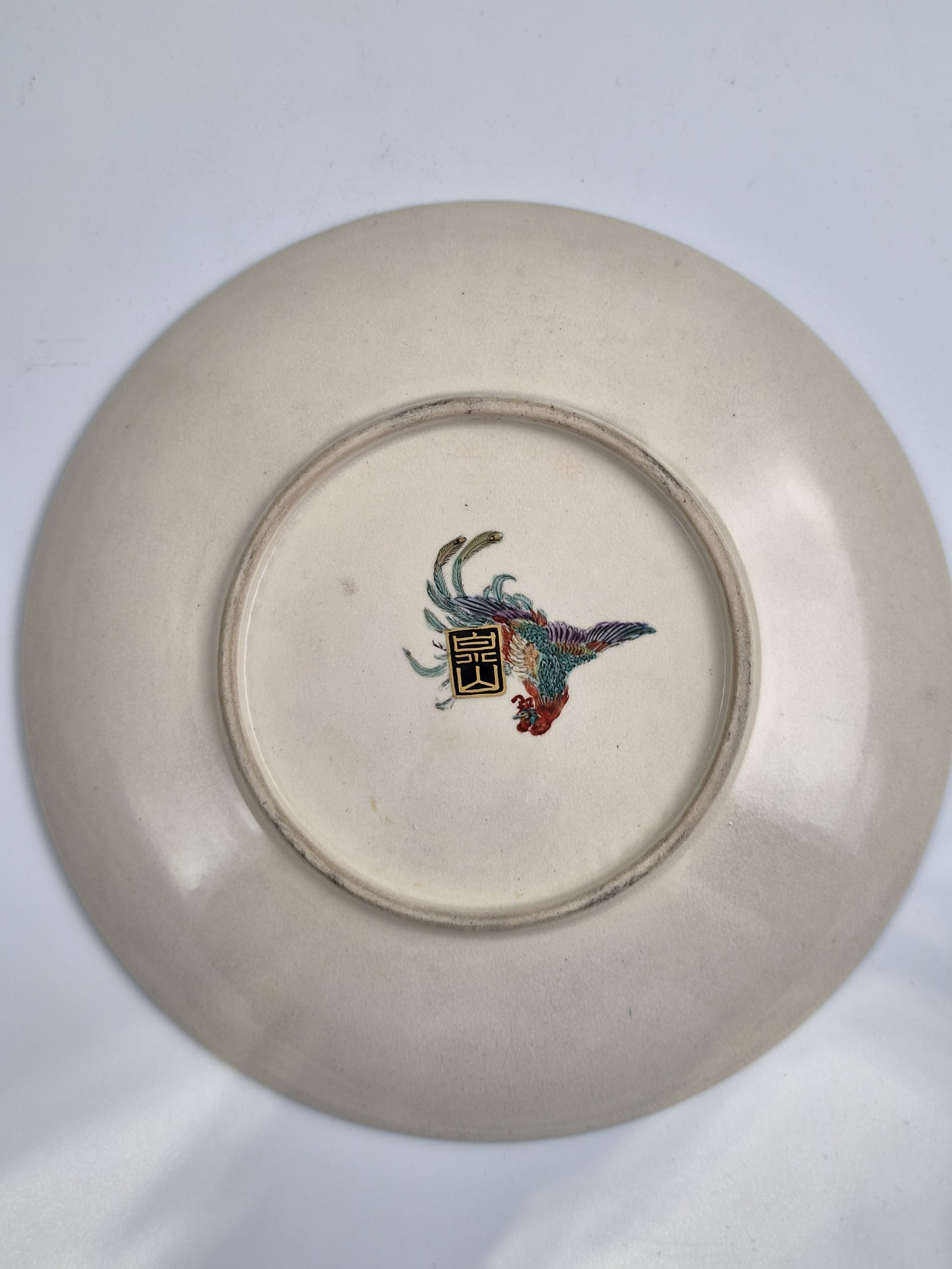
The reverse is painted with a fine polychrome phoenix and carries the gold Senzan (??) seal mark on a black rectangular cartouche.

Dimensions: diameter approx. 21.3 cm; height approx. 2.5 cm. Weight: approx. 423 g.
Technique and materials: Satsuma ceramic with ivory crackle glaze, overglaze enamels, raised enamel and lavish gilding.

Condition: exceptional; the plate looks as if it has only just left the workshop. A UV test revealed no restorations, no repainting, no over-spray and no regilding.
Investment: in our experience, demand for Satsuma of this level is very active, and collectors buy it especially when prices of other assets are unsettled. Such works remain liquid on the international market and are well suited to long-term ownership.
Please study the accompanying photographs carefully, as they form an integral part of this description. If you have any questions, we will be happy to answer them. The item will be shipped with full tracking and insurance.

Date of Manufacture

Gillers Antiques Ltd has dated this Antique Japanese Satsuma Plate to the 1890s.

Reference Numbers
Sellingantiques Reference
SA1168003
Description
Japan, Meiji period, 1890–1900.
“
An outstanding plate by the renowned Satsuma master Senzan, of a quality that will appeal to the discerning collector of Meiji ceramics.
Gillers Antiques Ltd

The painting depicts a spring excursion to temple grounds. Ten elegant figures, one lady carrying a parasol, stand on plank bridges above a pond among irises. Three more walk a distant path, and tiny figures can be made out in the pavilion windows. Beyond rise scarlet halls on stilts, an eight-sided pagoda and a three-tiered pagoda, framed from above by cascades of wisteria with red gates glimpsed through the blossom. Pink and yellow peonies bloom in the foreground. The bridges among irises recall the classic yatsuhashi motif of Japanese art.

fig 1. A circular Meiji period Satsuma earthenware plate featuring finely detailed figures, temples, and wisteria framed by a gilt geometric border.
fig 1. Satsuma, 1890–1900. Exceptional Multi-figure Plate by the Renowned Master Senzan

The execution rewards study under a loupe. Each kimono carries its own pattern, and each wisteria petal and leaf is outlined in gold and finely hatched. The roofs are painted tile by tile, while the wisteria and peonies stand in raised enamel. Minute gold dots across the sky gather into haze at the horizon.

fig 2. A circular Meiji period Satsuma earthenware plate featuring finely detailed figures, temples, and wisteria framed by a gilt geometric border.
fig 2. Satsuma, 1890–1900. Exceptional Multi-figure Plate by the Renowned Master Senzan

The gilding is of exceptional density, rarely seen even in the finest works: there is more gold here than colour. Matte and burnished gold bring the scene to life at every turn of the plate. The rim bears a black band with gold leaves and a gold edge.

fig 3. A circular Meiji period Satsuma earthenware plate featuring finely detailed figures, temples, and wisteria framed by a gilt geometric border.
fig 3. Satsuma, 1890–1900. Exceptional Multi-figure Plate by the Renowned Master Senzan

The reverse is painted with a fine polychrome phoenix and carries the gold Senzan (??) seal mark on a black rectangular cartouche.

Dimensions: diameter approx. 21.3 cm; height approx. 2.5 cm. Weight: approx. 423 g.

fig 4. A circular Meiji period Satsuma earthenware plate featuring finely detailed figures, temples, and wisteria framed by a gilt geometric border.
fig 4. Satsuma, 1890–1900. Exceptional Multi-figure Plate by the Renowned Master Senzan

Technique and materials: Satsuma ceramic with ivory crackle glaze, overglaze enamels, raised enamel and lavish gilding.

Condition: exceptional; the plate looks as if it has only just left the workshop. A UV test revealed no restorations, no repainting, no over-spray and no regilding.

fig 5. A circular Meiji period Satsuma earthenware plate featuring finely detailed figures, temples, and wisteria framed by a gilt geometric border.
fig 5. Satsuma, 1890–1900. Exceptional Multi-figure Plate by the Renowned Master Senzan

Investment: in our experience, demand for Satsuma of this level is very active, and collectors buy it especially when prices of other assets are unsettled. Such works remain liquid on the international market and are well suited to long-term ownership.

fig 6. A circular Meiji period Satsuma earthenware plate featuring finely detailed figures, temples, and wisteria framed by a gilt geometric border.
fig 6. Satsuma, 1890–1900. Exceptional Multi-figure Plate by the Renowned Master Senzan

Please study the accompanying photographs carefully, as they form an integral part of this description. If you have any questions, we will be happy to answer them. The item will be shipped with full tracking and insurance.

Date of Manufacture

Gillers Antiques Ltd has dated this Antique Japanese Satsuma Plate to the 1890s.

Reference Numbers
Sellingantiques Ref
SA1168003
Gillers Antiques Ltd
Sellingantiques verified Since Mar 2023
Dealer Profile

You can view the stock and full dealer information on the Gillers Antiques Ltd Profile Page
PDF SHARE
SAVE
A circular Meiji period Satsuma earthenware plate featuring finely detailed figures, temples, and wisteria framed by a gilt geometric border.
1 / 18
Archive I A circular Meiji period Satsuma earthenware plate featuring finely detailed figures, temples, and wisteria framed by a gilt geometric border.

Satsuma, 1890–1900. Exceptional Multi-figure Plate by the Renowned Master Senzan
Archive II A circular Meiji period Satsuma earthenware plate featuring finely detailed figures, temples, and wisteria framed by a gilt geometric border. View II
Archive III A circular Meiji period Satsuma earthenware plate featuring finely detailed figures, temples, and wisteria framed by a gilt geometric border. View III
Archive IV A circular Meiji period Satsuma earthenware plate featuring finely detailed figures, temples, and wisteria framed by a gilt geometric border. View IV
Archive V A circular Meiji period Satsuma earthenware plate featuring finely detailed figures, temples, and wisteria framed by a gilt geometric border. View V
Archive VI A circular Meiji period Satsuma earthenware plate featuring finely detailed figures, temples, and wisteria framed by a gilt geometric border. View VI
Archive VII A circular Meiji period Satsuma earthenware plate featuring finely detailed figures, temples, and wisteria framed by a gilt geometric border. View VII
Archive VIII A circular Meiji period Satsuma earthenware plate featuring finely detailed figures, temples, and wisteria framed by a gilt geometric border. View VIII
Archive IX A circular Meiji period Satsuma earthenware plate featuring finely detailed figures, temples, and wisteria framed by a gilt geometric border. View IX
Archive X A circular Meiji period Satsuma earthenware plate featuring finely detailed figures, temples, and wisteria framed by a gilt geometric border. View X
Archive XI A circular Meiji period Satsuma earthenware plate featuring finely detailed figures, temples, and wisteria framed by a gilt geometric border. View XI
Archive XII A circular Meiji period Satsuma earthenware plate featuring finely detailed figures, temples, and wisteria framed by a gilt geometric border. View XII
Archive XIII A circular Meiji period Satsuma earthenware plate featuring finely detailed figures, temples, and wisteria framed by a gilt geometric border. View XIII
Archive XIV A circular Meiji period Satsuma earthenware plate featuring finely detailed figures, temples, and wisteria framed by a gilt geometric border. View XIV
Archive XV A circular Meiji period Satsuma earthenware plate featuring finely detailed figures, temples, and wisteria framed by a gilt geometric border. View XV
Archive XVI A circular Meiji period Satsuma earthenware plate featuring finely detailed figures, temples, and wisteria framed by a gilt geometric border. View XVI
Archive XVII A circular Meiji period Satsuma earthenware plate featuring finely detailed figures, temples, and wisteria framed by a gilt geometric border. View XVII
Archive XVIII A circular Meiji period Satsuma earthenware plate featuring finely detailed figures, temples, and wisteria framed by a gilt geometric border. View XVIII
Enlarged Archival View
Telephone 07738 009924
Location
Buckland House
Buntingford
Hertfordshire
SG9 0PY
United Kingdom
Verified Since Mar 2023
Items For Sale 397
Items Sold 581
Gillers Antiques Ltd
Verified Since Mar 2023
View Dealer Info
Location: Buckland House, Buntingford, Hertfordshire, SG9 0PY, United Kingdom
Verified
Mar 2023
For Sale
397
Sold
581
A circular Meiji period Satsuma earthenware plate featuring finely detailed figures, temples, and wisteria framed by a gilt geometric border.
Satsuma, 1890–1900. Exceptional Multi-Figure Plate by the Renowned Master Senzan
Ref: SA1168003
A circular Meiji period Satsuma earthenware plate featuring finely detailed figures, temples, and wisteria framed by a gilt geometric border.
Detail View 1
Detail View 2
Detail View 3
Detail View 4
Detail View 5
Detail View 6
Detail View 7
Detail View 8
Detail View 9
Detail View 10
Detail View 11
Detail View 12
Detail View 13
Detail View 14
Detail View 15
Detail View 16
Detail View 17
Archival Detail
Every single antique dealer on our platform is individually approved by our internal team. We verify their professional trade history, ethical standards, and photographic quality to ensure a secure, high-standard buying environment. Upon joining, every dealer agrees to a strict 9-point code of conduct. While issues can occasionally arise, our dealers typically resolve them swiftly and directly with the buyer. In fact, since our founding in 2002, Sellingantiques has only had to step in to help resolve an issue on roughly five occasions—a true testament to the quality of our dealers and their dedication to your happiness.
Our dealers are highly experienced in packing and shipping fragile, high-value antiques. Because you are in direct contact with the dealer, you will be able to easily go through all available shipping and insurance options together to ensure your item arrives safely.
Antiques are the ultimate green purchase. By choosing historical pieces over newly manufactured goods, you completely eliminate the carbon footprint of modern mass production while preserving exceptional, timeless craftsmanship.
Written by Sellingantiques from the dealer’s photographs and listing
  • ObjectDecorative Plates
  • Period19th century
  • StyleMeiji Period
  • MaterialEarthenware, Enamel, Gold Leaf
  • ColourCream and Gold
  • MotifsCrackle glaze, wisteria blossoms, pagoda architecture, geometric gilt border

This Satsuma earthenware plate dates from the Meiji period around 1890 and is finished with a warm ivory crackle glaze, polychrome overglaze enamels, and extensive gilding. The surface is decorated with a complex courtly garden scene featuring layered pavilions, a wooden bridge, flowering shrubs including pink wisteria and peonies, and numerous figures in patterned kimono, all framed by a geometric gilt border. The reverse carries a gold signature cartouche on a black ground. Measuring 21.3 cm in diameter and 2.5 cm in height, this decorative plate weighs 423 g. Suitable for display in a formal reception room, the plate can be mounted on a stand or placed upon a mantelpiece as a focal point. It fits naturally into traditional or eclectic interior schemes where detailed antique ceramics are collected and appreciated. The piece requires careful handling during dusting and should be kept away from direct moisture to preserve the delicate enamel and gold leaf decoration over time.

Satsuma ware is a category of Japanese earthenware that originated in the Satsuma province during the sixteenth century. By the Meiji period (18681912), production expanded to cater to Western export markets, developing intricate enamelling, detailed figural or landscape scenes, and delicate gold leaf embellishments over a fine crackle-glazed cream body.

Satsuma ceramics were crafted from fine earthenware clay fired at low temperatures to produce a light cream-coloured body with a characteristic fine crackle glaze. Skilled artisans then applied detailed polychrome enamels and rich gold gilding before a second firing fixed the decoration.

Authentic pieces generally display a warm cream ground with a tight, uniform crackle glaze, delicate hand-applied enamel decoration, and detailed gilded borders. Period examples often carry painted signatures, seals, or workshop marks, such as the Shimazu family crest or artists signatures like Meizan, executed in iron-red and gold.

Decorative Satsuma plates and chargers are commonly displayed on acrylic or wooden plate stands atop mantelpieces, sideboards, or console tables. Alternatively, they can be wall-mounted within gallery displays or showcased behind glass in display cabinets to highlight their detailed enamelling.

To protect delicate gilding and overglaze enamels, clean Satsuma pottery using a dry, soft-bristled brush or microfiber cloth to remove dust. Avoid submersing the piece in water, using chemical detergents, or applying abrasive cloths, as moisture can penetrate the crackle glaze and damage the underlying earthenware.
items
Add keywords to the filter
Price
£100
£250000
Era
Period
Style
Material
Origin
Stock Location
Recently Added
Online Payments
Categories