



Antique Transferware Plates
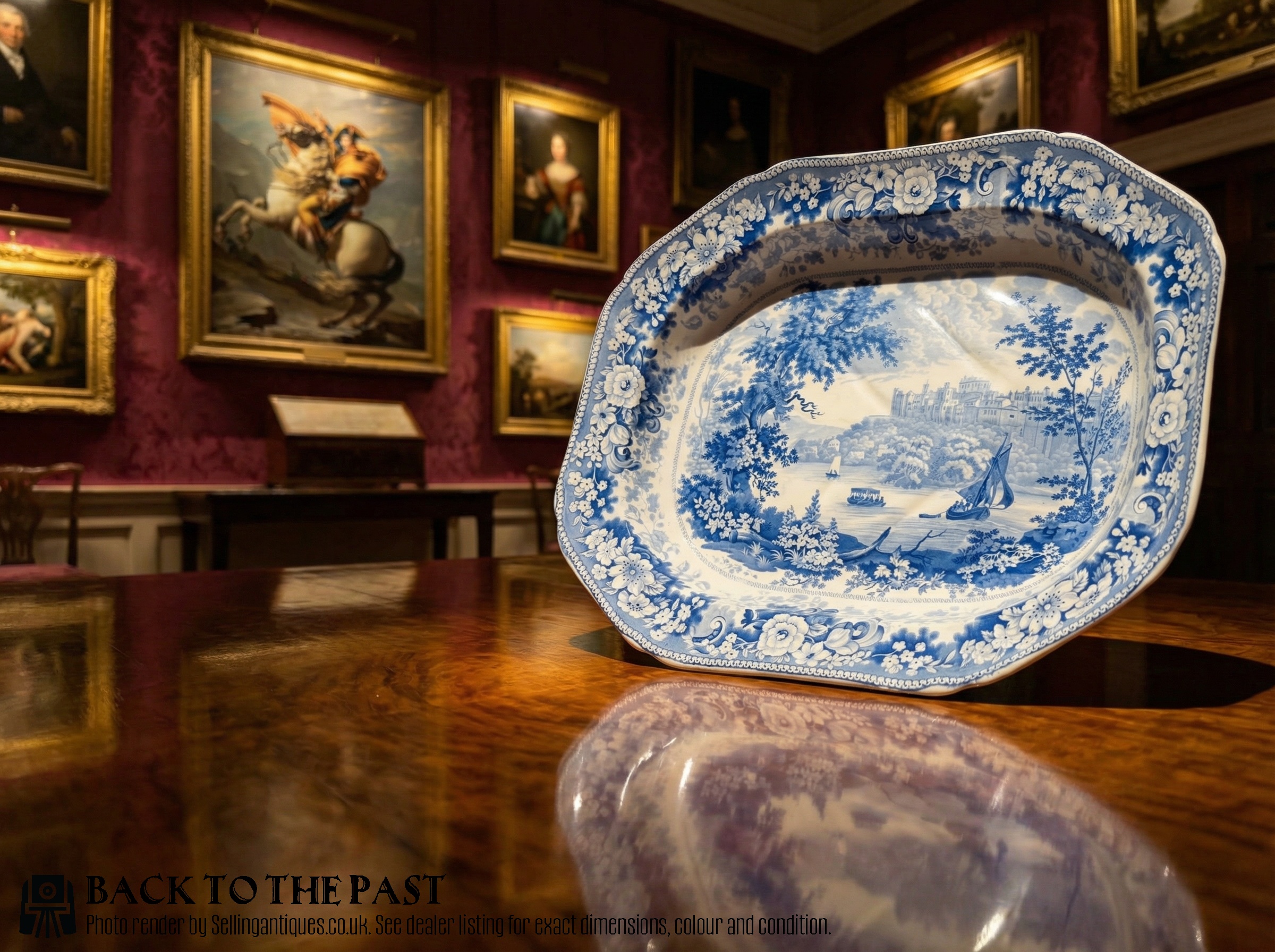
Earthenware and stoneware plates and dishes printed from engraved copper plates by paper tissue, made in England from the later 18th century as affordable pictorial tableware.
Antique Transferware Plates
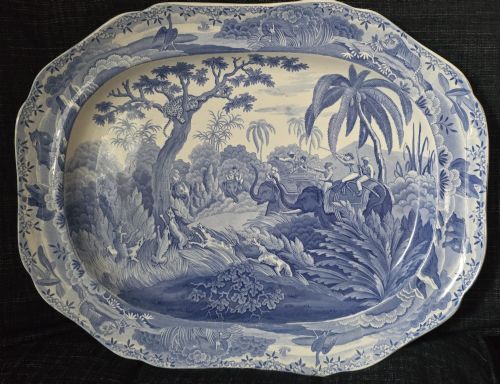
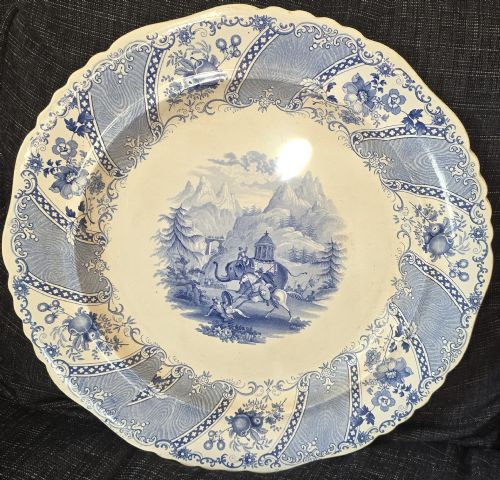
Transfer printing laid an inked tissue pulled from an engraved plate onto the pottery, so a pictorial design could be repeated on a whole dinner service. Blue-printed earthenware was made in quantity in England from about 1780, priced below hand-painted and imported wares, and the method carried on through the 19th century.
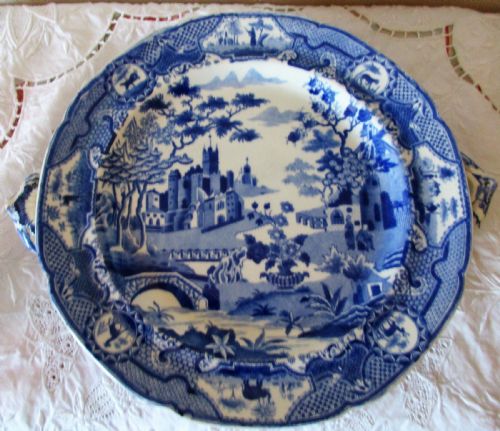
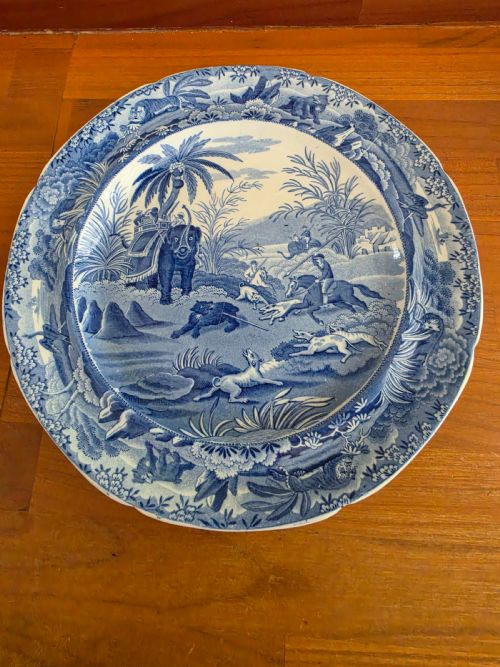
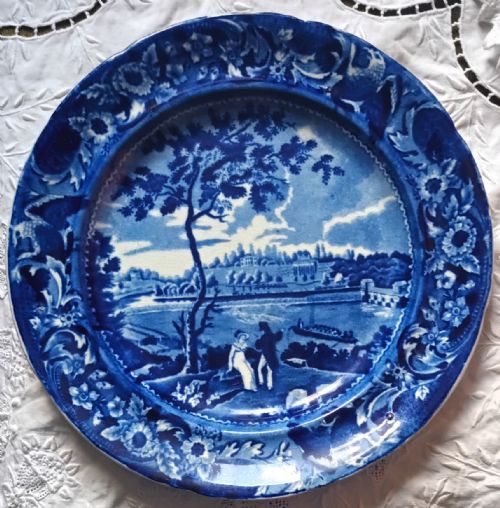
Blue on a white ground is close to a defining condition rather than a variant. The words blue and white each appear in thirty-five of the fifty-six titles on Sellingantiques, and the type you'll meet most is the English blue-and-white pottery plate of the Georgian or early 19th-century sort. Georgian works as a style label here, applied across the first third of the century rather than a tight bracket.
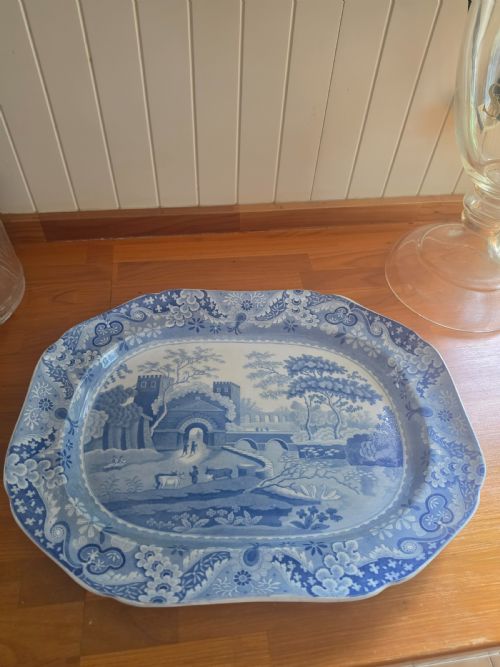
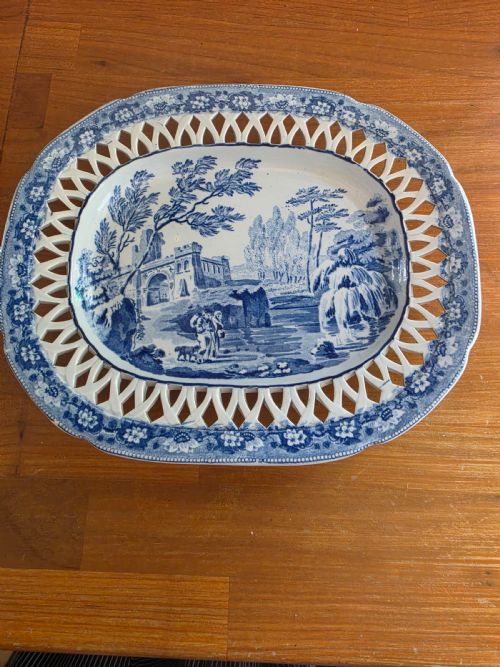
The heading covers more than the flat dinner plate. Meat plates, serving plates and platters run through it, alongside a hot-water plate, a footed bread stand, a fretted platter and a sauce tureen stand catalogued among the plates. Roughly a fifth of titles name the printed pattern outright, with Willow, Italian, Penang, Bridge of Lucano and Chinese Garden among them.
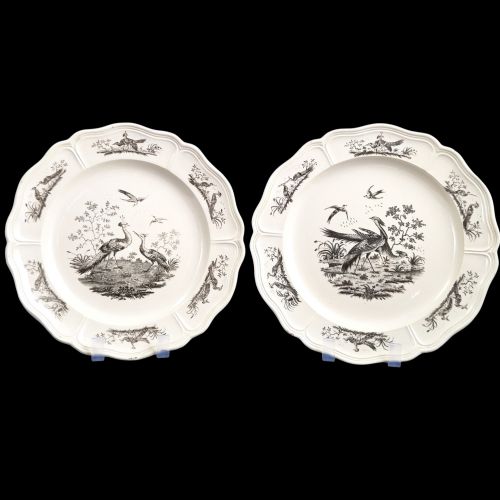
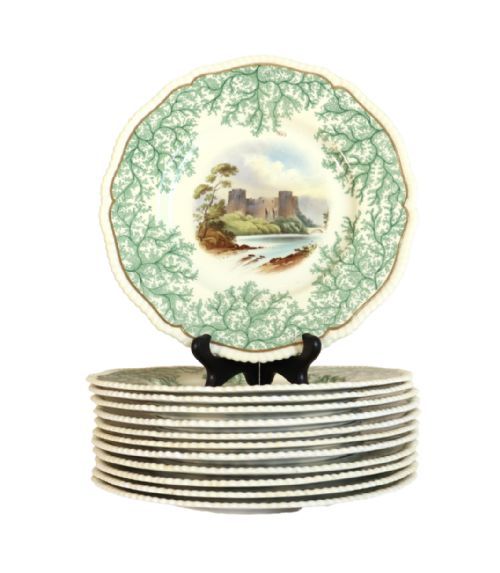
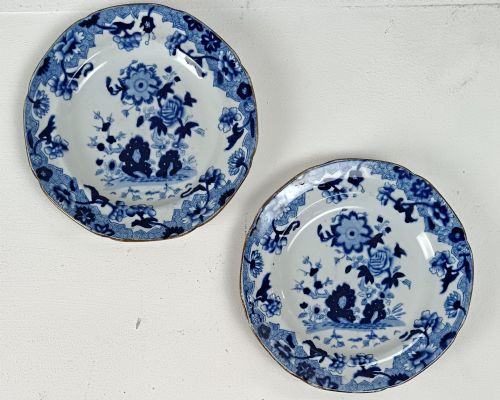
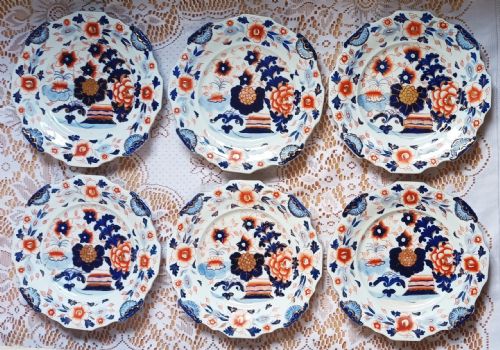
Pairs and sets are as common as singles, with plates plural in a third of titles and sampled groups of four, six, ten, twelve and seventeen. Outside the blue mainstream sits a small tail: multicolour Prattware plates using pot-lid illustrations, an Ironstone Japan pattern set, and children's nursery and pearlware plates. Dating is often loose, twenty-seven listings recorded simply as 19th Century, though a title may still give a close circa date.

Where Value Sits
Naming does most of the work. A plainly titled blue and white meat plate sits low in the sampled range, while listings that give both a pattern and the potter who printed it sit at the upper end. The same plate, identified, moves up.
Subject matter separates the middle from the top. Printed views of real places carry further than generic rustic scenes: Staffordshire, Hastings, Glasgow, Allahabad and Philadelphia all appear, and one plate records a Crimean War action. Recorded history on the face of a plate is what collectors of these buy.
Then quantity and form. Singles and pairs occupy the lower half, sets of six, ten, twelve and seventeen the upper end, and a named family provenance on a set of twelve puts it at the top. Large serving plates, meat plates and the odd forms sit above small tea plates. Stated rarity, as on the nursery alphabet plate and the child's pearlware set, also clusters high.
Antique Transferware Plates Retail Price Guide 2026
Typical UK retail prices for transferware plates, calculated from the Sellingantiques database of over a million retail prices indexed since 2003. This retail price guide relies exclusively on Sellingantiques data; no external sources or auction records are used, so the figures do not describe the wider market.
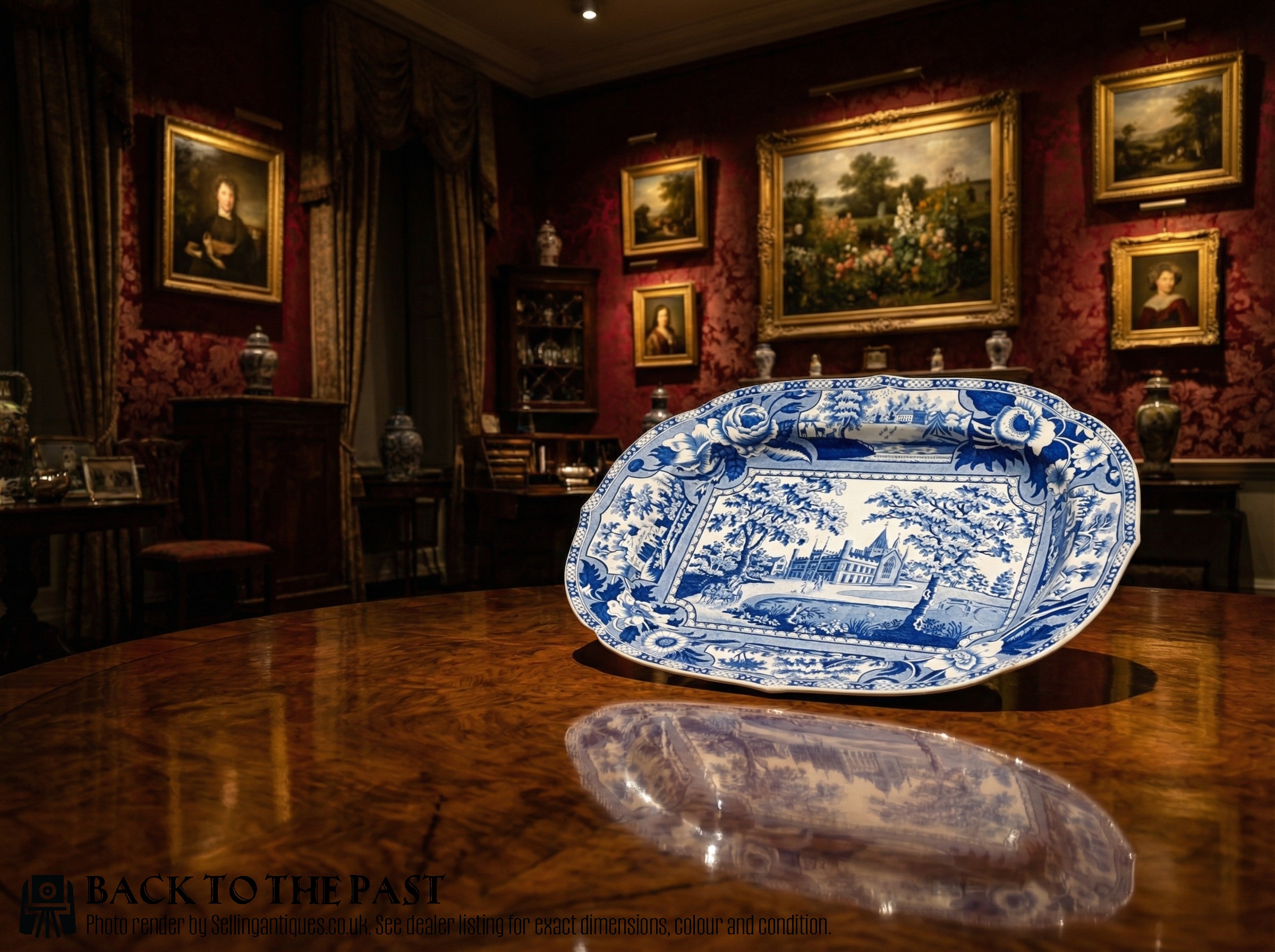
The largest grouping to pass through Sellingantiques is a set of seventeen dessert plates, dated 1845.
The Antique Transferware Plates Glossary
- Transferware
- Pottery decorated from an engraved plate, the design printed onto tissue and laid on the body before glazing. The word transfer appears in ten of the titles.
- Meat plate
- A large flat or well-and-tree dish for serving a joint. Several listings use the term where others would say platter.
- Pattern
- The named printed design, such as Willow, Italian or Penang. Named in about a fifth of titles, and the name is often what the buyer is after.
- Pearlware
- A whitened earthenware body under a glaze with a faint blue tint. Named in two of the sampled listings, both children's plates.
- Prattware
- Pottery with multicolour printed decoration, here plates carrying pot-lid illustrations. The main non-blue presence in the category.
- Hot-water plate
- A double-walled plate filled with hot water to keep food warm at table. One turns up among the sampled listings.
Antique Transferware Plates: Frequently Asked Questions
Why is nearly everything blue and white?
Cobalt blue was the colour that survived the glaze firing reliably, and blue-printed earthenware was made in England in quantity from about 1780 as a cheaper answer to hand-painted and imported china.
On Sellingantiques it shows in the numbers: blue and white each appear in thirty-five of fifty-six titles. Other palettes exist, mainly the multicolour Prattware plates, but they are a small tail.
Are these sold singly or in sets?
Both, and sets are common. Plates appears in the plural in a third of titles, with sampled groups of four, five, six, seven, eight, ten, twelve and seventeen.
The largest recorded are a set of seventeen dessert plates dated 1845 and a set of twelve dinner plates with a named family provenance.
What does Georgian mean on one of these?
It works as a style label rather than a precise date bracket, applied across roughly the first third of the 19th century. Georgian blue appears in fifteen titles and English Georgian in fourteen.
The dealers' own dating is often broad. Twenty-seven listings are recorded simply as 19th Century, though the title itself may carry a closer circa date.
Which patterns turn up?
Willow and Italian are the familiar ones. Alongside them the sampled listings include Returning Home, The Villagers, Returning Woodman, Classical Ruins, Bridge of Lucano, The Cowman, Penang, Japan, Gorhambury and Chinese Garden.
Roughly a fifth of titles name a pattern outright. A substantial minority name none, and those tend to be the plainly titled meat plates and serving plates.
Do children's plates appear in this category?
Occasionally. Three sampled listings: a nursery alphabet plate dated around 1800, a set of four child's pearlware plates from 1820, and a single Victorian nursery transfer pearlware plate.
They sit near the top of the sampled range where the listing states rarity.
How often do these come up for sale?
Twenty-four dealers have listed in the category and roughly eight pieces come to market a year on Sellingantiques.
So you meet them in ones and twos rather than in bulk, and the unusual forms appear once each: a hot-water plate, a footed bread stand, a fretted platter, a sauce tureen stand.