



Antique Spode Plates
Blue and white transfer-printed earthenware and porcelain plates, dishes and platters marked Spode or Copeland Spode, made in Staffordshire for the dinner table.
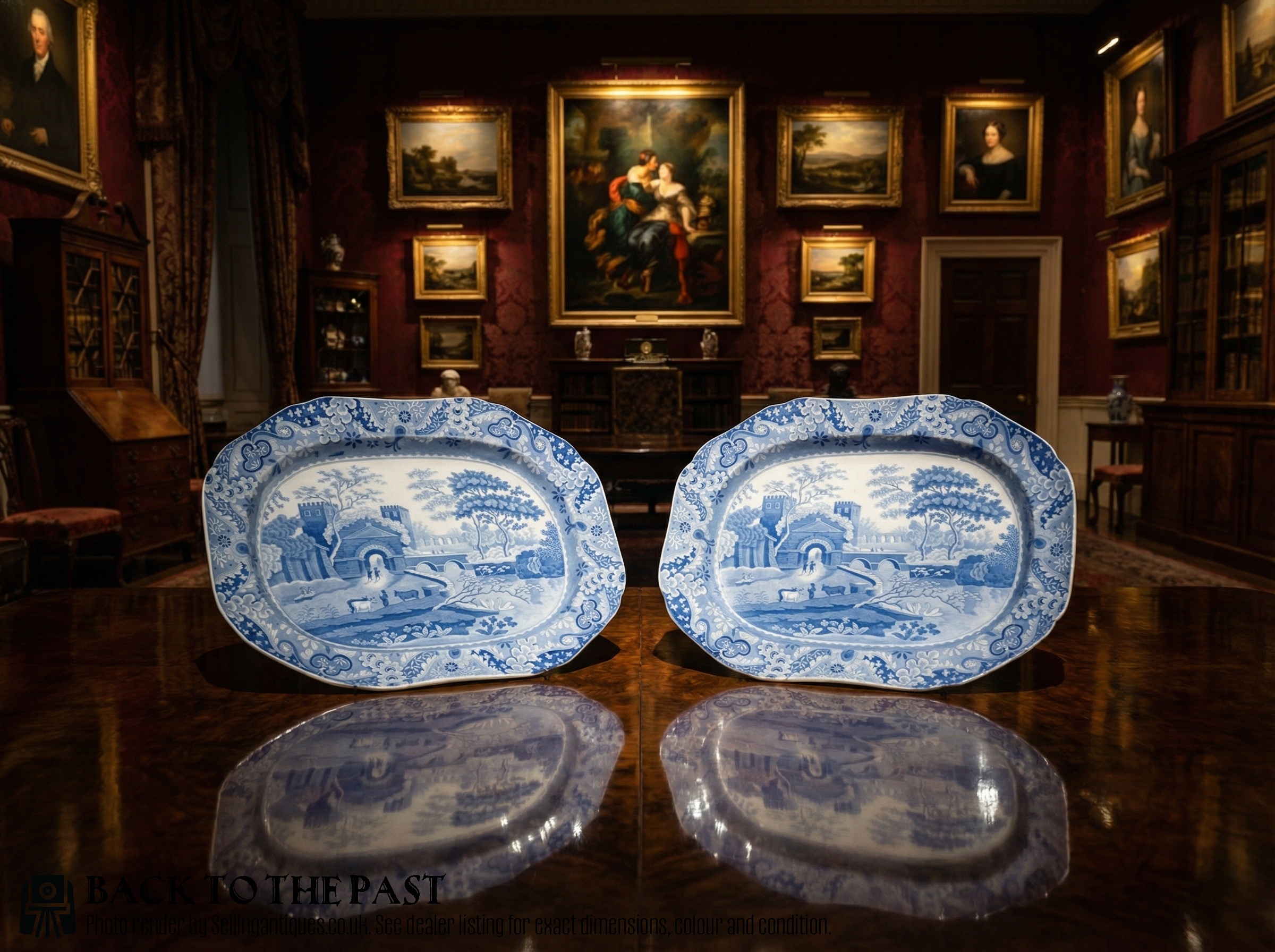
Antique Spode Plates
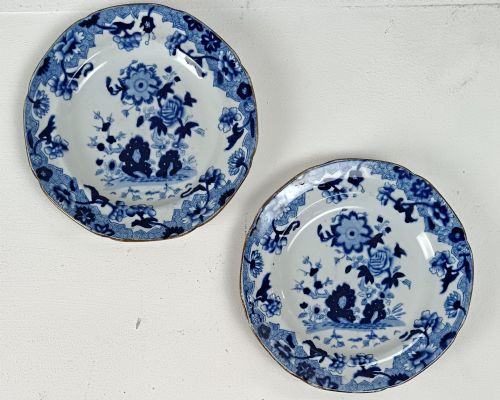
Spode was one of the Staffordshire potteries that turned transfer-printed blue and white earthenware and bone china into a mass-market product. Designs were engraved on copper, printed onto tissue and laid on the ware before glazing, so a whole dinner service could be matched. Later output from the works was issued under the Copeland and Copeland Spode names.
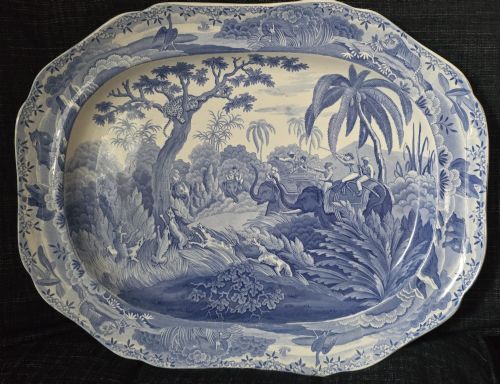
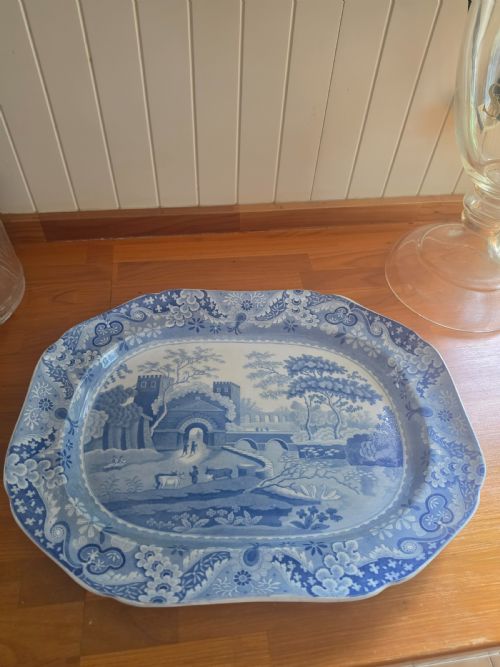
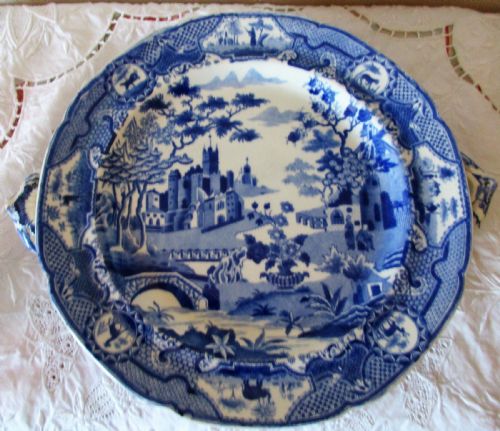
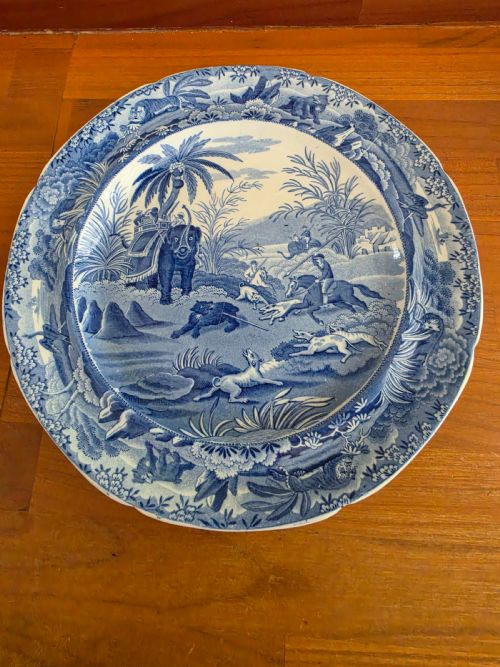
The plate you are most likely to meet is a single or paired early 19th-century transfer print in blue and white. Named printed series carry about a third of the listings on Sellingantiques: Caramanian, Death of the Bear, Zeus in His Chariot, Bridge of Lucano, Sarcophagi at Cacamo, Gothic Castle, Italian, Union, Landmark Scene, Indian Sporting Scenes. Pairs and sets recur, from two tea plates up to twelve dinner plates.
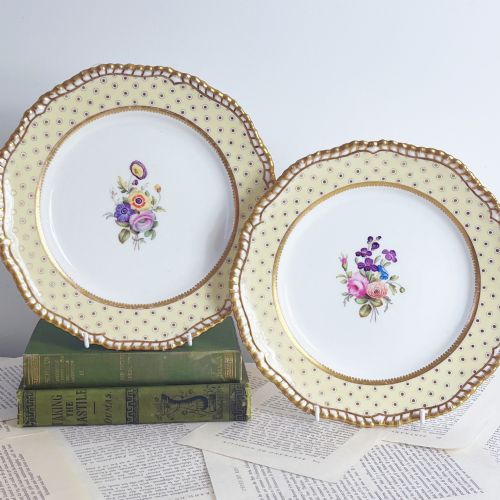
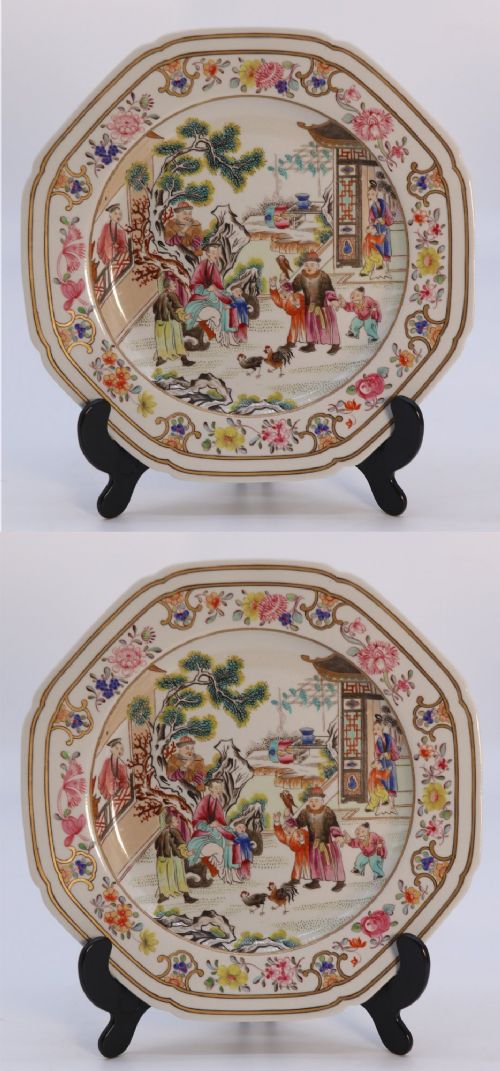
The Copeland name carries nine of the thirty-one titles, and its dated pieces sit in two pockets: bird plates around 1880 and fish-pattern platters and plate sets from the 1930s. A smaller group is hand-painted rather than printed, including Felspar dessert plates of about 1820, an 1830s porcelain cabinet plate and an armorial plate with the Grant family crest and the motto Stand Fast.
Not everything under the heading is a flat dinner plate. Large oval meat plates turn up, one of them titled massive, along with two platters, a sauce tureen stand in the Bridge of Lucano pattern and a double-walled hot-water plate in Gothic Castle. Dating is mostly broad: twelve listings are filed simply as 19th Century, and only seven carry a clean year, though titles name c.1810, 1815, c.1830, c.1880 and the 1930s.
Where The Range Splits
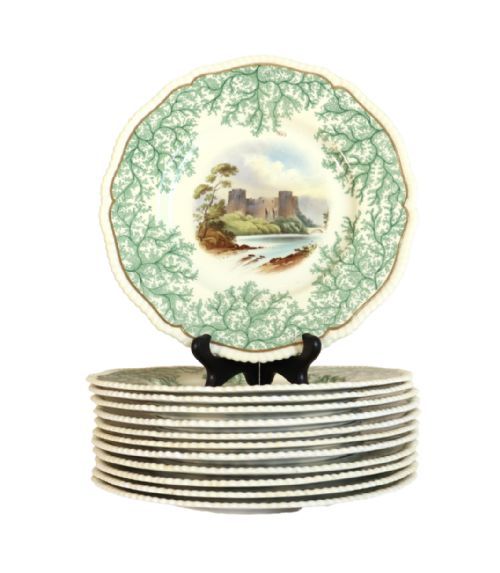
Number is the first divider. Single plates and pairs fill the lower half of the range, while the sets sit at the top: ten Italian pattern plates, twelve Landmark Scene dinner plates, twelve Union pattern dinner plates dated 1815. One set of twelve also carries recorded Ford family provenance, and provenance pushes the same way.
Decoration is the second. Printed single plates cluster at the bottom of the range; the hand-painted work sits at the other end, with an 1830s Copeland cabinet plate and a pair of octagonal Stone China cabinet plates of about 1820 the highest-priced things in the archive. Painting was slower and personal, and the market has always paid for that difference.
Then size and identity. Large and massive meat plates, platters and tureen stands are priced above tea plates and small dishes. A title that names its series does more than describe: Caramanian, Zeus in His Chariot, Indian Sporting Scenes and Union are used as identifiers throughout, and one side plate is flagged as rare within its series. Four bird plates are attributed in the title to C.B. Brough.
Antique Spode Plates Retail Price Guide 2026
Typical UK retail prices for spode plates, calculated from the Sellingantiques database of over a million retail prices indexed since 2003. This retail price guide relies exclusively on Sellingantiques data; no external sources or auction records are used, so the figures do not describe the wider market.
Dates on Sellingantiques Spode listings run from 1800 to 1930, though only seven of the thirty-one carry a clean year. Twelve are filed simply as 19th Century.
The Antique Spode Plates Glossary
- Meat plate
- A large oval serving platter, sometimes with a well and tree to catch juices. Three appear in the archive, one of them described as massive.
- Transfer print
- A design engraved on copper, printed onto tissue and laid on the ware before glazing. It gives the repeatable blue and white patterns the factory is known for.
- Cabinet plate
- Made to be looked at rather than eaten from, usually hand-painted or richly decorated. Four turn up on Sellingantiques.
- Stone China
- A dense, hard earthenware body used for durable tablewares. Named on one pair of octagonal cabinet plates; New Stone is a later refinement of the same body, named on a pair of Georgian tea plates.
- Felspar
- A porcelain body name, found on two hand-painted pink floral dessert plates dated c.1820.
- Pattern number
- A painted number identifying the decoration, as on the 1166 pattern dish.
Antique Spode Plates: Frequently Asked Questions
What patterns appear most often?
Named printed series run through the titles: Caramanian, Death of the Bear, Zeus in His Chariot, Bridge of Lucano, Sarcophagi at Cacamo, Gothic Castle, Italian, Union, Landmark Scene and Indian Sporting Scenes.
Between them they account for around a third of the listings. Dealers use the series name as the main identifier, ahead of form or date.
How old are most of these plates?
The dated field runs from 1800 to 1930. Twelve of the thirty-one listings are filed only as 19th Century, with Georgian, Regency and Victorian used as further broad labels.
Titles tend to be tighter than the dated field, naming c.1810, c.1820, 1815, c.1830, c.1860, c.1880 and the 1930s. Only seven listings carry a clean year, and two are undated.
Is Copeland the same as Spode?
Copeland is the name the Spode works traded under from the mid-19th century, and Copeland Spode marks appear on later pieces.
The Copeland name carries nine of the titles. Its dated examples sit in two pockets: bird plates around 1880, and fish-pattern platters and plate sets from the 1930s.
Are sets of plates listed, or only singles?
Both. Pairs recur throughout, including a pair of tea plates and two pairs of Zeus in His Chariot plates.
Larger groupings appear six times: six plates, six plates with a platter on two occasions, ten Italian pattern plates, and two sets of twelve dinner plates. The sets sit near the top of the range.
What forms other than plates turn up?
A sauce tureen stand in the Bridge of Lucano pattern, a double-walled hot-water plate in Gothic Castle, and two platters.
Large oval meat plates also appear three times, one titled massive.
How often do these come up for sale?
Roughly four a year come to market on Sellingantiques.
Eighteen different dealers have listed one, so almost every listing comes from a different hand, and descriptions vary in what they choose to record.