


Antique Sevres Plates
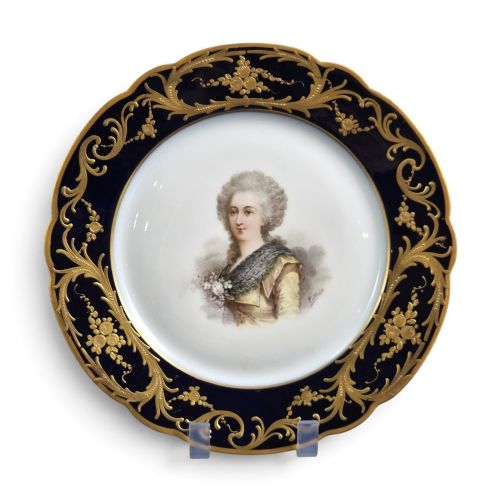
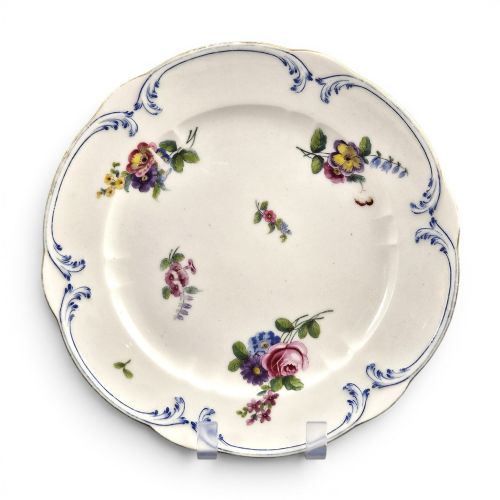
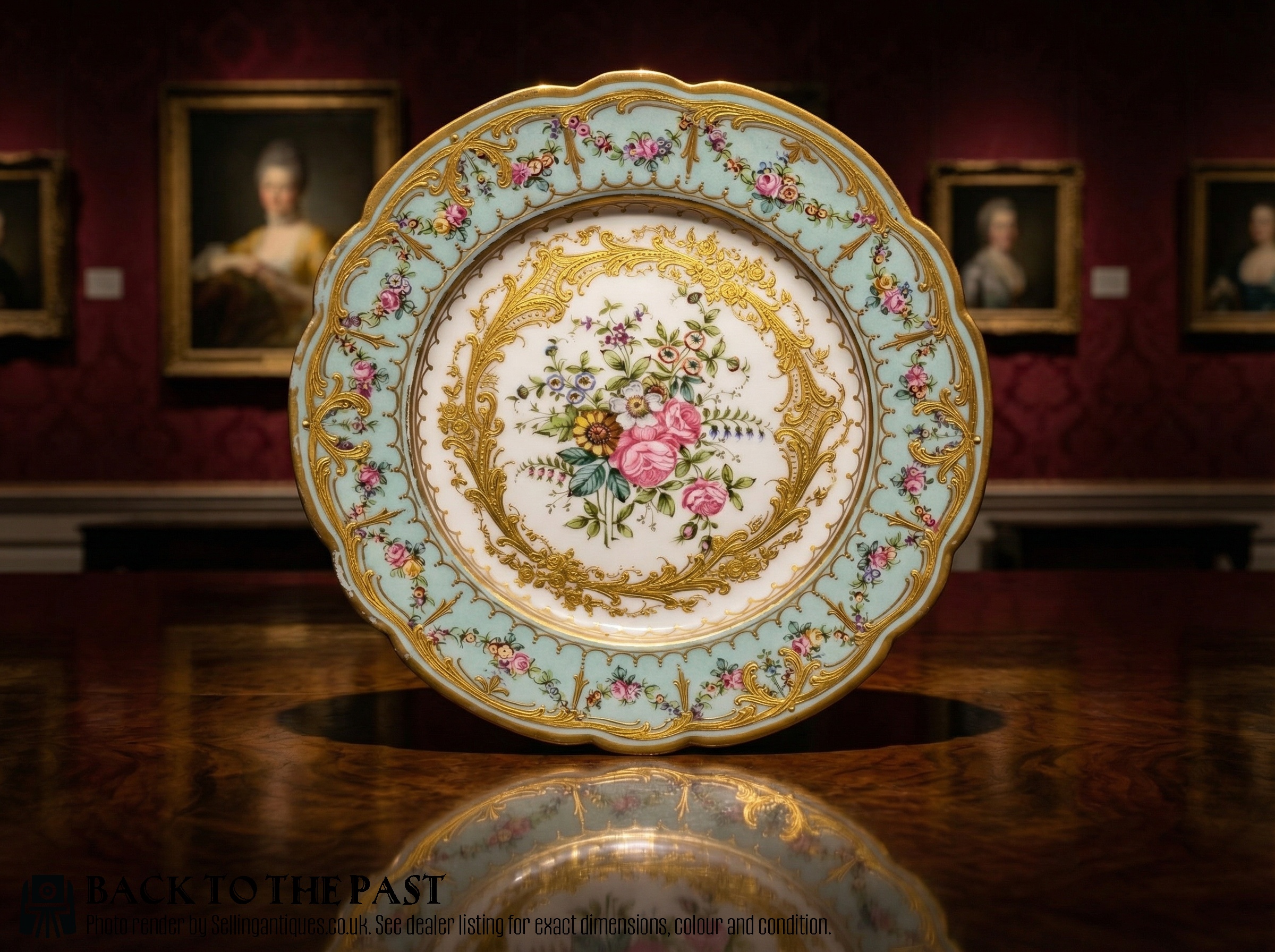
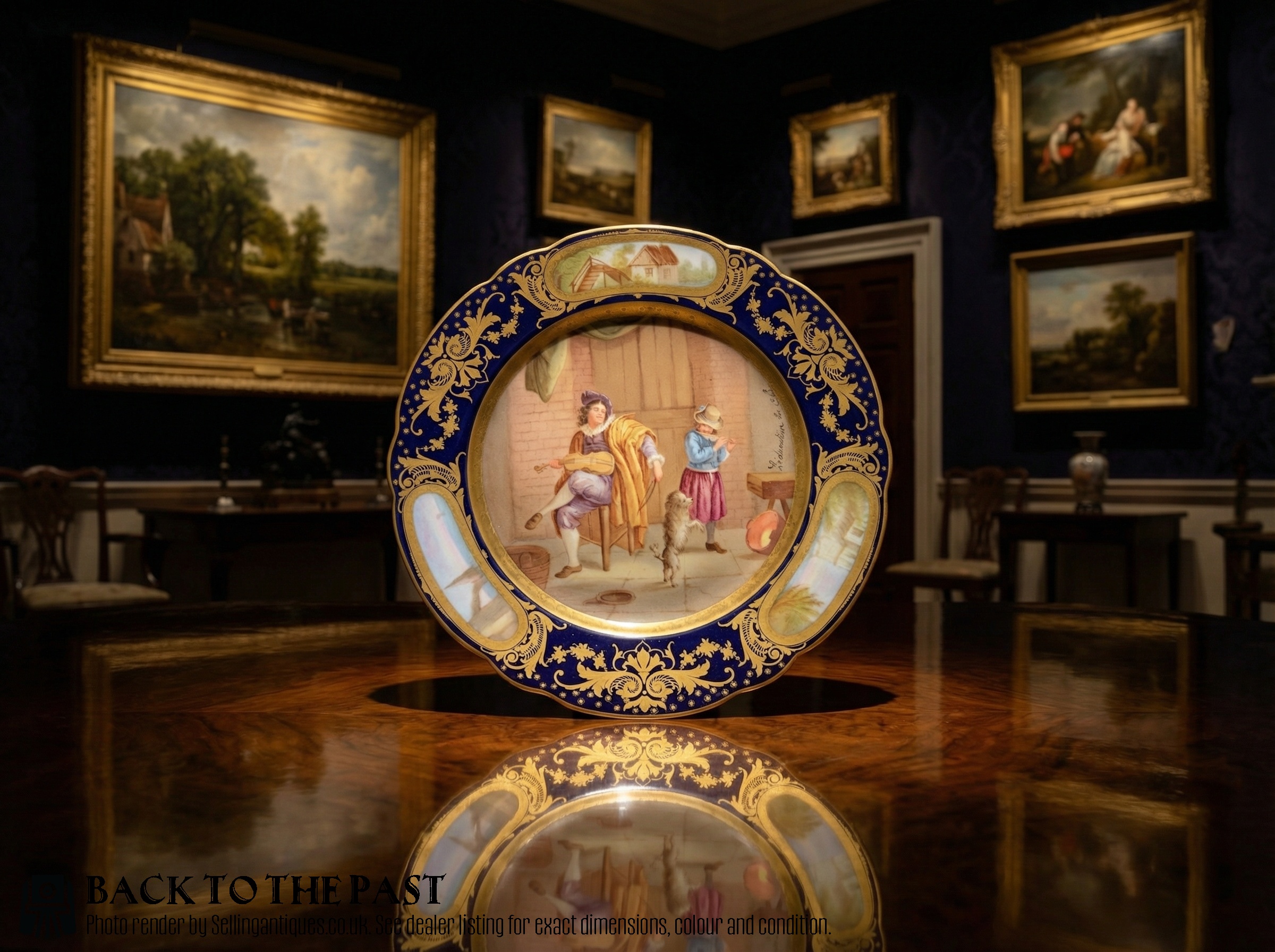
A painted and gilded porcelain plate, made at Sèvres or in the Sèvres taste, meant for display on a wall or shelf as much as for the table.

Antique Sevres Plates
The porcelain factory at Sèvres set the pattern for painted and gilded European tableware from the mid-18th century: a coloured ground, a reserved panel of painting, gold on the rim. Those designs were copied across France, England and the Continent through the 19th century, which is why "Sèvres" in a listing title describes decoration about as often as it names a factory.
The form you'll meet most often is a single 19th-century French porcelain cabinet plate, hand-painted and gilt. Porcelain appears in thirteen of twenty titles on Sellingantiques and French in eight, and "cabinet plate" recurs right through the middle of the range. Singles outnumber multiples, though pairs and sets turn up: a pair of Napoleon plates, a pair of portrait plates, a set of seven, a set of twelve.
Roughly a third of the listings name Sèvres directly, usually alongside French and porcelain, with battle and portrait subjects. Another third use "Sevres style" or "in the Sevres manner" instead of a factory claim. A smaller group is English porcelain in the same taste, with Minton, First Period Worcester and Kerr & Binns dessert plates all described that way.
The heading also carries related shapes: a 20-inch charger, a painted plaque, a dish and a tea bowl and saucer. Dating is mostly dealer shorthand, eleven listings filed simply as 19th Century and four as 18th, while titles are often more exact, giving c.1770, 1777, circa 1751-1755 and circa 1890.
Where The Range Sits
Attribution moves the range first. Titles that claim Sèvres itself, and name what's painted on the plate, sit above those that say style or manner. The style and manner wording clusters through the low and middle of the range; the bottom is a small pink cabinet plate with no factory claim at all.
Quantity moves it just as much. Pairs and sets occupy the upper part of the range, and the top of it is a set of twelve. One plate on its own has to work harder, which is where a named subject earns its keep: Napoleon, Louis XV, Louis XVI, a medieval battle scene, a military encampment, a titled scene called "Prise de Valence".
Age and scale do the rest. The four 18th-century listings, among them a 1777 soft-paste dinner plate and a set of seven given as circa 1751-1755, sit at the top, and so does the one large display piece, a charger at 20 inches across.
Antique Sevres Plates Retail Price Guide 2026
Typical UK retail prices for sevres plates, calculated from the Sellingantiques database of over a million retail prices indexed since 2003. This retail price guide relies exclusively on Sellingantiques data; no external sources or auction records are used, so the figures do not describe the wider market.
The earliest piece to pass through is a set of seven given as circa 1751-1755. Titles often carry a closer date than the period field does.
The Antique Sevres Plates Glossary
- Cabinet plate
- A plate made or kept for display rather than dining. It's the commonest form word in these titles.
- Sevres style, in the Sevres manner
- Wording used when the decoration follows Sèvres but the maker is other or unknown. Roughly a third of the listings are phrased this way.
- Dessert plate
- Service plate size, and the term used for the English pieces described as Sèvres style.
- Bleu celeste
- The pale turquoise ground colour, named in two listings, one Minton and one Sèvres.
- Soft-paste porcelain
- The early non-feldspathic body, named here on the 1777 dinner plate.
- Imp de Sevres
- An imperial Sèvres mark form quoted in one title, the only mark wording in the group.
Antique Sevres Plates: Frequently Asked Questions
Does Sevres style mean it was made at Sevres?
No. "Sevres style" and "in the Sevres manner" are the wording dealers use when the decoration follows Sèvres but the maker is other or unknown. About a third of the listings are phrased that way.
Roughly another third name Sèvres directly, usually with French and porcelain in the title, and often with a named painted subject.
Are English plates listed under this heading?
Yes, and they turn up regularly. Minton, First Period Worcester and Kerr & Binns dessert plates have all been described as Sevres style.
Sèvres designs were imitated across France, England and the Continent through the 19th century, so the taste travelled well beyond the factory.
What period do these plates come from?
The 19th century dominates. Eleven listings are filed simply as "19th Century" and four as "18th Century", with only four carrying a clean year.
Titles are often more precise than the dated field, giving c.1770, 1777, circa 1751-1755 and circa 1890. Nothing in the group is dated past circa 1890.
Why are some sold as pairs or sets?
Because they started as services or as matched display pairs. A pair of Napoleon cabinet plates, a pair of portrait plates, a set of seven and a set of twelve have all been listed.
Multiples sit in the upper part of the range, so quantity shifts the figures as much as attribution does.
What subjects appear painted on the centres?
Named subjects are a running theme: Napoleon, Louis XV, Louis XVI, a medieval battle scene, a military encampment and a titled scene, "Prise de Valence".
Portrait and battle painting shows up mainly among the plates attributed to Sèvres itself. Titles carrying an identified subject sit higher in the range.
Is anything other than plates sold in this category?
It isn't confined to plates. A 20-inch charger, a painted plaque, a dish and a tea bowl and saucer have all been listed under the heading.
They're described in the same terms, painted centres, coloured grounds and gilding, which is why they sit together.