
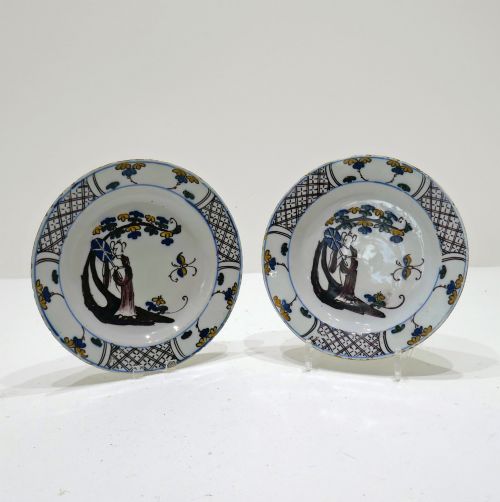


Antique Delft Plates
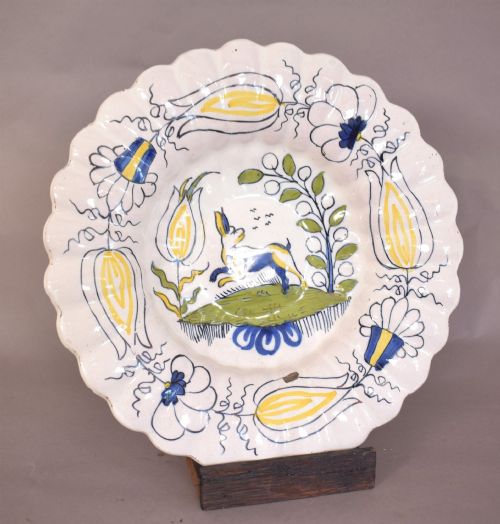
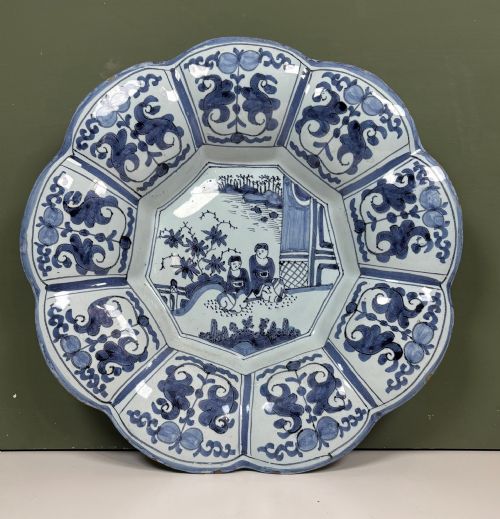
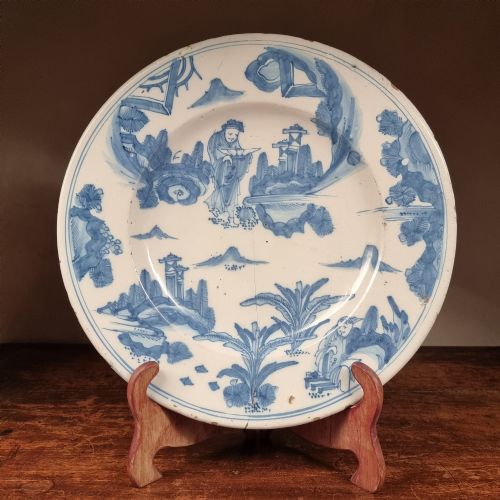
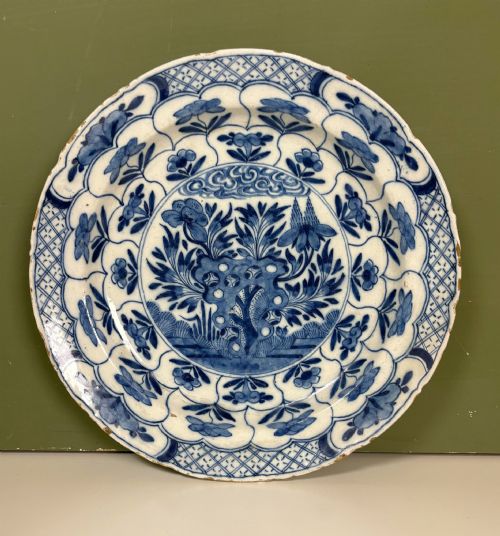
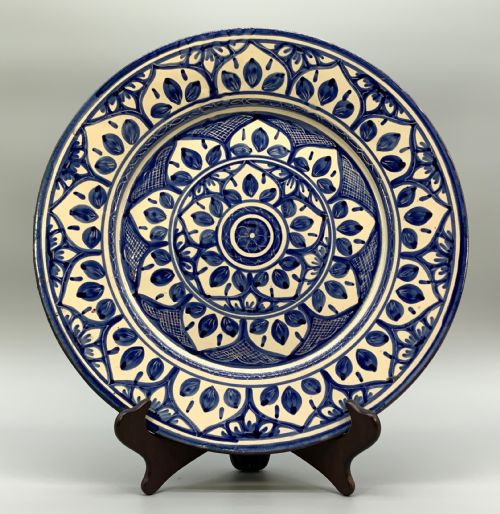
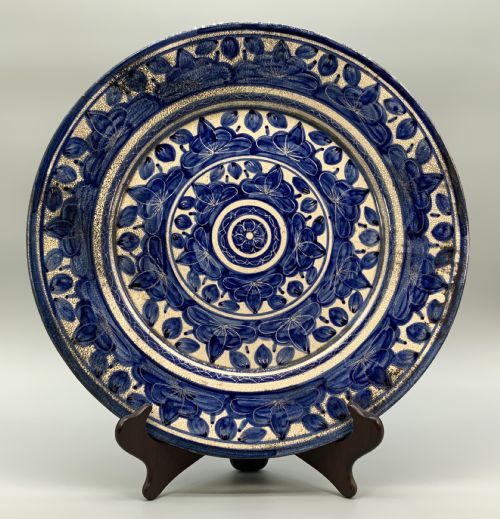
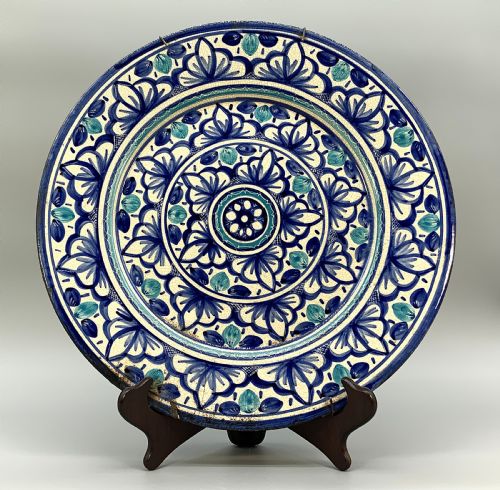
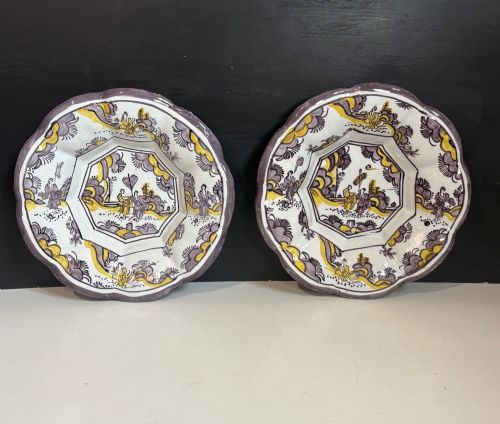
Tin-glazed earthenware plates, dishes and chargers painted in cobalt blue or in colours, made in the Netherlands and at the English delftware potteries as painted tableware and display ware in imitation of Chinese porcelain.

Antique Delft Plates
Delftware is tin-glazed earthenware: a buff body under an opaque white glaze, painted with metal-oxide colours. The name covers both Dutch pieces and those from the English potteries in London, Bristol and Liverpool, and listings use it for both. Sizes here run from small plates of around nine inches up to chargers of fourteen inches, or 37cm.
The century dominates. Of 188 listings, 124 carry "18th" in the title, and 110 sit under the vague label "18th Century" with a further 44 given as "1750s". Only three are 17th century and eight fall after 1800. Dating is usually a bracket rather than a year, and the title and the date can disagree, so a piece called 18th century may carry a 19th-century date beside it.
Palette splits the category. Polychrome appears in 39 titles, blue and white in a similar band, and the rest leave the colour unsaid. Chargers, the large flat dishes made for display, are named in 50 titles and make up a rising share of what is currently listed. Manganese purple-brown turns up on its own or alongside other colours.
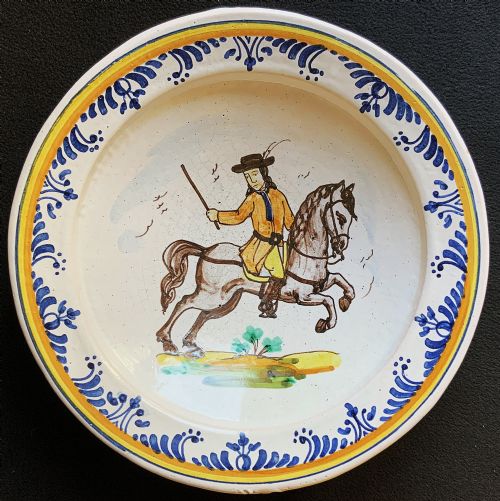
Origin is named less often than you might expect. Around a sixth of titles say English, with Bristol the town most often given and Lambeth, Liverpool and London appearing once or twice each. Dutch is named in 23. Spain appears once, as a faience charger described as Catalana, and three Moorish-style continental faience chargers from the 1940s are the newest things in the archive.

What Sets Them Apart
Number in the lot moves the range more than anything. Singles cluster at the bottom, and they are offered singly about as often as in groups. Pairs sit higher, sets of four and six higher again, and one lot of fourteen plates is the largest assembly recorded on Sellingantiques and near the top of the range.
Size and attribution pull in the same direction. Chargers and anything titled large sit above plain plates, with the biggest stated at 37cm. A named English town does the same work: Bristol, Lambeth, Liverpool and London pieces sit mostly above the middle, where an unattributed plate has only its painting to argue with.
Age and subject account for the rest. Late 17th and early 18th-century plates sit near the top, as do the Kraak-bordered pieces copying late Ming export porcelain. So does a named subject, whether a marriage plate, a peacock, a long-tailed bird or a portrait charger of Prince William of Orange and his wife.
Antique Delft Plates Retail Price Guide 2026
Typical UK retail prices for delft plates, calculated from the Sellingantiques database of over a million retail prices indexed since 2003. This retail price guide relies exclusively on Sellingantiques data; no external sources or auction records are used, so the figures do not describe the wider market.
Delft plates have been listed on Sellingantiques since 2009.

The Antique Delft Plates Glossary
- Charger
- A large flat dish made for display rather than eating. Named in 50 titles, and one of the two commonest words in the category after plate.
- Polychrome
- Painted in several colours rather than cobalt alone. It appears in 39 titles, sometimes paired with charger.
- Tin glaze
- The opaque white glaze that gives delftware its ground, over a buff earthenware body. Some titles say "tin glazed" in place of Delft.
- Manganese
- A purple-brown oxide colour, used on its own or as part of a polychrome scheme.
- Kraak
- A panelled border style copying late Ming export porcelain, named on a couple of plates and sitting high in the range.
- Bianco supra bianco
- A white-on-white painted border, named once in the whole archive, as is grand feu, the high-fired palette.
Antique Delft Plates: Frequently Asked Questions
Is Delft always Dutch?
No. The word covers tin-glazed earthenware from the Netherlands and from the English potteries, and listings use it for both without distinction.
Around a sixth of titles name England, concentrated in four towns: Bristol, Lambeth, Liverpool and London. Dutch is named in 23 titles. The rest say nothing about origin at all.
What period do most of these come from?
The 18th century, heavily. Of 188 listings, 124 carry "18th" in the title, and 44 are narrowed to the 1750s.
Earlier pieces are scarce: three are 17th century, with the earliest named as circa 1690 and a small Bristol plate put at 1680-90. Eight fall after 1800.
How accurate are the dates given?
They are usually a bracket rather than a year. Only 58 of the 188 listings carry a clean year, and "18th Century" and "1750" read as defaults.
Title and date field sometimes disagree. One plate titled 18th century is dated 19th, and another titled 18th century carries "Circa 1820".
What is a Delft charger?
A large flat dish, made for display rather than for eating from. The word appears in 50 titles, about a quarter of the category.
The biggest stated sizes are a Bristol charger at 37cm and a Dutch one described as 14 inches. Chargers make up a growing share of current stock.
Are they sold as singles or in sets?
Both. Singles are offered about as often as groups, and they sit at the bottom of the range.
Groups run from pairs through sets of three, four and six, with one lot of fourteen plates. Larger groups sit higher, and that lot of fourteen is near the top.
Do Delft plates carry maker's marks?
Nothing in this archive supports marks as a general practice. One title mentions a piece marked PK, and no other listing names a mark.
Where a source is given, it is a town rather than a pottery: Bristol nine times, with Lambeth, Liverpool and London once or twice each.