

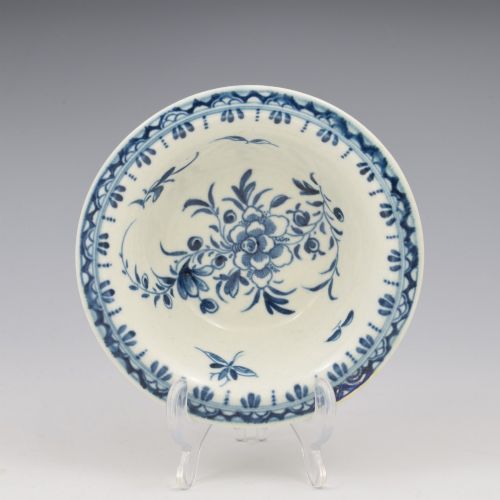
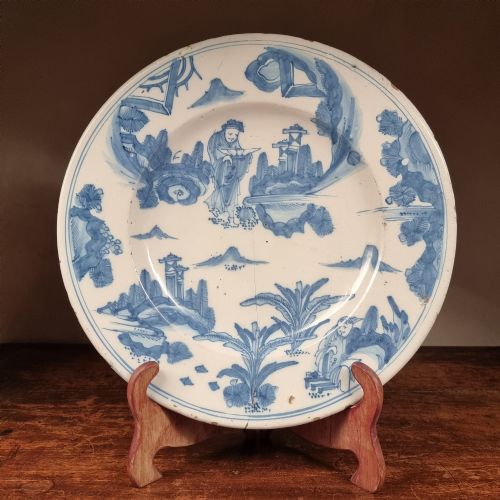
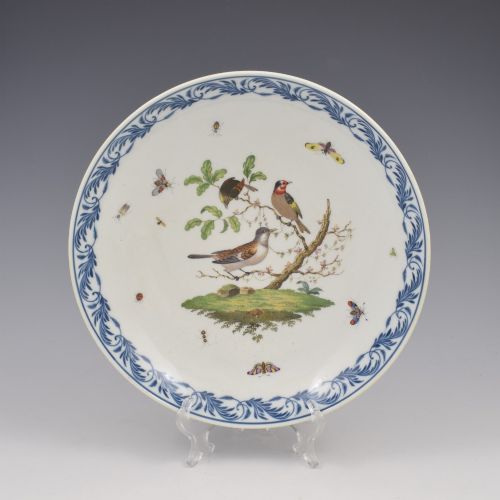
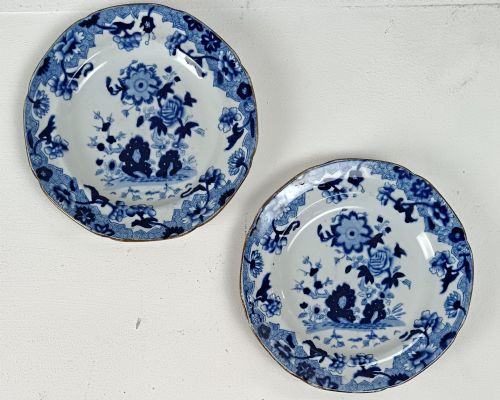
Antique Blue and White Plates
Flat ceramic tableware painted or printed in blue on a white ground, running from tea and toy plates through dinner and soup plates to meat platters and wall chargers.
Antique Blue and White Plates
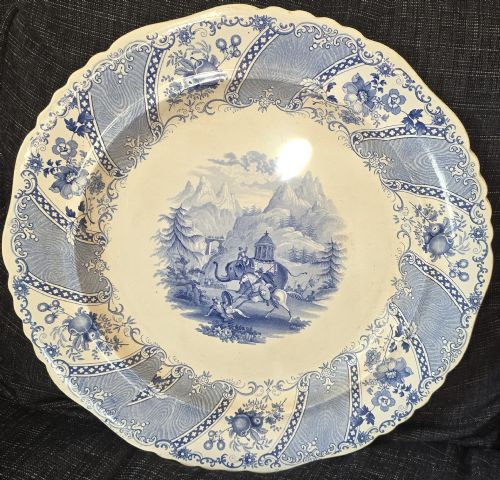
Two forms share the ground. English transfer-printed earthenware and pearlware make up the largest single block, with "english", "pattern", "pottery" and "transfer" running through the titles and named printed designs quoted throughout. Beside it sits tin-glazed delft, the commonest single word in the category and the largest block currently for sale.
Blue-on-white came into Europe on Chinese export porcelain. It was copied first in tin-glazed earthenware from the 17th century, then from the late 18th century in transfer-printed earthenware, where an engraved copper plate put a blue pattern on a dinner plate at a price ordinary households could meet. Both traditions are on Sellingantiques side by side.
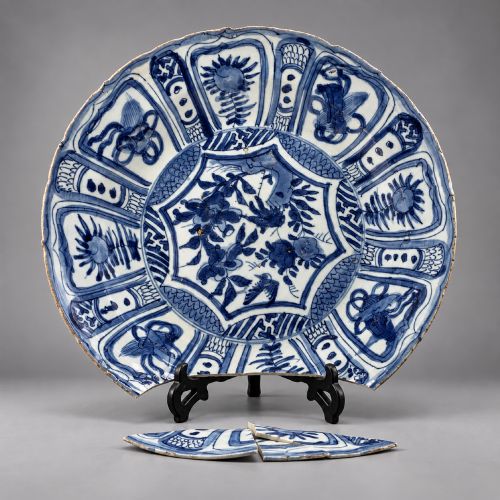
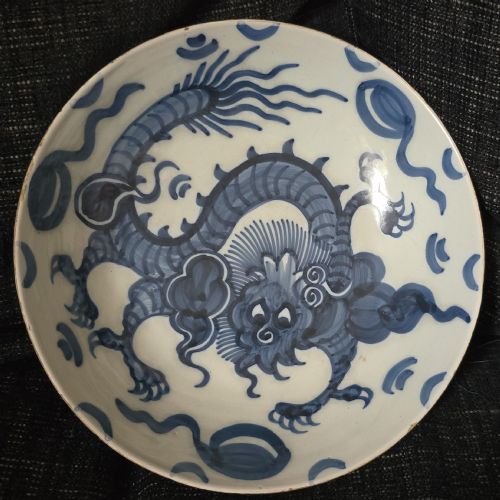
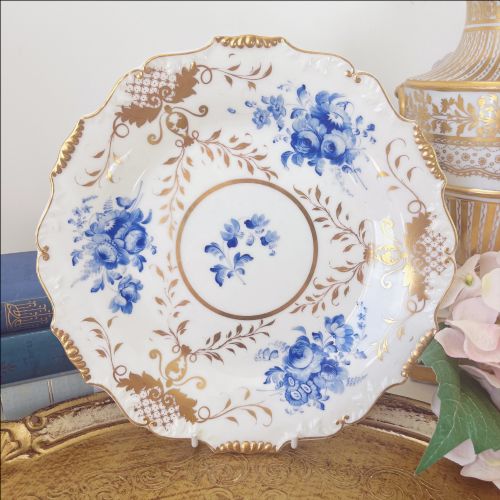
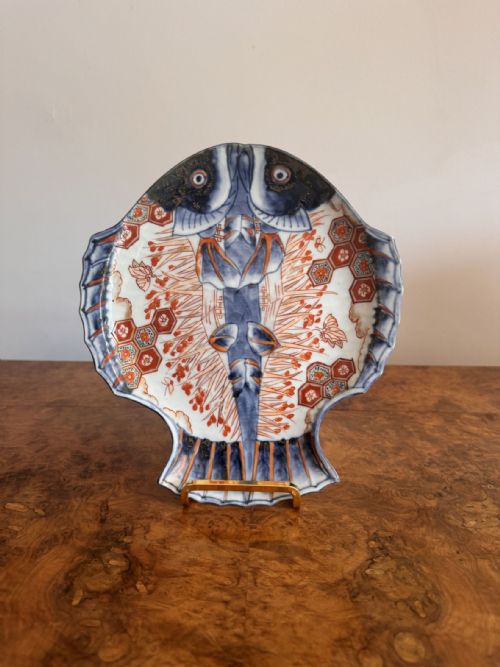
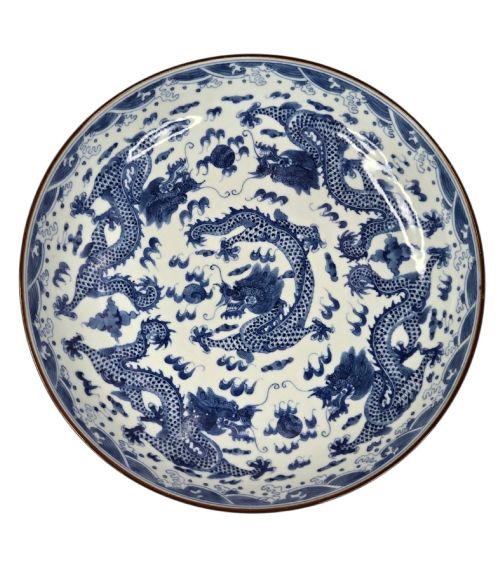
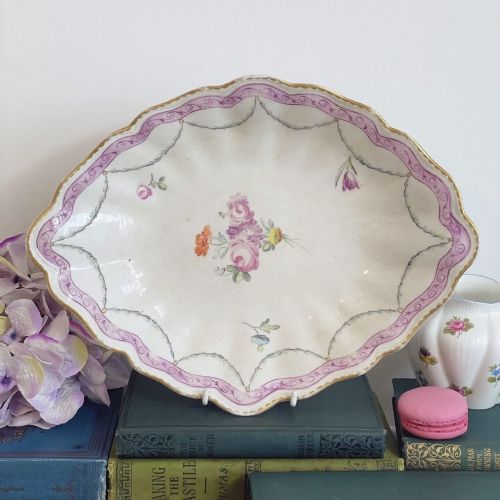
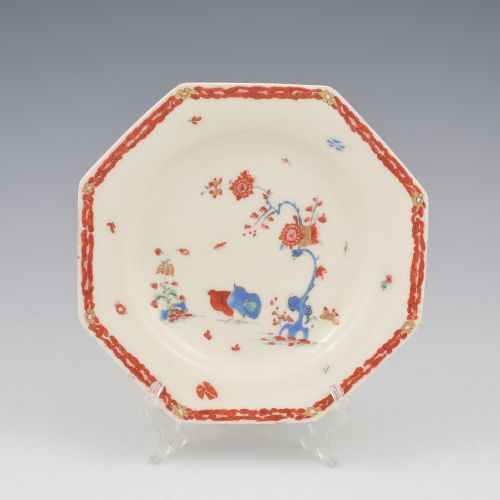
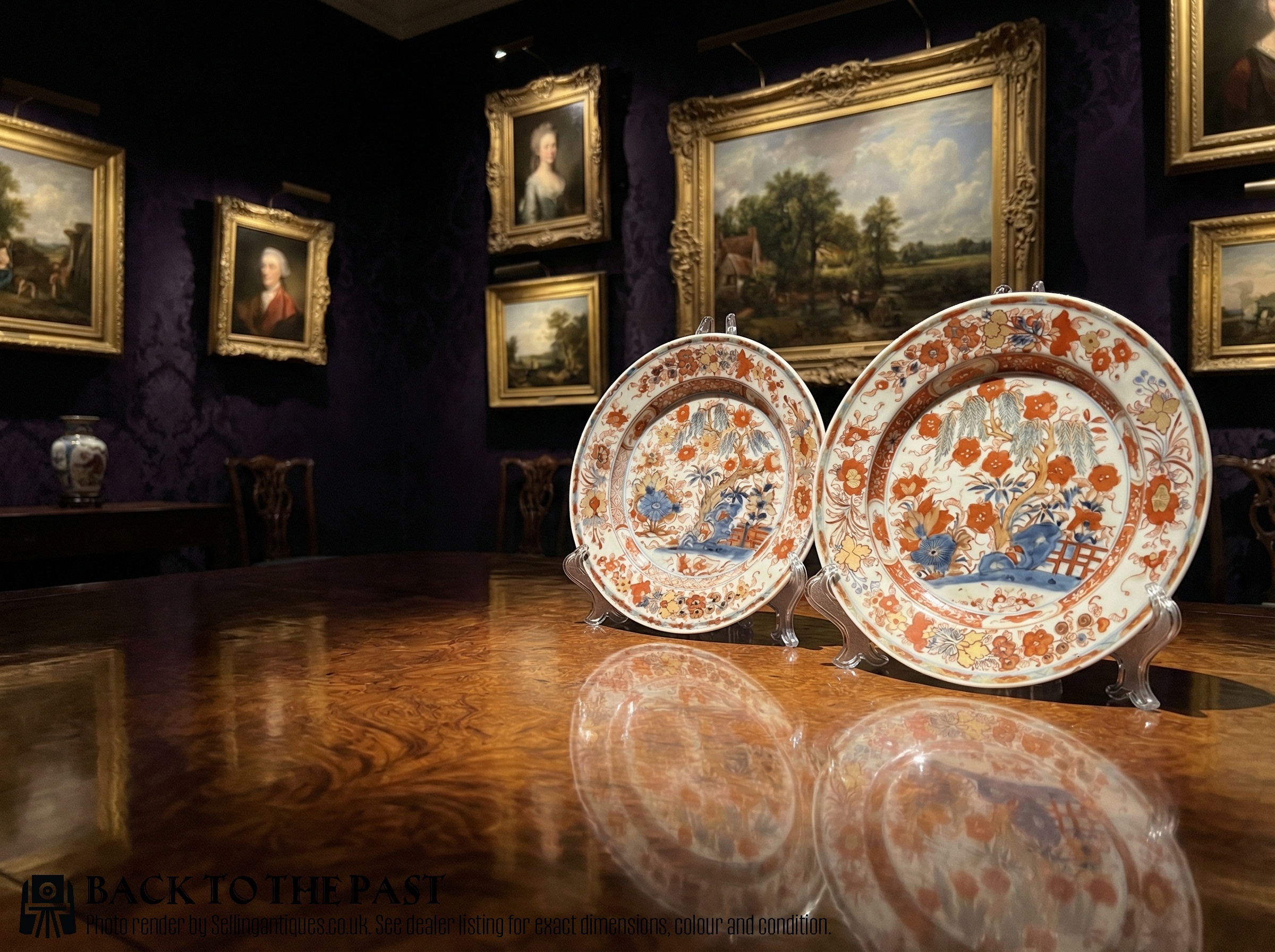
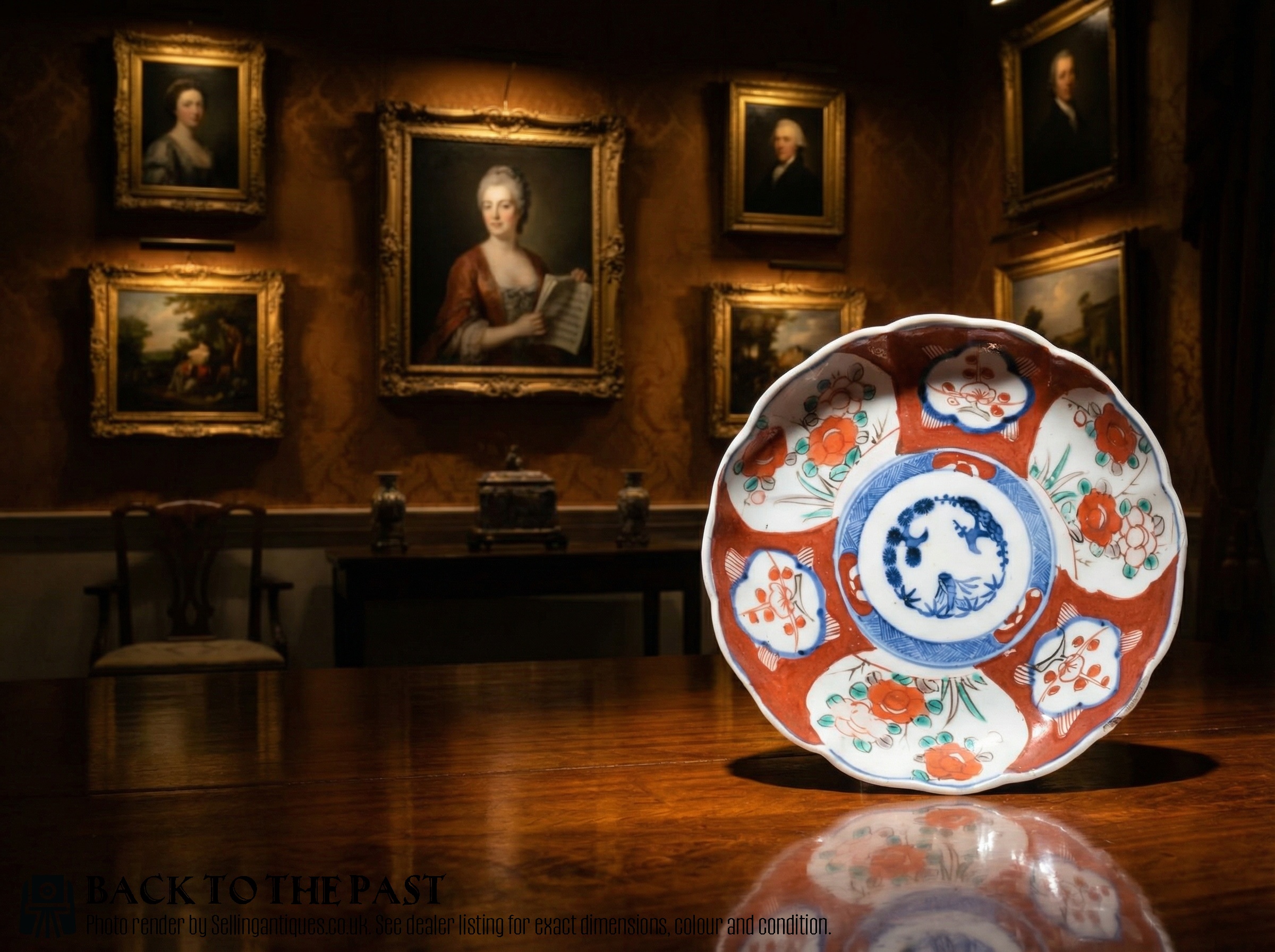
Chinese porcelain accounts for around a tenth, with Kangxi, Qianlong, Wanli, Ming Swatow, kraak and export meat plates in the samples. Japanese Imari is smaller again and almost all current stock, dated between 1890 and 1920. A minority of listings under this heading aren't strictly blue and white: Imari, polychrome delft and painted dessert plates appear too.
Dates are broad. Century-level labels do almost all the work, with 19th Century and 18th Century far outnumbering decade buckets or style words, and the dealer date field spanning 1750 to 1940. Treat "18th Century" as shorthand rather than a firm attribution: one listing headed 18th century delft gives its date as circa 1820.
Where The Range Splits
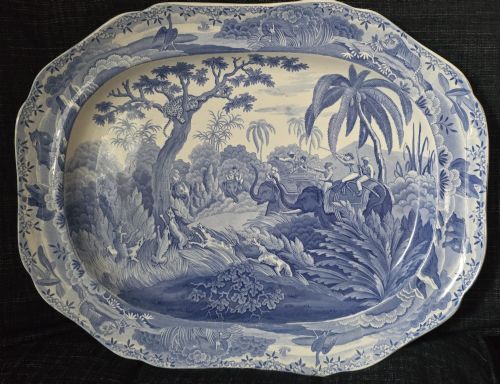
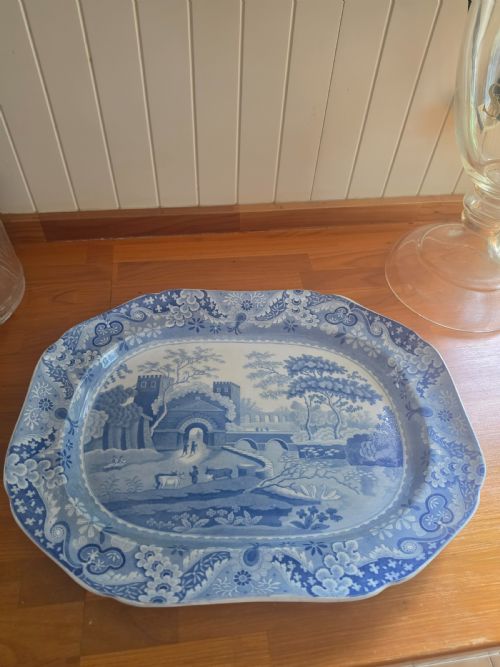
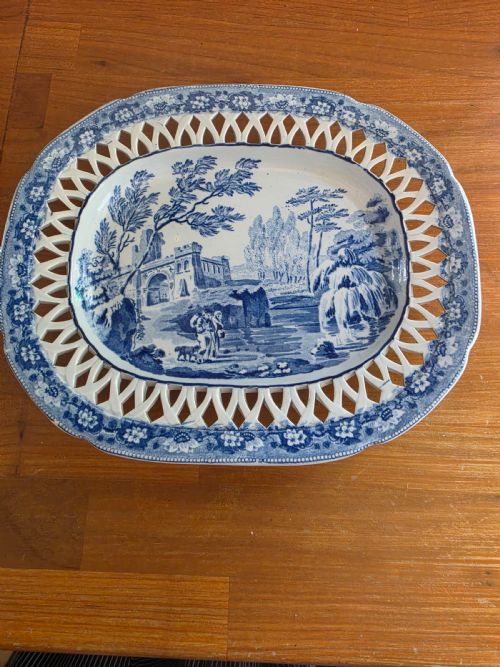
A named pattern is the clearest divide in the printed pottery. Titles quoting a design and its series, such as an Oriental Scenery cartouche or a Rustic Scenes subject, sit well above those reading only "Blue and White Meat Plate". The naming is literal, so a plate often tells you the view it carries.
Number and size push in the same direction. Pairs turn up in a good many titles, and sets of four, six, seven and ten recur; graduated sets of meat plates and sets of six named-pattern plates sit high. Large chargers and meat platters carry their measurements in the title where small tea and toy plates do not, and miniatures form their own pocket at the bottom.
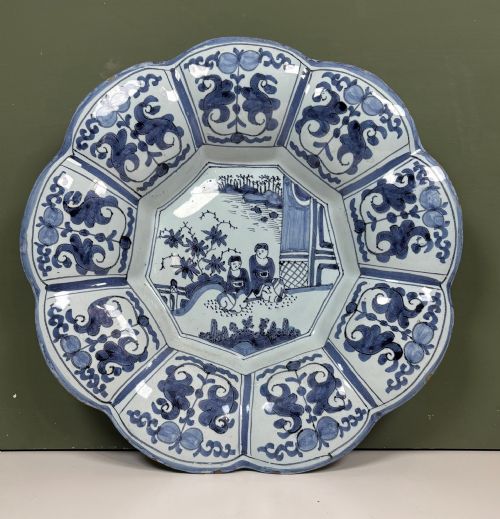
Among the tin-glazed pieces, age does the sorting. Kraak plates and delft dated to the 17th or early 18th century stand at the upper end, with later delft in the middle. Unusual form lifts anything: octagonal and scalloped plates, shell and fish shapes, a hot-water plate, a bread stand, a sauce tureen stand.
Antique Blue and White Plates Retail Price Guide 2026
Typical UK retail prices for blue and white plates, calculated from the Sellingantiques database of over a million retail prices indexed since 2003. This retail price guide relies exclusively on Sellingantiques data; no external sources or auction records are used, so the figures do not describe the wider market.
The latest dated pieces on Sellingantiques are three Continental faience chargers in Moorish style, given as 1940.

The Antique Blue and White Plates Glossary
- Transfer print
- A design printed from an engraved copper plate onto tissue, then laid onto the ware before glazing. Twenty-eight titles use the word.
- Delft
- Tin-glazed earthenware with an opaque white surface painted in blue, made in Bristol, Lambeth, Liverpool, Ireland and the Netherlands. The commonest single word in these titles.
- Pearlware
- A whitened earthenware body under a faintly blue-tinted glaze, named in eight titles and often carrying printed chinoiserie.
- Meat plate
- A large oval serving dish, sometimes with a gravy well cut into the base. Meat platters and chargers together account for roughly a fifth of the category.
- Charger
- An oversized flat dish meant for display rather than dining. Twenty titles use it, covering delft, Continental faience and Chinese porcelain.
- Kraak
- Thinly potted Chinese export porcelain with panelled borders, a style copied on delft as well as sold in the original.
Antique Blue and White Plates: Frequently Asked Questions
What is transferware?
Earthenware decorated by printing a design from an engraved copper plate onto tissue, which is then laid onto the plate before glazing. It replaced hand-painting and made a patterned dinner plate affordable from the late 18th century.
On Sellingantiques it's the largest single block in this category, and the pattern name is usually quoted in the title.
Why do so many plates name a place?
Printed patterns in this category are unusually literal. Titles quote destinations and scenes: Boston State House, Fair Mount near Philadelphia, Glasgow Cathedral, Linlithgow Palace, Nuneham Courtenay Park, the Mausoleum of Sultan Purveiz.
The plate names the view it carries, which is why series titles and pattern names carry weight in a listing.
How old are these plates?
The dealer date field spans 1750 to 1940, but only fifty of 214 listings carry a clean year. The rest sit in century buckets, with 19th Century and 18th Century doing almost all the work.
The oldest pieces aren't English. A Chinese Wanli kraak deep plate and a Ming Swatow charger are the earliest in the samples. The latest are three Continental faience chargers in Moorish style given as 1940.
Are Imari plates blue and white?
Not strictly. Imari is a palette of underglaze blue with iron red and gilding, and it appears under this heading alongside polychrome delft and painted dessert plates.
Japanese Imari runs to under a tenth of the category and is almost entirely current stock, dated between 1890 and 1920. Scalloped, octagonal, shell-shaped and fish-shaped examples all turn up.
Do these come as sets or singles?
Singles dominate, but pairs appear in a good many titles, and sets of four, six, seven and ten recur through the samples.
Graduated sets of meat plates and sets of six named-pattern plates sit high in the range.
Which dealers list in this category?
Sixty-one different dealers have listed blue and white plates, with roughly twenty-seven pieces coming to market a year.
It's a category spread thinly across a great many stockrooms rather than held by a few specialists, which is why the mix of delft, printed pottery and Asian porcelain stays broad.