



Antique Dessert Plates
The plate from the last course of a formal meal, painted and gilded for display rather than gravy, and collected ever since as much for the painting as the porcelain.
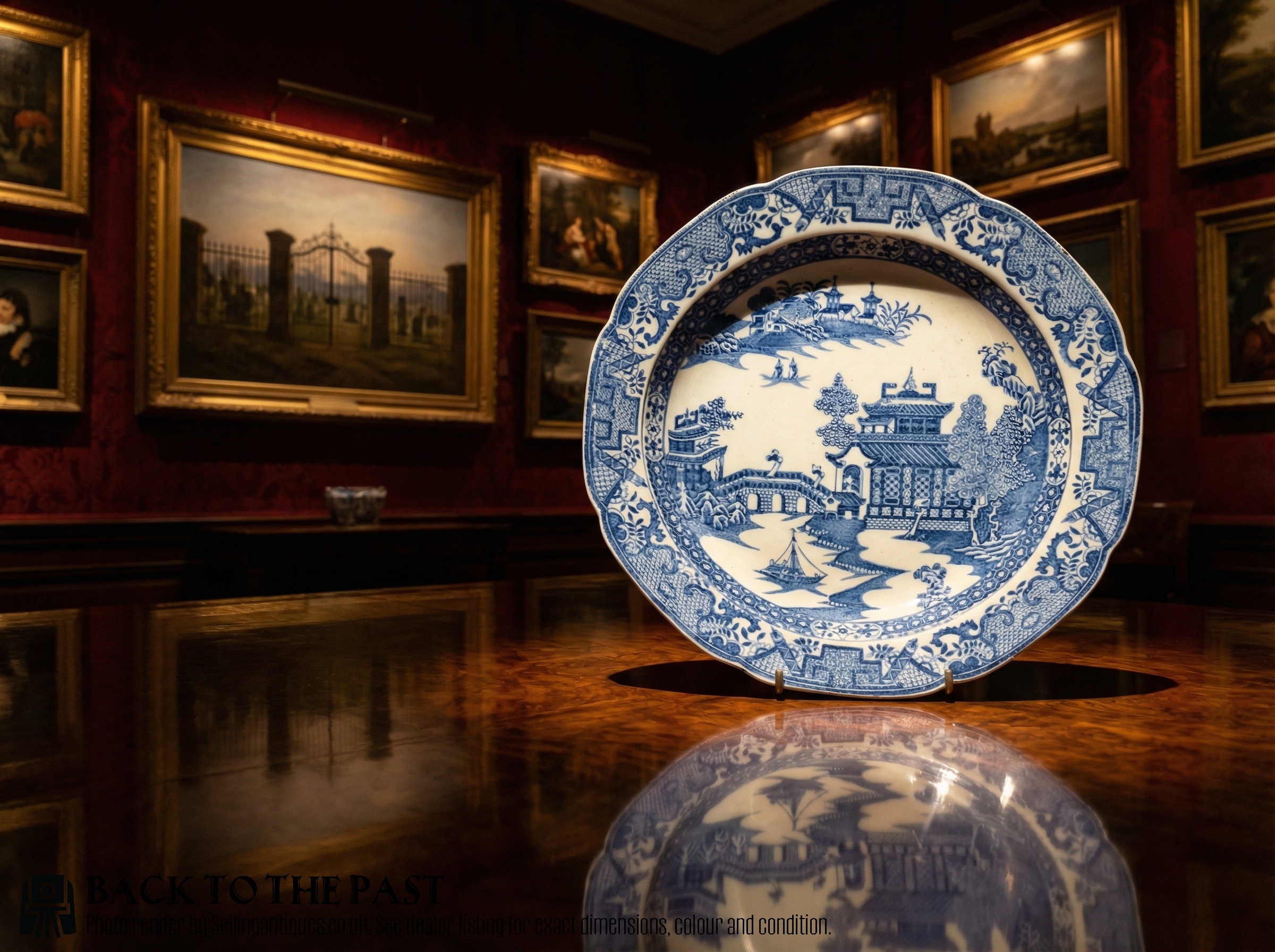
Antique Dessert Plates
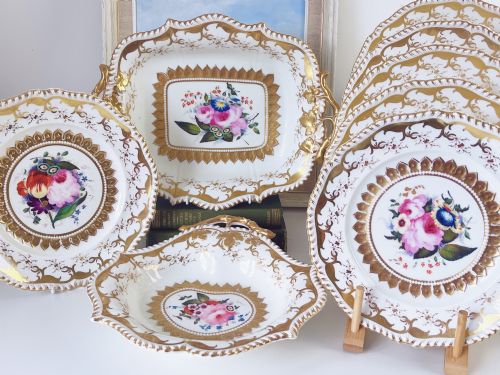
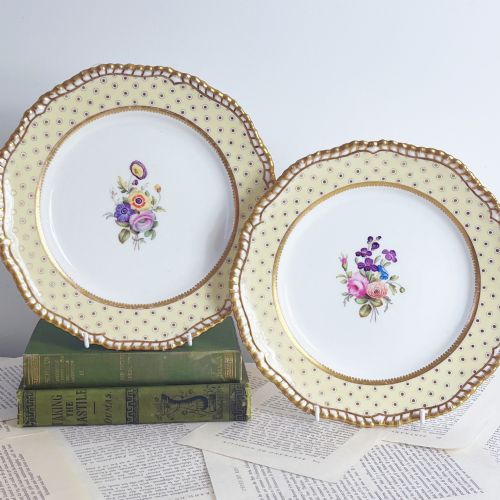
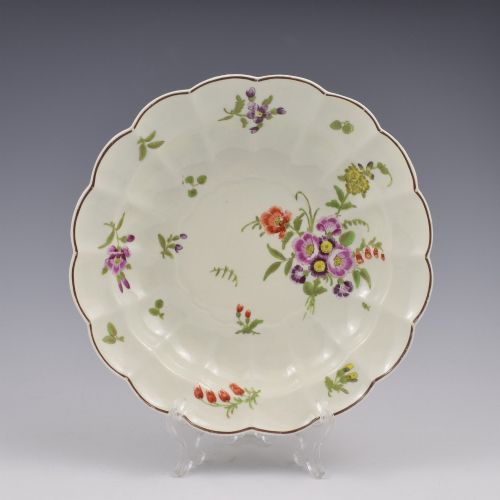
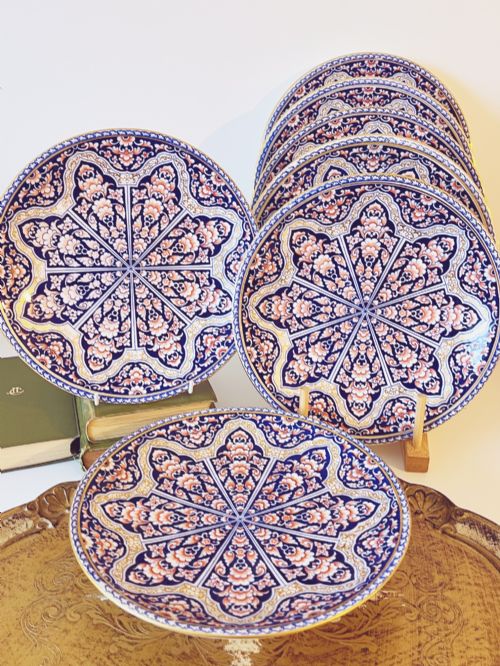
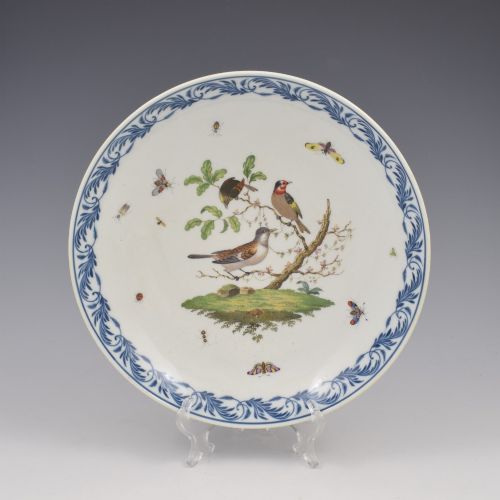
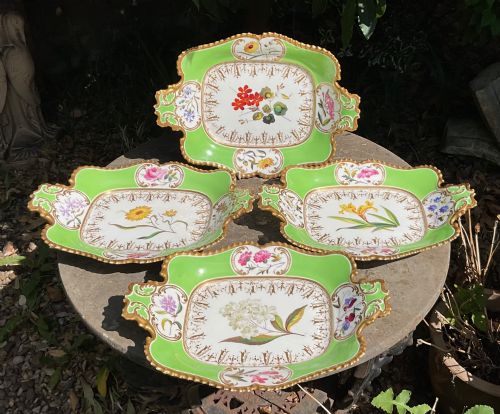
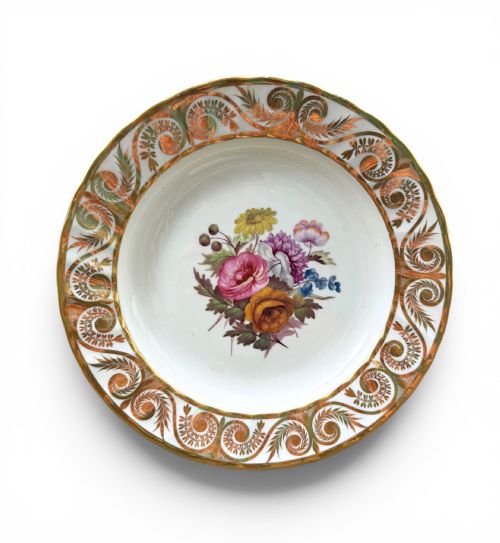
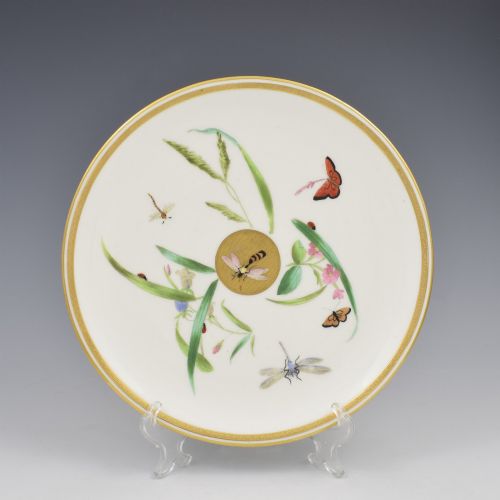
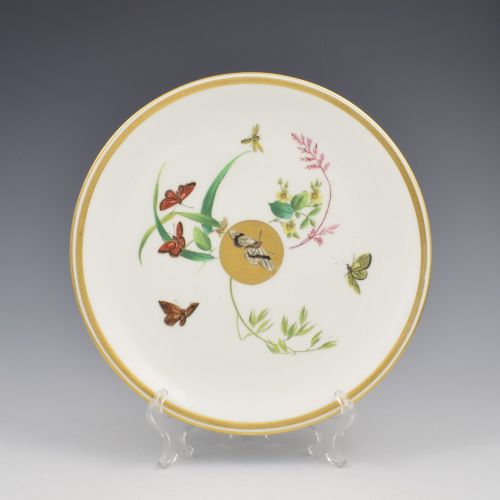
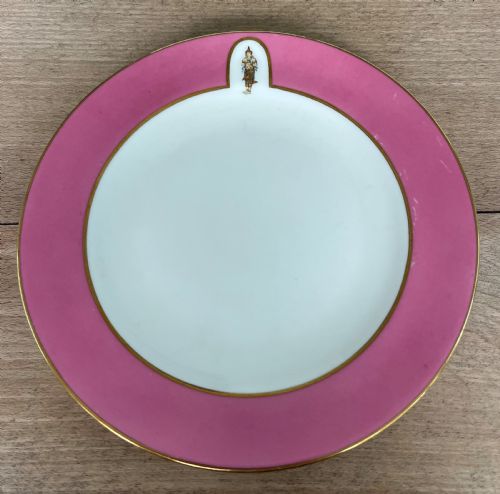
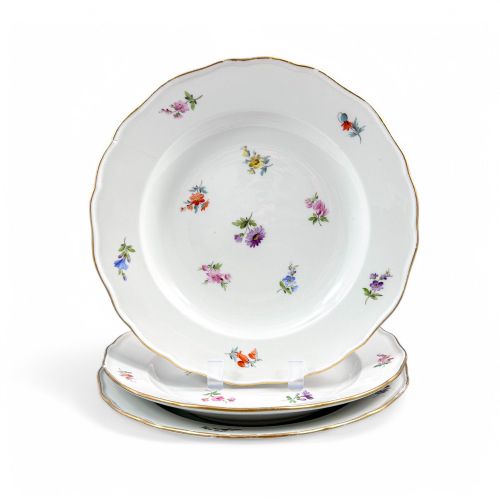
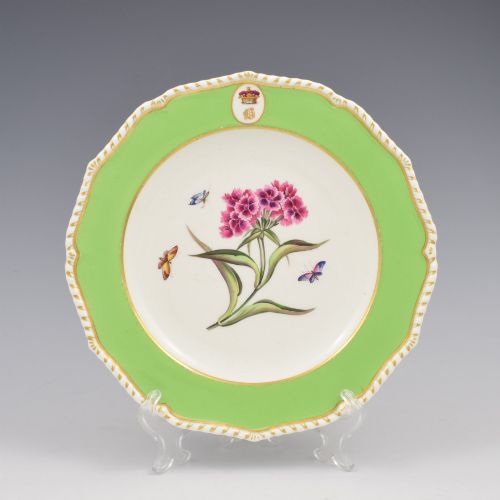
Plates and small dishes of roughly seven to nine inches, made as part of a dessert service and decorated far beyond anything on the dinner table. A coloured ground, gilding, and a painted reserve holding fruit, flowers, a bird or a landscape. Because the dessert course carried fruit and sweetmeats, the wares were treated as display from the mid-18th century onward.
On Sellingantiques they arrive overwhelmingly as singles or pairs, offered as dessert or cabinet plates, with part services and larger sets of six to twenty-seven appearing less often. Porcelain is in 65 of 159 titles; a minority are earthenware, ironstone or majolica instead.
The single most likely thing you'll meet is a hand-painted English porcelain plate from Worcester in one of its successive firms, named in 55 titles. The two ends of that are 18th and early 19th century First Period, Flight Barr & Barr, Chamberlain and Grainger work, and 20th-century Royal Worcester fruit painting. Regency Staffordshire and Shropshire porcelain accounts for about as much again: Derby, Coalport, Minton, Ridgway, Daniel, Alcock, Spode.
Dating runs from Chelsea red anchor plates of the 1750s through to Royal Worcester fruit plates of the 1950s and 60s, a full two centuries. Forty-two listings carry a clean year, the rest a century or a reign. Titles often give a tighter circa date than the field beside them, so read the title for the date.

Where The Range Sits
A named painter does more than anything else. Signed Royal Worcester fruit plates carrying Sebright, Ayrton, Horace Price, Lockyer or Freeman sit in the upper half of what's sold, and so do earlier pieces given to James Giles, Thomas Steele, Moses Webster or George Robertson. Hand painting generally, whether signed or not, runs above moulded, glazed or transfer-decorated plates, which sit at the bottom.
Count matters next. Sets of eight, twelve, seventeen, eighteen and twenty-seven, and part dessert services with their comports or dishes, take up most of the top of the range. Singles dominate the lower half, which is simply how the category comes to market.
Then date and elaboration. First Period Worcester, Chelsea red anchor, Bow and Chelsea-Derby of around 1755 to 1775 cluster in the upper reaches; later 19th-century single plates sit lower. Titles citing blue scale, mazarine, cailloute, pearl jewelling, armorials or reticulated rims run well above plainly described plates.
Antique Dessert Plates Retail Price Guide 2026
Typical UK retail prices for dessert plates, calculated from the Sellingantiques database of over a million retail prices indexed since 2003. This retail price guide relies exclusively on Sellingantiques data; no external sources or auction records are used, so the figures do not describe the wider market.
Dessert comes from the French desservir, to clear the table. The plates came out once everything else had gone.
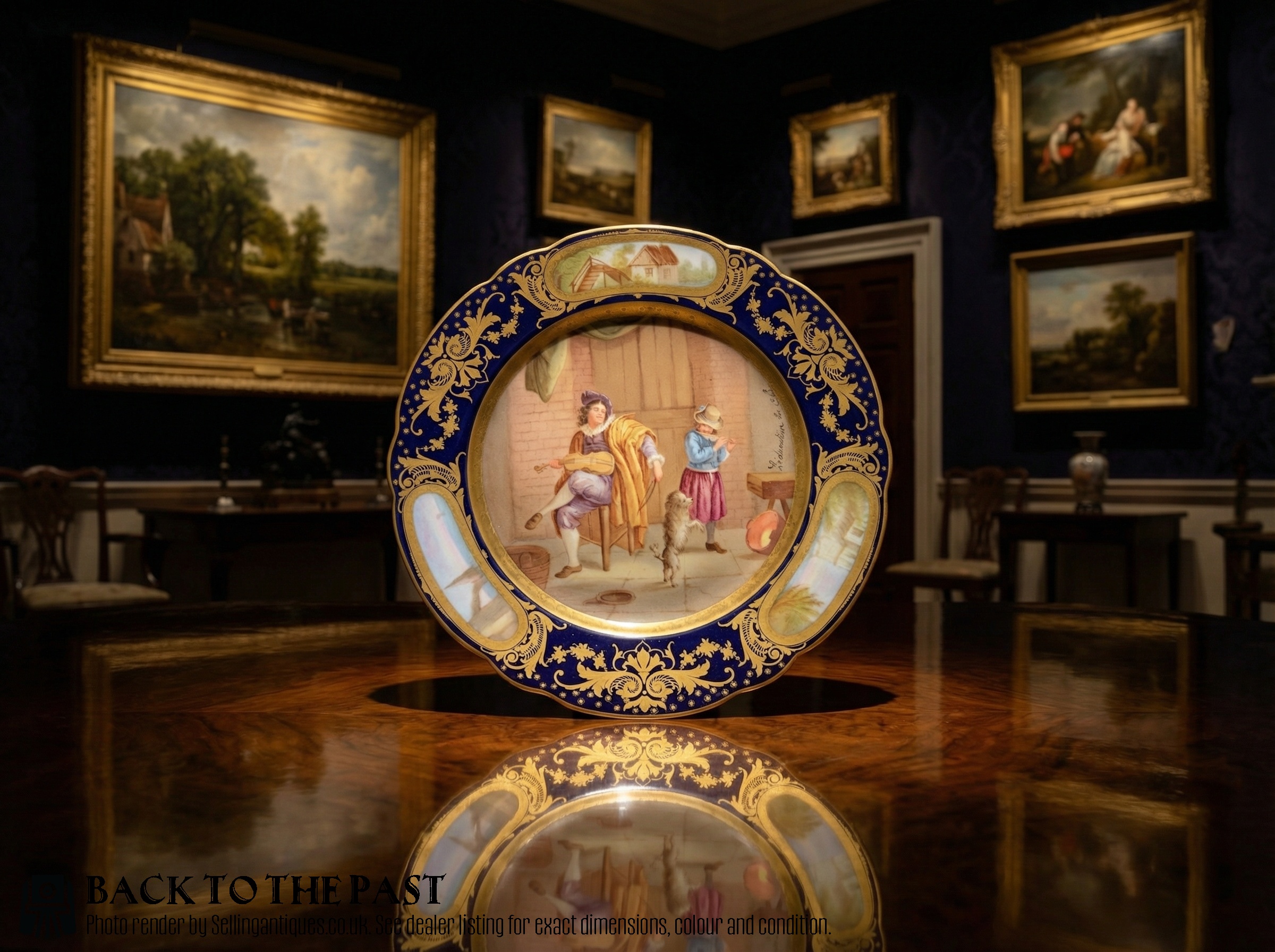
The Antique Dessert Plates Glossary
- Cabinet plate
- A plate bought for display rather than use. Fifteen titles pair the word with dessert, which tells you how these have long been treated.
- Ground
- The solid coloured field around the painted reserve. Cobalt, mazarine blue, apple green, burgundy, orange, pink and celeste bleu all turn up in titles.
- Reserve or panel
- The shape left clear in the ground, into which the fruit, bird or landscape is painted. The better the painting in the reserve, the higher the plate sits.
- First Period, or Dr Wall
- The earliest Worcester factory phase, roughly 1751 to 1776. The word 'first' appears in fourteen titles.
- Blue scale
- A Worcester ground of overlapping blue scale-pattern brushwork framing the painted panels. One of the grounds that lifts a plate above plainly described examples.
- Reticulated
- A rim cut through in a lattice. It shows up on Daniel, Ridgway and Limbach plates in these listings, and rims can also be gadrooned, that is moulded in lobes or ribs.
Antique Dessert Plates: Frequently Asked Questions
Are dessert plates usually sold singly?
Yes. Singles and pairs dominate what comes to market on Sellingantiques, and they fill the lower half of the range.
Part services and sets of six upward do appear, and larger groups occupy most of the top. The biggest single lot in the samples is a collection of twenty-seven French Limoges plates of about 1840; sets of eighteen, seventeen and twelve also occur.
Which factory turns up most often?
Worcester, across all its successive firms. It's named in 55 of 159 titles, about a third of the category, covering First Period and Dr Wall, Barr Flight & Barr, Flight Barr & Barr, Chamberlain, Grainger, Kerr & Binns and Royal Worcester.
Regency porcelain from Derby, Coalport, Minton and their neighbours makes up roughly as much again. The field is almost entirely English.
Why do painters' names appear so often?
Because dessert plates were painted, not printed, and the painting was the point. Names get recorded on the plate more often in this category than in most ceramics.
On 20th-century Royal Worcester fruit plates the signatures include Sebright, Ayrton, Horace Price, Lockyer and Freeman. On earlier pieces the hands named are James Giles, Thomas Steele, Moses Webster and George Robertson, and these sit in the upper half of the range.
How old are the earliest examples?
The oldest in the samples are Chelsea red anchor floral plates dated around 1753 to 1758, with Bow of about 1758 to 1762 close behind, then a run of First Period Worcester of roughly 1765 to 1780.
At the other end, Royal Worcester fruit painting carries dates into the 1950s and 60s.
Is anything here not porcelain?
A modest minority. Earthenware, ironstone and majolica all appear, including Masons Ironstone, Leeds Pottery and drabware.
Majolica is a small pocket only: green-glazed, sunflower and basketweave sets of four to eight, all mid to late 19th century. Scottish Wemyss ware turns up three times, painted with cherries, damsons and blackcurrants.
What does a pattern number tell you?
It identifies the decoration at the factory rather than the shape or the date. Numbers such as 1698, 1727, 1732, 2/1063 and 3/1612 appear in these listings, with 'pattern' named in eight titles.
Shape names run alongside them. Shrewsbury, shell, Newcastle, 'Royal' shape and star edge all occur, describing the moulded form of the plate.