




Antique Imari Plates
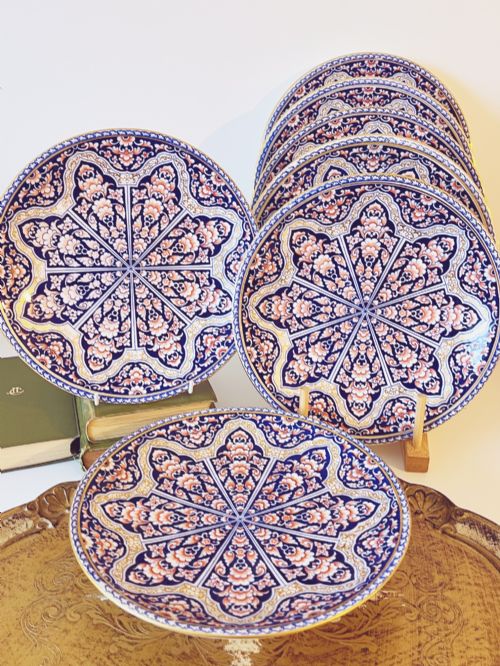
Plates, dishes and chargers painted in the Imari palette of underglaze blue, iron-red and gold, made for the table and for display.
Antique Imari Plates
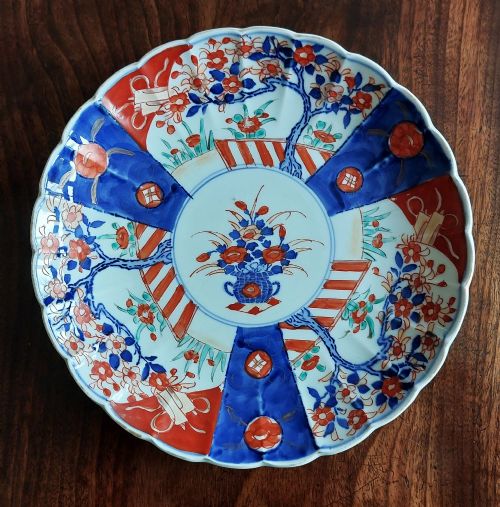
Imari takes its name from the Japanese port through which Arita porcelain was shipped from the 17th century onward. The name now describes a palette as much as a place: cobalt blue under the glaze, iron-red and gilding over it. Export success carried the look to Chinese kilns, and from the early 19th century to English potteries decorating for the Western table.
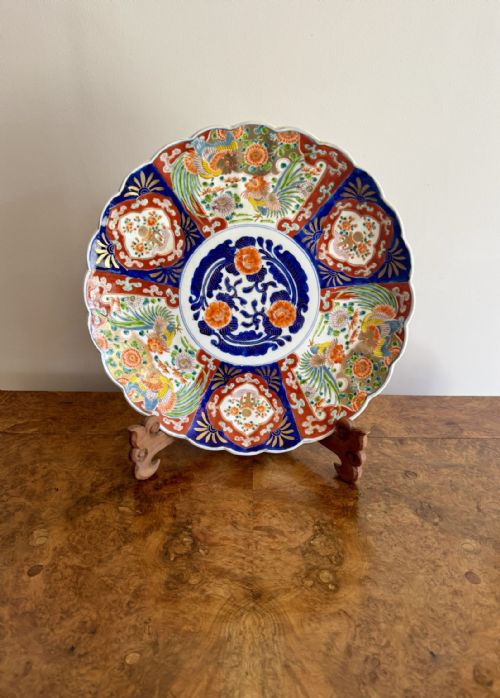
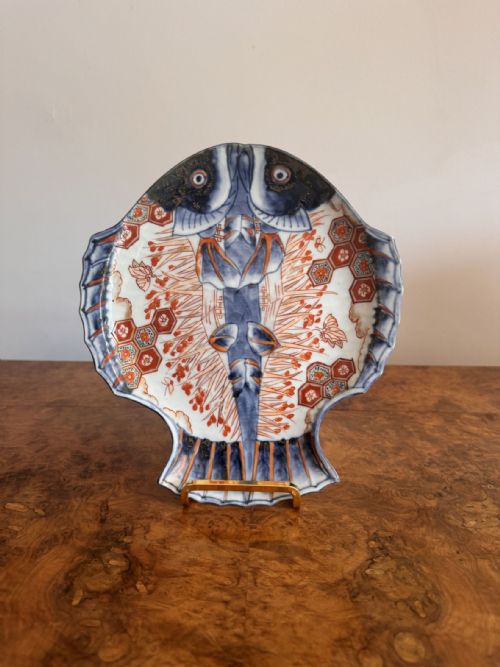
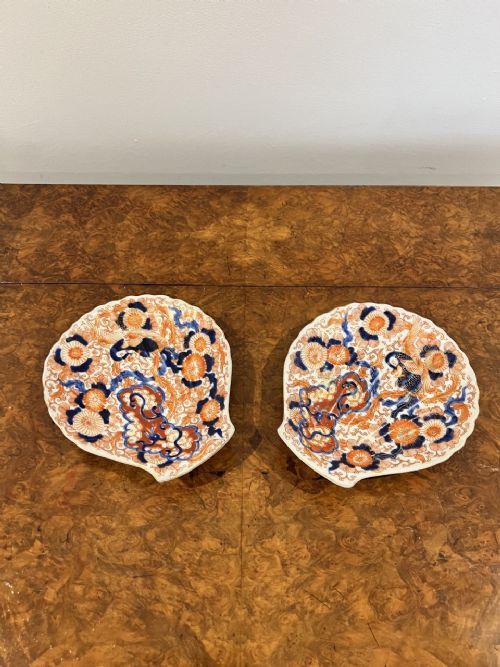
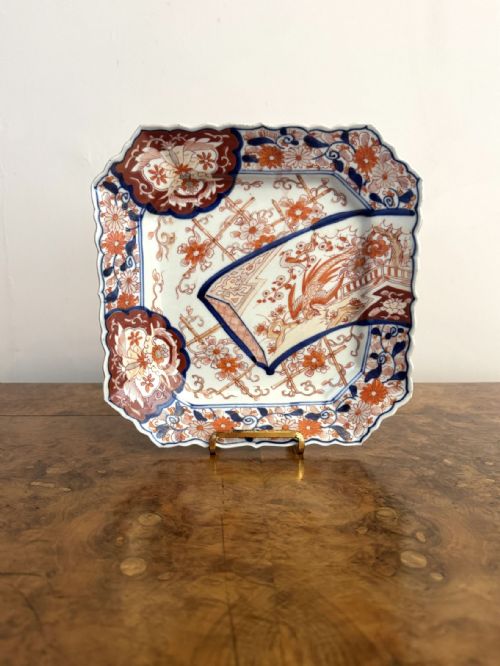
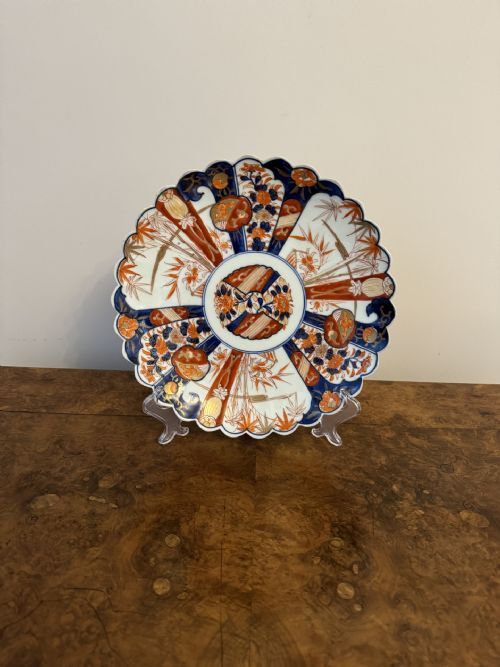
On Sellingantiques the Japanese porcelain plate dominates. "Japanese" appears in 207 of 283 titles, and the shape is generally a round plate of dinner-plate size, though lobed, petal, hexagonal, octagonal, square, oval, shell and fan forms all turn up, and once a plate modelled as a fish. Chargers are the next familiar face, about one title in seven using "large" and twenty using "charger", running from twelve inches up to a stated 55cm.
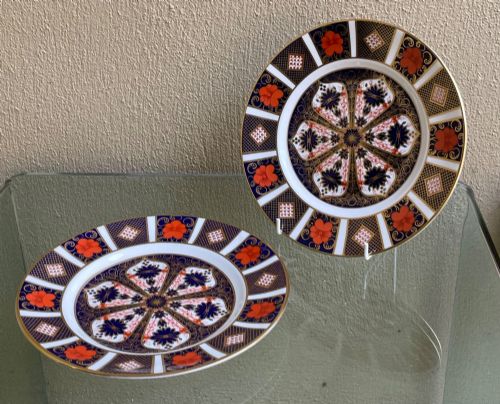
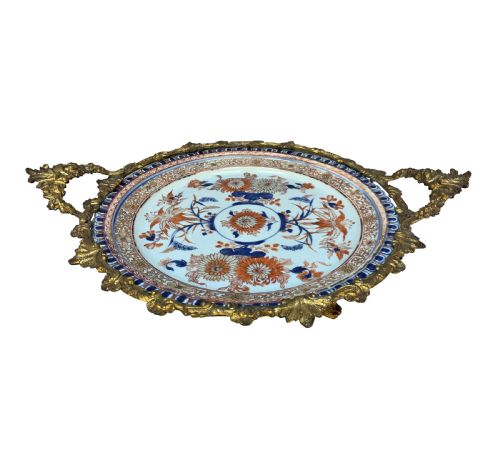
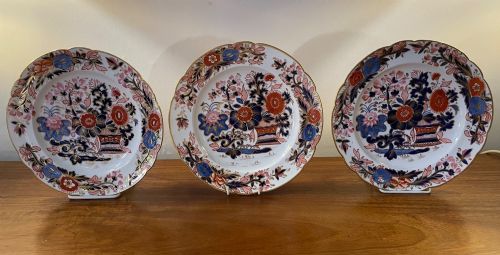
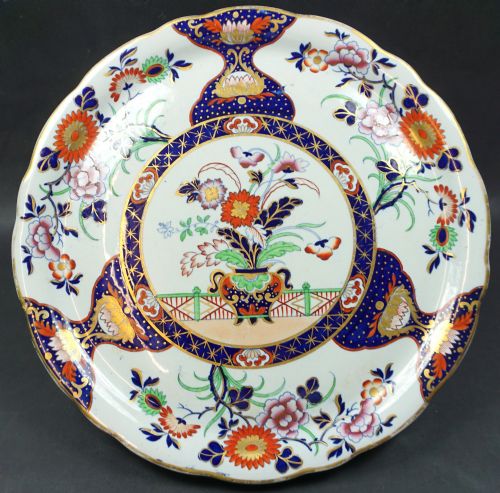
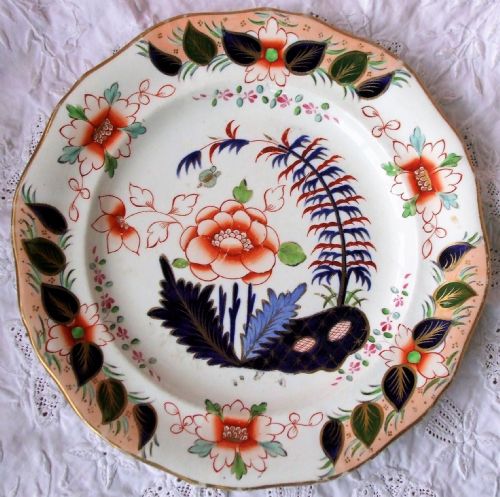
Smaller streams sit alongside. English ironstone and bone china plates decorated in Imari or "Japan" pattern account for a modest share, described as Georgian and Regency dinner plates and dessert services. Chinese Imari is rarer still, with only eight titles naming China, among them a Qianlong set of six and one plate with an ormolu mount.
Dating is worth reading carefully. The structured field runs 1750 to 1920, and 173 listings sit in the 1900s, which in practice means a round "1900" entered for late Meiji plates rather than a researched year. Forty say only "19th Century". A few titles reach back further than the field allows, describing late 17th-century Arita and Edo period dishes.

What Sets Them Apart
Size and number do most of the work. Single plates fill the lower and middle of the range, while pairs, sets of five and six, and at the top a collection of fourteen matching Japanese plates, sit above them. Large plates and paired chargers climb the same way, the 55cm example being the biggest with a stated diameter.
Form matters after that. Plain round is the norm, so the plates described as unusual or shaped, the fan, shell, octagonal, hexagonal, square and petal-shaped ones, gather toward the upper half. Stated hand painting does the same, appearing in only ten titles and mostly among the better pieces.
Date is the last lever. The mass of c.1900 Japanese plates occupies the middle, and it is the Edo period dishes, the late 17th-century Arita and the Qianlong Chinese Imari that sit near the top. Novelties are thin on the ground: black ship decoration shows up in two listings, an ormolu mount in one.
Antique Imari Plates Retail Price Guide 2026
Typical UK retail prices for imari plates, calculated from the Sellingantiques database of over a million retail prices indexed since 2003. This retail price guide relies exclusively on Sellingantiques data; no external sources or auction records are used, so the figures do not describe the wider market.
Chinese Imari is the rarer sort on Sellingantiques: only eight titles mention China, among them an ormolu-mounted plate and a Qianlong set of six.

The Antique Imari Plates Glossary
- Imari
- The blue, iron-red and gilt palette, used in these titles as a pattern name as much as a place of origin.
- Charger
- An oversized display plate, twenty titles using the word, several around twelve inches and one at 55cm.
- Shaped
- Used in twenty-five titles for petal, lobed, fan, shell, square and hexagonal rims, as against the plain round plate.
- Scalloped
- A wavy rim, in eleven titles, often paired with "shaped edge" in the same description.
- Japan pattern
- English trade name for Imari-derived designs, used in Georgian ironstone and porcelain titles.
- Collection of
- Dealer shorthand in twenty-five titles for an assembled group of three to fourteen plates, not a factory set.
Antique Imari Plates: Frequently Asked Questions
Why are so many dated around 1900?
Of the 283 listings, 173 sit in the 1900s. That reflects dealers entering a round "1900" for late Meiji Japanese plates rather than pinning down a year.
Everything else is thinner: forty listings say only "19th Century", ten the 1890s, eleven the 1880s, and a handful reach the 18th century.
Are these Japanese or English?
Japanese porcelain accounts for roughly three-quarters of what has been listed on Sellingantiques, with "Japanese" in 207 of 283 titles.
English ironstone and bone china plates in Imari or Japan pattern make up under a tenth. Chinese Imari is rarer again, named in eight titles.
What sizes do they come in?
Nine inches is a typical stated size for a plate and twelve inches for a charger.
The largest with a size given is a Japanese plate of 55cm diameter, dated to around 1890. "Large" appears in forty-four titles.
Do they sell as singles or sets?
Singles are the usual unit and fill the lower and middle of the range.
About a third of listings describe more than one plate. "Pair" turns up in sixty titles, and groups run to sets of three, four, five, six, ten, twelve, a set of seventeen dessert plates and a collection of fourteen matching Japanese plates.
Which makers are named on these plates?
No maker names emerged from the Japanese plates in this category at all. They are described by origin, period and decoration instead.
Where titles do carry a name it is usually a place: Arita or Hizen for the kiln district, and Meiji or Edo for the period.
How often do these come up for sale?
Fifty-four dealers have listed in the category, and around forty-two pieces come to market in a year.
The steady arrival is the single Japanese plate. Chargers, English ironstone and Chinese Imari appear at longer intervals.