


Antique Majolica Plates
Moulded earthenware plates under thick coloured glazes, made for the Victorian dining table and sold, more often than not, in sets.
Antique Majolica Plates
Majolica in the Victorian sense is moulded earthenware finished in thick, bright lead glazes, brought in commercially in the mid-19th century and made in quantity for the dining table and conservatory. The name also attaches to much older continental tin-glazed earthenware, which is why 18th-century pieces sit under the same heading.
The plate you're most likely to meet is green-glazed and relief-moulded as a leaf. "Plates" appears in 22 of 36 titles, "green" in 10 and "leaf" in 9, with "leaf plates" running as a set phrase. Cabbage leaf, cabbageware and basketweave sit alongside them, and this group is the core of the category.
They arrive in company. Titles count them out as pairs, threes, fours, fives, sixes, sevens, eights, tens, elevens and twelves, and a set of twelve green leaf plates has turned up more than once. A single plate is the exception. Only around four plates or sets come to market on Sellingantiques in a year, spread across twenty different dealers.
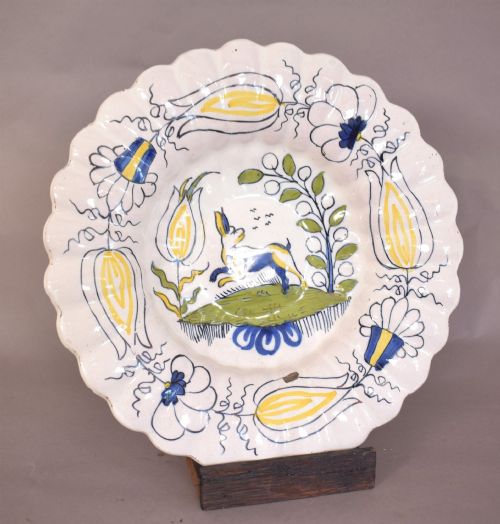
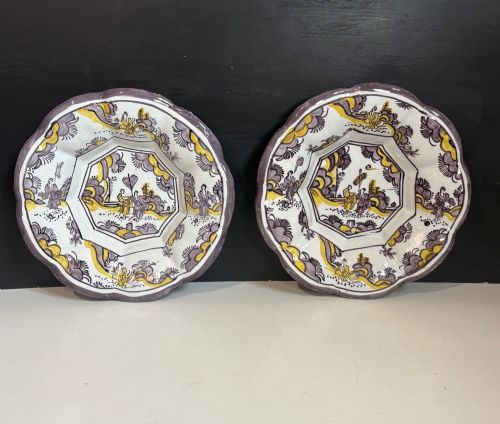
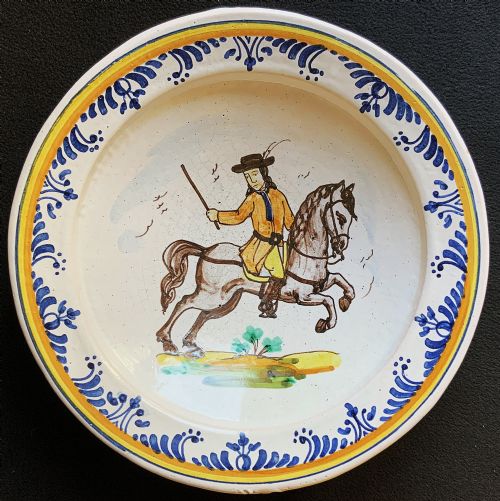
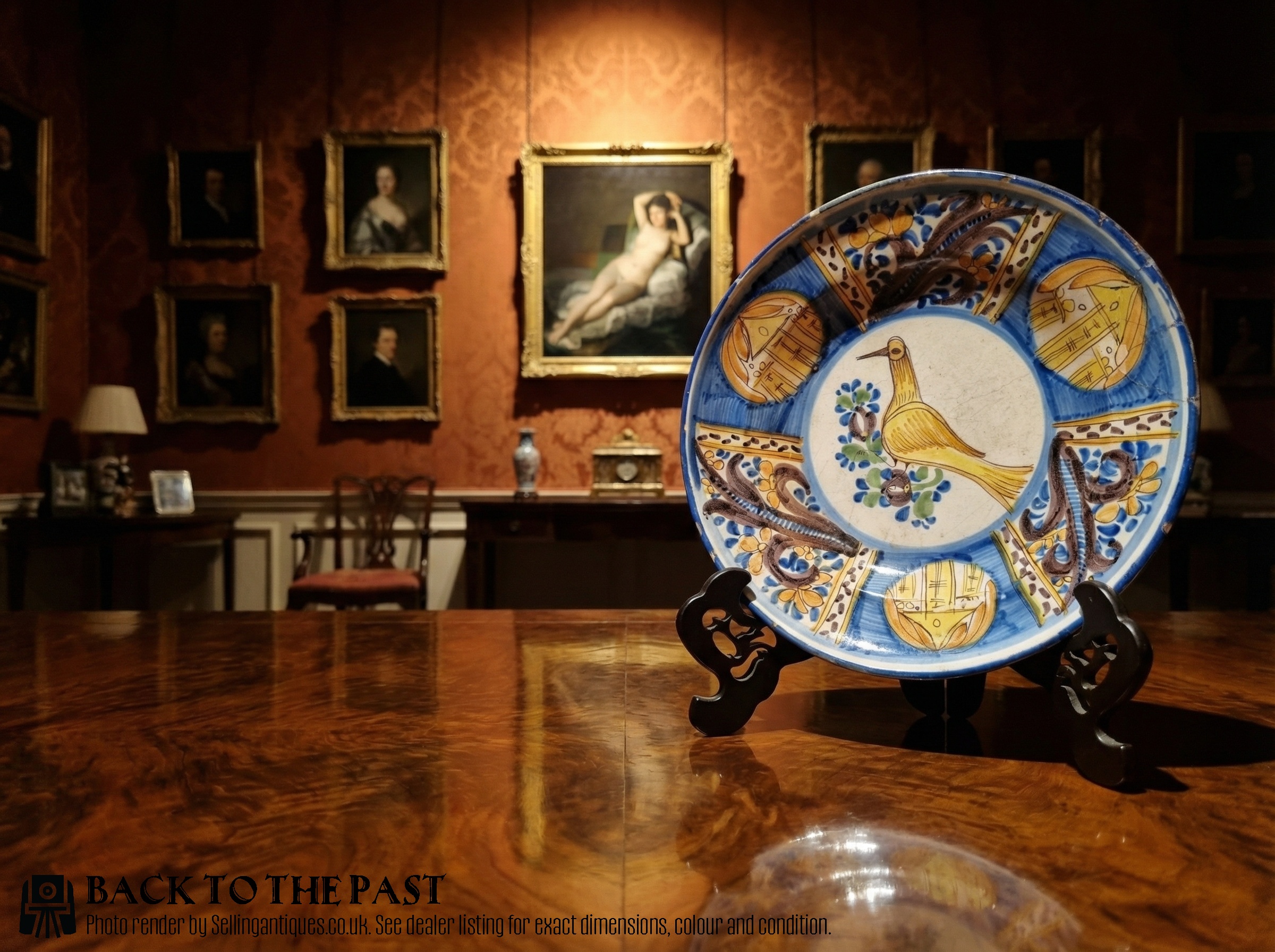
Beyond the green wares are three smaller strands: French majolica and barbotine, including Salins-Les-Bains asparagus plates and a kingfisher plate; tin-glazed chargers and delft-type dishes, which account for the whole of the 18th-century group; and one-off continental and named-modeller pieces such as a Bohemian Schutz Blansko plate and an Austrian wall charger with a medieval portrait. Dating is often loose, with seven listings saying only "19th Century" and seven only "Victorian", so a title naming 1868 or 1874 tells you more than the dated field.
Where The Range Splits
Set size does more work than anything else. Pairs and threes sit at the bottom of the range; sixes, eights, tens and twelves run up through the middle and into the upper part of it. Since these were made as dessert services, a surviving run of plates is the thing being bought.
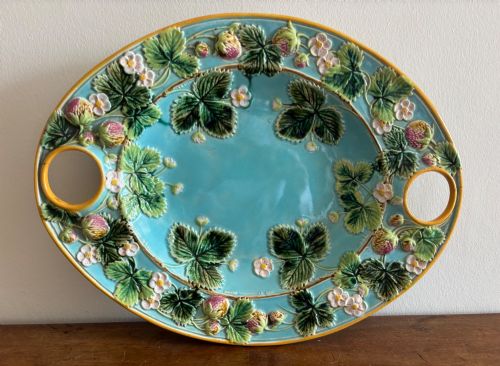
A named factory or modeller in the title lifts a piece toward the top. George Jones pineapples on basketweave, a George Jones strawberry dish, oyster plates and the Austrian wall charger all sit in the upper part of the range, while unattributed Victorian pairs sit right at the bottom. The green leaf sets that make up the bulk of the category carry no attribution at all.
Subject and colour separate the rest. Sunflower, pineapple, oyster, asparagus, kingfisher and strawberry modelling each appears once and each prices above generic green leaf. Polychrome work sits above single-glaze green, and size counts too: the large 18th-century chargers, including Talavera and polychrome examples, hold the top end with the named pieces.
Antique Majolica Plates Retail Price Guide 2026
Typical UK retail prices for majolica plates, calculated from the Sellingantiques database of over a million retail prices indexed since 2003. This retail price guide relies exclusively on Sellingantiques data; no external sources or auction records are used, so the figures do not describe the wider market.
Modelled subjects have each turned up just once: a sunflower, a pineapple on basketweave, a kingfisher, an oyster, a strawberry and an asparagus set.
The Antique Majolica Plates Glossary
- Leaf plate
- A plate modelled as a leaf, usually green-glazed. The commonest form in this category by a distance.
- Cabbageware
- Relief plates modelled with overlapping cabbage leaves, also written as cabbage leaf in titles.
- Basketweave
- A moulded woven-basket ground, often combined with fruit or leaf relief on the same plate.
- Dessert plate
- The smaller size these sets were made in. Several titles specify it rather than leaving size open.
- Charger
- An outsized plate or dish, decorative rather than made for the table. The 18th-century pieces here are largely chargers.
- Barbotine
- French slip-decorated earthenware, named in two of the French listings and distinct from the moulded green wares.
Antique Majolica Plates: Frequently Asked Questions
Why are so many of these green?
Green-glazed relief moulding is what the category is built on. Green runs through a quarter of the titles, leaf through a similar share, and leaf plates appears as a fixed phrase.
The subject suited the glaze. Leaves, cabbage leaves and basketweave all read well under a single thick green, and the sets were made that way in quantity.
Are they sold singly or in sets?
Almost always in company. Titles count out pairs, threes, fours, fives, sixes, sevens, eights, tens, elevens and twelves.
A set of twelve green leaf plates has come up more than once. Singles do appear, but they tend to be the one-off continental pieces rather than the leaf wares.
Why is 18th-century delft listed as majolica?
The word covers two things. Victorian majolica is moulded earthenware under coloured lead glazes; the same name also attaches to older continental tin-glazed wares.
That is why delft, faience, Talavera and polychrome chargers sit under this heading. Four listings are given as 18th Century, and all of them are tin-glazed rather than moulded green ware.
What does Wedgwood mean in these titles?
The name appears in 9 of 36 titles, across green leaf, cabbage leaf, cabbageware, sunflower and basketweave dessert plates.
Two of those titles carry a tighter year than any dated field manages, 1868 and 1874, both on green leaf sets.
Which modelled subjects turn up?
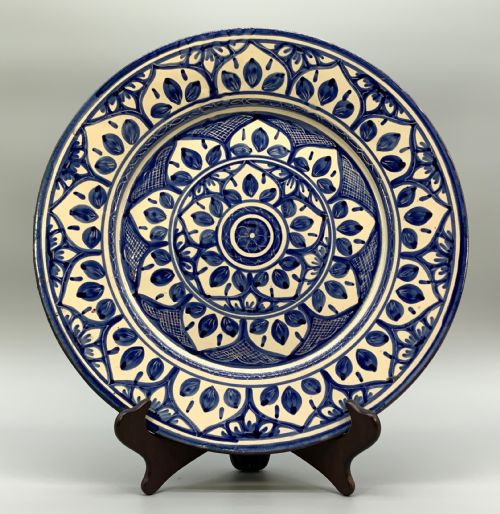
Sunflower, pineapple on basketweave, kingfisher, oyster, strawberry, asparagus and a Moorish orchard pattern each appear once and no more.
They sit above plain green leaf in the range. The asparagus plates are French, from Salins-Les-Bains.
How old are most of these plates?
The dated field runs 1870 to 1940 among the fifteen listings carrying a clean year, clustering in the 1870s and 1880s.
Dating is often loose, with seven listings saying only "19th Century" and seven only "Victorian". A thin 20th-century tail runs from the 1900s through to the 1940s.