








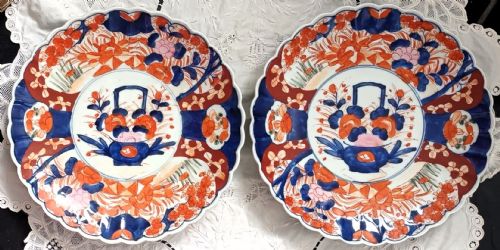
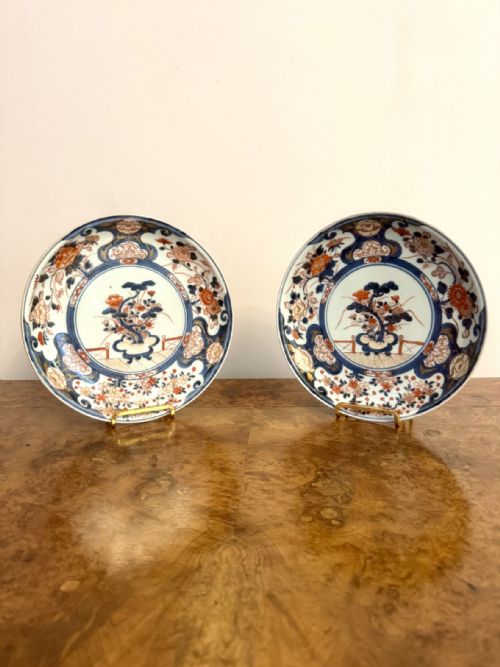
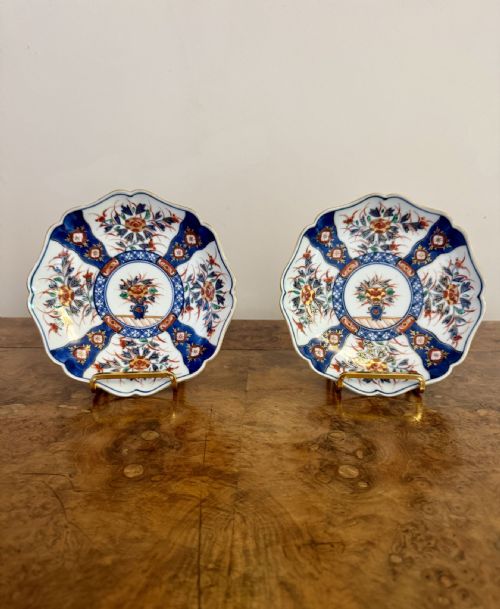
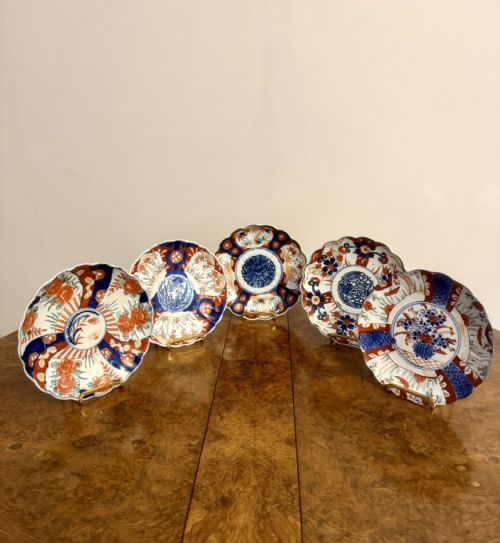
Meiji Ceramic Display Plate
A meiji ceramic display plate brings the intricate hand-painted traditions of nineteenth and early twentieth century Japan directly into your home.
Meiji Ceramic Display Plate
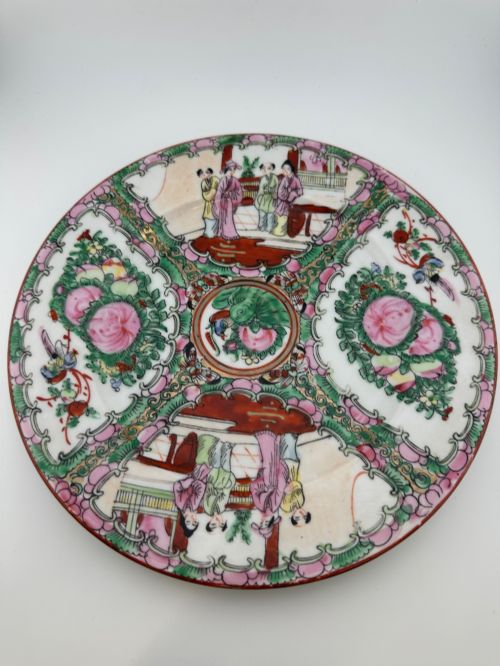
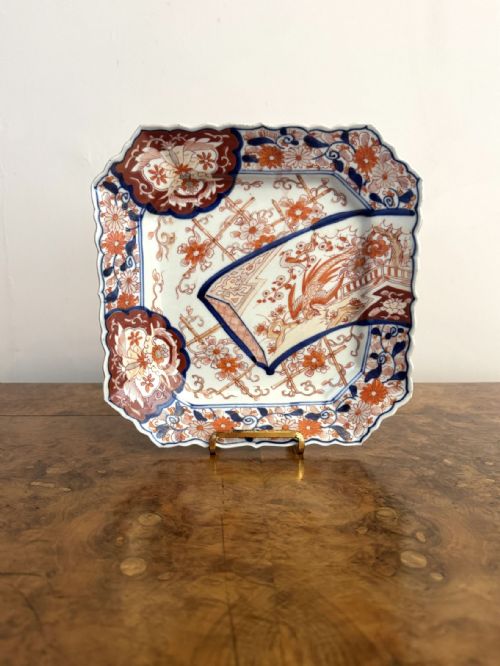
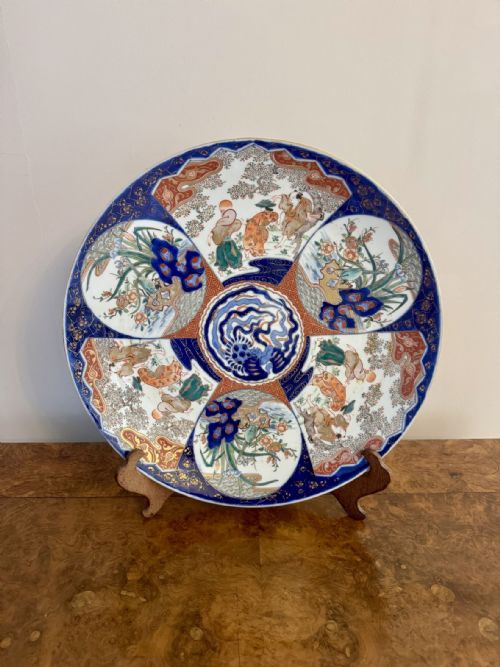
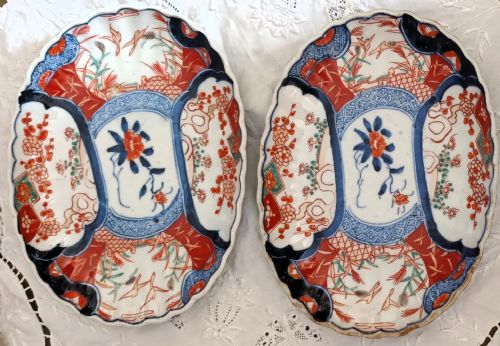
When you search for a meiji ceramic display plate, you encounter decorative plates, chargers, and dishes originating from Japan during the Meiji period and surrounding eras. The inventory here leans heavily towards Japanese Imari porcelain, alongside Kutani and Satsuma wares produced across the late nineteenth and early twentieth centuries. These items range from standard round plates to square, scalloped, ribbon, and shell-shaped display pieces.
The domestic and export markets of the period produced both individual dishes and matched pairs or larger sets for display purposes. You will frequently find pieces depicting traditional motifs such as exotic birds, floral patterns, and figures like the Seven Lucky Gods. Larger chargers span significant diameters, designed specifically to hang on walls or sit upon heavy stands within a room.
How they were made
Potters shaped porcelain and earthenware bodies by hand or mould before applying underglaze and overglaze pigments. The primary materials recorded in the listings include porcelain, ceramic, and earthenware, decorated with enamel, glaze, and hand-painted details. Many pieces incorporate gold leaf, gilt, or gold gilt to highlight specific elements of the pictorial design.
Specialised techniques such as Totai Shippo integrate cloisonne enamel effects directly onto porcelain bases, creating textured surfaces like imitation tree bark. Artisans fired these ceramic bodies at high temperatures to vitrify the clay and fix the cobalt blue and iron red pigments. Kiln work required precise temperature control to ensure the metallic gilding adhered properly to the glazed surface during secondary firings.
Materials documented across the inventory include porcelain, earthenware, enamel, gold leaf, and glaze.
What varies in quality
The standard of a meiji ceramic display plate depends fundamentally on the precision of the hand-painted brushwork and the complexity of the composition. Superior examples exhibit crisp, detailed lines in the floral, bird, or figural scenes rather than rushed or repetitive brushstrokes. The richness of the gilding and the depth of the cobalt blue underglaze also separate ordinary production pieces from finer studio work.
Form and moulding contribute significantly to desirability, with unusual shapes like square, shell, ribbon, or scalloped edges demanding higher levels of ceramic skill. The clarity of the glaze and the absence of heavy firing distortions distinguish better-executed chargers. Signed pieces or those attributed to specific makers like Koshida carry an added layer of artistic distinction.
Koshida
The Meiji Ceramic Display Plate Glossary
- Imari
- A style of Japanese porcelain featuring a distinct palette of cobalt blue, iron red, and gold gilt. It originated in the town of Arita and was widely exported during the Meiji period.
- Charger
- A large decorative plate intended primarily for display on a wall or sideboard rather than for serving food at the table.
- Kutani
- A traditional style of Japanese painted porcelain known for vibrant overglaze enamel colours and intricate pictorial designs.
- Satsuma
- A type of Japanese earthenware characterised by a pale, ivory crackle-glaze finish decorated with detailed enamels and raised gold work.
Meiji Ceramic Display Plate: Frequently Asked Questions
What is a meiji ceramic display plate?
It is a decorative ceramic or porcelain dish or charger made in Japan during the Meiji period, featuring hand-painted designs meant for visual display.
These pieces were produced for both domestic use and export to Western markets, often utilising traditional Imari, Kutani, or Satsuma decoration styles.
How were these plates used?
They were used primarily as decorative ornaments in nineteenth-century interiors, placed on mantelpieces, tables, or mounted on walls.
Larger chargers were built specifically to command attention in a room, showcasing complex pictorial scenes involving birds, flowers, or deities.
How do I date a Meiji piece?
Dating relies on stylistic markers, materials, and associated period indicators recorded in the ceramic design, spanning from the late nineteenth into the early twentieth century.
While some items carry specific period attributions like Meiji or Taisho, others align with broader Victorian export timelines based on their decorative traits.
Are these plates fragile?
Like most antique porcelain and earthenware, they require careful handling to protect the delicate surface enamels and gilded highlights from scratching or impact.
Displaying them securely on stable stands or proper wall mounts ensures they remain safe while on view in a modern home.