9,530  PAGES BROWSED TODAY PAGES TODAY 36  ANTIQUES UPLOADED TODAY NEW ARRIVALS
ID #SA1089167
FOR SALE
£1,500
Email
Save
Porcelain Figurines ‘Allegory of Art’ by Achille Mollica, 19th Century
Gillers Antiques Ltd
for sale €1,755     $1,905
£1,500
Gillers Antiques Ltd

Gillers Antiques Ltd

Sellingantiques Verified Since Mar 2023
View Dealers Stock Page
Id #SA1089167
PDF SHARE
SAVE

Porcelain Figurines ‘Allegory of Art’ by Achille Mollica, 19th Century

19th century
Description

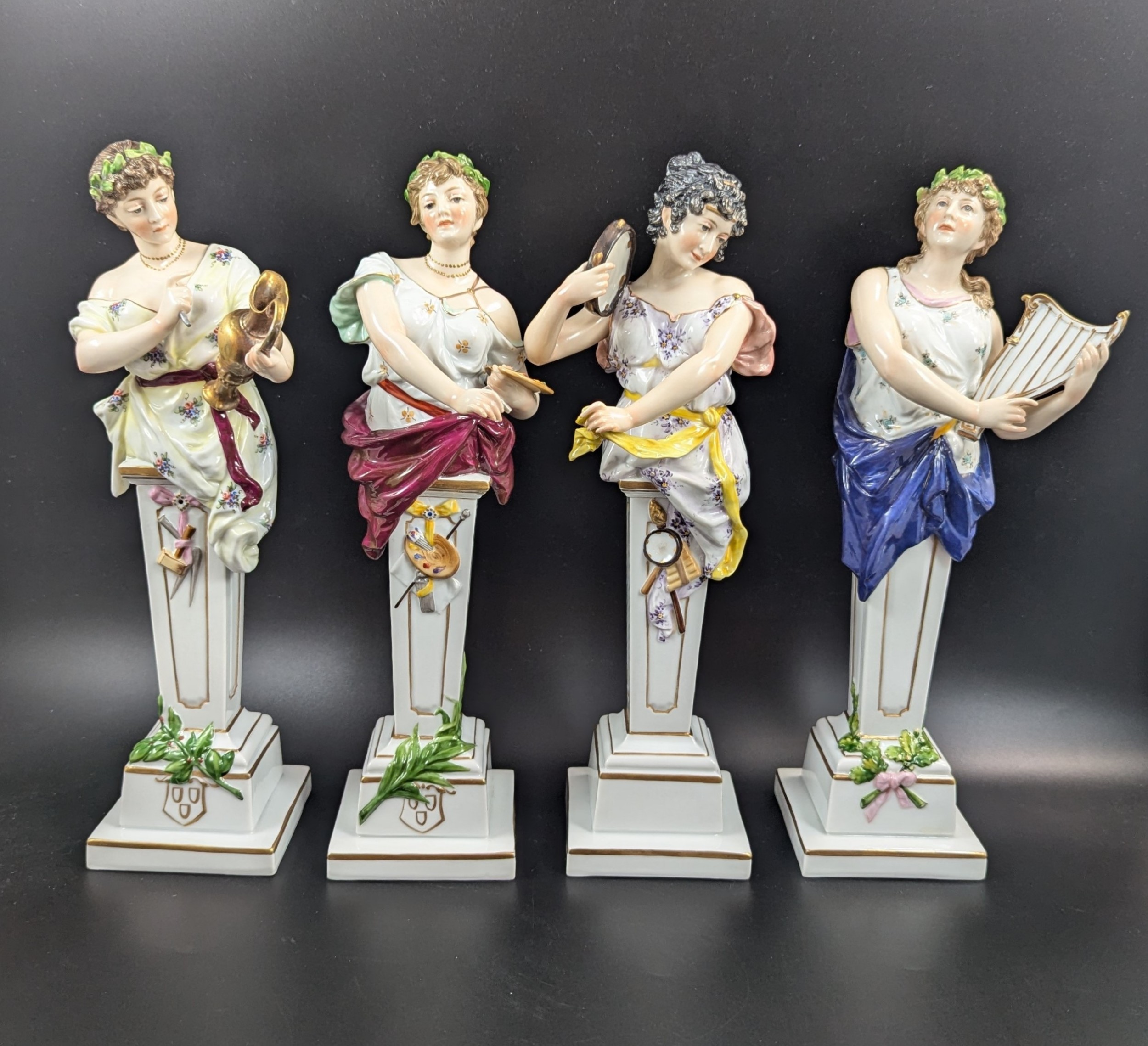
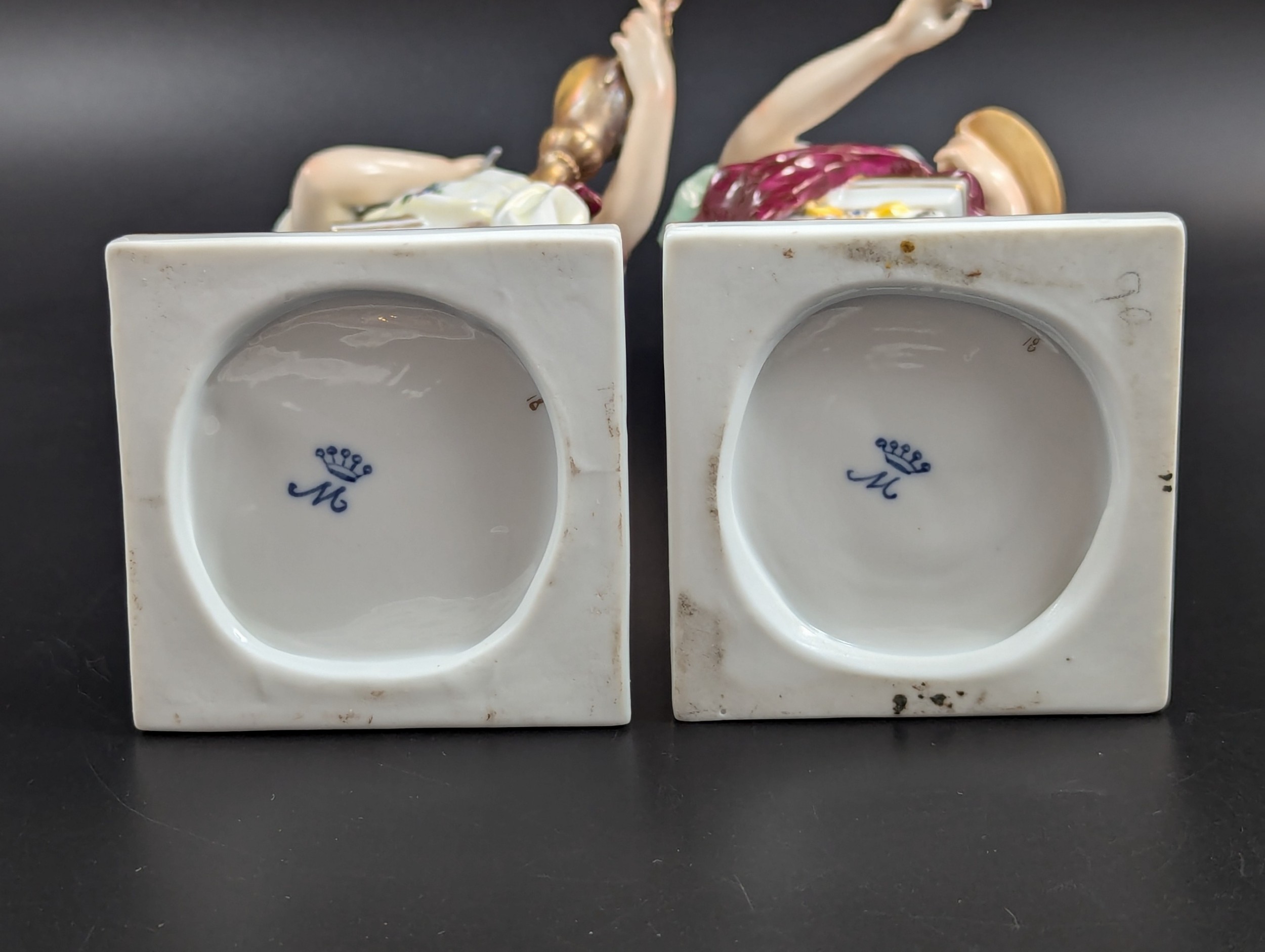
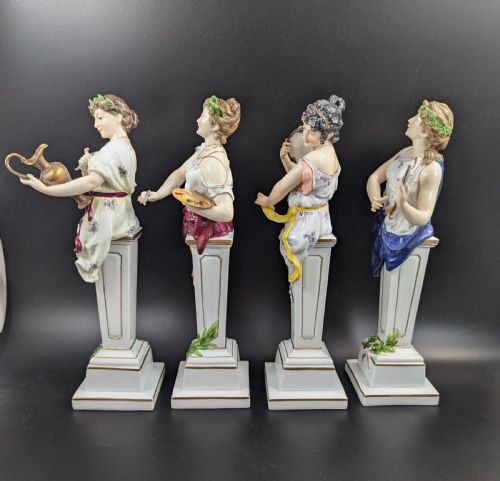
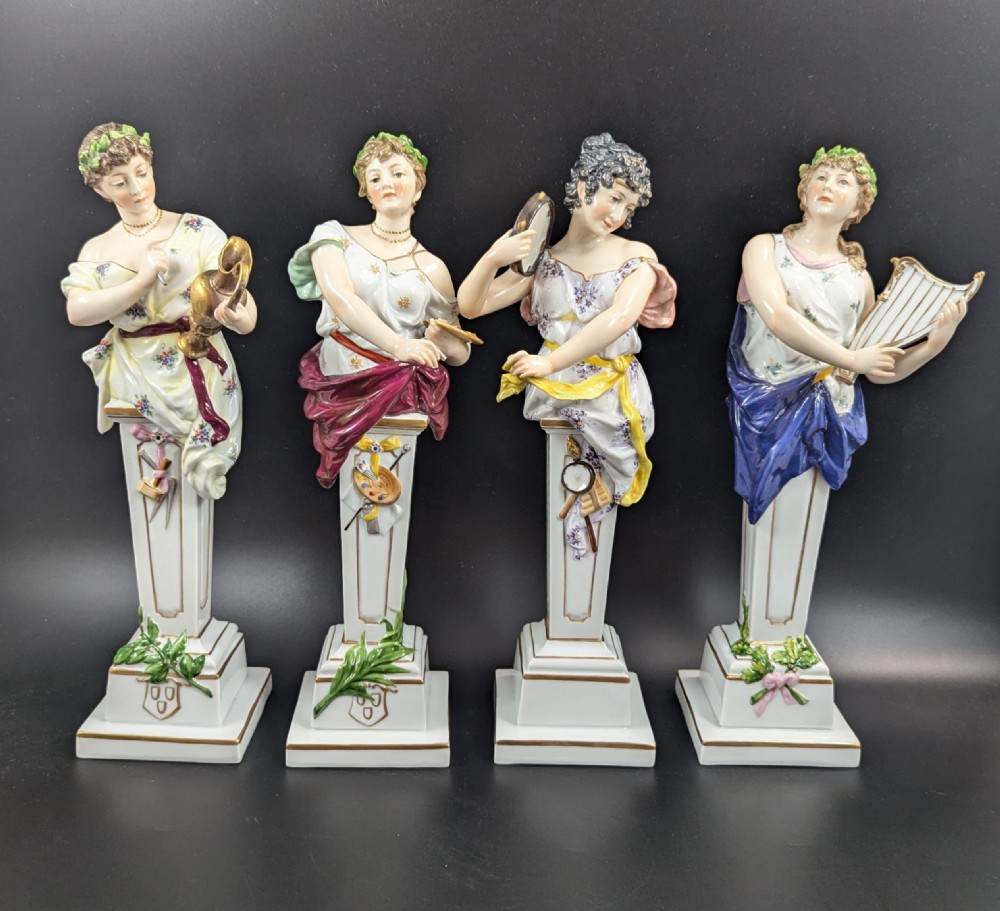
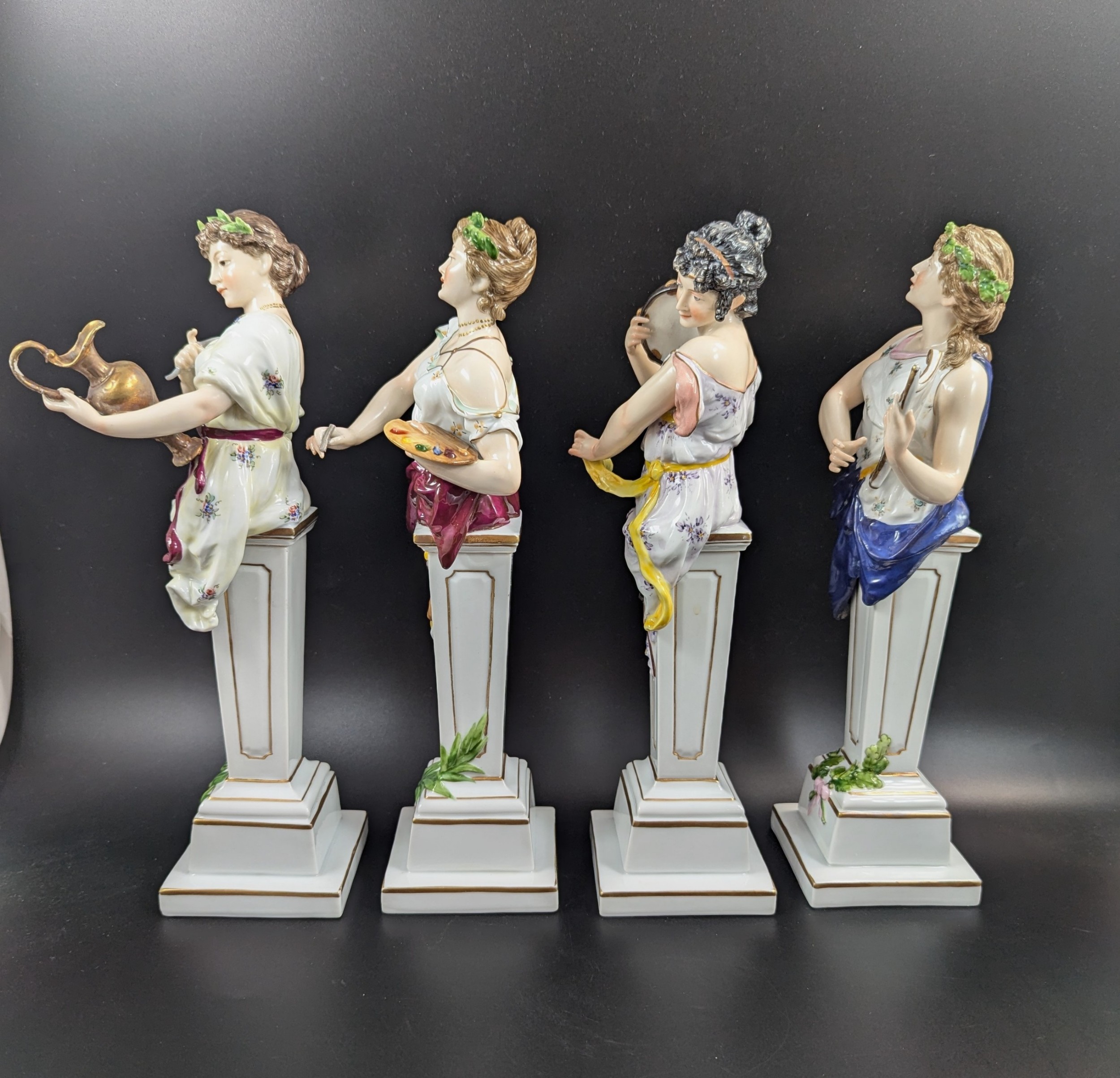
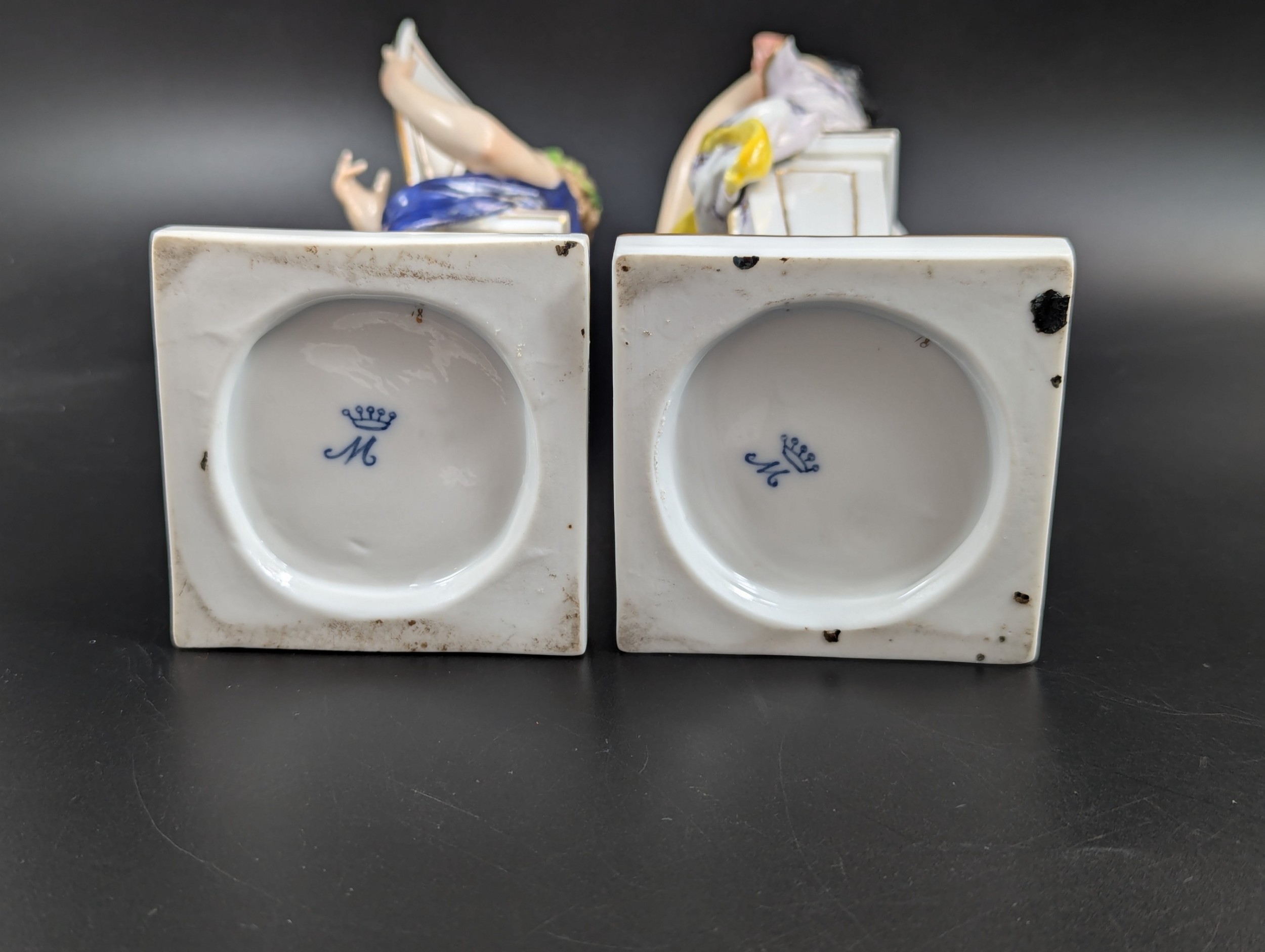
Incredibly attractive antique porcelain figurines of women representing various arts. These bust-shaped figurines are hand-painted and were made by the Italian company Mollica in the late 19th century. The busts are mounted on tapering white square columns with stepped Greek-style bases decorated in gilt. At the bottom, there is a blue branding with a crown and an ‘M’.
The story of the Mollica family begins in Naples, where Giovanni Mollica and his sons opened their studio for producing both porcelain and earthenware in 1842. The brothers had an excellent instructor in their father, a former department head at the original Capodimonte factory under King Ferdinand.
By the late 1800s, Giovanni's three sons had taken over the operation. Of these three brothers, Achille Mollica received high praise for his painted vases and plates in the Renaissance style. Pieces by Mollica from the late 19th and early 20th centuries reached collectible status. The similarity between the Mollica mark and the Capodimonte mark was intentional, as the association with the Ginori factory was beneficial for both companies, offering consumers a familiar trademark to associate with. Between 1950 and 1970, the Mollica factory reached its zenith of popularity under the leadership of Carlo (Charles) Mollica. Notably, Mollica porcelains proved more popular than Ginori pieces, and Mollica is credited with reviving interest in Capodimonte porcelains in general. During this period, Mollica produced artwork equal to the finest pieces throughout Italy. The factory produced a wide range of products, from classical Capodimonte to Lenci-like Art Nouveau. Their ability to produce such diverse styles made them the envy of every factory in operation at the time.
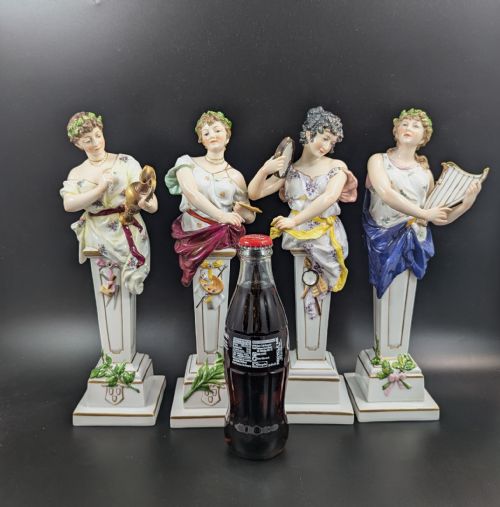
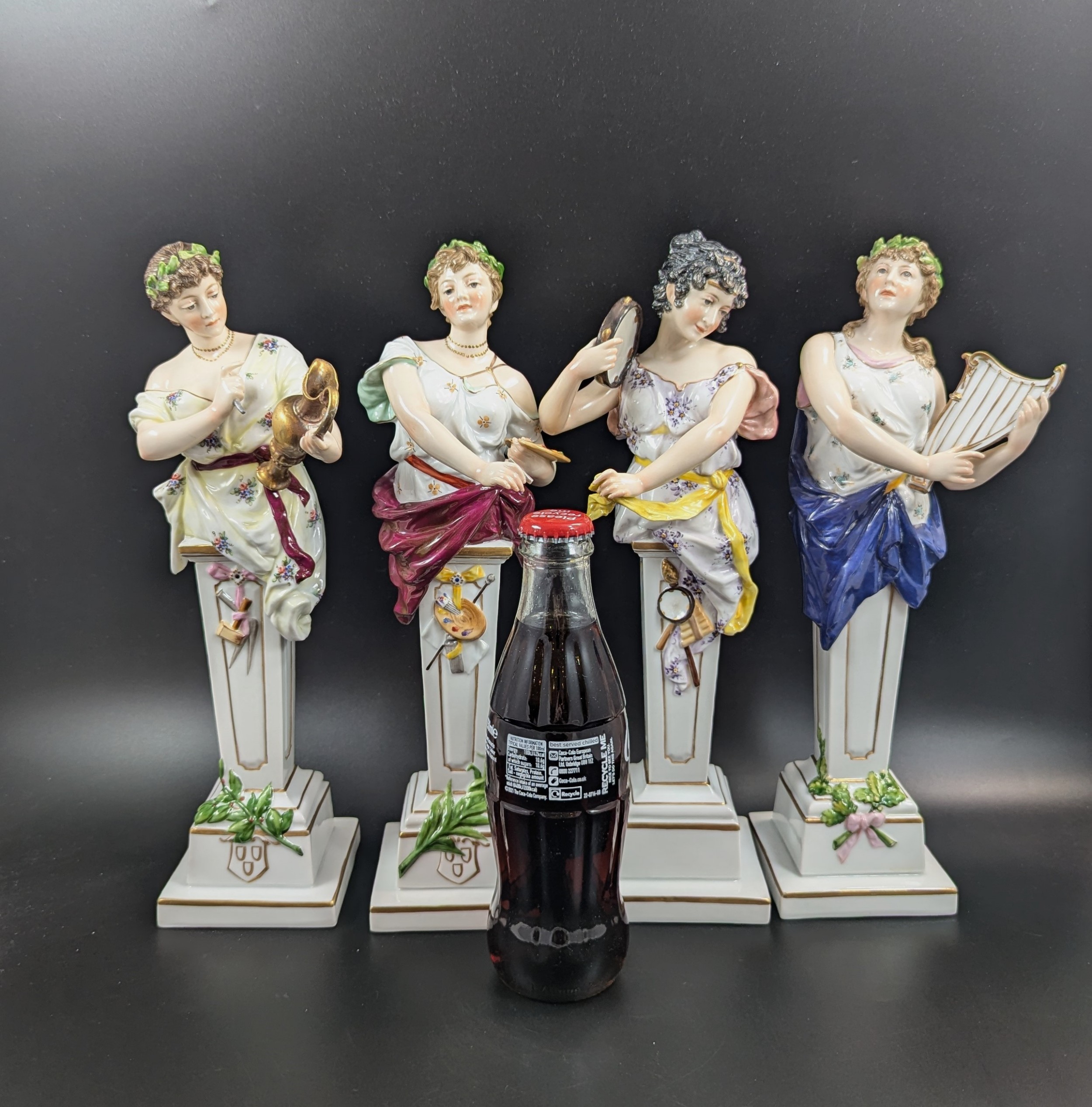
Dimensions: Each figure is 29 cm high. The total weight of all four figures is 2,627 grams.

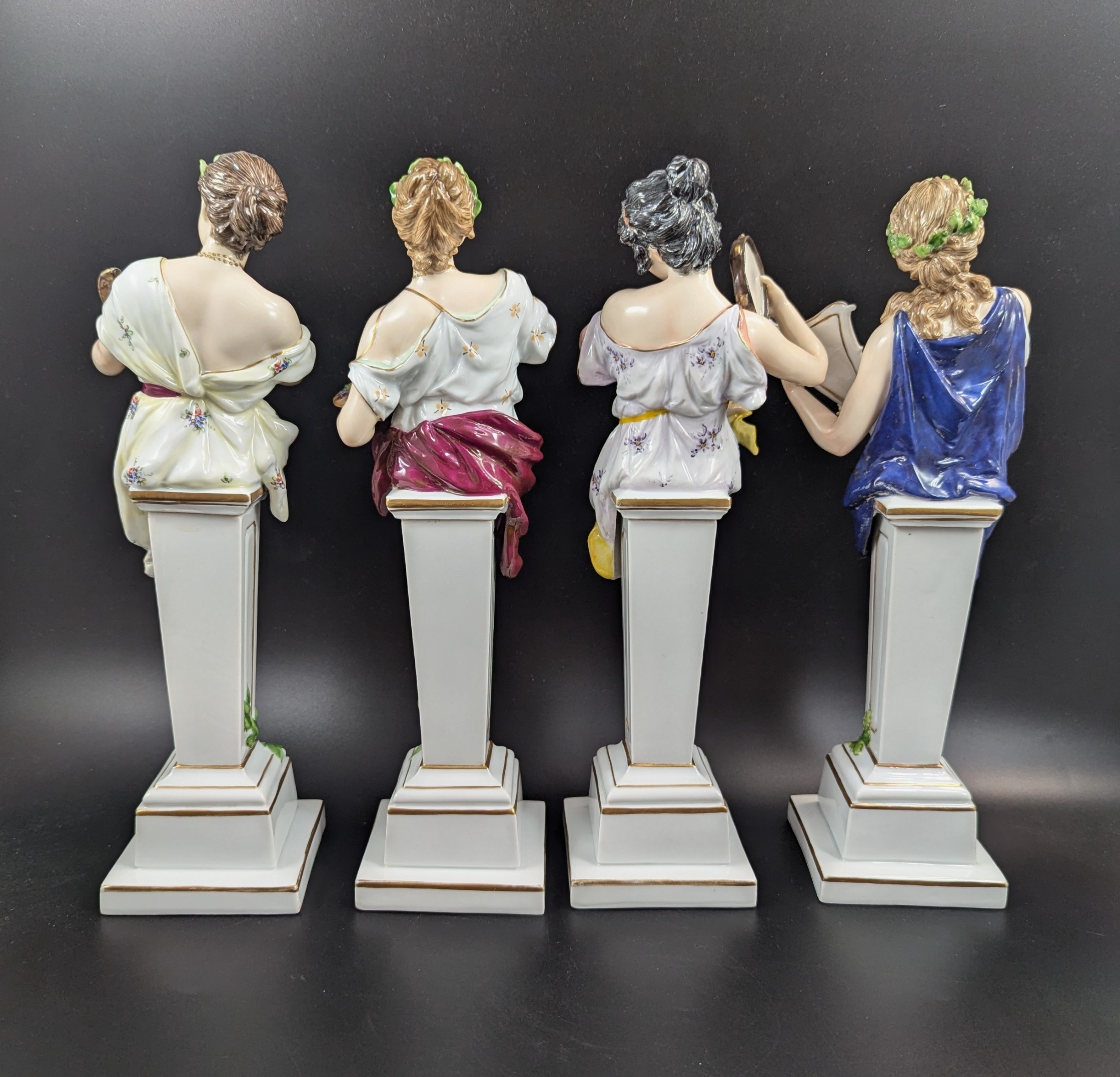
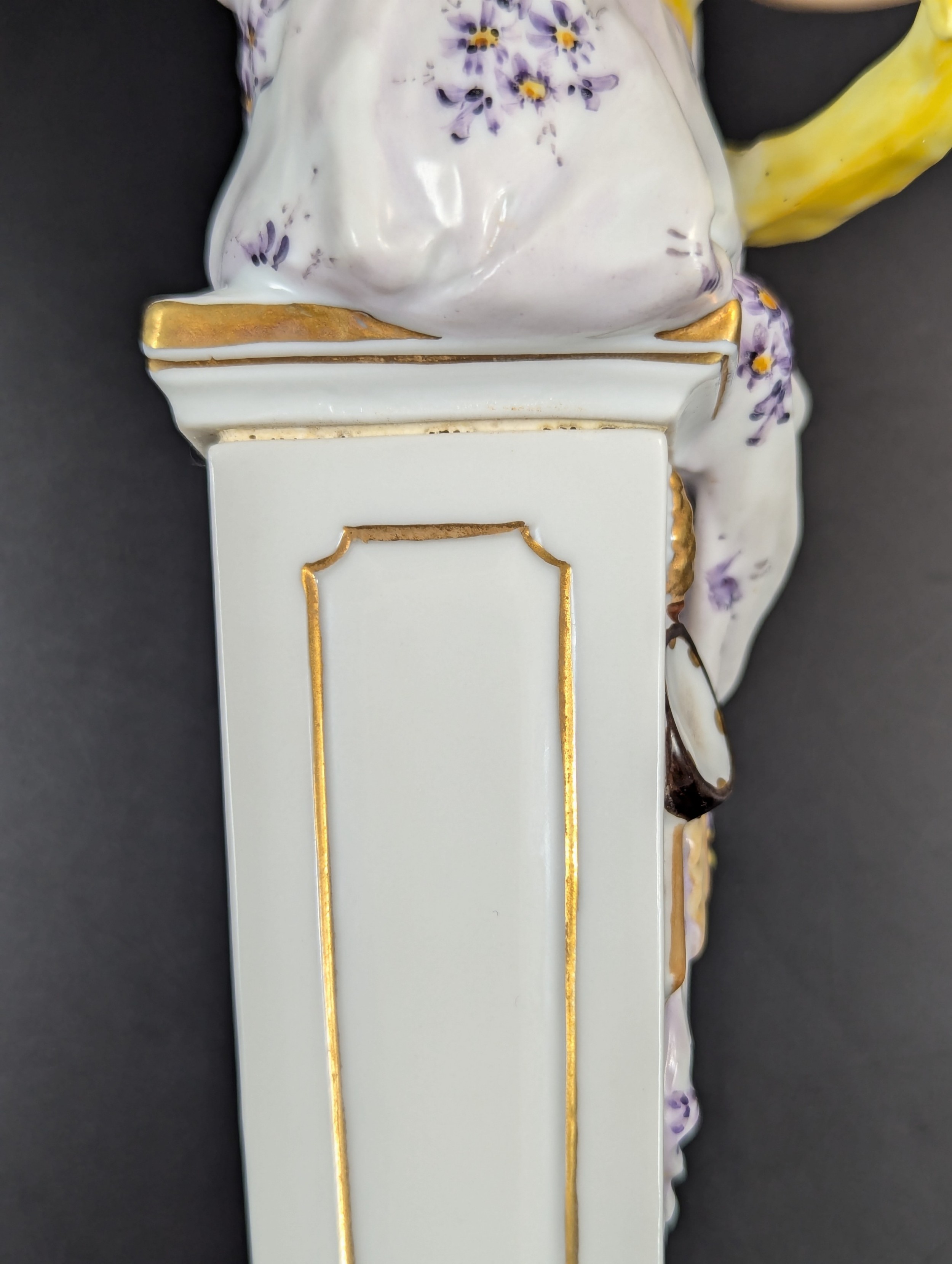
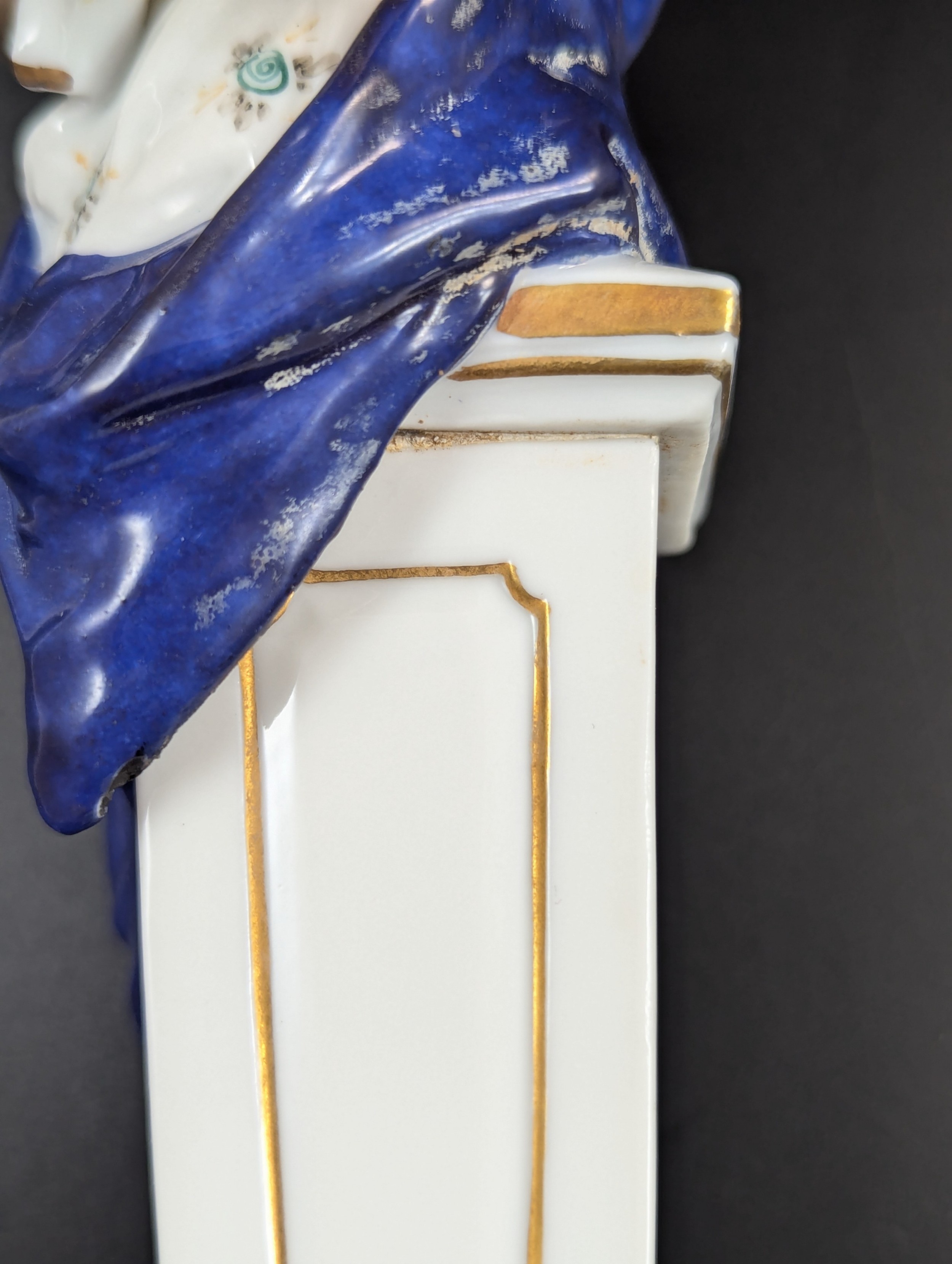
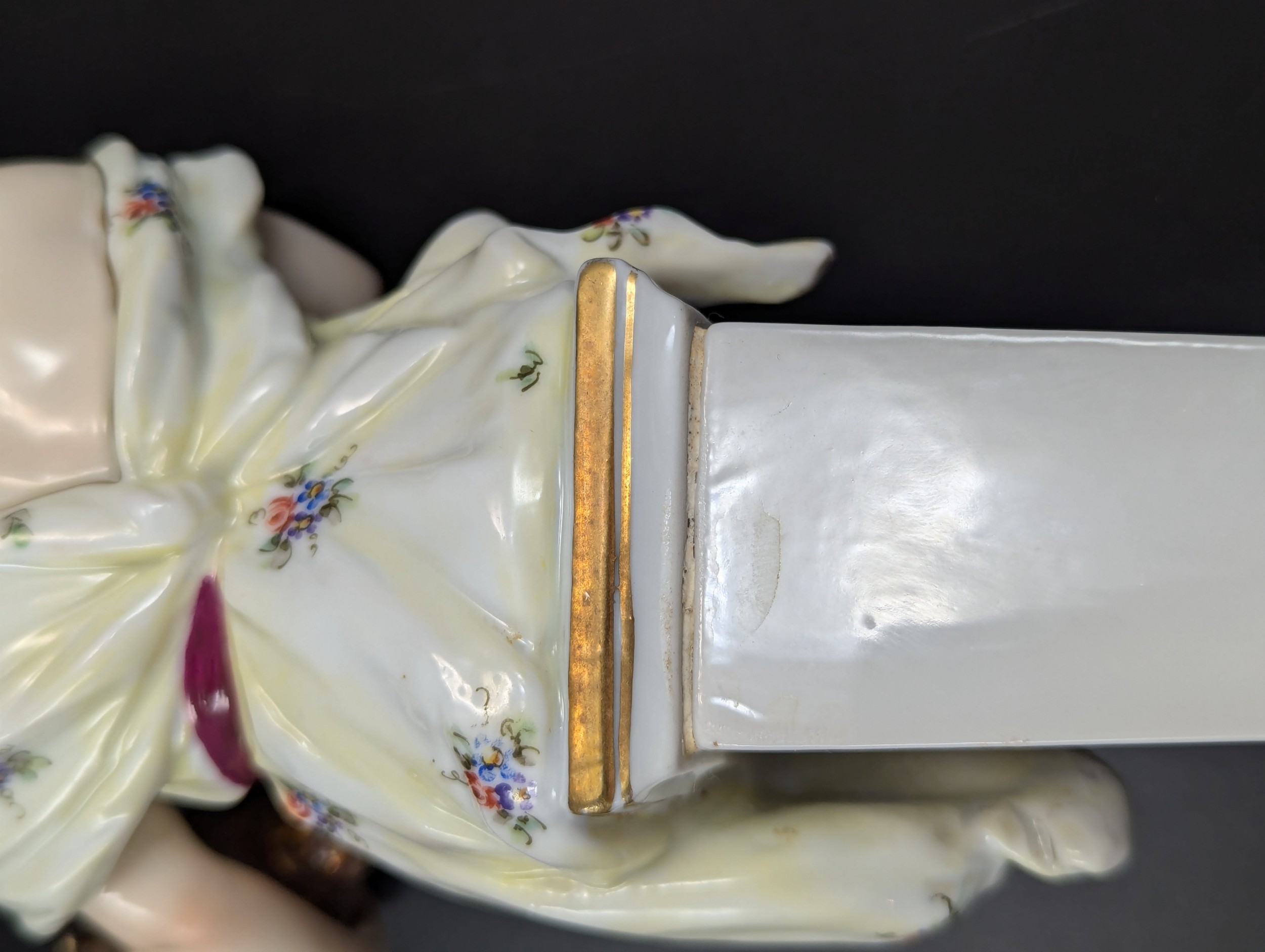
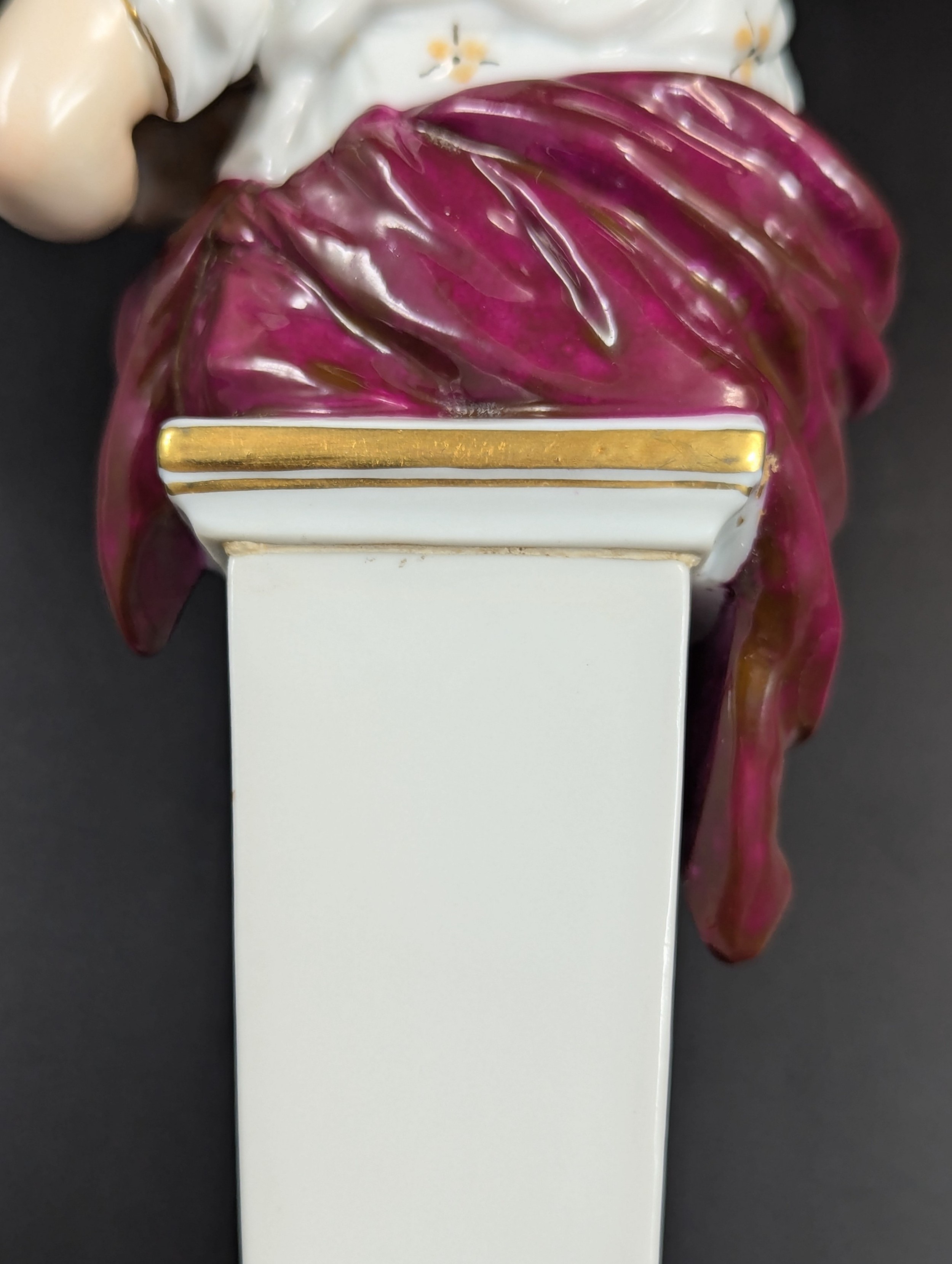
Condition: The figurine personifying painting has broken off the tips of the brush held in the girl's right hand. It should also be noted that it appears each figure is made of two parts—the bust itself and the column-shaped base. The artisans at the factory then glued these parts together, and if you use a magnifying glass, this connection point is visible. It can be seen in the enlarged photos. This shows an inexplicable carelessness for a company of such a high level. Otherwise, all figures are in excellent condition.
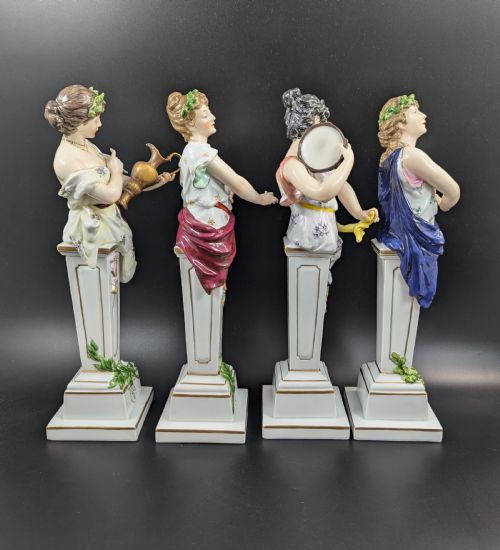
Please study the accompanying photographs carefully as they form an integral part of this description. The item will be shipped with full tracking and insurance. It is important to note that shipping costs include labor, packaging, and postage.

Declaration

Gillers Antiques Ltd has dated these Antique Porcelain Allegorical Figurines to the 19th Century.

Reference Numbers
Sellingantiques Reference
SA1089167
Description
Incredibly attractive antique porcelain figurines of women representing various arts.
These bust-shaped figurines are hand-painted and were made by the Italian company Mollica in the late 19th century.
Gillers Antiques Ltd

The busts are mounted on tapering white square columns with stepped Greek-style bases decorated in gilt. At the bottom, there is a blue branding with a crown and an ‘M’.

fig 1. A set of four 19th-century glazed Italian porcelain figurines depicting allegorical female figures representing the arts atop gilded square pedestals.
fig 1. Porcelain Figurines ‘Allegory of Art’ by Achille Mollica, 19th Century

The story of the Mollica family begins in Naples, where Giovanni Mollica and his sons opened their studio for producing both porcelain and earthenware in 1842. The brothers had an excellent instructor in their father, a former department head at the original Capodimonte factory under King Ferdinand.

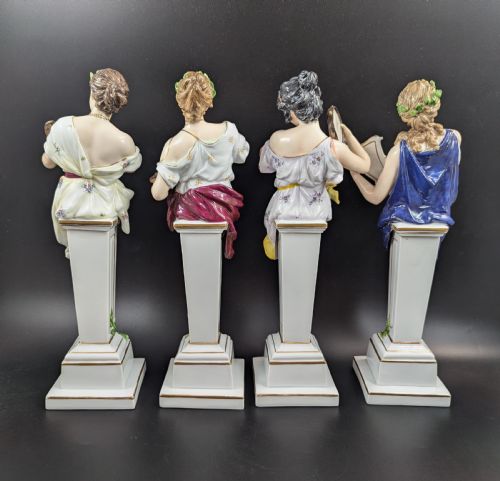
fig 2. A set of four 19th-century glazed Italian porcelain figurines depicting allegorical female figures representing the arts atop gilded square pedestals.
fig 2. Porcelain Figurines ‘Allegory of Art’ by Achille Mollica, 19th Century

By the late 1800s, Giovanni's three sons had taken over the operation. Of these three brothers, Achille Mollica received high praise for his painted vases and plates in the Renaissance style. Pieces by Mollica from the late 19th and early 20th centuries reached collectible status. The similarity between the Mollica mark and the Capodimonte mark was intentional, as the association with the Ginori factory was beneficial for both companies, offering consumers a familiar trademark to associate with. Between 1950 and 1970, the Mollica factory reached its zenith of popularity under the leadership of Carlo (Charles) Mollica. Notably, Mollica porcelains proved more popular than Ginori pieces, and Mollica is credited with reviving interest in Capodimonte porcelains in general. During this period, Mollica produced artwork equal to the finest pieces throughout Italy. The factory produced a wide range of products, from classical Capodimonte to Lenci-like Art Nouveau. Their ability to produce such diverse styles made them the envy of every factory in operation at the time.

fig 3. A set of four 19th-century glazed Italian porcelain figurines depicting allegorical female figures representing the arts atop gilded square pedestals.
fig 3. Porcelain Figurines ‘Allegory of Art’ by Achille Mollica, 19th Century

Dimensions: Each figure is 29 cm high. The total weight of all four figures is 2,627 grams.

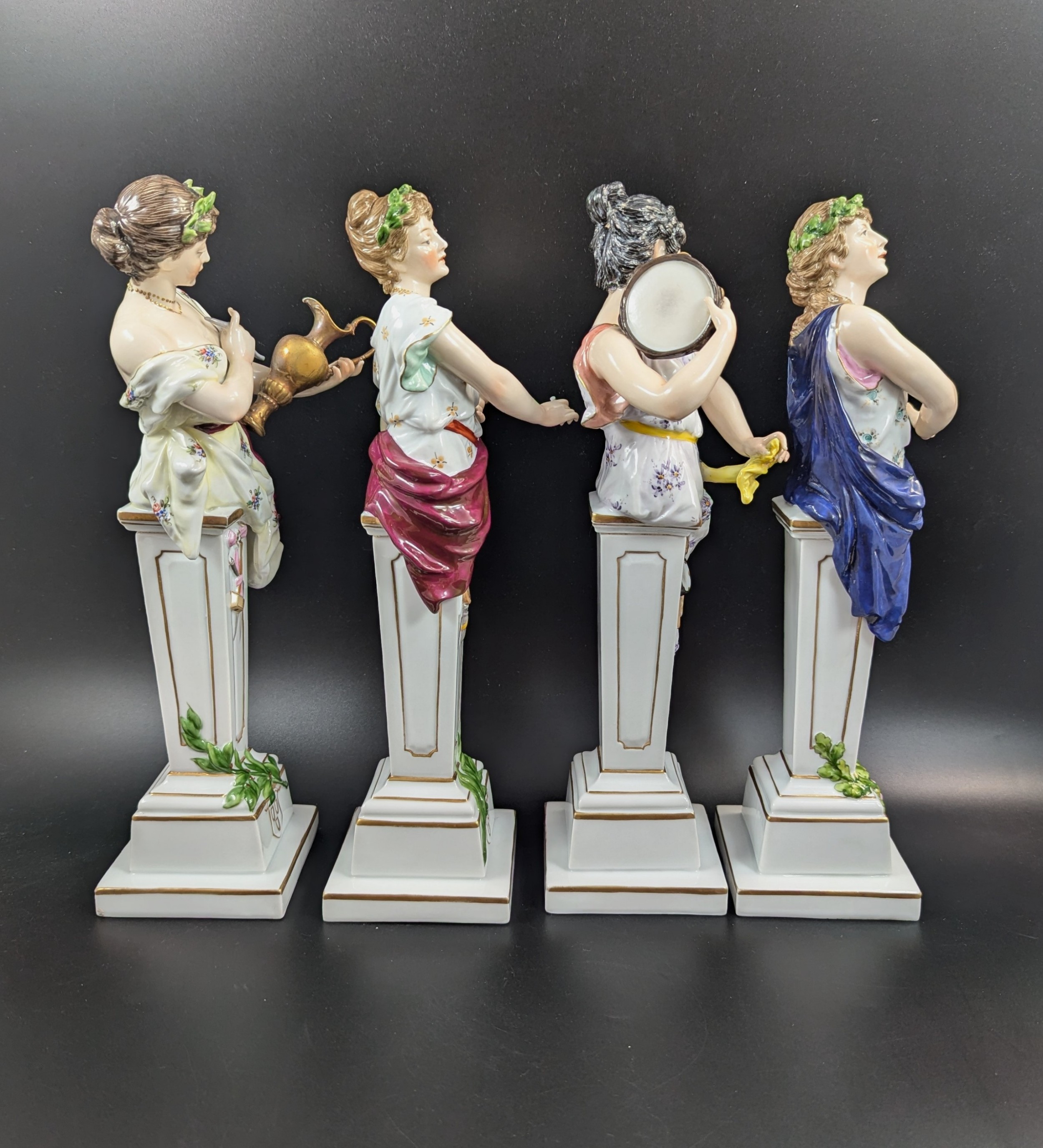
Condition: The figurine personifying painting has broken off the tips of the brush held in the girl's right hand. It should also be noted that it appears each figure is made of two parts—the bust itself and the column-shaped base. The artisans at the factory then glued these parts together, and if you use a magnifying glass, this connection point is visible. It can be seen in the enlarged photos. This shows an inexplicable carelessness for a company of such a high level. Otherwise, all figures are in excellent condition.

fig 4. A set of four 19th-century glazed Italian porcelain figurines depicting allegorical female figures representing the arts atop gilded square pedestals.
fig 4. Porcelain Figurines ‘Allegory of Art’ by Achille Mollica, 19th Century

Please study the accompanying photographs carefully as they form an integral part of this description. The item will be shipped with full tracking and insurance. It is important to note that shipping costs include labor, packaging, and postage.

Date of Manufacture

Gillers Antiques Ltd has dated these Antique Porcelain Allegorical Figurines to the 19th Century.

Reference Numbers
Sellingantiques Ref
SA1089167
Gillers Antiques Ltd
Sellingantiques verified Since Mar 2023
Dealer Profile

You can view the stock and full dealer information on the Gillers Antiques Ltd Profile Page
PDF SHARE
SAVE
A set of four 19th-century glazed Italian porcelain figurines depicting allegorical female figures representing the arts atop gilded square pedestals.
1 / 11
Archive I A set of four 19th-century glazed Italian porcelain figurines depicting allegorical female figures representing the arts atop gilded square pedestals.

Porcelain Figurines ‘Allegory of Art’ by Achille Mollica, 19th Century
Archive II A set of four 19th-century glazed Italian porcelain figurines depicting allegorical female figures representing the arts atop gilded square pedestals. View II
Archive III A set of four 19th-century glazed Italian porcelain figurines depicting allegorical female figures representing the arts atop gilded square pedestals. View III
Archive IV A set of four 19th-century glazed Italian porcelain figurines depicting allegorical female figures representing the arts atop gilded square pedestals. View IV
Archive V A set of four 19th-century glazed Italian porcelain figurines depicting allegorical female figures representing the arts atop gilded square pedestals. View V
Archive VI A set of four 19th-century glazed Italian porcelain figurines depicting allegorical female figures representing the arts atop gilded square pedestals. View VI
Archive VII A set of four 19th-century glazed Italian porcelain figurines depicting allegorical female figures representing the arts atop gilded square pedestals. View VII
Archive VIII A set of four 19th-century glazed Italian porcelain figurines depicting allegorical female figures representing the arts atop gilded square pedestals. View VIII
Archive IX A set of four 19th-century glazed Italian porcelain figurines depicting allegorical female figures representing the arts atop gilded square pedestals. View IX
Archive X A set of four 19th-century glazed Italian porcelain figurines depicting allegorical female figures representing the arts atop gilded square pedestals. View X
Archive XI A set of four 19th-century glazed Italian porcelain figurines depicting allegorical female figures representing the arts atop gilded square pedestals. View XI
Enlarged Archival View
Telephone 07738 009924
Location
Buckland House
Buntingford
Hertfordshire
SG9 0PY
United Kingdom
Verified Since Mar 2023
Items For Sale 401
Items Sold 564
Gillers Antiques Ltd
Verified Since Mar 2023
View Dealer Info
Location: Buckland House, Buntingford, Hertfordshire, SG9 0PY, United Kingdom
Verified
Mar 2023
For Sale
401
Sold
564
A set of four 19th-century glazed Italian porcelain figurines depicting allegorical female figures representing the arts atop gilded square pedestals.
Porcelain Figurines ‘ALLEGORY OF ART’ by Achille Mollica, 19th Century
Ref: SA1089167
A set of four 19th-century glazed Italian porcelain figurines depicting allegorical female figures representing the arts atop gilded square pedestals.
Detail View 1
Detail View 2
Detail View 3
Detail View 4
Detail View 5
Detail View 6
Detail View 7
Detail View 8
Detail View 9
Detail View 10
Archival Detail
Every single antique dealer on our platform is individually approved by our internal team. We verify their professional trade history, ethical standards, and photographic quality to ensure a secure, high-standard buying environment. Upon joining, every dealer agrees to a strict 9-point code of conduct. While issues can occasionally arise, our dealers typically resolve them swiftly and directly with the buyer. In fact, since our founding in 2002, Sellingantiques has only had to step in to help resolve an issue on roughly five occasions—a true testament to the quality of our dealers and their dedication to your happiness.
Our dealers are highly experienced in packing and shipping fragile, high-value antiques. Because you are in direct contact with the dealer, you will be able to easily go through all available shipping and insurance options together to ensure your item arrives safely.
Antiques are the ultimate green purchase. By choosing historical pieces over newly manufactured goods, you completely eliminate the carbon footprint of modern mass production while preserving exceptional, timeless craftsmanship.

Allegorical porcelain figurines are sculptures where human figures embody abstract concepts such as music, painting, or sculpture. Popularised during the 18th and 19th centuries by European manufactories, these pieces draw heavily from classical mythology and neoclassical design conventions.

These statuettes were crafted using hard-paste or soft-paste porcelain clay, fired at high temperatures, and finished with clear glazes. Intricate details were added using overglaze polychrome enamel paints and liquid gold accents before undergoing subsequent lower-temperature firings.

Authentic pieces typically feature distinct factory makers marks, such as the crowned N or specific monogram stamps pressed or painted on the underside. Additionally, genuine items display fine hand-painted details, crisp surface modelling, and characteristic wear patterns on unglazed base edges.

Displaying these figures as a symmetrical set on a fireplace mantelpiece or within a minimalist glass display cabinet creates a structured focal point. Combining classical porcelain forms with contemporary neutral backdrop palettes enhances the visual contrast of the polychrome enamels.

Dust the porcelain regularly using a soft, dry camel-hair brush to prevent dirt accumulation in intricate drapery folds. Avoid immersing pieces with gilded or overglaze enamel decoration in water or applying chemical detergents, as these can wear away original finishes.
items
Add keywords to the filter
Price
£100
£250000
Era
Movements
Material
Origin
Stock Location
Freshness
Online Payments
Categories