




Polychrome Porcelain Female Figures
Polychrome porcelain female figures are finely painted ceramic ladies that bring vibrant historical colour and sculptural charm to any room.
Polychrome Porcelain Female Figures
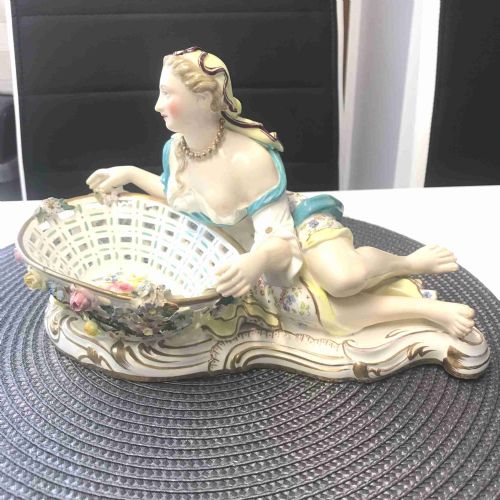
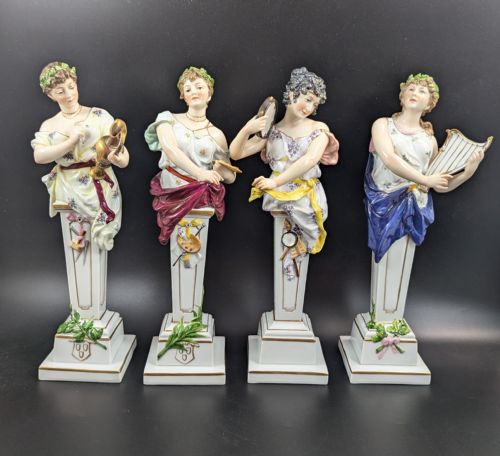
When you search for polychrome porcelain female figures, you encounter decorative figurines, allegorical representations, and sweetmeat dishes produced across several centuries. These pieces depict women in various roles, from street vendors and allegorical maidens to seated figures reflecting historical periods like the Georgian and Victorian eras.
You are most likely to meet 19th-century German and English examples on this page, including figures from major Continental factories and Staffordshire potteries. The forms range from small mantel ornaments to larger sculptural groups adorned with bright enamels and gold leaf.
The selection encompasses diverse stylistic influences, moving from Rococo and Neoclassical designs to Victorian Orientalism and Art Nouveau. Each piece captures a snapshot of contemporary taste, utilising hard-paste porcelain, bisque, and parian bodies to portray female subjects.
How they were made
Makers shaped these items using hard-paste porcelain, parian porcelain, bisque, and earthenware, often casting the figures in moulds before firing them at high temperatures. Artisans then applied detailed enamel colours and gold leaf highlights by hand.
The decorative schemes relied on precise brushwork to render garments, facial expressions, and naturalistic details such as floral baskets and street wares. Subsequent firings fixed the polychrome pigments permanently onto the glazed or unglazed ceramic surfaces.
Some Victorian Turks sit cross-legged with expressions of serene indifference, seemingly oblivious to the mantelpiece debates around them.
What varies in quality
Modelling complexity also dictates distinction, with intricate multi-figure compositions and delicate accessories like floral baskets requiring greater technical skill from the potter and painter. The clarity of factory marks and the preservation of the original polychrome palette further influence the standing of each piece.
Meissen·Derby Porcelain·Volkstedt·Achille Mollica·Frankenthal·Copeland·Royal Dux·Sitzendorf
The Polychrome Porcelain Female Figures Glossary
- Polychrome
- Decorated in a variety of colours. This technique defines the bright enamel palettes seen on many historic ceramic pieces.
- Bisque
- Unglazed white porcelain with a matte, marble-like texture. It was frequently used for Victorian figures to emphasise sculptural form.
- Hard-paste porcelain
- A durable ceramic composition fired at very high temperatures. It forms the robust body of many 18th and 19th-century Continental figures.
- Parian porcelain
- A fine-grained white ceramic developed in the 19th century to imitate marble. Copeland and other makers utilised it for classical figures.
- Sweetmeat dish
- An ornamental vessel designed for serving small confectionery. These pieces often incorporated figurative supports or maiden motifs.
Polychrome Porcelain Female Figures: Frequently Asked Questions
What are polychrome porcelain female figures?
These items are ceramic sculptures depicting women, produced as decorative ornaments, allegories, or functional vessels across European factories.
They combine moulded ceramic bodies with hand-painted enamel decoration and gilding.
How were these figures used originally?
Owners displayed them on mantelpieces, tables, and cabinets as symbols of refinement, learning, or seasonal allegories.
Some specialised forms, such as sweetmeat dishes, served confectionery during formal dining occasions.
How do I care for antique porcelain figures?
Keep them away from direct sunlight and areas prone to heavy vibrations or sudden temperature shifts.
Dust them gently with a soft, dry brush and avoid harsh cleaning agents that might damage the enamel.
How can I tell the period of a figure?
Examine the style of dress, the ceramic body, and any painted or impressed factory marks on the base.
Comparing the painting technique and colour palette to documented factory output helps narrow down the date.